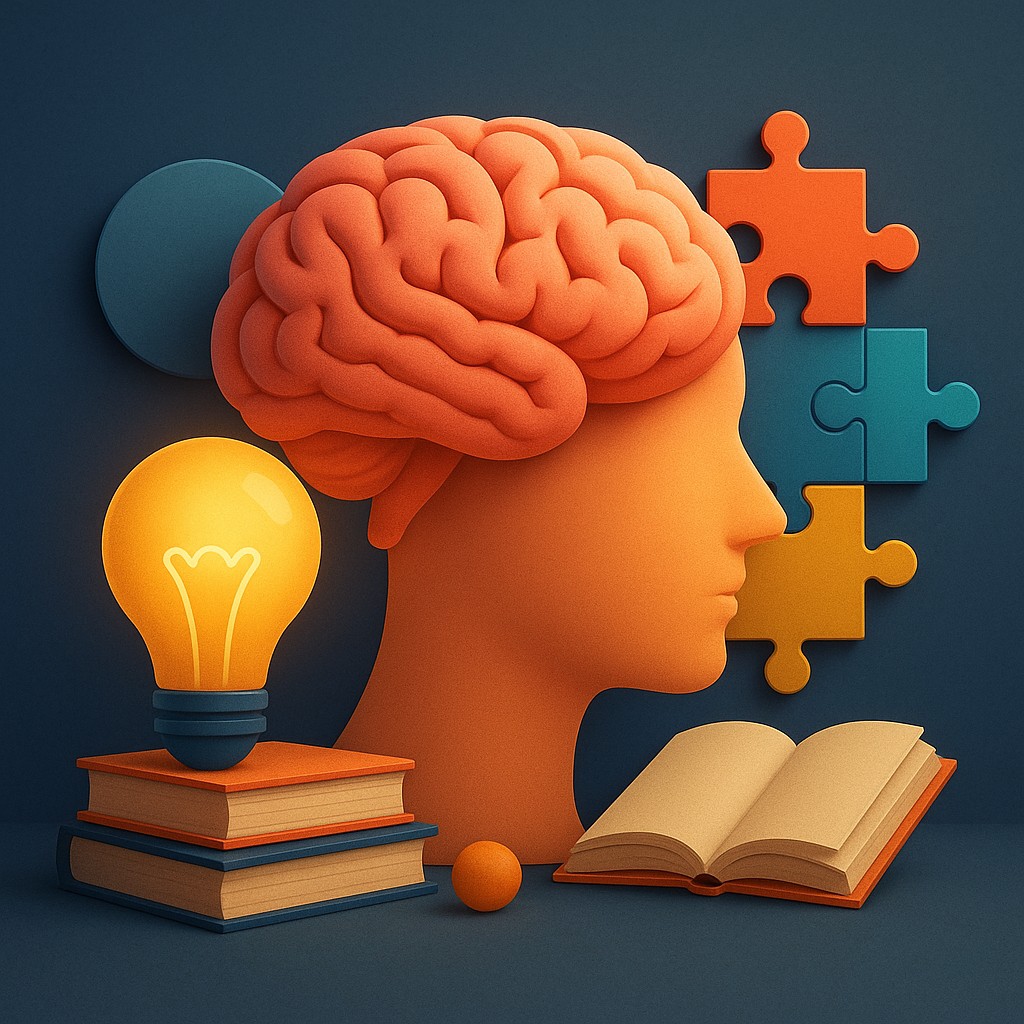
We often treat intelligence like a fixed prize won at birth, a golden ticket handed out by the universe to a lucky few who can solve Rubik’s cubes in seconds or recite the digits of pi until sunset. We see the "genius" in movies scribbling complex equations on window panes and think, "Well, that isn’t me, so I must not be one of the smart ones." But this narrow view of the human mind is like judging the entire ocean based only on the waves that hit the beach. It misses the vast, swirling depths of how we actually process information, solve problems, and navigate the messy world around us.
In reality, being intelligent is less about having a high-speed processor in your skull and more about how you use the software you have. It is a symphony of curiosity, adaptability, and the ability to connect dots that others haven't even noticed. Intelligence is not a stagnant reservoir of facts; it is a living, breathing set of skills that allows us to thrive in environments we’ve never seen before. When we peel back the layers of what it truly means to be "smart," we find a fascinating mix of biology, habit, and even a bit of humble self-awareness.
The Myth of the Giant Brain and the IQ Score
For over a century, the Intelligence Quotient (IQ) test has been the reigning champion of measuring the mind. It is a useful tool for predicting certain types of academic success, focusing heavily on logic, spatial reasoning, and mathematical patterns. However, relying solely on an IQ score to define intelligence is like trying to describe a five-star meal by only looking at the calorie count. It tells you something about the energy involved, but it says absolutely nothing about the flavor, the presentation, or the skill of the chef.
The traditional view of intelligence often ignores the fact that being "book smart" is only one slice of the pie. A person might be a wizard at calculus but struggle to read the room during a tense conversation or fail to fix a leaky faucet because they lack mechanical intuition. Scientists now largely agree that intelligence is multifaceted. One of the most famous theories, proposed by Howard Gardner, suggests we have "multiple intelligences," ranging from linguistic and logical-mathematical to musical, bodily-kinesthetic (physical coordination), and even interpersonal skills. This explains why a champion athlete and a master poet are both "intelligent," even if their talents look nothing alike.
Another common misconception is that our intelligence is "crystallized" or set in stone once we reach adulthood. We used to believe that your brain was like a house that finished construction in your early twenties, after which you just had to deal with the existing floor plan. We now know about neuroplasticity, the brain's incredible ability to rewire itself throughout our entire lives. Every time you learn a new language, pick up a difficult hobby, or change your mind about a deep-seated belief, you are physically altering your brain's architecture. Intelligence is a muscle that grows with tension and exercise, not a dusty heirloom that stays the same on a shelf.
The Power of Noticing and Connecting
If you look at the greatest thinkers in history, they share one common trait that often outweighs their raw brainpower: an insatiable sense of curiosity. Highly intelligent people tend to be "noticers." They are the ones who ask "why" long after everyone else has accepted a situation as normal. This curiosity acts as a scout for the mind, constantly seeking out new information and refusing to settle for surface-level explanations. When you are curious, your brain is in a state of high receptivity, making it much easier to absorb and retain complex data.
This habit of noticing leads to the hallmark of a truly sharp mind, which is pattern recognition. Intelligence is often the ability to take Information A from a history book and Information B from a hiking trip and realize they explain a current social trend. This "combinatorial creativity" allows smart people to solve problems by pulling solutions from seemingly unrelated fields. While others see a series of isolated events, the intelligent mind sees a web of cause and effect. They aren't necessarily faster thinkers; they just have a better map of the territory.
This also relates to "fluid intelligence," which is the capacity to think logically and solve problems in new situations, regardless of what you already know. It is the mental agility required to figure things out when you don't have a manual. Imagine being dropped in a foreign city without a phone. Your ability to navigate using landmarks, social cues, and logic is your fluid intelligence at work. It is the ultimate survival skill, turning the unknown into the manageable through observation and deduction.
The Emotional Side of the Intellectual Coin
We often imagine the highly intelligent person as a cold, calculating machine, much like Spock from Star Trek. However, some of the most vital forms of intelligence are deeply rooted in our emotions. Emotional Intelligence (EQ) is the ability to recognize, understand, and manage our own emotions while also influencing the feelings of others. Without EQ, a person with a 160 IQ might find themselves constantly frustrated, unable to lead a team, maintain a relationship, or navigate the subtle politics of a workplace.
Empathy is a sophisticated cognitive act. To truly understand another person's perspective, your brain has to perform a series of complex simulations, putting your own ego aside to model someone else's internal state. This requires immense mental flexibility. People who are "people smart" can de-escalate conflicts and inspire others because they can process social data as quickly as a mathematician processes numbers. They read micro-expressions, tone of voice, and body language to build a coherent picture of the social environment.
Self-regulation is another pillar of this emotional hardware. An intelligent person knows that being right isn't the same as being effective. They can pause their immediate impulses to achieve a long-term goal. This "delayed gratification," the ability to wait for a better reward later, is one of the strongest predictors of success in life. If you can't control your own mind, it doesn't really matter how fast it can calculate; you will always be at the mercy of your shortest-term whims. The smartest people are usually the ones who have learned how to master their own internal weather.
| Type of Intelligence |
Primary Focus |
Real-World Example |
| Logical-Mathematical |
Patterns, categories, and relationships |
A computer programmer debugging complex code |
| Linguistic |
Sensitivity to the meaning and order of words |
A novelist crafting a compelling narrative |
| Spatial |
Mentally rotating and visualizing objects |
An architect designing a bridge from a sketch |
| Interpersonal |
Understanding and interacting with others |
A diplomat negotiating a peace treaty |
| Intrapersonal |
Understanding one's own inner feelings |
A person using self-reflection to change a bad habit |
| Bodily-Kinesthetic |
Physical coordination and timing |
A surgeon performing a delicate operation |
The Art of Thinking About Your Own Thinking
One of the most profound markers of intelligence is something called metacognition. This is the act of "thinking about thinking." Most people simply have thoughts, but an intelligent person frequently steps back to examine the quality of those thoughts. They ask themselves: "Why do I believe this? Am I falling for a bias? Is there a gap in my logic?" This self-critical voice prevents us from becoming overconfident and helps us adjust our strategies when things go wrong.
The Dunning-Kruger effect is a famous psychological phenomenon where people who are bad at a task overestimate their own skill. In contrast, highly intelligent people often underestimate themselves because they are keenly aware of just how much they don't know. This "intellectual humility" is a superpower. When you admit you don't know everything, you leave the door open for more learning. The moment you decide you are the smartest person in the room, your intelligence hits a ceiling.
Metacognition also involves managing your mental resources. A smart person knows when they are too tired to make a big decision or when their emotions are clouding their judgment. They use mental models, which are simple frameworks for thinking, to navigate the world. For example, they might use "First Principles Thinking," where they break a problem down to its basic truths and rebuild it from there, rather than just doing what everyone else is doing. This prevents them from following the crowd into a dead end and allows for true innovation.
Adaptability and the Willingness to Fail
If you ask a biologist what the most "intelligent" species is, they might look at which one survives best in a changing environment. In the human world, intelligence is closely tied to adaptability. The world is notoriously unpredictable, and a person who can only function when everything goes according to plan is limited. High intelligence allows a person to pivot. When the "old way" of doing things stops working, the smart individual doesn't just push harder; they find a different way to push.
This adaptability requires a healthy relationship with failure. Many people avoid difficult tasks because they are afraid of looking "stupid," but this is a trap that stunts intellectual growth. True intelligence involves a "growth mindset," a term coined by psychologist Carol Dweck. People with this mindset see challenges as opportunities to get smarter rather than as threats to their identity. They understand that the "smart" thing to do is to try, fail, learn, and try again.
Think of intelligence as a GPS system. A basic GPS might give you one route and leave you stuck if there is a road closure. A smart GPS, however, is constantly recalculating. It looks at traffic, road conditions, and your fuel levels to find the most efficient path. It doesn't get "upset" when it hits a detour; it just finds a new way to reach the destination. That ability to recalculate in real time, without losing your cool or your sense of purpose, is perhaps the ultimate sign of a high-functioning mind.
Small Habits That Sharpen the Mind
While we are born with certain biological traits, intelligence is also a byproduct of how we live our daily lives. You can think of your brain as a garden; if you don't water it and pull the weeds, it won't produce much. One of the most effective habits for increasing your cognitive "horsepower" is varied reading. When you read across different genres and subjects, you are essentially "downloading" the life experiences and thought patterns of other smart people. It gives you a larger library of ideas to pull from when you are trying to solve a problem.
Deep work is another essential habit. In our modern world of notifications and ten-second videos, our ability to focus is under constant attack. Intelligence thrives in the "deep state," where you focus on a single difficult task for a long time without distraction. This allows your brain to form complex neural connections that are impossible to create if you are constantly switching tasks. Cultivating the ability to sit in a room and work on one thing for two hours is like taking your brain to a heavyweight training camp.
Finally, teaching others is one of the fastest ways to get smarter. There is a concept called the Feynman Technique, named after the physicist Richard Feynman. It suggests that if you can't explain a complex concept to a six-year-old, you don't really understand it yourself. When you try to explain something to someone else, your brain is forced to strip away the jargon and find the core essence of the idea. This reinforces your own understanding and reveals the "holes" in your knowledge that you need to go back and fix.
The Beautiful Plasticity of Becoming More
The journey to becoming more intelligent isn't a race toward a finish line or a quest for a specific number on a test. It is a lifelong commitment to remaining open, curious, and remarkably brave in the face of what we don't understand. Every time you choose to listen instead of talk, every time you pick up a book that challenges your worldview, and every time you admit you were wrong, you are literally making yourself smarter. Your brain is not a static object; it is a dynamic, shifting landscape that responds to the demands you place upon it.
You possess a biological machine capable of more processing power than any supercomputer ever built, yet its true value is found in the heart and the will. Intelligence is the bridge between the world as it is and the world as it could be, and you are the architect of that bridge. As you move forward, remember that your capacity to learn is your greatest asset. Embrace the confusion, seek out the difficult questions, and never stop "recalculating" your path. The more you explore the boundaries of your mind, the more you will realize those boundaries were mostly an illusion to begin with.