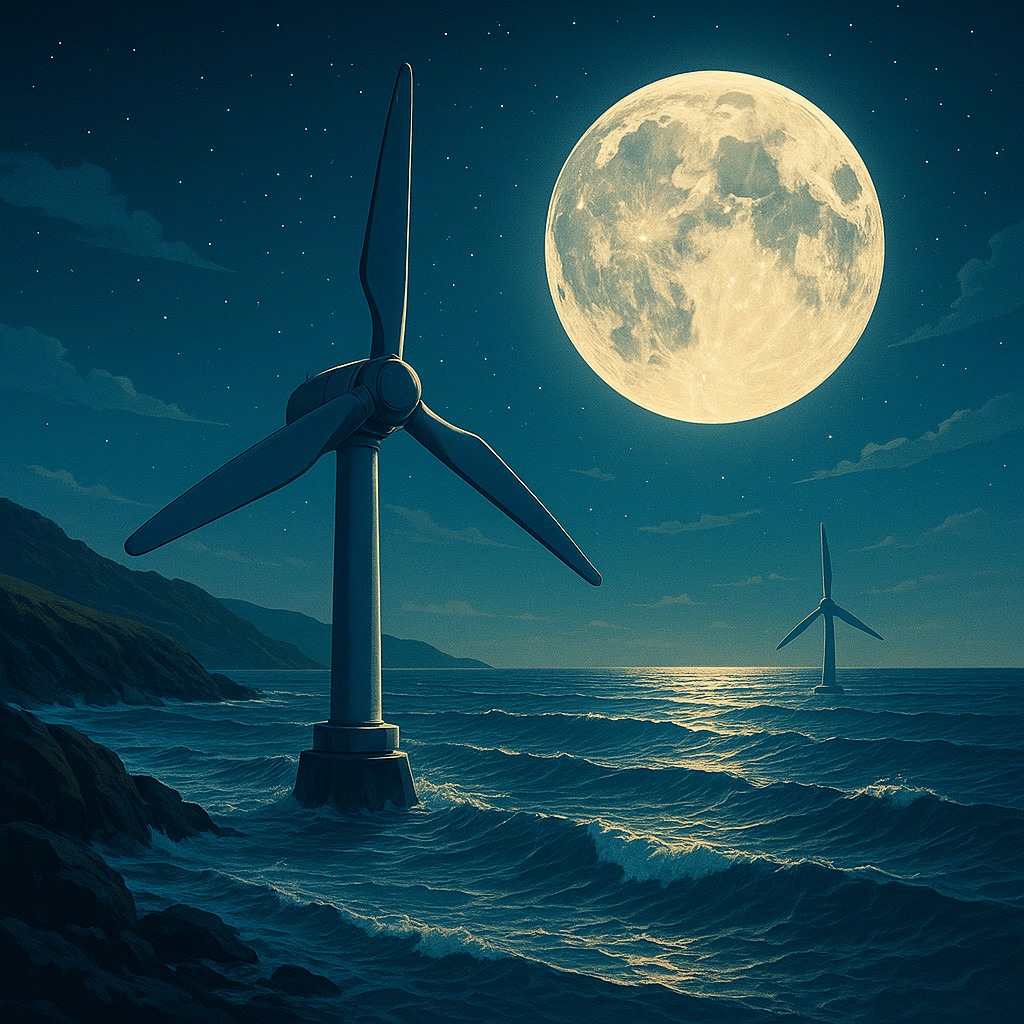
Imagine standing on the coast, watching the rhythmic rise and fall of the tides, and realizing that the water itself is a massive battery waiting to be tapped. For centuries, we have looked at the ocean as a source of food, a path for trade, or a place for a holiday. Now, we are entering an era where we see it as a powerhouse of clean, predictable energy. Unlike the wind that might stop blowing or the sun that sets every night, the tides follow the reliable clockwork of the stars. The pull of the moon and the sun ensures that trillions of gallons of water move twice a day, every day, with a force that makes our strongest machines look like toys.
Understanding tidal energy is about more than just building underwater windmills; it is about syncing our modern power needs with the ancient pulse of the planet. As we move away from coal and gas, the search for "baseload" power - energy that stays steady and reliable around the clock - has led us back to the sea. The technology to capture this movement has evolved from the simple water wheels of medieval mills to sophisticated subsea turbines that look like something out of a science fiction film. By looking at how these systems work, we can appreciate the engineering grit required to produce electricity in one of the harshest environments on Earth.
The Celestial Engine Behind the Waves
To understand how we get electricity from the ocean, we first have to look up at the sky. The primary driver of our tides is the moon, which exerts a gravitational pull on the Earth. Because our planet is covered in water, this gravity creates a "bulge" - a literal mountain of water - that follows the moon as the Earth rotates. When the sun aligns with the moon, these forces stack up to create massive "spring" tides. When they are at right angles, we get the gentler "neap" tides. This constant sloshing of the world’s oceans through narrow channels and around coastlines creates kinetic energy on a scale that is almost hard to imagine.
When this massive volume of water is forced through a narrow gap, such as a strait or a passage between islands, it speeds up significantly. Engineers call this a "tidal stream," and it is the sweet spot for renewable energy. Think of it like a wind turbine, but instead of air, you are dealing with seawater, which is roughly 800 times denser than air. This means a relatively small underwater turbine can generate the same amount of power as a much larger wind turbine on land, all while moving at a slower, more graceful pace. It is a dense, punchy form of energy that offers the kind of predictability that power grid managers love.
Catching the Flow with Modern Tech
Engineers have developed several clever ways to catch this moving water, and each method has its own pros and cons. The most common approach uses tidal stream generators, which are essentially underwater fans. These can be fixed to the seabed with massive concrete blocks or "piled" directly into the rock. Some newer designs are floating platforms tethered to the floor. These sit in the fastest-moving water near the surface and are much easier to tow back to shore for repairs. Maintenance is a huge challenge when your equipment is submerged in salty, corrosive water that can eat through metal.
Another method is the tidal barrage, which works like a traditional hydroelectric dam. A giant wall is built across an estuary, and as the tide comes in, gates open to fill a basin. When the tide goes out, the water is trapped behind the wall and then released through turbines to generate power. While these are incredibly effective at producing large amounts of energy, they are very expensive to build and can change the local ecosystem by altering water levels. Because of this, the industry is currently leaning toward "tidal lagoons" or modular stream turbines that have a smaller footprint and are safer for local fish and birds.
The Engineering Gauntlet of the Deep
Building things in the ocean is arguably harder than building things in space. In space, you have a vacuum and radiation; in the ocean, you have salt, barnacles, extreme pressure, and the relentless physical battering of moving water. A tidal turbine must be built to survive "the 100-year storm," a hypothetical event where waves and currents reach their absolute peak. Every bolt, cable, and blade must be treated with specialized coatings to prevent rust, and the electrical parts must be sealed so tightly that not a single molecule of saltwater can get inside to cause a short circuit.
One of the biggest hurdles is getting the power back to the people who need it. Running high-voltage cables along a rugged seabed is a logistical nightmare that requires specialized ships and robotic divers. Furthermore, the turbulence beneath the surface can cause vibrations and "fatigue" in the turbine blades. Engineers use advanced computer modeling to ensure blades are shaped for maximum efficiency while remaining strong enough to handle the equivalent of a heavy truck pushing against them every second of the day.
| Feature |
Tidal Stream Turbines |
Tidal Barrages |
Offshore Wind |
| Predictability |
100% (based on moon cycles) |
100% (based on moon cycles) |
Low (weather dependent) |
| Environmental Impact |
Minimal (small footprint) |
High (alters estuaries) |
Moderate (visual/bird impacts) |
| Energy Density |
Very High (water is dense) |
High |
Moderate |
| Maintenance Difficulty |
High (underwater access) |
Moderate (bridge-like access) |
Moderate (height access) |
| Visual Impact |
None (submerged) |
High (visible dam) |
High (visible towers) |
Debunking the Myths of Tidal Power
A common misconception is that tidal turbines act like giant underwater blenders, posing a threat to whales, seals, and fish. In reality, tidal turbines spin much slower than wind turbines or boat propellers. Because water is so dense, you do not need a high RPM (rotations per minute) to generate significant power. Most sea life is quite agile; animals treat these structures like a new reef or simply swim around them. Extensive monitoring at sites like the MeyGen project in Scotland has shown that marine mammals are generally quite savvy and avoid the moving parts without much trouble.
Another myth is that tidal energy is too expensive compared to solar or wind. While upfront costs are currently higher, this is largely because the industry is still in its early "pilot phase." It has not yet reached the mass production levels that made solar panels so cheap. If you look at the total value rather than just the cost, tidal energy is incredibly useful because it provides power when the wind is still and the sun is down. This reduces the need for expensive battery storage, making the overall energy grid more stable and cheaper in the long run.
Connecting the Ocean to the Grid
For tidal energy to truly take off, it needs to move beyond test sites and become a standard part of our global infrastructure. This requires governments to provide the same support and subsidies that helped launch the wind and solar revolutions decades ago. We are already seeing "tidal farms" appearing in places with high current speeds, such as the shores of the United Kingdom, the Bay of Fundy in Canada, and the coasts of France and South Korea. These locations serve as proving grounds for a technology that could eventually provide a significant chunk of the world’s electricity.
As we improve our ability to store energy and manage smart grids, the rhythmic nature of the tides becomes our greatest asset. Imagine a future where your morning coffee is brewed using the power of a receding tide, and your evening lights stay on thanks to the incoming swell. We are learning to stop fighting the ocean and start working with it. By placing these silent, invisible generators beneath the waves, we can preserve the beauty of our landscapes while drawing on the infinite strength of the solar system.
The Horizon of Marine Innovation
The future of marine energy does not stop at tides. Researchers are also looking at Wave Energy Converters, which capture the bobbing motion of surface waves, and Ocean Thermal Energy Conversion (OTEC). OTEC uses the temperature difference between warm surface water and cold deep water to run a power cycle. While these technologies are still developing, they all point toward a single truth: the ocean is the world’s largest solar collector and its most massive flywheel. We are finally developing the tools and engineering "muscles" needed to make use of that vast reservoir of power.
Stepping into a world powered by the sea requires a shift in how we think about nature. It asks us to be as resilient and adaptable as the machines we submerge. The progress made in tidal energy over the last decade is a testament to human ingenuity and our desire to find harmony with the planet’s natural systems. As we refine these designs and bring down costs, the heartbeat of the ocean will become the heartbeat of our civilization, providing a clean and endless flow of power for generations to come.
The journey from observing the tides to mastering them is one of the most exciting chapters in the story of human progress. It reminds us that solutions to our greatest challenges are often hidden in plain sight, or in this case, just beneath the surface. The next time you look out at the ocean, do not just see a body of water; see a powerhouse, a guardian of our climate, and a silent partner in our quest for a sustainable future. The moon is pulling, the water is moving, and we are finally ready to catch it.