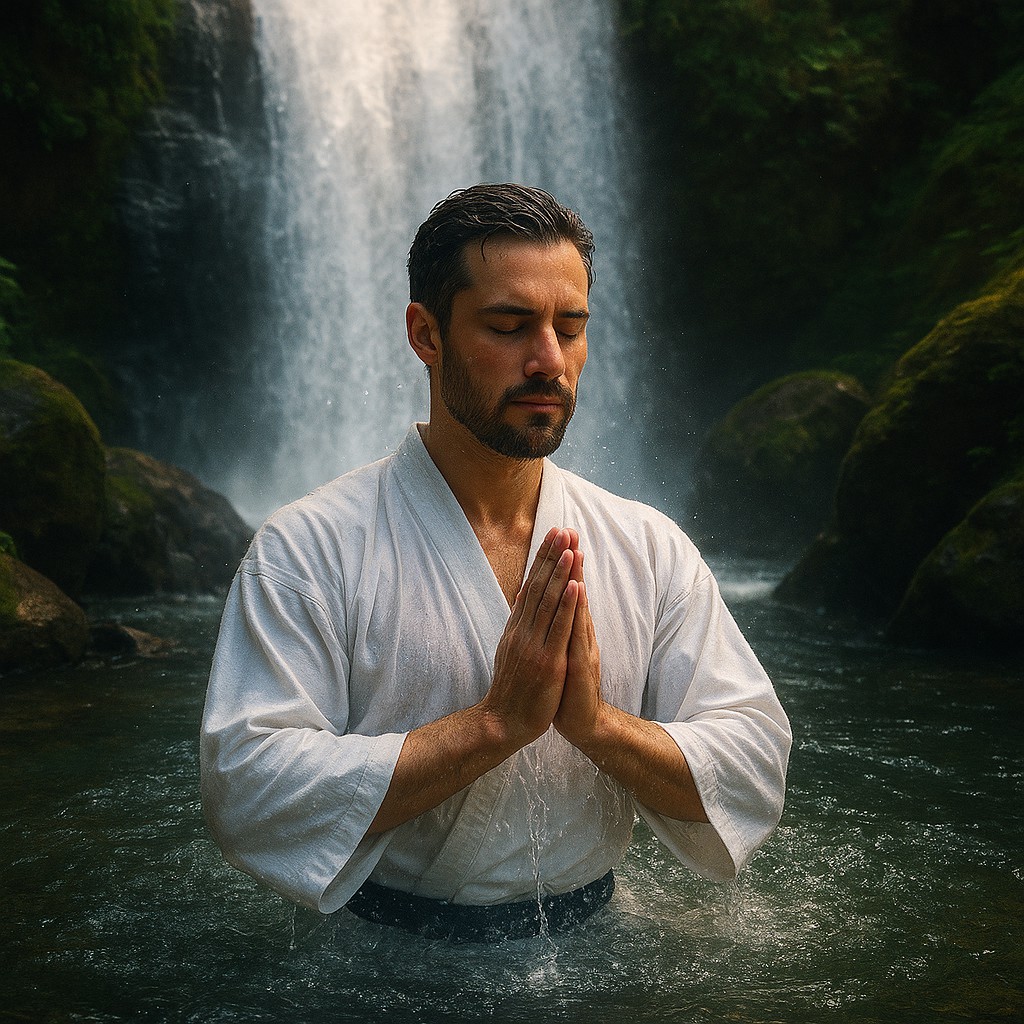
On a cold morning, deliberately stepping into a river sounds like a dare gone wrong. Yet in Japan, people have done exactly that for centuries—not as a stunt, but as a way to clear the mind, steady the spirit, and start over. This tradition is called misogi, and it sits at the crossroads of religion, nature, psychology, and community.
People often translate misogi as "purification," but that word can feel dusty and moralizing, as if someone is judging your life. In practice, it works more like a reset button. It is a deliberate meeting with water, breath, and attention meant to loosen what is stuck or heavy, and to invite a clearer state of being.
If you are curious about Japanese culture, ritual, or the human habit of using hard experiences to wake up, misogi is a good doorway. It is ancient but alive. It is spiritual and intensely physical. And it offers a lesson many modern minds need: sometimes you do not think your way into clarity, you wash your way into it.
Misogi in plain language: a ritual reset with water at the center
At its simplest, misogi is a cleansing practice that uses water, commonly performed in Shinto contexts. Shinto is Japan’s indigenous tradition that values harmony with nature and respect for kami - a word often translated as "spirits" or "divine presences," but closer to "sacred qualities that appear in places, forces, and beings." Misogi is not mainly about sin and punishment. It is about removing kegare, a kind of spiritual grime that builds up through contact with death, illness, conflict, exhaustion, and everyday mess.
The key idea is that purity is a state, not a moral scorecard. You can become clouded without being bad, like a window that gets dirty near traffic. The ritual helps return you to a bright, clear condition called kiyome - purity and cleanliness - so life can flow more smoothly again.
Water becomes central because it is direct, literal, and nonnegotiable. You cannot argue with cold water. You cannot explain yourself to a waterfall. You show up, breathe, and meet what is real. That quality makes misogi both symbolic and practical, which is why it has remained important.
A story Shinto loves: Izanagi, the underworld, and the first "wash it off" moment
Misogi has deep roots in Shinto myth, especially the story of the deity Izanagi. After visiting the underworld to bring back his partner Izanami, Izanagi returns contaminated by death and decay. He performs a cleansing wash, and from that act of purification new deities appear, including Amaterasu (the sun goddess), Tsukuyomi (the moon deity), and Susanoo (linked to storms and the sea).
You do not have to read this as literal biology. Myth speaks in images meant to stick in memory, and this one makes a striking point: cleansing can do more than remove something, it can create something. In other words, purification is not only subtraction. It can open the way for light, order, and life to return.
That story also reveals a Shinto sensibility: contact with death is not evil, but it is heavy and disruptive, like mud on a white robe. Misogi recognizes that some experiences leave residue, and it offers a respectful way to come back into balance.
What misogi looks like in real life: from waterfall training to shrine basins
Misogi covers a range of practices, not a single script. The most dramatic is takigyō, waterfall austerities, where practitioners stand under a cold waterfall while focusing on breath, posture, and chant-like recitation. Other forms involve entering rivers or the sea, especially at seasonal turning points. You will also find a gentler echo at shrines: visitors rinse their hands and mouth at a water pavilion, called a temizuya, before approaching the main sanctuary.
A more formal misogi session often includes preparation, clear intention, and community structure. Participants may wear white garments to symbolize clarity and follow a leader who sets rhythm and safety rules. There can be chanting, deep breathing, and a specific sequence: bowing, purification gestures, and then the water itself.
It is tempting to focus on the most cinematic version - people being pounded by a waterfall like laundry. But the quieter forms matter too. The shrine basin ritual is a miniature misogi, a small reminder that you do not approach sacred space carrying the day’s psychic clutter. You pause, rinse, and shift gears.
A simple comparison of common purification practices in Shinto settings
| Practice |
Typical setting |
What you do |
Main purpose |
Intensity level |
| Temizu (hand and mouth rinsing) |
Shrine water pavilion |
Rinse hands, rinse mouth, rinse ladle |
Everyday readiness before prayer |
Low |
| Misogi (water immersion/ablution) |
River, sea, or designated site |
Enter water, pour water over body, controlled breathing |
Deeper cleansing, renewal |
Medium to high |
| Takigyō (waterfall practice) |
Waterfall with trained group |
Stand under waterfall, chant/breathe, maintain posture |
Austerity, focus, breakthrough |
High |
| Harae (ritual purification by priest) |
Shrine ceremony |
Priest uses prayers and symbolic tools |
Communal or formal purification |
Varies |
That table hides an important truth: the most intense practice is not always the best one. Shinto ritual values appropriateness and sincerity over theatrical difficulty.
The hidden mechanics: why water, breath, and rhythm change how you feel
Misogi is spiritual, but it also produces real psychological and physical effects, which helps explain its power for people who do not share Shinto beliefs. Cold water exposure triggers the body's stress response - rapid breathing, higher heart rate, and a strong urge to get out. If you stay calm and control your breath, you train your nervous system to shift from panic to steadiness.
Breathing and chanting add structure. Repetitive sound and rhythm focus attention and quiet mental chatter, similar to how a song can settle a restless mind. The body also responds to ritual signals: when actions follow a set sequence with clear intention, the brain treats the moment as special, which deepens commitment and memory.
There is a social side too. Doing something hard with a group, under guidance, creates a strong sense of shared purpose. In many cultures, communal hardship, when done safely and meaningfully, becomes bonding. Misogi can do that, except the bonding happens while everyone tries not to squeal when the water hits.
Misogi is not about "toughness," it is about attention
A common mistake is to think misogi is ancient cold-plunge machismo. In truth, the goal is not to out-endure your neighbor. The goal is to reach a clear mental state by aligning breath, posture, and intention, then letting the water do what water does - strip away distraction.
In many accounts, the breakthrough is not "I survived." It is "I became quiet inside." That is a very different prize.
Kegare and purity: a different moral map than "sin"
If you view misogi through a Western religious lens, you might assume purification equals guilt. Shinto does not work that way. Kegare is more like contamination or imbalance. It can come from grief, conflict, illness, or simply being worn down by life. Misogi is a way to return to harmony, not to confess wrongdoing.
That difference changes the emotional tone. Instead of "I am bad and must be cleansed," the feeling is closer to "I am carrying too much and want to be clear again." That nuance helps misogi feel compassionate rather than punitive.
It also explains why purification is part of ordinary life. The shrine rinsing ritual is not reserved for crisis. It is a routine act of preparing yourself to meet something important. In modern terms, it is a little like washing your hands before cooking, but for your attention.
Misconceptions and myths: what misogi is not
- Myth: Misogi is just "Japanese cold plunging." Cold exposure can be part of it, but misogi is a ritual practice with cultural and religious context. Intention, sequence, and meaning matter as much as temperature.
- Myth: You must be Shinto to learn from misogi. You should respect its roots, but learning about it, and even participating under proper guidance, is not automatically off-limits. Many shrines and groups emphasize sincerity and correct conduct.
- Myth: More suffering equals more purity. Misogi is not a suffering contest. Recklessness is not holiness. Traditional practice includes preparation, supervision, and attention to conditions.
- Myth: Purity means "spotless perfection." In Shinto, purity is closer to clarity and right relationship. It is a return to alignment, not a demand to become flawless.
If you take away one point, let it be this: misogi is less about punishing the body and more about training the mind through the body.
A guided walk-through: what a formal misogi session often includes
Details vary by group and region, but a structured misogi practice usually follows a clear arc. Knowing that arc helps you see why each piece exists.
Preparation: setting the body and mind up for success
Participants often begin by calming down. There may be light warm-ups, breathing exercises, and reminders about posture and safety. Clothing is usually simple and modest, often white, to emphasize a blank-slate feeling. This stage is not filler; it is the foundation that keeps later intensity from becoming chaotic.
Intention and ritual framing: making it more than a bath
Before entering the water, there may be bows, claps, prayers, or chants. These are not random gestures. They mark the boundary between ordinary time and ritual time. The mind responds to boundaries, and ritual is one way to create them.
The water encounter: meeting discomfort with skill
When the water hits, the body wants to gasp and tense. Practitioners focus on controlled breathing and a steady stance. In waterfall practice, the sound and force overwhelm the senses, which is partly the point: they force full presence. Many people report that the mind stops narrating and starts simply experiencing.
Closing: reintegration, gratitude, and return
Afterward, there is usually a closing sequence, including warming up, drying off, and a final bow or prayer. This step matters because it helps the nervous system return to baseline. It also completes the story, rather than leaving you with a half-finished adrenaline spike.
Misogi in modern Japan: tradition, training, and everyday echoes
Today, misogi appears in several places. Some Shinto practitioners and ascetic groups keep rigorous training traditions, including waterfall austerities. Some shrines host misogi events at certain times of year, and participation may be open to the public with guidance. Many people practice "micro-purifications" through shrine visits, seasonal customs, and mindful washing without calling it misogi at all.
Misogi has also influenced modern self-development talk, sometimes stripped of its Shinto roots. You may see the word used loosely to mean "a hard thing that changes you." That loose use can inspire, but it can also flatten the tradition into a motivational slogan. Misogi is not only about personal grit. It is about relationships - to community, to nature, to the sacred, and to the parts of life that leave residue.
If you want to experience it: respect, safety, and a few grounded tips
If misogi interests you as a practice rather than a concept, the safest path is to learn in a legitimate setting. Traditional misogi is not DIY, and cold water is not a toy. Safety and respect belong to the tradition, not just modern add-ons.
A few practical guidelines if you explore further:
- Seek a reputable group or shrine-affiliated event with clear leadership and safety procedures.
- Treat it as cultural learning, not a personal branding stunt.
- Pay attention to health concerns, especially heart conditions, blood pressure issues, or cold sensitivity, and consult a professional if unsure.
- Notice the soft parts - breathing, intention, gratitude. They are not decorations; they are core tools.
Even if you never stand under a waterfall, you can borrow the misogi insight: clarity sometimes comes from a deliberate ritual shift, not from more screen time or internal debate.
Carrying misogi’s lesson into ordinary days
Misogi endures because it speaks to a simple human problem: life collects residue. Stress, grief, resentment, and plain mental clutter stick to us like humidity. Misogi offers a physical metaphor for renewal, and then backs it up with an experience you can feel in your bones.
You do not need a mountain waterfall to use the underlying wisdom. You can build small rituals of entering and exiting, moments that mark a real reset. Wash your hands slowly before a difficult conversation. Step outside and breathe with attention before starting work. Treat transitions as well-made tools, not awkward gaps to fill with scrolling.
If misogi has a message for modern life, it is this: you are allowed to begin again, and you can do it on purpose. Sometimes the clearest path forward is not another thought, but a simple act that tells your whole system, "We are here now, and we are ready.