Have you ever wondered why, when sitting at a dinner table, you ask the person next to you, "Could you possibly pass the salt?" instead of just pointing and barking, "Salt!"? If we were purely logical creatures driven by efficiency, the one-word command would win every time. It is shorter, clearer, and takes less breath to say. Yet, we rarely choose the most efficient path because humans are not just information processors; we are social animals deeply invested in a fragile, invisible currency known as "face." Every time we speak, we are performing a high-stakes negotiation to ensure that nobody leaves the conversation feeling small, ignored, or forced into something.
This delicate dance is what sociolinguists Penelope Brown and Stephen Levinson famously called Politeness Theory. At its heart is the idea that we all carry a public self-image that we want others to recognize and respect. When we use "flowery" language, indirect hints, or self-deprecating jokes, we aren't just being "nice." We are actually performing complex social surgery to avoid "Face-Threatening Acts." Understanding this mechanism changes how you view every interaction, from a tense salary negotiation to a simple coffee order. It reveals that our social world is held together not by what we say, but by the careful ways we avoid saying exactly what we mean.
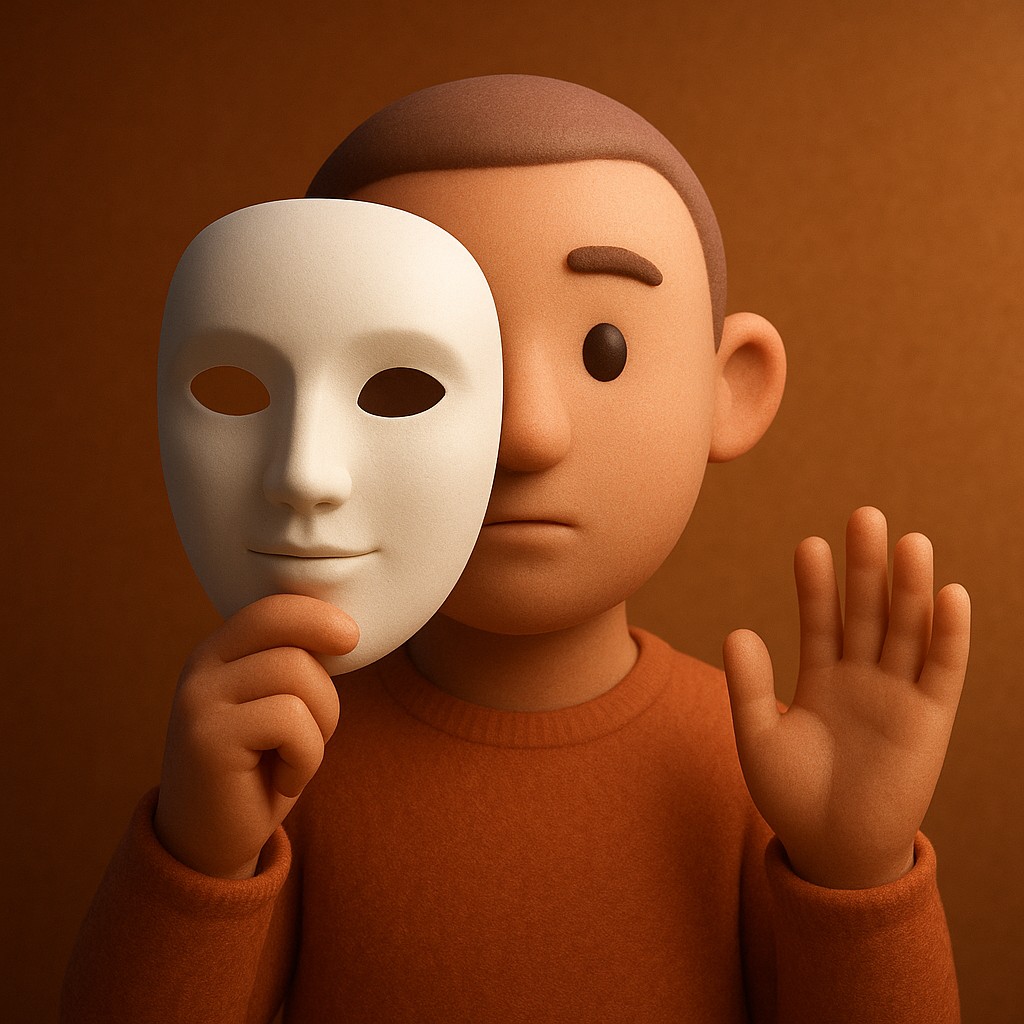
The Dual Nature of Face and the Social Mask
To understand why we aren't just direct all the time, we have to look at the concept of "face" as a two-sided coin. In Politeness Theory, face is divided into two distinct needs: Positive Face and Negative Face. Positive face is your desire to be liked, appreciated, and treated as part of the group. It is the warm glow you feel when a colleague praises your work or a friend laughs at your joke. Negative face, despite the name, isn't a bad thing; it is your desire for autonomy, freedom, and the right to not be imposed upon. It is the part of you that wants to be left alone to do your work without someone breathing down your neck or demanding your time.
Most of our daily friction happens when these two needs are threatened. When you ask a coworker for a favor, you are inherently threatening their negative face because you are taking up their time and effort. When you disagree with someone's opinion, you are threatening their positive face because you are suggesting they might be wrong or unlikable. Because we generally want to keep social life balanced, we use "softening strategies" to reduce the blow. We apologize for the intrusion, we offer compliments before critiques, and we use "hedges" like "I was wondering if..." to show that we recognize the other person's right to say no.
Navigating the Minefield of Face-Threatening Acts
Every time we speak, we risk performing a Face-Threatening Act (FTA). These are moments where the very act of speaking causes a potential loss of face for the speaker or the listener. For example, if you have to tell an employee that their report was poor, you are attacking their positive face (their need to be seen as competent). If you have to ask your neighbor to stop playing loud music at 2:00 AM, you are attacking their negative face (their right to do what they want in their own home). Politeness Theory provides a framework for how we manage these threats based on three variables: Power, Distance, and Rank.
The way we "dress up" our language depends heavily on who we are talking to. If you are the CEO, you might feel more comfortable being direct with an intern because you have more power. However, if that intern is the CEO’s nephew, the social distance or the "rank" of the request changes the math entirely. We subconsciously calculate these factors in milliseconds. If the threat is high, we move from "on-record" communication (the direct "Do this!") to "off-record" communication (the indirect "Gosh, it’s getting late and this report still isn't finished..."). This indirectness allows the other person to "save face" by offering help voluntarily rather than being forced into it.
The Strategy Toolbox: From Directness to Deception
How we choose to communicate generally falls into four main categories, ranging from the most efficient to the most polite. Choosing the right strategy is the difference between being a "straight shooter" and a socially tone-debit jerk. While direct strategies are great for emergencies - nobody wants a firefighter to say, "I was wondering if you might consider exiting the building" - they are disastrous for building long-term rapport in an office or a relationship.
| Strategy Type |
How it Works |
Example Scenario |
| Direct (On-Record) |
Clear and blunt; no attempt to soften the request. |
"Give me that pen." |
| Positive Politeness |
Focuses on friendliness and making the listener feel liked. |
"Hey friend, could I borrow that cool pen for a second?" |
| Negative Politeness |
Focuses on being unobtrusive and giving the listener an out. |
"I'm so sorry to bother you, but would you mind if I used your pen?" |
| Indirect (Off-Record) |
Dropping hints so the listener can "choose" to understand. |
"I forgot my pen and I have so much to write down..." |
As the table shows, the more we move down the list, the more "work" we are doing to protect the other person's face. Positive politeness often involves emphasizing common ground, using nicknames, or showing interest in the other person's life. Negative politeness, on the other hand, is the hallmark of professional bureaucracy and formal society. It uses the passive voice ("It has been noted that...") and heavy hedging ("It might be the case that...") to create a buffer of respect and distance. This is why a formal rejection letter feels so cold; it uses maximum negative politeness to distance the institution from the individual's feelings.
When Direct Honesty Becomes Accidental Aggression
One of the most common points of failure in modern communication, especially in diverse workplaces, is a mismatch in expectations. Some corporate cultures value radical honesty, which relies heavily on direct feedback. While this can be efficient, it often triggers a defensive physical response in people who were raised to value face-saving. When a manager says, "This paragraph is confusing, rewrite it," a sensitive employee doesn't just hear a task; they hear a threat to their positive face. They feel their image as a competent writer is being attacked, and their brain may go into "fight or flight" mode.
The "sandwich method" of feedback - positive comment, critique, positive comment - is actually a perfect example of Politeness Theory. By starting with praise, the manager builds up the employee's positive face, making it strong enough to withstand the "dent" of the coming critique. Then, by ending with a vote of confidence, they repair the damage. While cynics call this manipulative, Politeness Theory suggests it is a necessary ritual. Without these buffers, the cost of communication becomes too high, and people stop sharing ideas for fear of the social "bruising" that comes with blunt honesty.
The Global Context: Silence and Formality
It is a mistake to assume that "polite" means the same thing everywhere. While the need for "face" is a human universal, the ways we protect it are deeply cultural. In many Western cultures, being "polite" often means being friendly and informal. We use first names and ask about people's weekends. However, in many East Asian cultures, being "polite" is rooted in formality, which emphasizes social hierarchy and not imposing on others. In these contexts, being overly friendly or using first names can actually be seen as aggressive because it ignores the proper social distance.
Silence is another tool that varies wildly. In some cultures, silence after a proposal is a polite way of saying "no" without having to perform the face-threatening act of a direct rejection. A Western negotiator might see that silence as an invitation to keep talking, accidentally piling on more pressure and further threatening the other person's space. Understanding that "face" is at play helps us realize that someone from a different culture isn't being "difficult" or "vague"; they are likely using a different set of strategies to navigate a social minefield you might not even realize is there.
Mastering the Mechanics of Respect
Once you begin to see the world through the lens of Politeness Theory, your daily interactions take on a new clarity. You realize that the "extra" words we use are not wasted; they are the oil in the social gears that prevents us from grinding against one another. Whether you are dealing with a difficult client, a sensitive spouse, or a new group of friends, the goal is always the same: to communicate your needs while ensuring the other person feels respected and valued. It is a constant balancing act of power and distance that requires both empathy and precision.
Embrace the complexity of these social rituals. The next time you find yourself adding three "justs" and an "if you have time" to an email, don't delete them. Recognize them for what they are: sophisticated tools for protecting the dignity of your colleagues. By becoming a conscious practitioner of face-work, you gain the ability to navigate high-stakes environments with grace. You learn that the most effective communicators aren't the loudest or the most direct, but those who understand that every word is an opportunity to strengthen the social fabric and leave everyone's "face" intact.