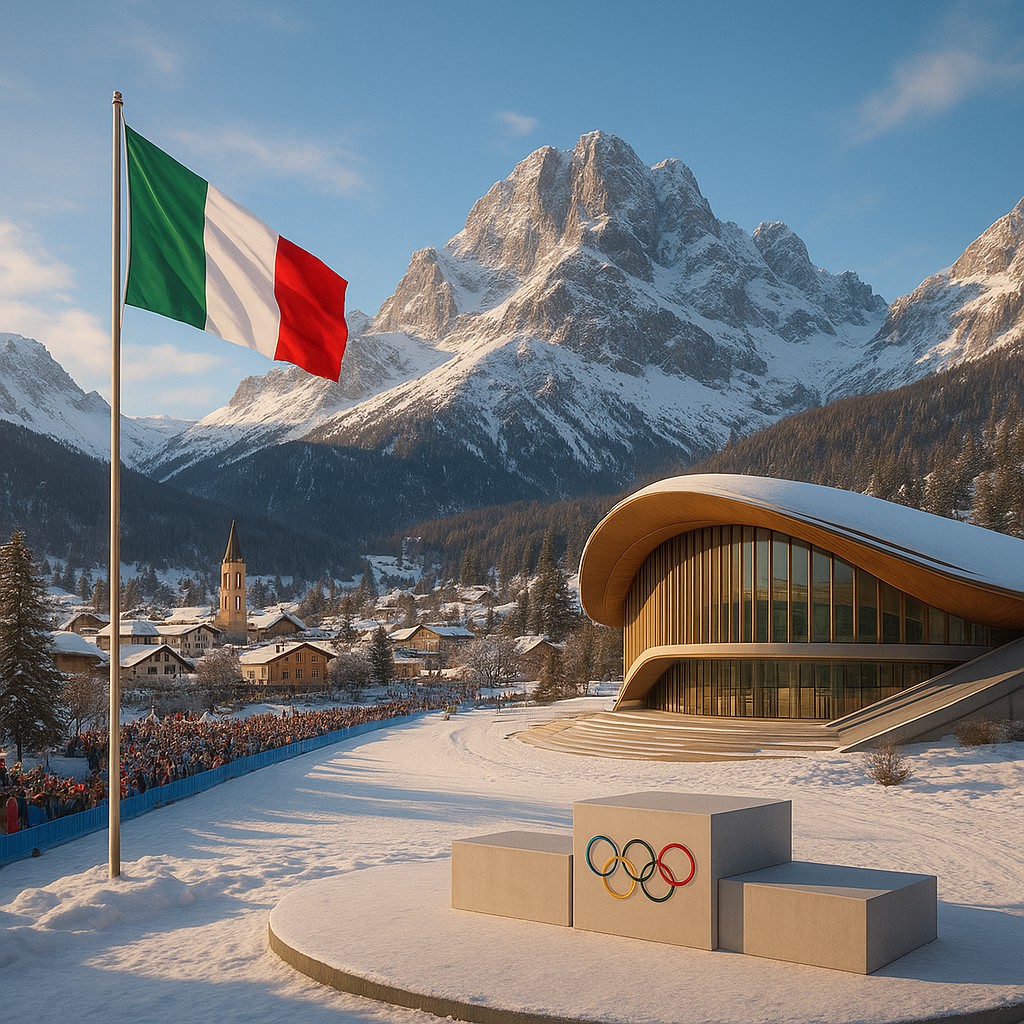
Picture yourself at the foot of the Italian Alps. The air is so sharp and clean it feels like a drink of cold water, and the distant ring of church bells from a mountain village blends with the roar of a massive crowd. This is the stage being set for the 2026 Winter Olympics, officially known as Milano Cortina 2026. After years of the Games being held in tight clusters or isolated "Olympic bubbles," Italy is bringing the world back to the true home of winter sports. This event represents a major shift in how the Olympics are run: instead of building giant, temporary stadiums, Italy is moving toward a more sustainable, spread-out model that highlights the spirit of an entire region.
The 2026 Games are about more than just speed or athletic stunts. They represent a homecoming for winter sports, returning to the legendary slopes of Cortina d’Ampezzo, which first hosted the Winter Olympics in 1956. This time around, the scale is much bigger, stretching from the high-fashion streets of Milan to the jagged, snow-covered peaks of the Dolomites. It is an ambitious project involving logistics, history, and top-tier athleticism, aiming to be the most "widespread" Olympics ever held.
Two Cities and a Mountain Range
Usually, we think of the Olympics as belonging to a single host city. In 2026, the name gives the secret away: this is a joint effort between Milan and Cortina d'Ampezzo. However, the event reaches far beyond these two spots. Competitions will be scattered across northern Italy, covering an area of about 22,000 square kilometers. This isn't just to share the spotlight; it is a calculated move to use existing, world-class facilities rather than building "white elephants" (expensive venues that fall into ruin after the cameras leave).
Milan will be the urban heart of the Games. This is where the glamour, the media centers, and the massive ice rinks will be located. The famous San Siro Stadium, home to the AC Milan and Inter Milan football clubs, will host the Opening Ceremony. Meanwhile, Cortina d'Ampezzo, known as the "Queen of the Dolomites," will host alpine skiing and the sliding sports. Because these locations are hours apart, organizers are creating "Olympic Clusters." This means fans and athletes might stay in the Valtellina valley for snowboarding or the Val di Fiemme for cross-country skiing, rather than everyone trying to cram into one town.
This geographic spread does make travel tricky. If you want to see a hockey game in Milan in the morning and a downhill ski race in the mountains that afternoon, you will find it nearly impossible. The Games are designed for fans to pick one region and soak up the local culture. It turns the Olympics into a series of regional festivals, each with its own local food, style, and passion.
The Sports Program and New Additions
The 2026 Winter Olympics will feature 116 medal events across eight sports and 16 disciplines. While classics like figure skating and ice hockey remain the highlights of the indoor schedule, the outdoor events are getting some exciting updates. The International Olympic Committee (IOC) is always looking for ways to keep the Games fresh for younger audiences, and 2026 is no exception.
The most talked-about new sport is Ski Mountaineering, or "Skimo." This is far from a casual day on the slopes. In Skimo, athletes race up a mountain using "skins" (textured strips) on their skis for grip, then switch gears to ski back down at high speeds. it is a grueling test of stamina and skill that fits the steep Italian Alps perfectly. Other changes include a new "dual moguls" event in freestyle skiing and more opportunities for women, including the first-ever women’s large hill ski jumping competition and women’s doubles in luge.
| Sport Category |
Key Venues |
What to Watch For |
| Ice Sports |
Milan (Unipol Forum, Rho Fiera) |
Hockey, Figure Skating, Short Track Speed Skating |
| Alpine Skiing |
Cortina d'Ampezzo & Bormio |
The difficult "Stelvio" course in Bormio for the men's races |
| Nordic Sports |
Val di Fiemme |
Cross-country skiing and the debut of "Skimo" |
| Sliding Sports |
Cortina Sliding Centre |
Bobsleigh, Skeleton, and Luge |
| Snowboard/Freestyle |
Livigno |
High-altitude jumps and a fun, festive atmosphere |
The use of the Stelvio track in Bormio for the men’s alpine events is a highlight for skiing fans. The Stelvio is famous for being one of the most punishing downhill courses in the world. It is bumpy, icy, and stays in the shade most of the day, making it cold and dangerous. While Cortina offers beautiful, sunny slopes for the women's events, Bormio provides the gritty, high-stakes drama that professional skiers love.
A Vision of Sustainability and Harmony
For years, the Olympics have been criticized for being expensive and bad for the environment. Milano Cortina 2026 wants to change that. The theme of these Games is "Harmony," which refers to the balance between people, nature, and technology. An impressive 90% of the venues are already built or will be temporary structures. This move is a direct response to past Games where huge stadiums were built in the middle of nowhere, only to sit empty and decay a few years later.
The speed skating rink is a perfect example of this practical thinking. Instead of building a permanent, multi-million dollar indoor arena, there was a long debate about using an outdoor track in the mountains. In the end, planners decided to move the skating to the Fiera Milano exhibition center in Milan. While skating inside a convention hall might seem less romantic than being under the stars, it is a smart move for urban planning. It saves hundreds of millions of euros and ensures the venue remains useful for trade shows once the Olympics are over.
The organizers are also pushing for a "car-free" experience. Northern Italy has a strong train network, and the plan is to use shuttles and rails to move people between valleys. This is part of a goal to make these the most climate-friendly Winter Games yet. Even the snow itself is being managed carefully. Since climate change makes natural snow less reliable, the Games will use energy-efficient snow-making technology that runs on mountain water and recycled energy.
Tips for Fans: Navigating the Logistics
If you plan to attend or follow the Games, the 2026 experience will feel different from years past. Because venues are so spread out, ticketing is being handled digitally to manage the crowds. Organizers have launched the "Fan26" portal where people can enter a lottery for tickets, avoiding the usual website crashes that happen with "first-come, first-served" sales.
One common mistake is thinking you can easily "hop" between different sports. The drive between Milan and Cortina takes three to five hours depending on the weather and traffic. If you want to see snowboarding in Livigno, you will have to navigate long, winding mountain passes. Success for spectators in 2026 means picking a "base camp." If you want city energy and the elegance of figure skating, stay in Milan. If you prefer the old-world charm of hot chocolate and high-speed ski racing, head to Cortina.
Security is also being updated. Italy is using more technology, such as digital IDs and pre-registration, to speed up entry into venues. The goal is to keep the atmosphere relaxed while ensuring safety. Organizers want the tech to stay in the background so the focus remains on the "Italian lifestyle." This means fans can expect world-class espresso and pasta at the concession stands instead of the usual stadium hot dogs.
The Finish Line
As the countdown continues, the pressure is building. Building or fixing bobsleigh tracks is always one of the hardest parts of the Winter Games. There was a lot of debate about whether Cortina should build a new track or use one in nearby Austria or Switzerland. Italy ultimately decided to build its own, showing a commitment to its sporting history but leaving construction crews with a very tight deadline.
Every Olympic cycle has its moments of worry, but 2026 feels like a bridge between the past and the future. By leaning into the history of the 1956 Games and using modern sustainability goals, Italy is trying to prove the Olympics can still be a force for good. When the torch is lit in Milan’s San Siro, it won't just be the start of a contest; it will be a celebration of a region that has lived and breathed winter sports for centuries.
Watching these Games will be a lesson in beauty and resilience. We will see athletes push their limits against the backdrop of the most stunning landscapes on earth. Whether it is the debut of Ski Mountaineering or a veteran skier's final run, Milano Cortina 2026 is shaping up to be a masterclass in how to host a global party with style, heart, and respect for the planet. Get ready for a spectacular ride in the Dolomites.