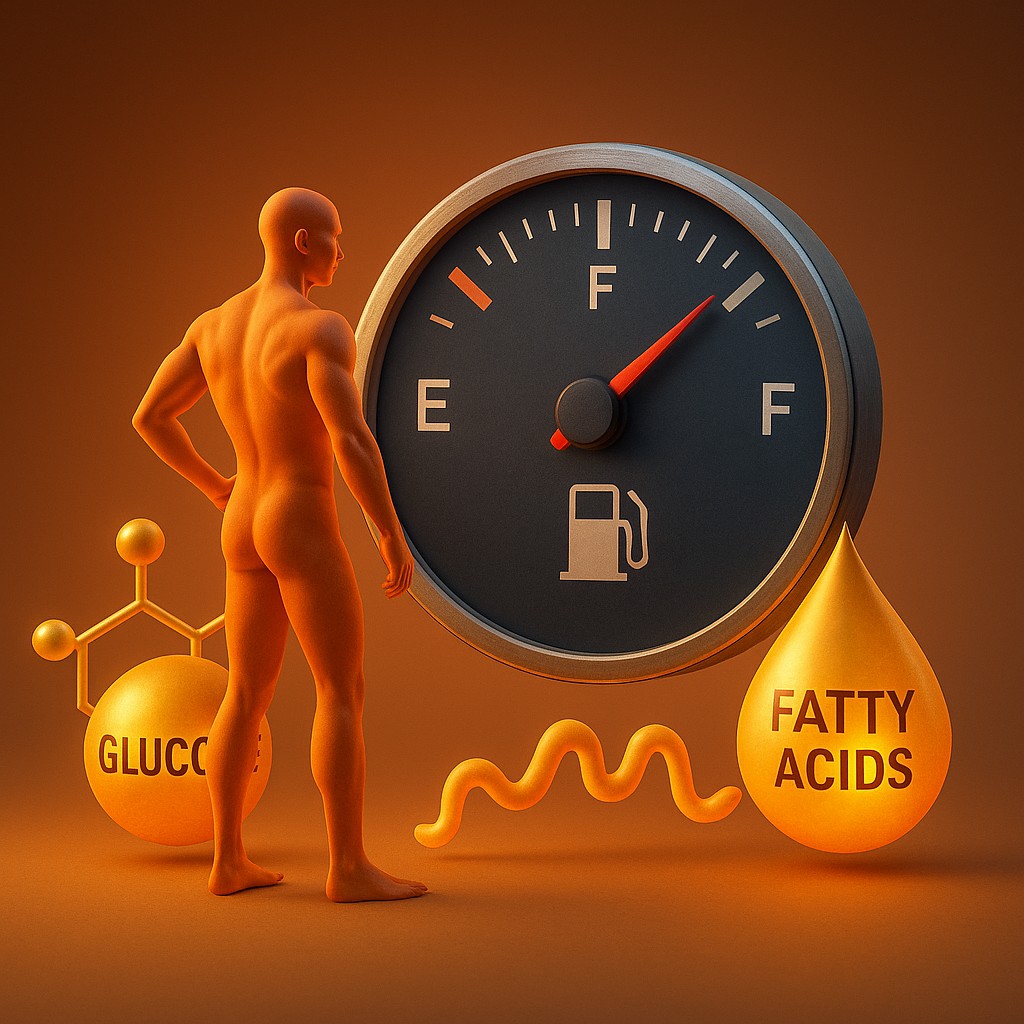
Imagine waking up in a world where your car only runs if you are standing at a gas station with the nozzle in the tank. The moment you pull away, the engine sputters and dies because it cannot access the spare tank or the battery. This sounds like an engineering disaster, yet it is exactly how many people live their biological lives. They are trapped in a cycle of constant refueling, feeling a surge of energy after a meal followed by "hangry" irritability and a crash just three hours later. This exhaustion isn't necessarily a lack of willpower or calories; usually, it is a sign that the body has forgotten how to use its backup fuel sources.
The human body is designed to be the ultimate survival machine. It is a hybrid vehicle capable of burning both fast-acting sugars and long-burning fats. This ability is called metabolic flexibility. It is the secret reason why some people can skip a lunch and feel fine while others fade into a cloud of brain fog. By understanding how our internal power plants switch between these fuels, we can stop being slaves to our next snack and become masters of our own energy. It isn't just about what we eat, but about teaching our cells how to handle change.
A Tale of Two Fuels
To understand how our bodies manage energy, we have to look at the two main players: glucose and fatty acids. Glucose, or blood sugar, is like high-octane racing fuel. It is easy to burn and provides immediate energy. Your body prefers it when you are doing something intense or have just finished a meal. However, the body can only store a tiny amount of glucose in the liver and muscles. Once those small tanks are full, the extra energy has to go somewhere else. That "somewhere else" is usually our fat stores, which act like a massive tanker truck following the car.
Fatty acids are the slow-burning logs on the fire. They provide a steady, reliable stream of energy that can last for days or even weeks. In a perfect world, when your blood sugar drops because you haven't eaten for a few hours, your body should move seamlessly to burning fat. This transition is supposed to be so smooth that you barely notice it. However, because we snack constantly and eat so many processed carbs, many of us have lost the "switch." We are so used to a steady drip of sugar that our fat-burning machinery has grown rusty and slow from lack of use.
The Biological Switchboard: The Role of Insulin
The conductor of this energy orchestra is a hormone called insulin. Think of insulin as a traffic warden at a busy intersection. When you eat, especially carbohydrates, your blood sugar rises and the pancreas releases insulin. The warden blows his whistle and directs all that sugar into your cells to be used or stored. Crucially, as long as insulin levels are high, the warden also puts up a giant "Stop" sign in front of your fat stores. The body will not burn much fat while insulin is high because it thinks there is plenty of easy fuel available in the blood.
Metabolic flexibility is simply the body's ability to lower insulin levels quickly once a meal is processed. This lets the "Stop" sign come down so fat burning can begin. In someone who is "metabolically stiff," insulin levels stay high, or the cells become "numb" to the hormone-a state called insulin resistance. When this happens, the body stays in storage mode even when the stomach is empty. You might have 50,000 calories of energy stored on your hips or belly, but because the chemical signal to unlock those stores is blocked, your brain thinks it is starving. This is why you might crave a doughnut even though you have plenty of fuel on board.
Mitochondria: The Cellular Engines
While insulin manages the signals, the actual work of burning fuel happens inside the mitochondria. These are the bean-shaped powerhouses inside your cells that take oxygen and nutrients and turn them into ATP, the "battery" or universal currency of biological energy. A metabolically flexible person has "fit" mitochondria that are great at switching their internal gears. To burn glucose, the mitochondria use one set of enzymes; to burn fat, they use another. If you only ever feed them glucose, they eventually stop making the tools needed to burn fat.
Keeping mitochondria healthy is like keeping a fireplace clean. If you only burn cheap, sappy wood, the chimney gets clogged with soot. Glucose is a "messy" fuel in large amounts; it produces more oxidative stress (a type of cellular wear and tear) and waste than fat does. Fat, on the other hand, is a clean-burning fuel that produces high energy with fewer "exhaust" fumes. When your mitochondria are healthy and numerous, they process both fuels well. This allows you to stay sharp and strong regardless of when you last ate.
Comparing Metabolic States
To see how these two states differ in daily life, look at the table below. It compares a flexible metabolism with one that is stuck in "sugar-burning" mode.
| Feature |
Metabolically Flexible |
Metabolically Inflexible |
| Fuel Source |
Switches easily between glucose and fat |
Relies mostly on glucose and sugar |
| Energy Levels |
Steady throughout the day |
Peaks and crashes (the "afternoon slump") |
| Hunger Cues |
Gradual, manageable hunger |
Frequent "hangry" moods and cravings |
| Fasting Ability |
Can skip a meal without stress |
Skipping a meal causes anger and fog |
| Exercise Type |
Burns fat at low intensity, sugar at high |
Struggles to burn fat even at low intensity |
| Weight Management |
Easier to maintain or lose body fat |
Body holds onto fat even when eating less |
Breaking the Cycle of Metabolic Gridlock
If you find yourself on the "inflexible" side of the table, the good news is that metabolic flexibility is a skill you can practice, not a fixed trait. You can retrain your body to find its "switch" by challenging the system. One of the best ways to do this is through variety. If you always eat the same high-carb breakfast at 7:00 AM, your body never has a reason to look elsewhere for energy. By delaying breakfast occasionally or eating fewer carbs for a while, you force the body to go looking for that stored fat.
Exercise is another powerful tool. Physical activity, particularly "zone two" cardio-like walking, light jogging, or cycling where you can still hold a conversation-specifically trains the mitochondria to burn fat. on the other hand, high-intensity interval training (HIIT) burns through stored glucose fast. This creates a "vacuum" that encourages the body to switch back to fat burning more quickly once the workout ends. By giving your body different energy demands, you are teaching it to be a more versatile survivor.
Common Myths About Fuel Switching
A common myth is that you must be on a "keto" or zero-carb diet to burn fat. This is a misunderstanding. While a very low-carb diet forces the body to burn fat, the goal isn't to be stuck in "fat-burning only" mode. If someone avoids carbs for years, they can actually become "glucose inflexible," meaning their body struggles to handle a piece of fruit or a slice of bread.
The real goal is the middle ground: the ability to eat a bowl of pasta and burn it off well, but also the ability to go for a six-hour hike with nothing but water and feel energized. Another misconception is that "fat burning" only happens during exercise. In reality, a healthy person burns most of their fat while sitting still or sleeping. If your metabolism is flexible, your body defaults to fat-burning during low-demand activities, saving your precious glucose for when you need to sprint or solve a hard problem at work.
Building a Resilient System
Building metabolic flexibility is an investment in your future. It provides a level of freedom that is rare today: freedom from being controlled by your blood sugar. When you stop hitting a wall at 3:00 PM, your productivity rises, your mood stabilizes, and your long-term health markers, such as blood pressure, often improve. It starts with small changes that tell your cells it is time to wake up and use all the resources they have.
Do not be discouraged if the change feels hard at first. If your body hasn't burned fat as its main fuel in years, the first few times you try to "switch" might cause a temporary headache or some sluggishness. This is just your cellular machinery shaking off the dust. Over time, the switch gets easier, the "Stop" signs vanish, and you will move through your day with the quiet confidence of a hybrid engine that always knows how to keep the lights on.
As you begin this journey, remember that your body is a masterpiece of adaptation. It wants to be efficient and strong. By adding a little variety to how you eat and move, you aren't just changing your waistline; you are reclaiming a natural biological gift. Trust your mitochondria, embrace the challenge of the switch, and enjoy the steady, vibrant energy that comes from being truly free.