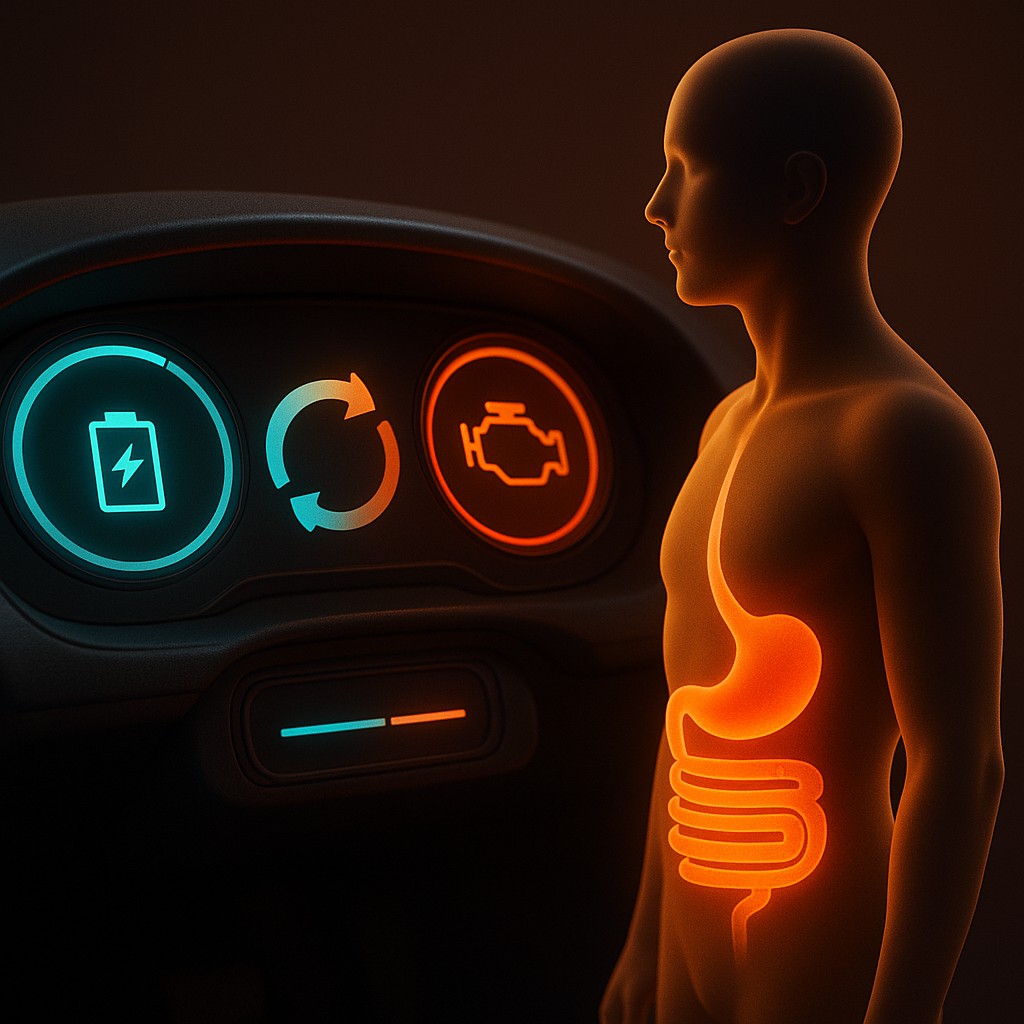
Imagine you own a high-end hybrid car, a masterpiece of engineering built to switch seamlessly between electricity and gasoline. When you are cruising through city traffic, the battery handles the load, whisper-quiet and incredibly efficient. When you hit the highway and need a surge of power for a few hours, the internal combustion engine kicks in without you feeling so much as a shudder in the steering wheel. This transition is so smooth that you rarely even think about it, but it is exactly what allows the car to perform at its best in every environment. Your body is designed with that same level of sophistication. It possesses a biological gear shift that allows you to swap between different fuel sources based on what you are doing and what you last ate.
Unfortunately, many of us have essentially "forgotten" how to shift gears. In a world where snacks are available on every corner and we rarely experience true hunger, our bodies can become metabolically stiff. We get stuck in a mode where we only know how to burn one type of fuel: sugar. This leads to that familiar mid-afternoon crash, the feeling of being "hangry" if a meal is delayed by twenty minutes, and a frustrating inability to tap into our massive internal reservoirs of stored energy. Learning how to reclaim this ability, known as metabolic flexibility, is not just about weight or vanity. It is about restoring a fundamental human capability that provides steady energy, sharper focus, and the freedom to move through the world without being tethered to a constant supply of granola bars.
The Two Primary Tanks in Your Biological Garage
To understand how the body switches fuels, we first have to look at what is in the tanks. Our primary "fast" fuel is glucose, which comes from the carbohydrates we eat, like bread, fruit, or pasta. Glucose is like high-octane racing fuel; it is easy to access, burns quickly, and is essential for short bursts of intense activity. However, our storage capacity for glucose is quite limited. At any given time, we only carry about 2,000 calories worth of it in our muscles and liver. Once that tank is empty, we either need to eat more or find a way to switch to our second, much larger tank: fatty acids.
Fatty acids are our "long-haul" fuel. Even a lean person carries tens of thousands of calories worth of stored body fat, representing a nearly bottomless reservoir of energy. In an ideal metabolic scenario, your body uses glucose when it is plentiful following a meal, but as those levels dip, it smoothly transitions to burning fat. This transition is a hallmark of good health. When you are metabolically flexible, your mitochondria - the tiny power plants inside your cells - are skilled at processing both fuels. They can churn through glucose during a sprint and then pivot to burning fat while you sleep or take a long walk.
The Hormonal Gatekeeper of Energy
The "shift lever" in this biological hybrid system is a hormone you have likely heard of: insulin. Produced by the pancreas, insulin is often called a storage hormone, but it is more helpful to think of it as a traffic controller or a gatekeeper. When you eat, especially when you eat carbs, your blood sugar rises and the pancreas releases insulin to usher that sugar into your cells. Crucially, as long as insulin levels are high, the "gate" to your fat stores remains locked. Insulin effectively tells the body, "We have plenty of fresh fuel coming in right now, so there is no need to burn the stored stuff."
Metabolic flexibility depends on the body's ability to lower insulin levels when food is not present. When insulin drops, the signal is sent to pull fatty acids out of storage and send them to the mitochondria to be converted into energy. The problem arises when we eat so frequently, or eat foods that spike insulin so high, that our levels never truly bottom out. In this state of "hyperinsulinemia" (chronically high insulin), the body stays stuck in sugar-burning mode. Even if you have plenty of stored fat, your cells cannot access it because the hormonal gate is permanently locked. This is why some people feel exhausted and hungry even when they have ample body fat; they are quite literally starving in the midst of plenty because they have lost the flexibility to switch tanks.
Recognizing the Difference Between Flex and Stiffness
How do you know if your internal machinery is humming along or if it has become rusted in place? A metabolically flexible person can usually skip a meal without an emotional or physical collapse. They have steady energy throughout the day rather than a roller coaster of peaks and crashes. On the other hand, metabolic "stiffness" often shows up as intense cravings, brain fog when a meal is late, and a heavy reliance on caffeine or sugar to get through the afternoon slump.
| Feature |
Metabolically Flexible |
Metabolically Stiff |
| Fuel Source |
Switches easily between glucose and fat |
Relies almost exclusively on glucose |
| Energy Levels |
Stable and consistent all day |
Highs after eating, followed by "crashes" |
| Hunger |
Can go 4-6 hours without food |
Becomes "hangry" or shaky if a meal is missed |
| Exercise |
Can do light activity while fasted |
Needs "pre-workout" sugar to function |
| Sleep |
Usually wakes up feeling rested |
Often wakes up hungry or craving sugar |
It is important to note that this is a spectrum, not a permanent diagnosis. You can train your body to be more flexible just as you can train your muscles to be stronger. The goal is not to stay in fat-burning mode forever, nor is it to avoid carbs entirely. Rather, the goal is to have a metabolism that responds to its environment. If you are sitting at a desk, you want to be burning fat. If you are running away from a metaphorical (or literal) tiger, you want to burn glucose with high efficiency.
Reclaiming the Gear Shift Through Movement and Timing
The most effective way to re-educate your metabolism is to create situations where the body is forced to practice switching. Exercise is a powerful teacher here. When you work out, especially at a low to moderate intensity like a brisk walk or a light jog, your muscles demand energy. If you do some of this activity in a "fasted" state, such as before breakfast, you are essentially forcing your body to look at its fat stores because there is no incoming glucose to use. Over time, your mitochondria become more efficient at processing those fatty acids, making the transition feel easier and more natural.
Another key strategy involves the "when" of eating. Every time we eat, we pause fat burning to handle the incoming nutrients. By extending the window between meals, often called time-restricted feeding, we give our insulin levels a chance to drop to a baseline level. This low-insulin environment is the training ground for metabolic flexibility. It is not necessarily about eating fewer calories overall, but about giving the body a consistent period of time each day where it is not being told to store energy, but rather to release it. This allows the enzymes responsible for fat burning to "wake up" after years of disuse.
Cellular Engines and Mitochondrial Health
At the deepest level, metabolic flexibility reflects the health of your mitochondria. Think of mitochondria as the engines inside your cells. If these engines are "dirty" or damaged due to overeating and a lack of movement, they become picky eaters. They might only be able to process glucose because burning fat is a more complex chemical process with more steps that requires healthier machinery. When we challenge our bodies through varied movement and periods of fasting, we stimulate a process called mitochondrial biogenesis, which is the creation of new, more efficient mitochondria.
This cellular renewal leads to the "limitless" feeling often described by people who have regained their flexibility. When your cells are packed with healthy, high-functioning mitochondria, you become much more resilient to daily stress. You no longer fear a missed lunch because your cells simply shrug and start burning last night's dinner (stored as fat) instead. This physiological resilience is one of the greatest benefits of metabolic flexibility, providing a buffer against the rigors of the modern world and ensuring your "hybrid engine" is always ready for whatever the road throws your way.