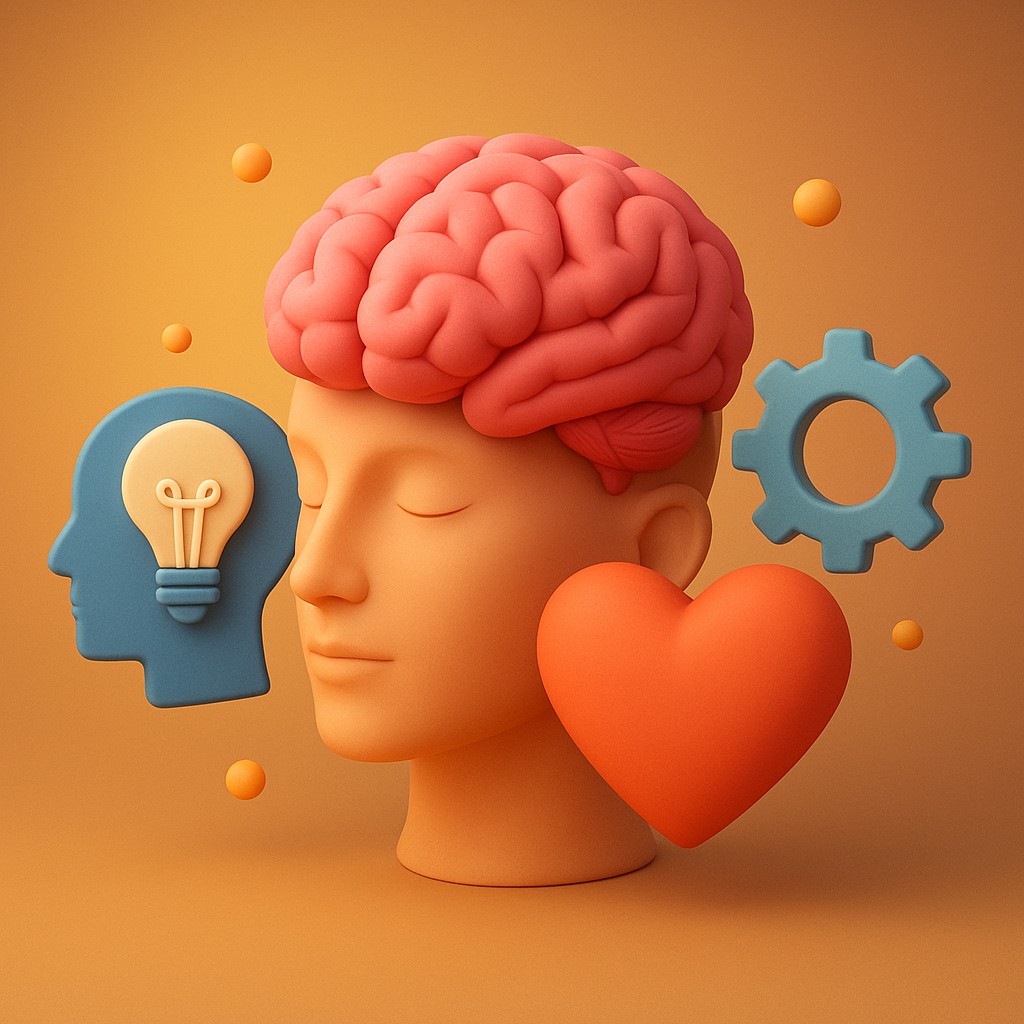
You’ve probably met someone who felt “smart” in a way that didn’t fit the usual stereotype. They might not be the loudest, the best dressed, or the one who floods the room with trivia like a human search engine. But after you talk with them, you feel clearer, calmer, and a bit more able to think. That is often what high intelligence looks like when it shows up in both the mind and the heart.
The reality is that intelligence is not just raw brainpower. Mental intelligence helps a person reason, learn, and solve problems. Emotional intelligence helps a person handle feelings, relationships, and conflict without burning everything down. When both are strong, you get someone who can deal with complicated stuff without acting complicated, and who can be honest without being cruel. That mix is rarer than people think, partly because it tends to look quieter than the usual “genius” outfit.
What follows is a practical tour of the signs, habits, and thinking patterns that often show up when someone is highly intelligent in both ways, plus a few myths that deserve to be politely shown the door.
The “two-engine” mind: sharp thinking plus emotional depth
People often treat mental intelligence and emotional intelligence like they are competing in a school talent show, but they are more like two engines on the same plane. Mental intelligence is the ability to build accurate pictures of reality: spotting patterns, reasoning through uncertainty, learning fast, and changing your mind when new facts show up. Emotional intelligence is the ability to notice, name, and manage emotions in yourself and others, then use that information wisely instead of reacting on impulse.
When someone has both, their strength shows up in how they move through situations, not just in what they know. They can handle uncertainty without panicking, disagreement without putting on a show, and feedback without falling apart. They are often curious in a way that feels open, not like an interrogation. And they make other people feel smarter too, which is a quiet kind of power.
An easy way to remember the difference is this: mental intelligence asks, “What’s true?” Emotional intelligence asks, “What’s happening in me and between us?” A highly intelligent person keeps both questions in play at the same time.
How mentally sharp people think when nobody is watching
High mental intelligence is not mainly about speed, it is about quality control. Some very smart people do think quickly, but the more reliable sign is how they manage their thinking under stress, uncertainty, and temptation. They do not just generate ideas, they check them, test them, and improve them.
A classic sign is being comfortable saying, “I don’t know.” Not in a dramatic way, but in a calm, accurate way. Instead of rushing to fill in the blanks, they note the uncertainty and keep moving, like a good scientist with a notebook. They also ask better questions than most people because they are trying to find the real problem, not just the loudest symptom.
They often think in layers. First, they build a simple explanation. Then they add detail only when it makes things more accurate. That lets them speak plainly without oversimplifying, and handle complexity without becoming confusing. You will hear phrases like, “At a high level…” or “The simplest version is…” and then, if needed, “Here’s the catch.”
Common mental habits that show up in daily life
A mentally sharp person often does several of these without trying:
- They change their beliefs quickly when the evidence changes. Pride is not in charge of the research.
- They separate what they saw from what they assumed. “He didn’t reply” is not the same as “He’s ignoring me.”
- They look for base rates and context. They ask, “How often does this happen in general?” before calling something rare.
- They can hold two competing ideas without instantly picking a side. Not because they can’t decide, but because reality is often mixed.
- They notice what would change their mind. If nothing could, it is not a belief, it is a badge.
One more giveaway: they don’t confuse cynicism with intelligence. Cynicism is easy, it is basically fear wearing sunglasses. High mental intelligence can be skeptical, but it stays open enough to keep learning.
Emotional intelligence: the quiet superpower you can actually feel
If mental intelligence is about accurate thinking, emotional intelligence is about accurate relating. People with high emotional intelligence pick up emotional signals early, including their own. They notice the first spark of frustration, defensiveness, or shame and step in before it turns into a full Broadway show.
They also have a solid inner vocabulary for feelings. Not in a dramatic way, but in a precise way: disappointed, not “fine”; anxious, not “just tired.” That precision matters because naming an emotion often loosens its grip and helps you choose what to do next. People who can’t name what they feel often manage emotions through impulsive moves, passive aggression, or sudden “honesty” that hits like a brick.
Emotionally intelligent people are also better at fixing relationships after a rupture. They don’t treat conflict like a courtroom where someone has to be guilty. They treat it more like a navigation problem: “Where did we lose each other, and how do we get back?” They can apologize cleanly without making it about their pain, and they can accept apologies without charging interest.
What their emotional skill looks like in real conversations
You will often notice patterns like these:
- They listen to understand, not to reload. Their response fits what was actually said, not what they feared was said.
- They validate feelings without agreeing with bad conclusions. “I get why you’d feel hurt” is not the same as “You’re right to attack them.”
- They set boundaries without being cruel. Clear, calm, and consistent beats dramatic and vague.
- They don’t punish honesty. If someone shares a hard truth, they don’t strike back, they process it.
A major sign is that they can stay warm while staying firm. They don’t confuse kindness with being a doormat, and they don’t confuse dominance with strength.
The combined effect: what’s different about how they act
When mental and emotional intelligence come together, you get someone who can handle complexity and people at the same time. They don’t just solve problems, they solve the right problems, with minimal damage along the way. They notice the human limits that make “perfect solutions” fall apart, like pride, fatigue, confusion, and incentives.
They usually communicate with clarity and tact. Tact does not mean sugarcoating. It means telling the truth in a way the other person can actually take in. They can deliver a hard message without humiliating anyone, including themselves. They are more likely to say, “Here’s what I’m concerned about,” than “This is stupid.”
They also manage their energy wisely. Instead of arguing every point, they pick their battles like someone who values their time. They are not always calm, but they are rarely chaotic. And if they do lose their cool, they recover quickly and take responsibility, which is its own kind of emotional fitness.
A quick comparison of surface behaviors vs deeper explanations
| What you notice |
What it often signals |
What it is not |
| They pause before answering |
They are thinking and checking assumptions |
Being slow or unsure |
| They ask clarifying questions |
They want the real problem, not the loud one |
Being difficult or pedantic |
| They admit mistakes |
Strong self-worth and a focus on learning |
Weakness or lack of authority |
| They stay calm in conflict |
Good self-control and perspective |
Not caring or being “cold” |
| They change their mind |
Flexible thinking guided by evidence |
Being flaky or inconsistent |
| They use simple language |
Real understanding and respect for the listener |
Lack of sophistication |
This table has a point: some of the best intelligence looks like restraint.
Signs people get wrong: myths that keep us confused
A lot of intelligence myths stick around because they make great movies. Real life is less dramatic, but more useful. Here are a few ideas worth letting go.
Myth 1: Highly intelligent people are always the smartest voice in the room
Not always. Many choose when to speak, especially if they sense the conversation is more about status than truth. They may let others talk first so they can gather information. Sometimes the smartest move is to watch quietly and speak only when it will actually help.
Myth 2: Emotional intelligence means being “nice” all the time
No. Emotional intelligence means being skilled with emotions, including saying no, giving feedback, and letting people feel disappointed. Someone who never upsets anyone often isn’t emotionally intelligent, they’re avoiding conflict. The emotionally intelligent person can handle short-term discomfort to prevent long-term damage.
Myth 3: Genius looks like effortless perfection
Many highly intelligent people struggle, procrastinate, or doubt themselves. Intelligence doesn’t remove the human part of life, it just changes how you deal with it. Also, people who learn quickly may notice more clearly what they don’t know, which can look like uncertainty. That isn’t weakness, it is accuracy.
Myth 4: High intelligence equals high empathy
Empathy is not automatic. Some mentally brilliant people are emotionally awkward, especially if they were praised only for performance, not for connection. The mix of mental and emotional intelligence is powerful partly because it’s not guaranteed. It gets built through reflection, feedback, and practice.
The inner voice: what they tend to say to themselves
If you could hear the self-talk of someone who is highly intelligent in both ways, it would sound less like motivational slogans and more like solid coaching. Their words lower panic and increase choice. Instead of “This is a disaster,” they might think, “This is messy, what’s the next useful step?”
They also question their own stories. When they feel offended, they might ask, “What story am I telling myself right now?” That one question prevents a lot of unnecessary fights. They treat their feelings as real, but they don’t assume their interpretation is complete. That is a smart way to respect yourself without letting your emotions run your life.
And they are surprisingly kind to their future self. They plan in a way that expects fatigue, temptation, and time limits. They don’t treat willpower like it never runs out. They use systems, reminders, and boundaries because they know good judgment is easier when you’re not constantly wrestling your own chaos.
How they handle relationships, leadership, and conflict
In relationships, highly intelligent people are usually steady rather than dramatic. They don’t use confusion as a strategy. They say what they mean, and they mean what they say, which sounds basic until you date in the modern world and realize how rare that is.
In leadership, they often have “high standards, low ego.” They push for quality, but they don’t need to be the hero. They give credit fast and take responsibility even faster. They also understand motivation: people do better work when they feel safe enough to tell the truth and challenged enough to grow. So they build clarity, not fear.
In conflict, they do three things well: slow down escalation, find the real issue, and aim for repair. They can say, “I think we’re both tense. Can we reset?” which is an advanced move because it puts solving ahead of winning. They also don’t confuse intensity with truth. Someone can feel something strongly and still be wrong, and they handle that with care.
How to spot the real thing without turning it into a personality quiz
You don’t need to grade someone’s intelligence like you’re hiring for a spaceship. The most reliable signs are patterns over time, especially under stress. Notice how someone acts when they’re wrong, criticized, tired, or disagreed with. That’s where both kinds of intelligence show up.
A simple checklist is “clarity, curiosity, and clean repair.” Clarity means they communicate and think in ways that reduce confusion. Curiosity means they want understanding, not dominance. Clean repair means when something goes wrong, they address it directly and respectfully instead of pretending nothing happened or dragging it out for weeks.
Also notice how you feel after being with them. Do you feel more grounded, more capable, and more honest with yourself? That doesn’t mean they always agree with you. Often it means they helped you think better and feel safer at the same time.
Becoming more mentally and emotionally intelligent (without becoming insufferable)
The good news is that these traits aren’t fixed, like winning a personality lottery. You can practice them. Start small: when you feel certain, ask what evidence would change your mind. When you feel emotional, name the feeling precisely and figure out what it’s asking for. When you disagree, try to describe the other person’s view so well they’d say, “Yes, that’s it.”
You can also build a habit of going “one beat slower.” A small pause before you speak, react, send the text, or fire off the email can save relationships and reputations. In that pause, ask: “Is my goal to be right, or to be effective?” Highly intelligent people often choose effective, and they still end up right more often than not.
Finally, treat growth like a craft. Read widely, ask for feedback from people who won’t flatter you, and think after hard moments instead of replaying them like a mental blooper reel. Every time you choose curiosity over ego, you strengthen both engines.
Intelligence, at its most impressive, isn’t a spotlight you stand under. It’s a lamp you carry, one that helps you and others see more clearly. When you build both mental sharpness and emotional skill, you become someone who can think honestly, feel cleanly, and act wisely, even when life gets weird. And life will get weird, so you might as well bring a good lamp.