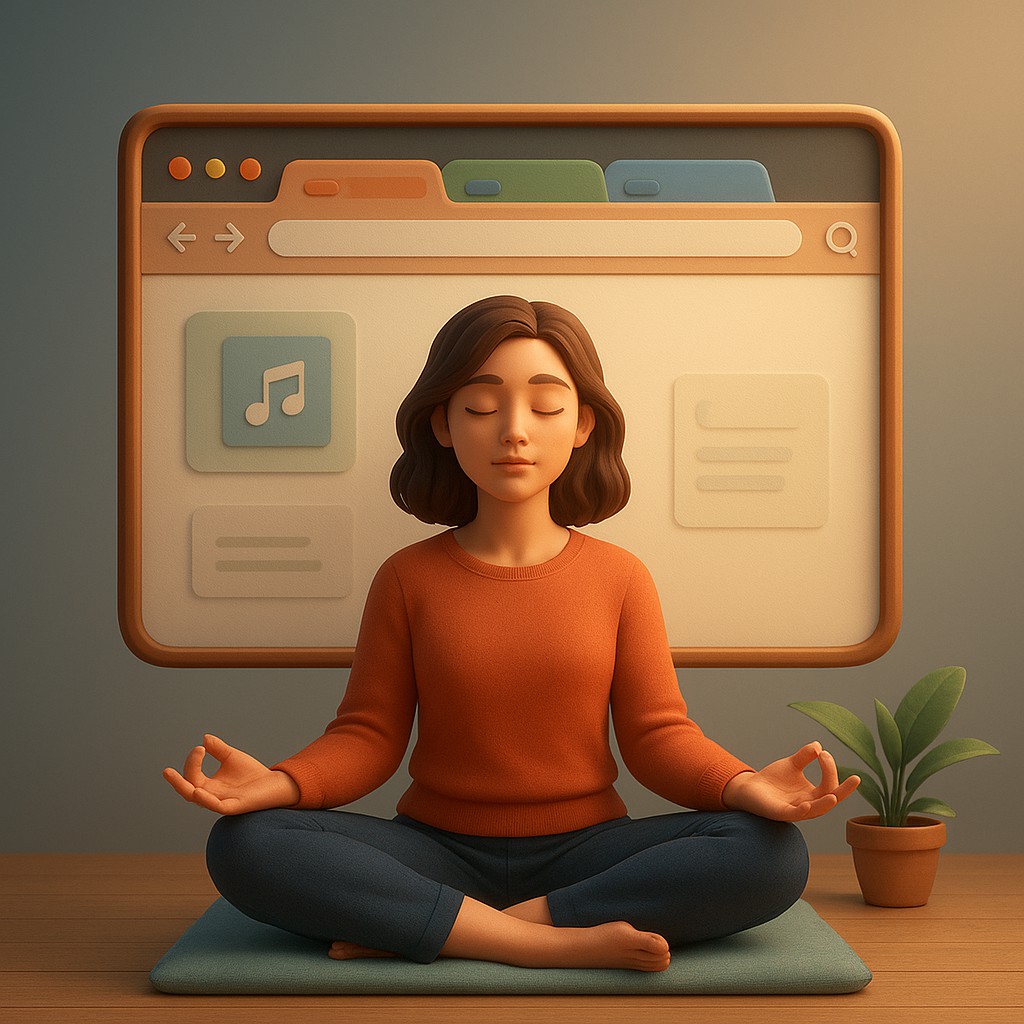
Your mind is like a browser with 37 tabs open, one of them playing music, and you cannot find which one. You can still function, technically, but everything feels louder than it needs to. Meditation is not a magical "close all tabs" button. It is more like learning to notice what is open, decide what deserves attention, and stop clicking "refresh" on the same anxious thought.
A lot of people try meditation because stress is draining, sleep is hit-or-miss, and modern life keeps promising you can calm down later. But meditation is not just for emergencies. It is also mental training, like working out your body: not because something is broken, but because you want more control, steadiness, and ease.
If you ever tried meditating and thought, "Well, I failed immediately," congratulations, you are already doing the key part: noticing what your mind does. The rest of this guide shows a practical way to meditate, what benefits you can realistically expect, and how to avoid the common myths that make meditation sound weirder than it is.
What meditation actually is (and what it is not)
Meditation is mental training. You practice paying attention on purpose, notice when attention wanders, and return it gently. That cycle - focus, wander, return - is not a mistake. It is the repetition that builds the skill. If meditation were a gym workout, wandering would be the rep, not the failure.
It is also not the same as "relaxing," though relaxation often follows. Some sessions feel peaceful, others feel restless, emotional, or boring. A good session is not the one where you feel blissful. A good session is the one you showed up for and practiced honestly.
Meditation is not a personality transplant, a religious requirement, or a vow of constant positivity. You will still have awkward conversations and sometimes eat cereal for dinner. What changes is your relationship to your thoughts and feelings. Instead of being dragged around by them like a dog pulling on a leash, you learn to hold the leash.
The science-backed benefits you can expect over time
Meditation has been studied in many forms, especially mindfulness practices. The research is not magic and not perfect, but the overall picture is encouraging: training attention and awareness tends to improve well-being for many people when practiced consistently. Think of the benefits as "more choice" rather than "no problems."
One of the most reliable effects is better emotional regulation. When you meditate, you practice noticing emotions early, before they take over your whole body. Over time, this creates more space between trigger and reaction. That space is where better decisions live, like not sending the spicy email draft.
Meditation is also linked to lower perceived stress and fewer anxiety symptoms for many people, especially when paired with healthy routines and, when needed, professional help. It can help sleep by reducing rumination, the mental replay feature that is only useful when you are editing a novel. Some people notice better focus, not because their minds stop wandering, but because they get faster at noticing wandering and returning.
Here are realistic benefits people often report after a few weeks to a few months of practice:
- More awareness of thoughts and habits, especially unhelpful loops
- Better ability to calm the nervous system after stress
- Increased patience and less reactivity in conversations
- Improved concentration for everyday tasks
- Greater self-compassion, meaning you stop narrating your life like a harsh sports commentator
Meditation can also support physical health indirectly. Stress affects blood pressure, inflammation, and sleep, so reducing stress responses can have follow-on effects. It is not a substitute for medical care, but it can be a meaningful companion to it.
A simple, reliable meditation method you can start today
If you learn one technique, learn this: sit, choose an anchor, notice distraction, return. That is the whole game. The point is not to win by never getting distracted. The point is to keep playing gently.
Step 1: Set up your environment and posture
Pick a time and place where you can be uninterrupted for a few minutes. Silence is nice but not required, and you do not need a candle, a gong, or a monastery retreat. Sit on a chair with your feet on the floor, or on a cushion with legs crossed. Keep your spine upright but not stiff, as if you are balancing a book on your head that you actually want to stay there.
Let your hands rest where they are comfortable. Soften your jaw. If closing your eyes makes you sleepy, keep them slightly open with a soft gaze.
Step 2: Choose an “anchor” for attention
An anchor is something you pay attention to on purpose. The most common one is the breath, because it is always with you and needs no gear. You can focus on the air at the nostrils, the rise and fall of the chest, or the belly expanding and contracting. Pick one spot and stay with it for the session.
If the breath feels uncomfortable, choose another anchor like sounds, points of contact (feet on the floor, hands on thighs), or a gentle phrase repeated silently.
Step 3: Do the core cycle: notice, label, return
You focus on the anchor. Your mind wanders. You notice it. You return. That is one rep.
A helpful tweak is a light mental label when you notice distraction. Use something simple like "thinking," "planning," "worrying," or "remembering." The label is not a scolding. It helps you unhook from the thought. Then return attention to the anchor, setting your focus down like a feather, not slamming a door.
Step 4: End with a small, kind finish
When your timer ends, do not jump up like a toast popper. Take a deeper breath. Notice how you feel, even if the answer is "a bit restless." Say one sentence of kindness: "Good job showing up." Then continue your day, ideally without immediately arguing with someone online.
A beginner-friendly timing plan
Start small so your brain does not treat meditation like a suspicious new chore. Five minutes daily beats forty minutes once a week.
- Week 1: 5 minutes per day
- Week 2: 7 to 10 minutes per day
- Week 3: 10 to 15 minutes per day
- Week 4 and beyond: 15 to 20 minutes per day, or split into two short sessions
Consistency matters more than duration. Meditation is built from ordinary days, not heroic ones.
Which style fits you? A practical comparison
There are many forms of meditation, and choosing one can feel like scrolling a menu where everything sounds healthy. The secret is that most styles train similar skills: attention, awareness, and a steadier relationship with experience. Pick what you will actually do.
| Meditation style |
What you pay attention to |
Best for |
Common beginner snag |
| Breath-focused mindfulness |
Breath sensations |
Focus, stress reduction, daily practice |
"My mind will not stop," which is normal |
| Body scan |
Sensations moving through the body |
Relaxation, sleep support, tension awareness |
Getting impatient halfway through |
| Loving-kindness (metta) |
Phrases of goodwill toward self and others |
Self-compassion, reducing hostility |
Feeling "fake" at first |
| Open awareness |
Whatever arises (thoughts, sounds, sensations) |
Emotional insight, flexibility |
Getting lost in thought without noticing |
| Walking meditation |
Sensation of steps and movement |
Restless energy, mindful movement |
Walking too fast and drifting |
If you are unsure, start with breath-focused mindfulness for two weeks. Then try one new style and see what sticks.
Common myths that make meditation harder than it needs to be
A few myths keep people from benefiting, mostly because they make meditation sound like a mystical performance review. Let us retire them politely.
Myth 1: “Meditation means emptying your mind”
No. Minds make thoughts the way lungs make breathing. The goal is not to stop thoughts, but to stop being pulled around by them. Noticing you are thinking means awareness is doing its job.
Myth 2: “If I’m doing it right, I’ll feel calm”
Sometimes you will. Sometimes you will feel annoyed, sad, distracted, or like reorganizing your spice rack. Meditation brings you closer to what is already happening, which can include uncomfortable stuff. The win is learning to stay present without immediately trying to escape.
Myth 3: “I’m bad at meditation”
If you can notice you are distracted, you are meditating. Saying you are bad at meditation usually means "I noticed my mind is busy," which is like saying you are bad at swimming because you got wet.
Myth 4: “Meditation is only for spiritual people”
Meditation can be spiritual, but it does not have to be. You can treat it like mental fitness. No incense required, unless you like incense, in which case, live your truth.
Making meditation stick in real life (without becoming a monk)
The biggest challenge is not technique. It is remembering to practice when you are busy, tired, or convinced you will "do it later." The trick is to make meditation frictionless and tied to your routine.
Start by attaching it to something you already do. This is habit glue. For example: meditate right after brushing your teeth, before coffee, or after shutting down your laptop. Keep the bar low enough that you do not bargain with yourself. If five minutes feels like too much, do two. You are building identity: "I am someone who practices."
A few practical strategies that help:
- Use a timer so you are not checking the clock every few seconds
- Pick a consistent cue (same chair, same corner, same time)
- Expect resistance and treat it as part of the practice, not a sign to quit
- Track gently with a calendar checkmark, not a guilt spreadsheet
- Try guided meditations if your mind needs training wheels at first
It also helps to bring micro-moments of meditation into your day. One mindful breath before answering a call. Ten seconds of feeling your feet on the ground while the kettle boils. These moments are small, but they teach your nervous system a new default: "We can pause."
Going deeper: working skillfully with thoughts and emotions
Once you can sit for ten minutes without feeling like you are wrestling an octopus, you can use meditation to understand your inner patterns. The goal is not to analyze everything while on the cushion. The goal is to recognize what is happening in real time.
When a strong emotion shows up, try this simple approach:
- Name it: "anxiety," "anger," "sadness," or even "yikes" if that feels truer.
- Feel it in the body: where is it located, and what sensations are present (tightness, heat, buzzing)?
- Allow it to be there for a few breaths without feeding it a story.
- Return to the anchor when you can, even if the emotion stays in the background.
This builds a crucial skill: you learn that emotions are experiences, not orders. Anger can be present without turning into aggression. Anxiety can be present without turning into avoidance. You are teaching your brain, "I can handle this moment."
If you tend to be self-critical, loving-kindness meditation is a strong complement. It uses simple phrases like "May I be safe, may I be healthy, may I live with ease." At first it can feel cheesy, like writing a Valentine to yourself. Over time, it can soften the inner voice that insists you must earn kindness through perfection.
When meditation feels difficult: what to do (and when to get help)
Some discomfort is normal, like restlessness or boredom. But meditation can also bring up intense feelings, especially if you have a history of trauma, panic, or depression. This does not mean meditation is bad, but it does mean you should practice wisely.
If you feel overwhelmed, try these adjustments: meditate with eyes open, shorten the session, switch to a grounding anchor like feet on the floor, or use walking meditation. Guided practices can provide structure and reassurance. And if meditation reliably increases distress, consider working with a qualified teacher or a mental health professional who understands contemplative practices.
Meditation is a tool, not a toughness test. You are allowed to adapt it to your nervous system. The goal is steadiness, not suffering.
Bringing the benefits off the cushion and into your actual life
The real payoff of meditation is not what happens during the session. It is what happens at 3:17 p.m. when someone cuts you off in traffic, or when your phone buzzes with a message that spikes your heart rate. Meditation trains you to notice the surge, pause for half a breath, and choose your response. That half-breath is the difference between automatic and intentional.
Over time, you may catch thoughts earlier. You might notice the start of a spiral and decide not to follow it down the rabbit hole. You might listen more patiently, apologize sooner, or fall asleep without replaying every conversation since 2009. These are quiet wins, but they add up to a life that feels more yours.
Meditation is one of those skills that rewards you for staying a beginner. Every time you sit, you practice meeting your mind as it is, not as you wish it were. Keep it simple, keep it consistent, and keep it kind. A few minutes a day can turn the volume down on chaos and turn the clarity up on what matters, and that is a trade worth making.