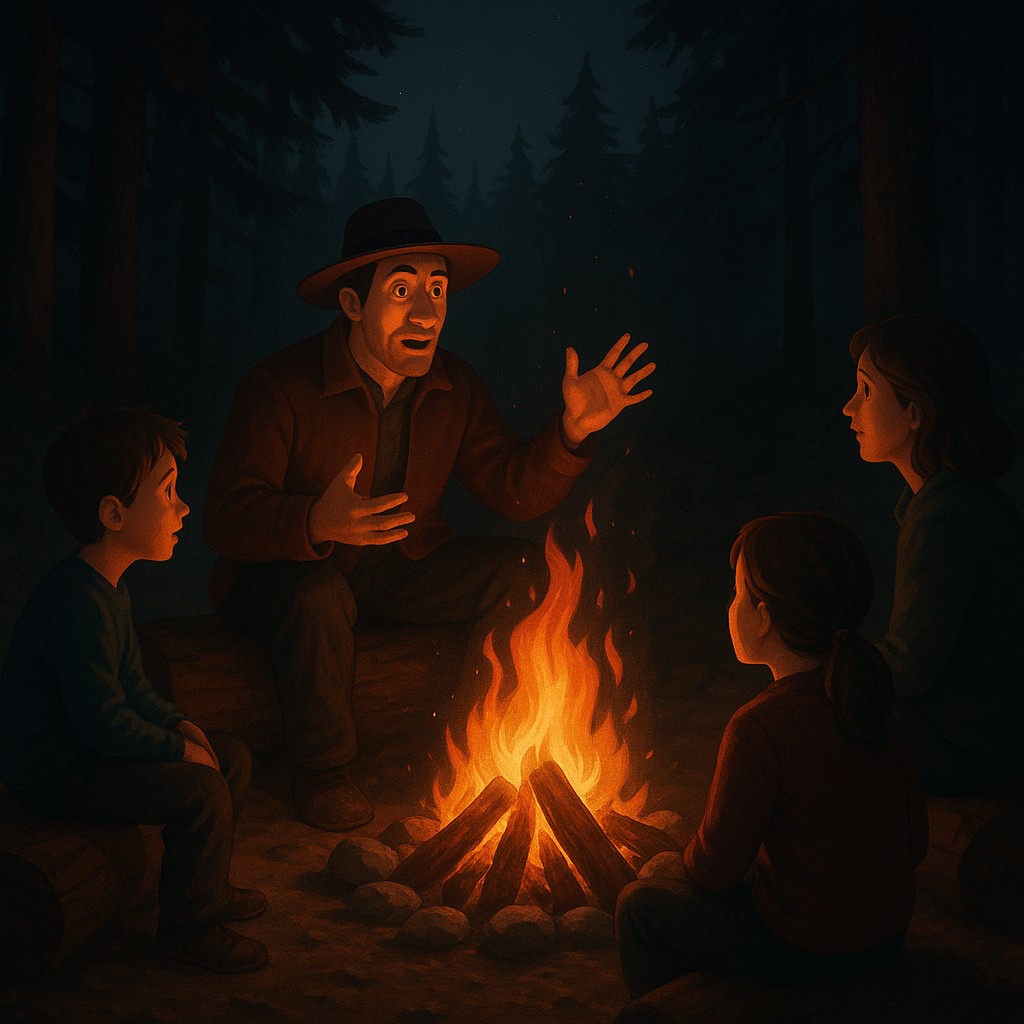
The crackle of dried pine needles, the scent of woodsmoke clinging to your jacket, and the hypnotic dance of orange flames against the black backdrop of the forest create a unique kind of theater. For as long as humans have mastered fire, we have gathered around it to trade legends of our ancestors and fears of the dark. There is a specific magic in the way a campfire narrows the world down to a small circle of light, making every rustle in the bushes or hoot of an owl feel like a guest joining the conversation. To tell a truly great campfire story, you must understand that the fire is your stage, and the silence between your words is just as important as the words themselves.
Choosing the right story is an art form that depends entirely on the vibe of your group. If you have a circle of wide-eyed children, you should probably lean toward something funny or adventurous rather than bone-chilling. However, if you are deep in the wilderness with a group of thrill-seekers, the goal might be to make sure nobody wants to walk back to their tent alone. The best stories feel local, immediate, and just plausible enough to make your listeners glance over their shoulders. Whether you are aiming for laughs, gasps, or a sense of wonder, mastering a few classic narratives will make you the undisputed monarch of the campsite.
The Architecture of a Perfect Spooky Tale
A great scary story is not about the monster; it is about the anticipation of the monster. When you begin a tale like "The Hook" or "The Velvet Ribbon," your voice should be low, forcing your audience to lean in toward the heat of the flames. This movement creates a sense of intimacy and vulnerability. You want to establish a setting that mirrors where you are currently sitting, perhaps mentioning the very woods that surround your campsite. By grounding the supernatural in the familiar, you bridge the gap between fiction and reality, making the stakes feel much higher for everyone listening.
Pacing is your most powerful tool when trying to elicit a genuine shiver. Start slow, providing vivid but mundane details that build a sense of normalcy before introducing the uncanny. The uncanny is that feeling where something is almost right, but not quite - like a house where the doors do not quite close or a person whose smile stays a second too long. If you rush to the jump scare, you lose the chance to build a lasting sense of dread. Instead, stretch out the moments of suspense, using pauses to let the natural sounds of the night do the heavy lifting for you.
To help you decide which type of story fits your current audience, consider the following table. It breaks down the primary categories of campfire narratives and the best time to deploy them during your outdoor excursion.
| Story Type |
Primary Goal |
Best Audience |
The "Vibe" |
| The Jump Scare |
A sudden, loud payoff |
Energetic kids & teens |
High energy and playful |
| The Urban Legend |
Localized, eerie realism |
Adults and older teens |
Unsettling and lingering |
| The "Funny" Scare |
Relief after tension |
All ages |
Lighthearted and bonding |
| The Folk Legend |
Cultural or moral lessons |
Small, quiet groups |
Thoughtful and traditional |
Masterpieces of the Macabre and the Mysterious
One of the absolute pillars of campfire history is the story of "The Golden Arm." This tale is a masterclass in repetition and escalating tension. It tells of a man who, out of greed, steals a golden prosthetic limb from his deceased wife's grave. Every night after, he hears her ghostly voice getting closer and closer, chanting, "Who has my golden arm?" The beauty of this story is that the teller can adapt their voice to be a raspy, terrifying whisper that slowly builds in volume. When the ghost finally "reaches" the thief, the storyteller lunges forward with a shout, usually sending marshmallows flying into the air as the audience jumps in unison.
For those who prefer a more psychological chill, "The Tailypo" is a classic of North American folklore that perfectly utilizes the wooded setting. An old man living in a cabin cuts off the tail of a strange creature to eat it, only to have the creature return night after night, asking for its "tailypo." It is a story about consequences and the feeling of being hunted. What makes it so effective is the description of the creature's claws scratching against the wooden logs of the cabin. When you tell this story, you can use your fingernails to lightly scratch a nearby log or a piece of gear to provide a realistic, skin-crawling sound effect.
If you are looking for something a bit more modern, the "clinking man" or "the escaped patient" tropes offer a more grounded, urban legend feel. These stories often involve a broken-down car on a lonely road, a scratching sound on the roof, and a terrifying discovery the next morning. These work exceptionally well because almost everyone has experienced the anxiety of a car stalling or being stuck in a remote area. They tap into a universal fear of isolation and the breakdown of the technology we usually rely on for safety.
Finding the Humor in the Shadows
Not every story told around a fire needs to lead to a sleepless night. In fact, "gotcha" stories are some of the most beloved traditions in scouting and summer camps. These are stories that build immense, terrifying pressure only to end in a ridiculous pun or a silly physical action. A prime example is the story of the "Bloody Finger." The teller describes a haunted hotel room where every guest is driven out by a ghostly voice moaning about a bloody finger. After a long build-up of several nights of terror, the final protagonist stays in the room and discovers the ghost is just a small spirit holding out a finger and asking, "Does anyone have a Band-Aid?"
These stories serve as an essential palate cleanser. They allow the group to release the adrenaline built up from previous scary stories through laughter. Laughter is a social glue, and a funny campfire story can turn a group of strangers into a tight-knit team. Another favorite involves a "mysterious purple gorilla" or a "pink jellybean," where the protagonist goes through a series of epic, dangerous trials across mountains and oceans just to satisfy a seemingly absurd request. The journey is grand and serious, but the destination is always a punchline that makes everyone groan and giggle simultaneously.
Transitioning from a serious mood to a funny one requires a bit of acting. You have to play the straight man, keeping a perfectly serious face while the story gets more and more ridiculous. The more invested you seem in the absurdity of the plot, the harder the audience will laugh when the payoff hits. This contrast between the dark, atmospheric setting of the campfire and the lightheartedness of the story creates a memorable experience that defines the social aspect of camping.
The Art of the Narrative Performance
To be a legendary storyteller, you must consider your body language and your environment. Using a flashlight held under your chin is a bit of a cliché, but it works for a reason: it creates deep shadows in the eye sockets and makes the teller look less than human. However, you can also use more subtle tricks. Try poking the fire with a stick at a pivotal moment to send a shower of sparks into the air, or stay perfectly still, almost like a statue, to make your listeners focus entirely on your words. A storyteller who gestures wildly might be entertaining, but one who sits perfectly still is often more intimidating.
Voice control is another professional secret. Most people have a tendency to speed up when they get to the exciting parts of a story, but you should do the opposite. Slow down. Make the audience wait for the next sentence. Whisper the parts that are supposed to be scary, and use a booming, authoritative tone for the heroic segments. If you are telling a story about a specific person, give them a subtle vocal quirk or a different accent to distinguish them from the narrator. These small touches make the world of the story feel lived-in and real.
- Know your ending: Never start a story if you do not know exactly how it concludes. The stumble at the end can ruin the entire build-up.
- Engage the senses: Do not just tell us what happened; tell us what it smelled like, how cold the wind was, and the sound of the dry leaves underfoot.
- Customize the setting: If there is a lake nearby, the story should involve a lake. If there is an old barn down the road, that barn is now haunted in your narrative.
- Watch the audience: If people look truly overwhelmed or if small children are getting genuinely upset, it is time to pivot to a funny or "safe" story.
Cultural Wisdom and the Power of Legend
Beyond the screams and the laughs, campfire stories are often our best way to connect with the history of the land and the people who walked it before us. Many cultures use fireside storytelling to pass down "pourquoi" tales - stories that explain why things are the way they are. For example, stories about why the crow is black or how the stars were placed in the sky provide a sense of wonder and connection to the natural world. These stories are less about fear and more about curiosity, making them perfect for the early evening when the sun has not quite disappeared.
Traditional folktales from around the world, like those of Anansi the Spider or the trickster Coyote, teach moral lessons through wit and cleverness. These stories are intellectually satisfying because they often involve a smaller, weaker character outsmarting a larger, more powerful foe. Sharing these legends keeps cultural heritage alive and encourages listeners to think critically about how to solve problems using their brains rather than just brute strength. They remind us that the campfire has been the classroom of humanity for thousands of years, serving as the place where values and ethics were forged.
When you tell these kinds of stories, you are stepping into a lineage of storytellers that stretches back to the dawn of time. There is a weight and a beauty to these narratives that differs from a simple ghost story. They leave the audience looking up at the trees and the stars with a refreshed sense of awe. This is the ultimate goal of the campfire tradition: to make the world feel a little bit larger, a little more mysterious, and a whole lot more interesting than it did before the match was struck.
Standing at the edge of the fire's glow, you hold the power to transport your friends and family to different worlds, different times, and different states of mind. Storytelling is a gift that costs nothing but pays out in lifelong memories and shared bonds that remain long after the embers have turned to grey ash. Whether you have managed to make their skin crawl with a classic urban legend or made them roll with laughter at a ridiculous pun, you have successfully participated in one of the oldest human rituals. Carry these stories with you, practice your delivery, and never forget that as long as there is a flame and an audience, the night is never truly silent. Relax, breathe in the mountain air, and let your imagination lead the way to the next great adventure.