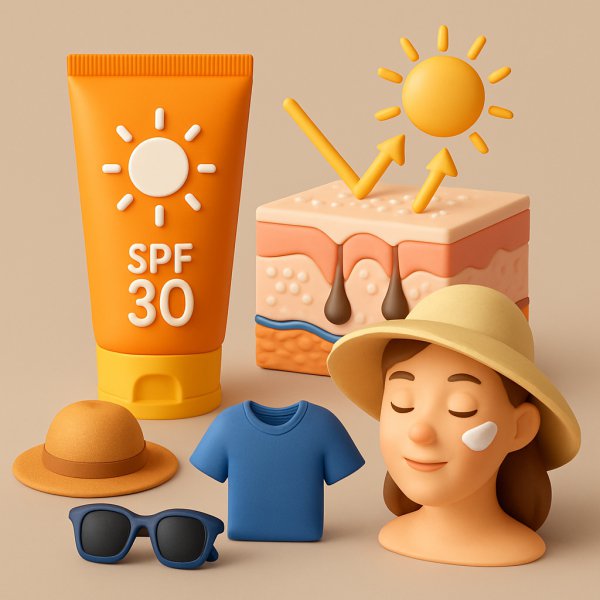
Why sunscreen deserves a standing ovation in your medicine cabinet
Imagine your skin as a well-lived-in book, pages slightly browned at the edges. Every sunbeam is like a tiny photographer, sometimes flattering and sometimes harsh, slowly leaving marks in the form of freckles, lines, and the occasional sunburn. Sunscreen is the unsung archivist that helps preserve those pages, blocking or absorbing damaging ultraviolet rays so your skin ages more gracefully and your cells stay safer. This is not just about vanity, it is about reducing the single biggest preventable risk factor for skin cancer, and that alone makes sunscreen worth mastering.
You probably think you know the basics: wear sunscreen at the beach, not in winter, and higher SPF means better protection. Those are good starting points, but the truth is richer, and more useful, than that. From how different sunscreens physically block light, to the science behind SPF numbers, to practical application tricks that double your real-world protection, there is an elegant logic to the whole topic. Learning this logic helps you pick products that fit your lifestyle, skin type, and environmental concerns, so your sunscreen actually gets used.
This Learning Nib will take you from simple to sophisticated, with memorable metaphors, real-world scenarios, and clear, actionable steps you can use today. Along the way you will encounter common myths and surprising facts, plus quick checklists and reflection prompts so the new knowledge sticks. Think of this as a friendly deep dive into sunscreen, guided by a brilliant friend who likes to be precise, a little witty, and always practical.
How sunlight interacts with your skin: the three guests at the UV party
Sunlight is made of different wavelengths, and not all of them behave the same way when they hit your skin. Ultraviolet B, or UVB, is the short-wave guest that mostly causes sunburn, and it plays a leading role in causing DNA damage that can lead to skin cancer. Ultraviolet A, or UVA, is the long-wave guest that penetrates deeper into the skin, contributing to aging, wrinkles, and some types of DNA damage that increase cancer risk. There is also UVC, but our atmosphere blocks it, so you rarely have to worry about it under natural conditions.
Both UVB and UVA are relevant for protection, which is why we talk about broad-spectrum sunscreens that guard against both. Think of UVB as the flashy stage performer that hurts quickly and gets noticed, while UVA is the slow-acting background player that quietly changes the set over time. The two together explain why you can get tan without burning, or burn without much visible long-term change at first, and why sunscreen must cover both to be truly protective.
What sunscreen actually does: shields, sponges, and light-eating molecules
Sunscreens work in two main ways, using different kinds of active ingredients to protect your skin. Mineral sunscreens, sometimes called physical sunscreens, use tiny particles of zinc oxide or titanium dioxide to reflect and scatter incoming UV light away from the skin, much like a mirror. Chemical sunscreens use organic molecules that absorb UV photons and convert that energy into small amounts of heat, acting more like microscopic sponges that soak up the harmful rays.
Each approach has advantages and trade-offs, and modern products often mix both to balance feel and protection. Mineral filters tend to work immediately on application, are less likely to irritate sensitive skin, and are physically stable under sun exposure. Chemical filters can be thinner, more cosmetically elegant, and often easier to wear under makeup, but some require a bit more time after application before they reach full effectiveness. Choosing between them often comes down to personal preference, skin sensitivity, and environmental priorities.
Quick comparison of mineral and chemical sunscreens
| Feature |
Mineral (zinc oxide, titanium dioxide) |
Chemical (examples: avobenzone, octocrylene) |
| How it protects |
Reflects and scatters UV light |
Absorbs UV and converts to heat |
| Onset of action |
Immediate |
Usually needs ~15-20 minutes |
| Cosmetic feel |
Thicker, may leave white cast (less with micronized particles) |
Often lighter, invisible finish |
| Ideal for |
Sensitive skin, babies over 6 months, reef-safe concerns |
Daily makeup-friendly use, oily skin textures |
| Stability under sun |
Very stable |
Varies, some require stabilizers or combos |
Decoding SPF: the number behind the sunscreen
SPF stands for Sun Protection Factor, and it is a measure of how well a sunscreen protects against UVB-induced erythema, which is the reddening you call sunburn. In simple terms, SPF tells you how much longer you can stay in the sun with sunscreen before getting sunburned, compared with no sunscreen. For example, SPF 30 blocks about 97 percent of UVB, while SPF 50 blocks about 98 percent. The incremental benefit of ultra-high SPFs is real, but small, and does not mean you can stay outside indefinitely without reapplying.
SPF does not measure UVA protection, which is why you should always look for broad-spectrum labels that indicate protection across both UVB and UVA. Also, the SPF figures assume a standardized application amount, roughly 2 milligrams per square centimeter of skin, which most of us do not apply in daily life. That means real-world protection tends to be lower than the label suggests unless you use the right amount and reapply as directed.
How to choose a sunscreen that fits your life and skin
Choosing a sunscreen is part science and part decorating your daily routine with a product you like enough to use. Start with broad-spectrum protection and at least SPF 30 for most daily needs, and SPF 50 for prolonged sun exposure or if you burn easily. Then pick a formulation that suits your skin type and habits: creams and lotions are great for dry skin and full-body use, gels and lightweight fluids work well for oily or acne-prone skin, and sticks or sprays are convenient for touch-ups on the go.
Look at active ingredients if you have concerns: zinc oxide and titanium dioxide are reliable for sensitive skin and are often labeled reef-safe, while chemical filters can provide a more invisible finish for darker skin tones or makeup layering. If you are protecting young children, infants under six months should avoid sunscreen when possible, relying on shade and clothing, and older children can use mineral sunscreens to reduce potential irritation. Finally, consider environmental information, such as local reef-protection regulations, if you frequently swim in fragile marine ecosystems.
Applying sunscreen like a pro: amounts, timing, and technique
The most common reason sunscreen fails is not because it is ineffective, but because it is used incorrectly. Use about a shotglass worth of sunscreen, roughly 30 milliliters, for full body coverage of an average adult in a single application, and about a nickel to quarter-sized dollop for the face alone. Apply sunscreen 15 to 20 minutes before sun exposure to allow chemical filters to bind, and mineral sunscreens to settle, then reapply every two hours, or sooner if you are sweating heavily or swimming.
Don’t forget easy-to-miss spots like the tops of ears, the back of the neck, the part in your hair, the back of your hands, and the tops of your feet. If you wear makeup, either use a sunscreen-first routine, let it set, then layer makeup, or pick a sunscreen designed to be used under makeup. For sprays, be careful to apply generously and rub in liquid residue, and avoid inhalation by spraying into your hands before applying to the face. A small list helps: apply generously, reapply often, protect lips with a lip balm of SPF 30 or higher, and pair sunscreen with protective clothing and shade when possible.
Myths, misunderstandings, and what the science really says
There are many myths floating around about sunscreen, so let us clear out the clutter. First, sunscreen does not prevent vitamin D production entirely; regular short sun exposure helps with vitamin D synthesis, but using sunscreen and sensible sun exposure together rarely causes clinically significant vitamin D deficiency for most people. Second, sunscreen does not cause cancer; extensive research supports its role in reducing skin cancer risk by lowering UV-driven DNA damage. Third, SPF 100 is not twice as protective as SPF 50, it offers only a small added percentage of UVB blocking and can create a false sense of security.
Some people worry about nanoparticles in mineral sunscreens or chemical filters like oxybenzone being endocrine disruptors. Current evidence shows topical sunscreens are safe for most people when used as directed, but if you are concerned about specific ingredients, choose formulations that avoid them, such as broad-spectrum mineral sunscreens with larger-particle zinc oxide. Environmental concerns have led to some regions restricting certain chemicals in marine areas, so look for reef-friendly labels if you swim in coral zones.
Special situations: sports, water, medications, and sensitive skin
If you play water sports, sweat heavily, or are in the water, pick a water-resistant sunscreen and reapply after 40 or 80 minutes depending on the label. No sunscreen is truly waterproof, so regular reapplication and additional protective measures matter. For people on photosensitizing medications, such as certain antibiotics, retinoids, or some psychiatric medications, sunscreen is essential because these drugs can intensify sun damage and burns.
Sensitive or acne-prone skin benefits from lightweight, non-comedogenic formulas, or mineral-only sunscreens that are less likely to irritate. Tinted mineral sunscreens are excellent for covering redness and offering slight cosmetic coverage while still protecting, making them a favorite for people treating hyperpigmentation or melasma. For infants under six months, prioritize shade and protective clothing, and consult a pediatrician before using any sunscreen.
Reflection prompts to help you apply what you learned
- How much sunscreen do you currently use on your face and body, and does that match the recommended amounts described here?
- Which sunscreen formulation sounds most compatible with your skin type, and what would you need to change to make it part of your daily routine?
- Think about a recent day outdoors. Where did you miss applying sunscreen, and what changes can you make to avoid that next time?
Quick practical checklist you can start using today
- Always choose broad-spectrum SPF 30 or higher for daily use, SPF 50 for prolonged sun exposure.
- Apply about 30 milliliters for full-body coverage, and a nickel to quarter-sized amount for the face.
- Apply 15 to 20 minutes before sun exposure, reapply every two hours, or after swimming or heavy sweating.
- Don’t forget ears, neck, hands, lips, and tops of feet, and use clothing or shade as added protection.
- For infants under six months, avoid direct sun and consult a pediatrician before sunscreen use.
A short, inspiring send-off: your future, sun-protected self
Wearing sunscreen is a small, daily habit with outsized rewards. It is an act of practicality and kindness toward the person you will be in five, ten, and twenty years, preserving both health and the skin’s story. With the right product and a little routine discipline, you can enjoy sunlit days with confidence, knowing you are doing the smartest, most proven thing to reduce premature aging and skin cancer risk. Go forth, apply generously, and let the sun be a guest, not a vandal.