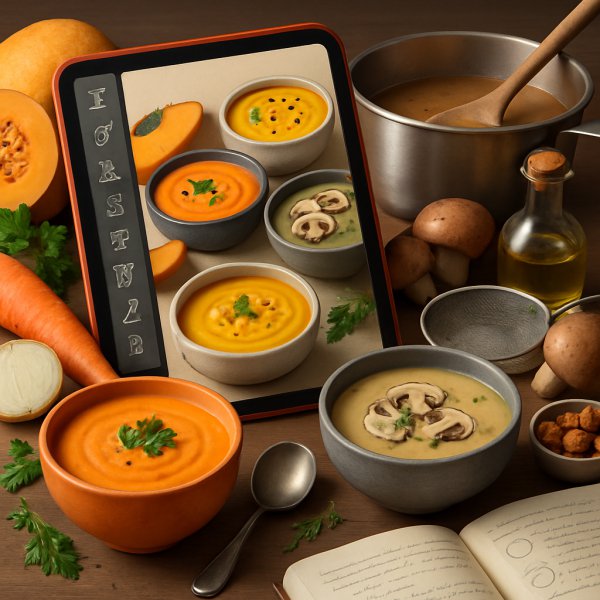
Why this soup deserves your attention and how it can transform an ordinary evening
Imagine a soup that makes you close your eyes at the first spoonful, warms the heart like a well-tailored wool coat, and somehow evokes a childhood memory you cannot explain. A great soup has that quiet power to turn an ordinary day into a memorable moment. You do not only learn a recipe, you learn how to layer flavors, build comfort, and sometimes impress guests without it looking like effort.
Making the "best soup in the world" is not a gastronomic competition. It is an invitation to understand ingredients, master a few simple techniques, and cultivate attention. The best soup for you may differ from someone else’s, but the principles for success are universal. Once you learn them, you gain the freedom to improvise and invent your own perfect version.
In this guide, we will move step by step, from choosing ingredients to the finishing touches that make the difference. We will mix science and poetry: why gentle simmering matters, how subtle caramelization changes everything, and why a pinch of salt at three key moments is more effective than a handful at the end. Expect practical tips, common mistakes demystified, and a few questions to make you think while the pot sings.
If you like cooking with curiosity more than rigidity, you are in the right place. This text is designed as a friendly lesson, sprinkled with tested tips, small stories, and recipes to try today. Sharpen your knives, take out a large pot, and let your palate lead the way.
Understanding the framework: broth, body, and personality of the soup
Every soup rests on three pillars that work like a symphony: the broth, the body, and the personality. The broth is the foundation, providing depth and an aromatic base. The body gives texture and mouthfeel, from ultra-silky to slightly rustic. The personality is the finishing accent that makes your soup unique: spices, herbs, acidity, and touches of fat.
The broth can be vegetable, chicken, beef, fish, or even a blend. A good broth is often made from bones, trimmings, or roasted vegetables, and cooking time matters more than you might think. A clear, short-simmered broth will feel light, while a long-simmered broth will be rich. You do not always have to start from scratch: a good homemade broth frozen in portions, or a quality store-bought broth, works very well when you know how to adjust it.
The body is the technical part. Soups can be clear, based on strained broth, or pureed for a velvety texture. The starch from potatoes, cream, butter, coconut milk, and legumes are all ways to thicken and smooth. Understanding how each thickening agent works lets you choose based on the desired effect: avoid heaviness if you want something light, or lean on cream if you want decadence.
Personality is what you add last: salt, acidity, fresh herbs, flavored oil, or fermented condiments. These accents wake the soup up and prevent boredom. The simple rule is balance: a touch of acid to brighten, a bit of fat to round, something crunchy to contrast, and a strong aromatic note to sign your creation.
Choosing ingredients: freshness, seasonality, and the truth of the produce
Choosing the right ingredients changes everything. A fresh, ripe vegetable will have more developed sugars and will give a richer soup simply by being respected. Favor seasonal vegetables; they taste better and often hold up better after cooking. Root vegetables tolerate long cooking and add body, while greens should be added at the end to preserve color and vibrancy.
Fresh herbs bring a clarity of aroma that dried herbs struggle to match, though dried herbs have their place in long cooks. Whole spices, lightly toasted in a pan before using, release aromas that ground spices lose quickly. For animal products, choose quality when possible: well-roasted bones for a broth, free-range poultry for more flavor.
It helps to keep backup ingredients in the freezer: homemade broth, vegetable trimmings, bread for croutons, and chopped herbs ready to use. These "secret weapons" let you put together a delicious soup quickly or rescue a preparation that lacks depth.
Quick reflection: look around your kitchen—what three quality ingredients can you keep on hand to instantly improve any soup?
Fundamental techniques explained simply and why they work
Searing and caramelizing. When you sauté onions, leeks, or shallots, you trigger the Maillard reaction, which develops sweet, complex flavors. Don’t rush to cover everything with water: let the vegetables color slowly, stirring occasionally. This step builds the aromatic base.
Deglazing. After searing, add a liquid (wine, broth, water) to lift the browned bits from the bottom of the pot. Those bits concentrate much of the flavor. Deglazing is like calling the dish’s ancestors to the table to share their wisdom.
Gentle simmering. Broths and soups prefer consistency over the violence of boiling. A gentle simmer extracts flavors without clouding the broth. If you want a clear soup, skim regularly. If you want maximum richness, reduce slowly to concentrate flavors.
Smoothing and straining. For a velvety soup, blend and strain. Careful blending in a blender or with an immersion blender makes it smooth, but a fine sieve removes any stubborn fibers for a satin texture. Some preparations benefit from a pass through a sieve to remove bitterness from skins or fibrous strands.
Emulsifying. Adding fat to a water-based base may seem contradictory, but it is the key to roundness. Cream, a knob of butter mounted in at the end, or a drizzle of fruity olive oil add binding. Let a soup rest briefly after adding fat so the flavors can marry.
Summary table: vegetables, cooking times, and their role in the soup
| Vegetable |
Approximate cooking time (simmering) |
Main role |
| Carrot |
20-30 minutes |
Natural sweetness, color, body |
| Potato (russet) |
15-25 minutes |
Starch for thickening, smooth texture |
| Leek |
10-20 minutes |
Aromatic sweetness, flavorful base |
| Celeriac |
20-30 minutes |
Earthy flavor, structure and richness |
| Tomato |
10-20 minutes |
Acidity, freshness, color |
| Squash (butternut) |
20-30 minutes |
Sweetness, natural creaminess |
| Mushrooms |
10-15 minutes |
Umami, aromatic depth |
| Spinach/chard |
3-5 minutes |
Color, freshness, green note |
This table is a guide for planning cooking time based on your vegetable mix. Times may vary with piece size and heat level.
Structured recipes: three soups to master, not just follow
- Classic vegetable soup, a versatile base.
- Start by sautéing a chopped onion and a chopped leek in a little oil. Add chopped carrots and potatoes, then a bouquet garni and enough broth to cover. Simmer until tender, blend, and adjust seasoning with salt, pepper, and a squeeze of lemon juice. A spoonful of cream or a pat of butter finishes the texture.
- Why it works: a combination of starch for structure, onion/leek for sweetness, and acidity to brighten.
- Butternut velouté with warm spices.
- Roast cubes of squash with a little oil and salt until lightly caramelized. In the pot, sauté onion and a potato, add hot broth, then the roasted squash. Blend, add a pinch of cumin and nutmeg, and finish with cream or coconut milk.
- Tip: roasting concentrates sugars and adds a smoky-sweet note without smoke.
- Umami mushroom soup, finished with brown butter.
- Sauté mushrooms and shallot until they release and evaporate their liquid, add a little flour to slightly thicken, deglaze with white wine, then cover with broth. Cook gently, blend partially to keep some pieces, and finish with brown butter and parsley.
- This approach plays on texture and umami intensity; the brown butter adds an irresistible toasted note.
These recipes are templates. Once you master them, you can vary ingredients or adjust spices.
Finishes and presentation: the small touch that transforms the soup
A garnish can elevate an ordinary soup into a memorable experience. Reliable ideas: golden croutons, toasted pumpkin seeds, a drizzle of chili oil, lightly salted whipped cream, chopped fresh herbs, or a sprinkle of grated Parmigiano Reggiano. Texture matters: add crunch to contrast the soup’s creaminess.
The final balance often depends on three elements: salt, acidity, fat. Always taste after letting the soup rest a few minutes. If it tastes flat, a drop of vinegar or a squeeze of lemon can wake up the flavors. If the mouthfeel is too thin, a small knob of butter or a splash of olive oil restores roundness.
Visual presentation: serve in a warm bowl, use a swirl of cream to make patterns if you want to impress. But remember: the best presentation is well-executed simplicity.
Practical reflection: what simple garnish could you prepare in advance to improve any soup in 30 seconds?
Common mistakes and how to fix them in no time
Many home cooks think a good soup comes down to blending and salting. Common mistakes are: under-seasoning, cooking too quickly, adding fat at the wrong time, and trying to thicken too late with starch without binding the preparation. Here are quick fixes.
If your soup lacks flavor, follow this order: salt, acidity, fat. Add a little salt first, taste, then a drop of lemon juice or vinegar, taste again, and finally a bit of fat. Acid reveals flavor layers that salt alone can mask.
If the texture is grainy after blending, blend longer, then strain. You can also add a little hot liquid and blend at high speed to emulsify. For a soup that is too thin, reduce it over low heat, or add a cooked, mashed potato to thicken naturally.
If the soup has a bitter or metallic note, a piece of raw potato in the pot will not fix it. Instead, try a pinch of sugar or a bit of cream to round it out, or remove the bitter source if possible.
Useful but not essential equipment: what really makes a difference
You do not need extravagant equipment to make excellent soup. A good heavy-bottomed pot, a sharp knife, and an immersion blender are enough for most soups. A blender provides a silkier texture for larger batches, and a fine-mesh sieve is valuable for an ultra-smooth finish.
A small whisk and a wooden spoon are your allies for emulsifying and tasting. A baking sheet for roasting vegetables adds another flavor dimension. Finally, a thermometer can help for broths, but it is not essential. Technique and attention often replace a missing tool.
Practical tip: keep a small jar of infused olive oil (garlic or chili) in the fridge - it can save many finishing moments.
A bit of science for fun: why these steps work
Understanding a few simple scientific principles gives you creative power. The Maillard reaction, which happens during searing, is a series of reactions between amino acids and reducing sugars that create toasted, complex aromas. The starch in potatoes and squash swells and binds liquids, creating a velvety consistency. Proteins and collagen from bones transform into gelatin during long cooking, giving body to the broth.
Water is a solvent that carries aromatic molecules. Heat dissolves and transforms those compounds, but overcooking can also break down delicate notes, which is why adding some herbs or vegetables at the end matters. Salt, beyond seasoning, changes how other flavors are perceived and increases the solubility of certain aromatic molecules. Playing with these principles makes cooking more predictable and more creative.
Practical exercises: three challenges to improve in a week
- Broth week: make three different broths (vegetable, chicken, roasted bones), taste them plain, and note the differences. Freeze portions for later use.
- Spice awakening: toast seeds (cumin, coriander) and infuse them into a neutral soup. Note how a small amount completely changes the aroma profile.
- Texture lab: make one soup thickened with potato, and another identical one thickened only with cream. Compare the mouthfeel and note which you prefer for different occasions.
These exercises develop your palate, flavor memory, and confidence to improvise.
Debunking myths: what does not make a soup "better"
Persistent misconceptions exist: more cream is always better; exotic spices are necessary for a memorable soup; you must follow a recipe exactly to succeed. The truth is more nuanced. Cream quantity should be chosen based on whether you want heaviness or lightness; often a little is enough. Spices should serve the dish’s idea, not dominate it. Finally, learning techniques and principles is more valuable than blindly following a recipe, because that knowledge lets you adapt to the ingredients you have.
Another myth: vegetable broth must simmer for hours. Vegetables release their flavors quickly, and overcooking can lead to flat aromas. Adjust time to the ingredient: bones need time, carrots do not.
Final tips for steady progress without stress
Cooking is above all about enjoyment and learning by trying. Note what you did and the result; a small personal cooking notebook is a treasure. Invite friends to taste and ask for specific feedback: is it too salty, too sweet, lacking acidity, is the texture pleasant? External feedback sharpens the palate.
Remember the power of patience. Often, letting a soup rest off the heat for a few minutes before adding a finishing touch transforms the result. Practice ingredient economy: remarkable dishes can be made with few, well-chosen items.
Final reflection: what flavor do you want your soup to convey - comfort, warmth, surprise, solace? Think of a memory or an emotion you want to evoke, and let it guide your ingredient choices.
One last word to inspire you to cook with confidence
Learning to make the best soup in the world is learning to put patience, observation, and a little boldness into a pot. This guide gives you the keys, but the magic comes from your hands and your palate. Start simple, experiment bravely, and always keep a small stash of quality ingredients. The real secret is not a hidden recipe, it is attentive repetition: taste, adjust, note, repeat.
When you serve your soup to someone, you share more than food. You offer a moment of warmth, a story, and an act of care. And if, by chance, you make a soup that turns an ordinary evening into a memory, remember you learned to listen to your ingredients and to dance with the cooking. That is how you gradually become the author of the best soups in your world. Enjoy your meal, and have fun in the kitchen.