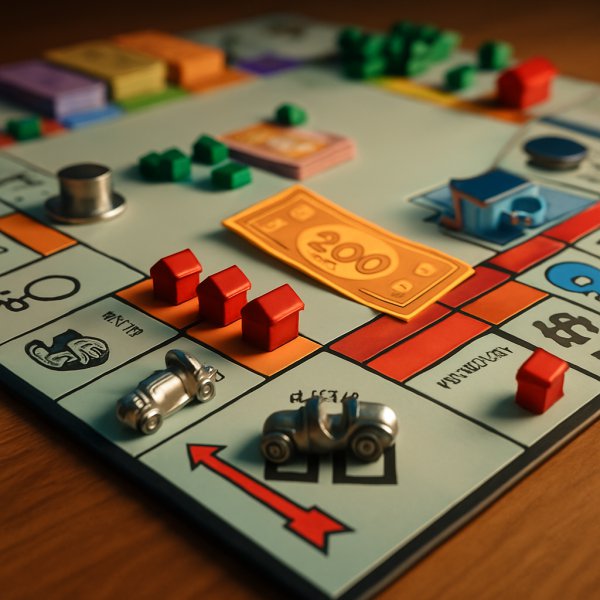
Why winning at Monopoly is a skill, not luck dressed in dice
Monopoly looks like a roll-and-hope party game, but beneath the board’s colorful properties and cartoon money lives a tactical landscape you can learn to read. Dice outcomes introduce variance, but smart choices about which properties to buy, how to build, when to trade, and how to manage cash convert random rolls into predictable advantages. Think of Monopoly as a small economy you can influence; the players who master patterns and timing win far more often than those who simply wait for lucky rolls.
If you want to stop blaming the dice and start winning consistently, you need a map of the board’s geography, a sense of probability, and a few psychological tradesmanship tricks. You will learn why certain color groups matter more than others, why three houses are often the “sweet spot,” how to weaponize auctions and house scarcity, and when going to jail is an advantage rather than a curse. This is about practical strategy, not magic: implement a few core principles and your win rate will jump.
I’ll balance numbers and narrative so the lessons feel intuitive and memorable. You will also get two short case studies showing the same principles in action, a clear step-by-step action plan you can use the next time you sit down at the board, reflection questions to sharpen your thinking, and a compact comparison table for quick reference. Bring curiosity and a willingness to trade intelligently; the rest is tactics.
Understand where the real money is: board geography and probabilities
Not all properties are created equal because players do not visit each square with the same frequency. The most-visited zone is the stretch right after players leave Jail, which makes the orange and red sets especially valuable. Jail acts like a traffic signal - many turns either end there or pass nearby, so the squares around it catch a lot of traffic. Light blues and browns see fewer visits, and the two dark-blue properties hit less often but hit hard when they do.
Probabilities shape strategy: frequent landings plus moderate to high rents give you steady income and frequent bankruptcies of opponents. High-cost, low-frequency properties can win the game if you are lucky, but they do not create as consistent pressure. So prioritize property groups with strong landing odds and good rent leverage once developed.
Remember that the board is dynamic. As players get monopolies and build, the threat map changes. Your job is to manufacture and exploit that change - get to a monopoly first, then use houses to create a compounding rent stream that overwhelms opponents.
Which properties to target and why: priority ranking with reasons
There is a predictable order you should aim for, driven by landing frequency, affordability, and house cost. Top priority should usually be the orange group, followed by red, light blue, and then the yellows and greens depending on the game flow. Brown (purple) properties are cheap and useful early game to force trades, but they rarely win late games without houses. Dark blue is tempting because it pays a lot, but the steep investment and low frequency make it a gamble.
Target properties that are:
- Frequently landed on - because they convert rolls into money.
- Cheap-ish to build on - because houses are where the profit lies.
- Hard to trade away once you have them - you want sticky monopolies.
Always evaluate a potential monopoly not just by its purchase cost but by how quickly it becomes self-sustaining through house rents.
The three-house secret and the power of house scarcity
Houses are the engine of Monopoly - not hotels. The rent increase from zero houses to one house is visible, but the largest marginal gain per house often happens when you reach three houses on each property in a set. Three houses typically give the best rent-per-house ROI; moving to hotels requires more resources and returns less marginal value per house used.
Because the game has a finite pool of houses, you can use building to create scarcity. If you buy up houses to the point where other players cannot complete three-house builds, you freeze their income while you grow yours. That makes thoughtful timing crucial: don’t rush to hotels if three houses are earning the highest leverage and depriving opponents of houses helps you crush them.
Use the house bank strategically - sometimes the best play is to leave a monopoly at three houses rather than convert to hotels, because doing so both maximizes your rent efficiency and denies houses to rivals.
Trading like a diplomat who knows when to be a shark
Monopoly is more trade than pure property acquisition. The best players negotiate like diplomats, but they prioritize asymmetric value. A good trade gives you a monopoly or puts you one or two deals away while making life harder for another player. Never trade away a color that helps your opponent complete a monopoly unless you get a bigger, immediate benefit.
Timing is everything. In the early game, trades can be generous because cash is abundant and the board is raw. Midgame trades should be surgical: offer money or utilities for a missing property that completes your set, or trade cash plus a low-value property to free someone from a crippling mortgage in return for a key piece. Use auctions to your advantage - if an opponent won't buy, push a property to auction and pick it up cheap to block others.
Be mindful of psychological currency: promise gymnastic trades like “I’ll give you X plus rent forgiveness for two turns” only if you can and will enforce it. Trust gets weaponized in Monopoly.
Cash management, mortgages, and survival math
A common fatal error is illiquid spending. If you run out of cash and land on someone’s monopoly, a single roll can bankrupt you. Maintain a cash buffer large enough to survive two to three of the highest rents currently on the board. The exact amount depends on opponent builds, but the idea is constant: preserve enough liquidity to cover the worst-case bounce.
When desperate, mortgage low-ROI properties first. Railroads are tempting to hold because their steady income feels nice, but they are also liquid assets you can mortage in a pinch. Only unmortgage a property when its cash-generating potential and monopoly status justify the cost. Avoid cyclical mortgage-unmortgage flipping unless you understand the fee math.
A rough cash rule: before building aggressively, ensure you can pay twice the rent of the nastiest opponent monopoly. That reduces the chance of instant bankruptcy from a single unlucky roll.
Jail strategy - escape early, stay late
Jail is not uniformly bad. Early game, you want to get out fast to buy properties, because missing the first 15 to 20 moves can cost you critical purchases. Late game, when many properties have houses and hotels, being stuck in Jail is an advantage because it protects you from landing on deadly rents while still collecting rent from your own properties.
The transition point is after the point when most players have developed monopolies with houses. At that stage, choose to delay leaving Jail or pay to stay if the rules allow it. If you have a strong mid- to late-game monopoly, staying in Jail with three turns per stay can be a shelter strategy that prolongs your solvency and forces others into bankruptcy grappling with your board.
Auctions, railroads, utilities - what actually matters
Auctions are a hidden battlefield and often underused as a tactic. If an opponent declines a property, push it to auction and pick it up cheap. Use auctions to block opponents from completing color sets even if you pay a little extra early. A single denied property can prevent a monopoly that would have ended you.
Railroads provide steady income and decent flexibility - owning all four is strong, but they rarely beat a decent 3-house monopoly for win probability. Utilities have low strategic impact except sometimes as bargaining chips in trades. Don’t overvalue them when trading away a color group that could be monetized aggressively.
A practical rule: treat railroads as mid-tier assets you can rely on for liquidity and modest income, but never let them distract you from completing house-friendly monopolies.
Endgame squeeze: forcing bankruptcies and the fine art of pressure
Once the board is developed, the game becomes about pressure and attrition. Your goal is to make rents so painful that opponents run out of cash slowly and are forced to liquidate or trade away game-saving properties. Use targeted offers: “I’ll trade you cash so you can pay rent this turn, and you give me X property” - when you lend money, get something that moves you toward a monopoly.
Consider the bankruptcy chain reaction. If one player is low on cash and you own a monopoly likely to bankrupt them, structure trades and auctions to ensure they cannot escape. Build houses in bursts to create sudden rent cliffs. Avoid dumb hotel upgrades that free up houses too early. Remember, the last few players can be merciless - the most successful endgame play often looks like careful bookkeeping and denial of opportunities rather than flashy moves.
Real-life story: the orange monopoly comeback
At a Friday game night, Anna had three properties but no doubles and a low cash balance. Marcus had both dark-blue properties and was smug. Early on, Anna focused on picking up every orange that hit an auction and traded cash plus a railroad piece to get the missing orange. She then built to three houses on each orange property and paused, not advancing to hotels. Marcus rolled well once and hit Boardwalk, but by the time he recovered, Anna’s three-house oranges were draining his cash every pass.
Anna used two critical ideas: the high-traffic nature of the orange set and the house-scaring strategy where she blocked houses by not converting to hotels. By forcing other players into mortgages and targeting trades to sabotage potential comeback routes, she kept pressure until Marcus wrote a bankruptcy check. The moral: small, steady money in high-frequency spots beats occasional jackpot squares for consistent wins.
Real-life story: a bad trade that teaches more than success
In a competitive tournament, David traded his last low-value properties plus cash to a rival in exchange for a single high-rent property that completed the rival’s monopoly. David thought the psychological win of acquiring a “prize” would unbalance the table. Instead, the trade created an opponent who immediately built houses and began extracting crippling rents. David’s lack of a risk buffer and failure to assess the opponent’s build capability turned a shiny-looking trade into a losing move.
This story highlights common blind spots: trades that grant monopoly power to others are dangerous, and avoiding short-term showmanship in favor of structural advantage is essential. Always evaluate trades in terms of the board state after the deal, not how it feels in the moment.
Quick comparison table: which properties to prioritize
| Property group |
Typical cost level |
House cost level |
Landing frequency |
Strategic priority |
| Orange |
Medium |
Medium |
High |
Very high |
| Red |
Medium-high |
Medium |
High |
High |
| Light Blue |
Low |
Low |
Medium |
High early game |
| Brown (Purple) |
Very low |
Low |
Low-medium |
Useful early, weak late |
| Yellow |
Medium-high |
Medium-high |
Medium |
Situational |
| Green |
High |
High |
Medium |
Late-game specialist |
| Dark Blue |
Very high |
Very high |
Low |
Gamble, low consistency |
| Railroads |
Low-medium |
N/A |
Medium |
Solid for income and liquidity |
| Utilities |
Low |
N/A |
Low |
Trade bait, low impact |
Use this table as a quick heuristic. The labels are qualitative; adapt to your table rules and opponents.
Clear action plan you can use next game
Imagine you sit down and roll the dice. Follow this narrative plan to shift the odds heavily in your favor.
-
Early game - sweep and block:
- Buy any property you land on. If you must choose, prioritize light blue and orange, because they are cheap and convert quickly.
- Participate in auctions aggressively to pick up pieces that block opponent monopolies.
-
Midgame - convert to houses:
- Aim to complete an orange or red monopoly first. Once you have a monopoly, build evenly across the set until you reach three houses on each property before pursuing hotels.
- Keep a cash buffer equal to about two times the highest rent you might face.
-
Trading - be precise:
- Trade only for monopolies or direct paths to them. Avoid trades that complete an opponent’s monopoly unless you get immediate, strong compensation.
- Use railroads and utilities as bargaining chips, not centerpieces.
-
House and jail tactics:
- Use three-house saturation to deny houses to opponents, and avoid hotels if the marginal benefit hurts house scarcity.
- If most players have built houses, choose to stay in Jail rather than roam.
-
Endgame - pressure and finish:
- Push for trades or loans that force others into mortgage decisions. Build in bursts to create cliffs of rent.
- Manage final auctions to ensure opponents cannot pick up key escape properties.
Short checklist to carry in your head during play:
- Buy on landing unless it is textbook suicide.
- Finish an orange or red set if the chance exists.
- Build to three houses across a set before hotels.
- Keep cash cushion of two harsh rents.
- Auction strategically - buy to block.
Reflection questions to refine your style
- Which of your past Monopoly losses were caused by bad trades, and how could you have reframed those deals to prioritize monopoly creation?
- How do you balance the temptation to convert to hotels versus the strategic advantage of denying houses to opponents in a future game?
- When is sticking in Jail beneficial for you, and how would you recognize that tipping point during play?
Consider these after your next game and tweak your checklist accordingly.
Key takeaways in one glance
- Prioritize orange and red sets because of their high landing frequency and strong rent leverage.
- Three houses are often the most efficient rent engine, and creating house scarcity is a powerful tactic.
- Buy everything early and use auctions to block opponents from completing sets.
- Trade only when the deal moves you toward a monopoly or prevents someone else from getting one.
- Keep a cash buffer equal to roughly two of the nastiest rents on the board.
- Jail is bad early, but a shelter late in the game.
- Railroads are reliable income, utilities are trade fodder, and dark-blue is a gamble.
Go play smarter and enjoy the game
Monopoly is a game of pressure, psychology, and resource conversion; dice will pepper the journey, but the overall arc depends on choices you make. Treat early moves like planting seeds, midgame like tending a field of houses, and endgame like harvesting the crop with cold calculation. Apply these principles, practice a few rounds with intent, and you will find that wins arrive more often than before. Play well, laugh at the misfortunes of your opponents, and remember that improvement comes from thoughtful play, not just lucky rolls.