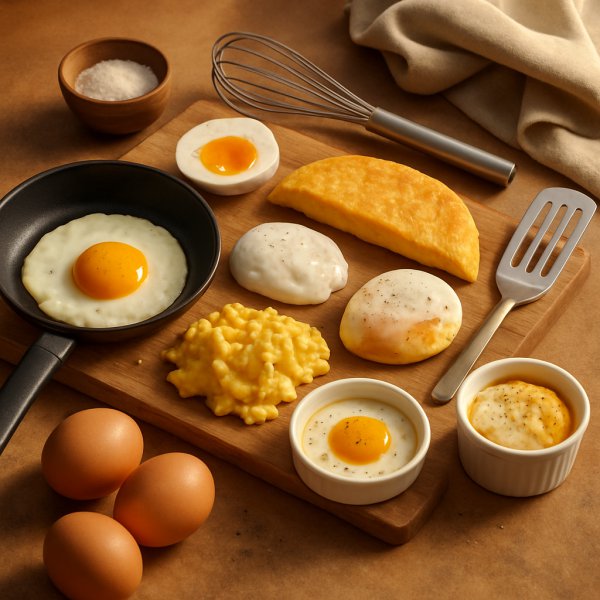
Why learning to cook eggs is one of the best skills you can pick up
Eggs are the kitchen equivalent of a Swiss Army knife - cheap, portable, and astonishingly versatile. A single well-cooked egg can transform a frugal lunch into a satisfying meal, rescue a bland weekday breakfast, or make a dinner feel like a restaurant plate. Beyond convenience, eggs are a perfect introduction to the fundamentals of cooking: timing, heat control, seasoning, and texture. Mastering the egg teaches you to recognize subtle changes in protein, to control moisture, and to taste like a pro.
Think about the last time you had a disappointing egg - rubbery white, chalky yolk, or scrambled eggs that looked like curds from the moon. Those moments sting because eggs are simple, which makes mistakes obvious. But simplicity is also a gift: small adjustments yield dramatic improvements. In the next sections you will learn not just recipes, but the why behind them, so you can adapt methods to your stove, your pan, and your taste.
I will mix a little kitchen chemistry with practical steps and memorable analogies, so the science stays useful instead of becoming abstract. You will get step-by-step approaches for soft-boiled, poached, fried, scrambled, omelettes, baked, and even sous-vide and microwave options. Each method will include troubleshooting tips and quick habits that change outcomes immediately, so you can practice and see results fast.
Finally, I will challenge some myths, give a simple comparison table you can glance at when deciding what to cook, and offer reflection questions that make you stop and experiment. By the end you will feel confident that when an egg lands in your pan it will do what you want.
What’s inside an egg, and why heat changes everything
An egg is mostly water and protein, with the white and the yolk playing different roles. Egg white is primarily albumin proteins suspended in water, and the yolk contains fats, emulsifiers like lecithin, and proteins that set at slightly different temperatures. When you heat an egg, those proteins unwind from their folded shapes and knit together into a network that traps water and changes texture. Because different proteins set at different temperatures, whites and yolks respond differently to the same cooking method.
Temperature is the most useful number to know. Egg whites start to firm around 62 degrees Celsius (about 144 degrees Fahrenheit), and become fully opaque and firm as temperature rises further. Yolks begin to thicken around 65 degrees Celsius (149 Fahrenheit), and gradually firm up more as you approach 70 to 75 Celsius. Controlling the final temperature of the yolk is how you get runny, jammy, or fully set yolks. Think of it as dialing a texture knob: low and slow gives creamy results, high and quick gives firmer textures.
Freshness matters too. Very fresh eggs have firmer whites and a more centered yolk, which is great for poaching and presentations. Slightly older eggs are easier to peel after hard boiling because the pH of the white changes over time, causing it to separate from the shell membrane more easily. Safety is straightforward: wash hands and equipment after handling raw eggs, cook until whites are set and yolks reach desired temperature if you are concerned about pathogens, or use pasteurized eggs for uncooked preparations.
Small preps that make big differences
Some habits will upgrade almost every egg you make. First, use the right pan and fat. Nonstick pans are forgiving for fried and scrambled eggs, while stainless steel requires a bit more heat and fat but rewards you with flavor and browning. A small, heavy-bottomed skillet gives even heat, while a wider pan spreads heat and speeds cooking. Use butter for flavor and a little oil when you want a higher smoke point.
Temperature control is crucial. For creamy scrambled eggs, low to medium-low heat is your friend, and patience helps more than extra butter. For a crisp fried edge, medium-high heat gives that pleasing contrast without overcooking the yolk, if you watch carefully. If you want consistent results for multiple eggs, try to work with eggs at room temperature for quicker, more even cooking; but for hard boiling, starting with cold water avoids cracking and ensures predictable timing.
Tools that pay back: a silicone or wooden spatula for gentle scrambling, a slotted spoon for poaching, a small saucepan with a lid for soft-boiled eggs, and a thermometer if you like precision. Also keep vinegar, a fine-mesh skimmer, and a bowl of ice water handy for poaching and boiling emergencies. These small tools solve many common problems before they become disasters.
The foundational methods and how to perfect them
This section will take you through classic methods, from the very simple to the techniques that make eggs restaurant-worthy. Each method includes a clear step sequence, timing guidelines, and troubleshooting notes you can use right away.
Soft-boiled, runny yolk, silky white - The gentle classic
- Start with cold eggs in a small pot of cold water so they heat evenly and are less likely to crack. Bring to a rolling boil, then immediately reduce to a gentle simmer and start your timer. For a jammy yolk that still breaks, aim for 6 minutes; for a very runny yolk, 4 to 5 minutes; for a nearly set yolk, 8 minutes. Immediately transfer eggs to an ice bath for at least 2 minutes to stop the cooking and make peeling cleaner.
- Troubleshooting: If whites are watery, your water was not hot enough for long enough, or the egg was too fresh. If the shell cracks, add a pinch of salt when starting or pierce the rounded end gently with a thumbtack to release air.
Poached eggs, delicate and elegant
- Use the freshest eggs you can, as the whites hold together better. Bring a wide skillet or shallow pan of water to a gentle simmer, add a teaspoon of vinegar (optional but helpful), and stir to create a small whirlpool. Crack the egg into a ramekin, then slip it gently into the center of the whirlpool to help the white wrap around the yolk. Cook 3 minutes for a soft yolk, 3.5 to 4 minutes for a slightly firmer yolk. Remove with a slotted spoon and drain on a paper towel.
- Troubleshooting: If the white fragments, your egg was not fresh or the water was too agitated. If the yolk is overcooked, shorten the time and lower the water temperature.
Fried eggs, from sunny-side to over-easy
- For sunny-side up, heat a nonstick pan over medium-low, melt butter or oil until it shimmers, crack the egg in and cook gently until the whites are set but the yolk is still jiggly, about 3 to 4 minutes. For over-easy, slide a spatula under the egg and flip gently, cook another 15 to 30 seconds. For over-medium or over-hard, increase time after flipping.
- Troubleshooting: Browning but uncooked tops means heat was too high; lower the temperature and cover briefly for whites to set without overcooking yolks.
Scrambled eggs, soft and custardy vs. curdled and dry
- For creamy French-style scrambled eggs, whisk whole eggs lightly with a pinch of salt, melt butter in a pan over low heat, add eggs, and stir slowly and continuously with a spatula until they form large, moist curds, about 8 to 12 minutes for very creamy texture. Finish off the heat and stir in a knob of cold butter to stop cooking and add shine. For a faster, American-style scramble, cook on medium heat, stirring more aggressively, and remove when slightly underdone, about 1 to 2 minutes.
- Troubleshooting: If the eggs look watery, you cooked at too low a heat for too long without stirring; if they are rubbery, you overcooked them. Salt timing matters slightly - salting early can make curds softer, but very early salting works best simply if you want uniformly seasoned curds.
Classic omelette, folded and tender
- Beat eggs with salt and pepper, heat a nonstick pan over medium with a small amount of butter, pour eggs and gently swirl to create an even layer, use a spatula to lift the edges to let uncooked egg flow underneath. When almost set but still slightly moist on top, add fillings on one half, fold and slide onto a plate. Cook time is short, usually 1 to 2 minutes.
- Troubleshooting: Overcooked omelettes are rubbery and dry; cook slightly less and let carryover cooking finish the set.
Baked eggs and shirred eggs, for hands-off ease
- Crack eggs into greased ramekins, season, and bake in a water bath at 160 to 180 Celsius (325 to 350 Fahrenheit) until whites are set, 10 to 15 minutes depending on desired yolk doneness. Add cream for richness or top with cheese and herbs toward the end.
- Troubleshooting: If yolks take too long, lower oven temp and bake a bit longer; if whites bubble excessively, reduce temperature a touch.
Sous-vide eggs, precision at a molecular level
- Cook whole eggs in their shells at 63 Celsius (145 Fahrenheit) for 45 minutes to 1 hour for a custardy white and a creamy yolk. The result is impossible to get by ordinary stovetop control. Chill immediately to store or use warm for dishes like eggs Benedict.
- Troubleshooting: Sous-vide gives precise textures, but you need the immersion cooker and time. Make sure water bath has good circulation.
Microwave eggs, instant but careful
- Scrambled eggs can be made in the microwave with short bursts of cooking, 30 seconds at a time, stirring between bursts to avoid hot spots. Never microwave eggs in their shells, as pressure can build up and cause explosions.
- Troubleshooting: Avoid overcooking by stopping when just a bit underdone, as they will finish cooking from residual heat.
Quick comparison table - choose the method by result
| Method |
Typical time |
Texture you get |
Difficulty |
Best for |
| Soft-boiled |
4-8 minutes |
Runny to jammy yolk, set white |
Easy |
Breakfast, ramen egg |
| Poached |
3-4 minutes |
Silky white, runny yolk |
Moderate |
Eggs Benedict, salads |
| Fried (sunny-side/over) |
2-4 minutes |
Crisp edges or tender whites, runny to set yolk |
Easy |
Quick breakfast, sandwiches |
| Scrambled (French) |
6-12 minutes |
Creamy, custardy curds |
Moderate |
Fancy brunch, soft textures |
| Scrambled (American) |
1-3 minutes |
Fluffy, slightly firm |
Easy |
Fast meals, toppings |
| Omelette |
1-3 minutes |
Tender folded egg, set interior |
Moderate |
Filled meals, dinner |
| Baked/Shirred |
10-20 minutes |
Runny to set yolk, evenly cooked whites |
Easy |
Batch cooking, brunch |
| Sous-vide |
45-60 minutes |
Precise custard-like textures |
Advanced |
Restaurant textures, meal prep |
| Microwave |
1-2 minutes |
Quick scrambled, variable texture |
Easy |
Emergency cooking |
Common myths and mistakes, busted and fixed
Myth - Adding oil to boiling water makes peeling easy. Not true. Oil floats and does not penetrate the shell, so it does not help the membrane separate. The real trick is aging the egg slightly so the pH changes, or shocking in ice water immediately after cooking to contract the white away from the shell.
Myth - You should always add salt to egg water when boiling to prevent cracks. Salt does not prevent cracking. A little salt may help if the shell breaks, by coagulating leaked white faster, but it is not a guarantee. A gentle heat increase and starting with room-temperature eggs minimizes cracking.
Mistake - High heat for everything. While high heat can give crispy fried edges, many wonderful textures require low and slow attention. French scrambled eggs, delicate curds, and perfectly jammy yolks all come from moderate temperature control and patience.
Myth - Egg yolks are unhealthy monsters. Nutrition science shows that for most people, moderate egg consumption is fine as part of a balanced diet. Eggs are nutrient-dense, supplying protein, vitamins, and choline. If specific health issues exist, consult a healthcare professional, but eggs are not the dietary villain they were once portrayed as.
Mistake - Salt timing. Salting scrambled eggs too early will extract moisture and can make curds looser, though this is often subtle. If you like a more uniform, tender curd, add some salt during whisking and a final adjustment at the end.
Flavor building - simple moves that elevate every egg
Finish with a small amount of acid to brighten the richness - a squeeze of lemon, a drizzle of vinegar, or a dab of hot sauce improves perceived flavors. Fresh herbs add lift; a sprinkle of flaky salt at the end makes textures pop. Use butter for depth and nutty richness, olive oil or neutral oil for higher-heat cooking or when you want a clean flavor.
Mix-ins and textures work well: a small amount of grated cheese folded into hot scrambled eggs melts and adds silkiness; crisped bacon or sautéed mushrooms introduce contrast. For sandwiches, a smear of mustard or mayo balances the yolk’s richness. Think in contrasts: creamy vs crunchy, salty vs bright, warm vs cold.
If you want to experiment, try poached eggs on a bed of garlicky spinach with a squeeze of lemon, or a soft-boiled egg on steamed rice with soy and sesame oil for a quick comfort dish. Small additions go a long way.
Short practical guides to practice tonight
Perfect 6-minute soft-boiled egg: Place large eggs in a single layer in a small pot and cover with cold water by an inch. Bring to a boil, reduce to a gentle simmer, and start timing at the first steady simmer; cook 6 minutes. Immediately transfer to ice water for 3 minutes, crack and peel or slice in half.
Reliable poached egg (fresh egg): Fill a deep skillet with about 7 to 8 cm of water, bring to a gentle simmer. Add 1 teaspoon vinegar per liter of water, swirl gently, and drop in the egg from a ramekin. Cook 3 minutes, lift with a slotted spoon, drain briefly, and serve.
French-style scrambled eggs: Whisk 3 eggs lightly in a bowl until blended. Heat a small nonstick pan on low, melt 1 tablespoon of butter, pour eggs in and stir continuously with a spatula in slow, deliberate motions for 8 to 12 minutes until curds are delicate and creamy. Remove from heat, stir in a small knob of cold butter, season to taste.
Sunny-side quick fry: Heat a nonstick pan over medium-low, add 1 tablespoon butter, crack the egg in, and spoon hot butter over the white to help it set, or cover with a lid for 1 minute. Cook 3 to 4 minutes for set whites and runny yolk. Season at the end with flaky salt.
Baked egg in a ramekin: Butter a ramekin, crack in two eggs, add a splash of cream, salt, and pepper. Place ramekin in a water bath and bake at 175 Celsius for 12 to 15 minutes for a set white and slightly jammy yolk. Finish with herbs.
Reflection questions - practice like a scientist
- Which egg method did you try last week, and what texture did you want but not get? What small change from this guide will you test next time?
- How does your stove run - hot or slow - and how might you change pan size or heat to match the techniques here?
- Try a blind tasting: make two scrambled egg versions - one low and slow French-style, one medium-heat American-style. What words describe each? Which do you prefer and why?
Spend an afternoon trying two methods back-to-back; note results and refine time or temperature. Repetition with mindfulness is the fastest path to mastering eggs.
Parting pep talk - cook with curiosity, not fear
Eggs are forgiving teachers. They respond quickly to small changes, so every mistake is useful feedback. If an egg burns or a yolk is overcooked, you did not fail, you gathered data. Treat the kitchen like a lab where your palate is the instrument and time is the variable. Start with the simple techniques: soft boil, poach, and one scrambled style. Master those, and you will have reliable building blocks for sandwiches, salads, casseroles, and restaurant-quality breakfasts.
Go make a soft-boiled egg tonight, time it, and taste. Notice the white texture, the way the yolk coats your spoon, and what you want changed next time. Each attempt will sharpen your instincts. Soon, you will not only know the best way to cook an egg, you will have your very own best way - tuned to your taste, your equipment, and your life.