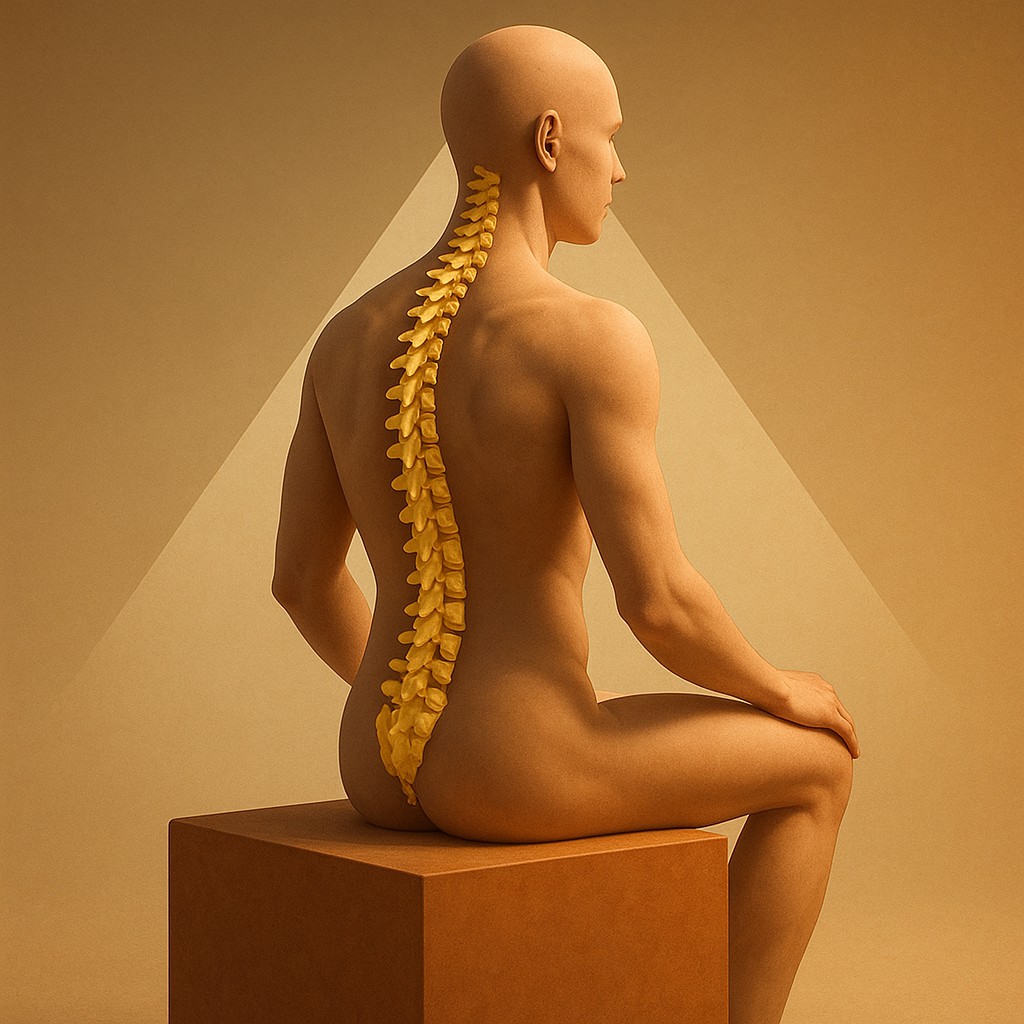
Imagine for a moment that your body is a high-performance architectural marvel. It is a skyscraper designed to withstand the constant pull of gravity while staying flexible enough to dance, run, and reach for the top shelf. Too often, however, we treat our bodies like overstuffed beanbags. We collapse into soft sofas or hunch over glowing screens as if our spines were made of wet noodles rather than a complex system of bones, ligaments, and muscles. Good posture isn't about looking like a stiff soldier on parade. It is the art of "dynamic alignment," or balancing your weight so efficiently that your muscles do the least amount of work possible to keep you upright.
When we ignore this balance, we are essentially asking our bodies to run a marathon while wearing a heavy, lopsided backpack. Over time, the "head-forward" tilt from staring at smartphones or the rounded shoulders from typing can trigger a chain reaction of problems, including chronic headaches, shallow breathing, and constant fatigue. By recalibrating your internal GPS, you unlock a version of yourself that moves gracefully, breathes deeply, and projects a natural confidence that no expensive outfit can match. It is time to stop fighting gravity and start working with it.
The Architecture of the Human Spine
To master your posture, you first need to understand the blueprint of the structure you live in. Your spine is not a straight pillar; it is a graceful "S" curve made of three distinct sections: the cervical (neck), thoracic (mid-back), and lumbar (lower back). These curves act like natural shock absorbers, spreading out the weight of your body and the impact of your movements. When people try for "perfect" posture, they often try to flatten these curves, which actually does more harm than good. A healthy spine keeps these natural waves so that the head sits directly over the shoulders, and the shoulders sit directly over the hips.
The real magic happens in the deep stabilizing muscles, often called the "postural muscles." Unlike "mirror muscles" like your biceps or quads, these stabilizers are built for endurance rather than quick bursts of power. They are the body’s quiet caretakers, working around the clock to keep everything in its right place. When these muscles get weak or out of balance, the larger, outer muscles have to take over. This is why your neck might feel tight after a long day at a desk. Your neck muscles are trying to do the job of your core and upper back, and they are exhausted from the overtime.
Many people fall into the trap of thinking posture is a fixed state, something you "set and forget." In reality, the best posture is your next posture. Our bodies are designed to move, and even a "perfect" sitting position becomes harmful if held for hours. Think of your spine as a river rather than a stone wall; it needs to flow and adjust. Once you see your skeleton as a series of stacked blocks held together by tension and support, you can begin to feel when your own blocks have slipped out of line.
Defeating the Modern Slump
The modern world is effectively a conspiracy against the human spine. From the height of our desks to the way we hold our phones, everything nudges us to curl into a defensive ball. This "C-shape" collapse is especially common in the age of "tech neck," where we tilt our heads forward to look at screens. The average human head weighs about 10 to 12 pounds, but tilting it forward at a 45-degree angle can make it feel like 50 pounds to the muscles in your neck and upper back. This constant strain leads to a permanent rounding of the upper spine, sometimes called a "dowager’s hump."
Another common problem is the way we sit. Most office chairs, no matter how "ergonomic" they claim to be, encourage us to tuck our pelvis under, which flattens the natural curve of the lower back. This puts massive pressure on the spinal discs, the soft pads between your vertebrae (backbones). To fix this, imagine your pelvis is a bowl of water. If you tilt too far forward, the water spills out the front (arching your back); if you tilt too far back, the water spills out the rear (slumping your back). Finding a "neutral" pelvis where the water stays level is the secret to a happy lower back.
Solving these habits takes more than just sitting up straight for five minutes until you forget and slump again. It requires changing your environment. Adjusting your monitor so the top third of the screen is at eye level, using a footrest to keep your knees slightly lower than your hips, and bringing your phone up to your face rather than dropping your head to your phone are small shifts that yield big results. These changes remove the temptation to slouch, making good posture the easiest path rather than a constant test of willpower.
Moving Beyond the Myth of Rigidity
One of the biggest myths about posture is that it should feel like a workout. If you are straining, clenching your jaw, or holding your breath to stay upright, you aren't practicing good posture; you are practicing tension. True alignment should feel effortless and light. A helpful mental image is to imagine a silver thread attached to the very top of your head, gently pulling you toward the ceiling. As the thread pulls you up, let your shoulders drop away from your ears like melting butter, and let your ribcage soften down toward your hips.
We also need to debunk the "military chest" myth. Many people try to fix rounded shoulders by shoving their chest out and pinching their shoulder blades together. This doesn't fix the underlying problem; it just creates a different kind of strain in the mid-back and flares the ribs, which can stop you from taking deep breaths. Instead of "pinching," think of "broadening." Imagine your collarbones are getting wider, reaching toward the walls on either side. This creates space in the chest without tensing the back.
Another myth is that posture is purely physical. In truth, how we stand often reflects how we feel. When we are stressed, tired, or insecure, we naturally "close off" our bodies, rounding our shoulders to protect ourselves. Conversely, when we feel powerful and relaxed, our bodies open up. This is a two-way street. By choosing an "open" posture, you can actually lower stress hormones and boost your confidence. Science calls this the "power pose" effect, but you can just think of it as giving your internal organs more room to do their jobs.
Simple Daily Strategies for Alignment
Improving your posture doesn't require a gym membership or expensive braces. It just takes consistency and a few movements to "wake up" muscles that have gone dormant from sitting. One of the most effective exercises is the "Chin Tuck." While looking straight ahead, gently pull your chin back as if you are making a double chin, without tilting your head up or down. This strengthens the deep neck muscles and helps bring your head back over your shoulders. It is a subtle move, but it is a powerful fix for forward-head posture.
Another essential move is the "Wall Angel." Stand with your back against a wall so your heels, glutes, upper back, and head are all touching it. Bring your arms up to a "goalpost" shape, keeping your elbows and the backs of your hands against the wall. Slowly slide your arms up and down, like you are making a snow angel. This exercise is notoriously difficult for people with tight chests, but it is an incredible tool for retraining your shoulders to sit in their proper sockets.
| Posture Goal |
The Slumped Version |
The Aligned Version |
Key Muscle Focus |
| Head Position |
Chin poking forward toward screen |
Ears stacked directly over shoulders |
Deep neck muscles |
| Shoulder Alignment |
Rounded forward and up by ears |
Broad collarbones, relaxed shoulders |
Mid-back muscles |
| Pelvic Tilt |
Tucked under (sitting on tailbone) |
Neutral bowl, weight on "sit bones" |
Core and hip muscles |
| Standing Stance |
Weight on one hip, locked knees |
Weight balanced, soft knees |
Glutes and abs |
| Breathing Style |
Shallow, upper-chest breathing |
Deep, 360-degree rib expansion |
Diaphragm |
The Role of Core Strength and Flexibility
When people hear the word "core," they often think of six-pack abs. For posture, however, the "inner corset" is much more important. This includes the deepest layer of abdominal muscle and the tiny muscles that run along the spine. These muscles act as a built-in back brace. A strong core provides a stable base so the rest of the body can move freely. Exercises like the plank or even basic yoga poses provide the kind of functional strength that keeps you upright without having to think about it.
However, strength is only half the battle; flexibility is the other. If your chest muscles are chronically tight, they act like short rubber bands, constantly pulling your shoulders forward no matter how strong your back is. Similarly, tight hip muscles from sitting can pull your pelvis out of line, causing an arched back and lower back pain. To have good posture, you must balance strengthening the back of the body with stretching the front. Think of it as a tug-of-war where both teams need to be equally strong and willing to give a little.
Focusing on your feet is also a game-changer. Your feet are the foundation of your entire skeleton. If your arches collapse or you lean too far back on your heels, the rest of your body has to compensate all the way up to your neck. When standing, try to find "three-point contact": the base of your big toe, the base of your pinky toe, and the center of your heel. Distributing your weight evenly across these three points creates a stable base that helps your knees and hips align, reducing the strain on your lower back.
Creating a Posture-Friendly Environment
We are products of our environment. If your desk is set up for slouching, you will inevitably slouch. One of the best investments you can make is an external keyboard and mouse for your laptop. Using a laptop as-is forces you to choose between your hands being in the right place or your eyes being in the right place; you can't have both. By propping the laptop up on a stack of books and using a separate keyboard, you can keep your head high and your wrists neutral. It is a simple fix that eliminates a major source of daily pain.
Movement breaks are the ultimate posture secret. No matter how perfect your setup is, the body hates staying still. Set a timer for every 30 to 45 minutes to stand up, reach for the ceiling, and roll your shoulders. This breaks the "static load" on your tissues and reminds your nervous system where you are in space. Think of it as hitting the "refresh" button on your alignment. Even a thirty-second walk to get water can prevent your muscles from "setting" into a slumped shape like cooling plastic.
Finally, consider your sleeping position. We spend about a third of our lives in bed. If your pillow is too high or your mattress is too soft, you are putting your spine through an eight-hour stress test. If you sleep on your back, a small pillow under your knees can help keep the natural curve of your lower back. If you sleep on your side, placing a pillow between your knees keeps your hips square and prevents your top leg from twisting your spine. Your "sleep posture" sets the tone for how your body feels the moment you wake up.
The Mental Shift to Mindful Movement
The journey to great posture is ultimately a journey in mindfulness. Most of the time, we are so focused on where we are going that we lose all feeling of the body carrying us there. To improve, you need to develop "proprioception," which is your brain's ability to know where your body parts are without looking at them. Throughout the day, ask yourself "Where is my head right now?" or "Am I tensing my stomach?" These little check-ins are more effective than any brace because they retrain the connection between your brain and your muscles.
You might find that as your posture improves, your mood follows. There is a deep psychological link between standing "upright" and feeling "upbeat." When you stand tall, you are telling your brain that you are safe, capable, and present. This isn't about vanity; it's about vitality. When your organs aren't cramped and your lungs can fully expand, your body operates so efficiently that you have more energy and clearer thoughts.
Do not expect perfection overnight. You are essentially overwriting years of old habits, and your body will likely resist at first. There might be days where you feel clumsy or where your "new" posture feels "wrong" simply because your brain is used to the old, crooked way. Trust the process. With every conscious adjustment, you are building a more resilient, powerful version of yourself. Stand tall, breathe deep, and let your spine be the elegant support system it was meant to be. This is your foundation for a lifetime of movement; treat it with the care that a masterpiece deserves.