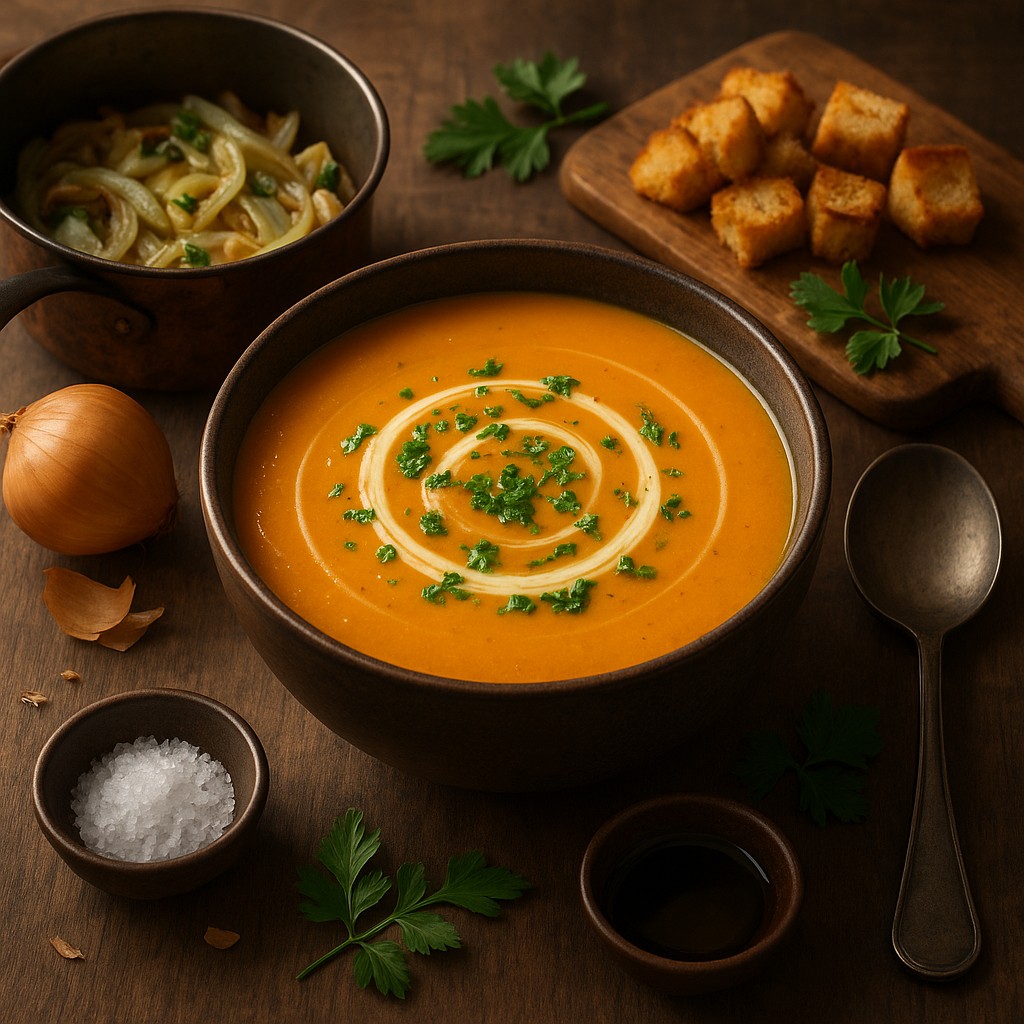
Soup has a rare superpower: it can be both the simplest meal on earth and the most refined. One pot, some water, two tired vegetables, and you have dinner. But that same pot, with a few smart moves, can turn out a silky puree worthy of a great restaurant, a clear broth that tastes like it was “filtered by angels,” or a hearty, rustic soup that can make anyone forgive winter.
The trap is that a lot of people think soup is “easy” in the sense of “no technique, just wing it.” The result is flat flavor, gritty texture, panic-salting at the end, and that sad feeling of eating boiled vegetables in a bowl. The good news is you do not need a diploma to make amazing soup. You need a handful of rules, a few simple tricks, and the habit of tasting like a chef.
So we are going to turn your kitchen into a soup workshop. You will learn how to build flavor in layers, control texture, fix an oversalted soup without tears, and spin endless variations from the same basics. Goal: your soups become your signature dish, the one people ask for, even when it is 28 degrees outside (yes, it happens).
Think of soup as a three-act story: base, body, finish
A great soup is built like a story: first an aromatic base that sets the mood, then a “body” that brings substance and personality, and finally a finish that makes people say “wow” on the first spoonful. The base is often onion, garlic, leek, celery, or carrot, gently cooked in a little fat. That start adds depth, even if you only add three more ingredients.
The body is what defines the soup: roasted vegetables, lentils, shredded chicken, mushrooms, fish, tomatoes, squash, and so on. This is also where the style is decided: smooth soup, chunky soup, clear broth, creamy puree, improvised ramen. And the finish, far too often forgotten, is what adds contrast and freshness: a drizzle of olive oil, a squeeze of lemon, herbs, a spoonful of yogurt, croutons, chili oil.
If you remember only one idea, make it this: soup is not “something you boil.” It is built. At every step, you can shape the flavor, texture, and aroma.
The aromatic base: the secret behind soups with real personality
Gently sweating aromatics (without browning them too much or burning them) is simple magic: water cooks off, sugars concentrate, and aromas wake up. You get a deeper foundation than if you dumped everything into cold water. Even for a “quick” soup, spend 5 to 8 minutes on this step and you will taste the difference.
Change your base to match the style you want. A Mediterranean soup loves onion + garlic + fennel. A bistro-style soup works great with leek + celery. An Asian-style soup can start with ginger + garlic + scallion (or shallot) in a little neutral oil.
The body: pick a “lead” and a “supporting actor”
To avoid muddy, confused soup, choose one lead ingredient (the star) and one supporting ingredient (the one that makes the star shine). Example: butternut squash (lead) + apple (support) for sweetness and a little tang. Lentils (lead) + carrot (support) for roundness. Mushrooms (lead) + thyme (support) for that forest vibe. This duo gives your soup a clear direction, which makes it more memorable.
Then add one or two “extras” at most: spices, herbs, a little tomato, a chili. Too many different ingredients and everything turns into... vaguely “soup.”
The delicious science: deep flavor without the fuss
An outstanding soup comes down to three things: concentration, cooking reactions, and balance (salt-acid-fat-sugar-umami). You do not need lab talk. You just need to understand a few basics.
First, concentration. Soup is flavored water. If you add too much liquid, you dilute everything and then chase flavor with salt. Start with less liquid than you think you need, and add more later if you want. This is the anti-bland-soup rule.
Next, browning (caramelization and the Maillard reaction, which is the browning that creates roasted, nutty, deep flavors). You can get it by cooking your aromatics longer, roasting some vegetables in the oven before blending, or searing meat or mushrooms before you add liquid. Tomato soup made with roasted tomatoes is not the same thing as tomato soup made by simply boiling tomatoes.
Finally, balance. A lot of soups are missing acidity, and we mistake that for “needs more salt.” Often, a small acidic touch (lemon, vinegar, tomato, wine, yogurt) makes the flavors pop without over-salting.
Quick-fix table: save a soup in 60 seconds
| Problem |
Symptom |
Common cause |
Fast fix |
| Bland |
“It tastes like hot water” |
Too much liquid, weak aromatic base |
Simmer uncovered 10-15 min to reduce, add concentrated stock, or saute a quick aromatic base separately and stir it in |
| Too salty |
It stings your tongue, flavor feels closed |
Salt added too early or too much bouillon cube |
Add chunks of raw potato then remove, dilute with unsalted water, add a little acid and fat |
| Too thick |
It “sticks” and feels heavy |
Too much starch, reduced too far |
Thin with stock, water, or milk, then re-season |
| Too thin |
It lacks body |
Not enough structure-building ingredients |
Blend part of it, add cooked beans, a little rice, or reduce uncovered |
| Gritty texture |
“Sandy” creamy soup |
Not blended enough, too much fiber, not enough fat |
Blend longer, strain through a fine sieve, add cream or oil and blend again |
| Flat even with salt |
Everything is “fine” but dull |
Missing acidity or umami |
Add lemon/vinegar, Parmesan, miso, soy sauce, tomato paste |
Mastering texture: from crystal-clear broth to velvet-smooth puree
Texture is half the pleasure. A soup can taste perfect and still fail if it feels like sad mashed vegetables in a bowl. On the flip side, a simple soup becomes great with the right contrast: crunch, silkiness, tender chunks.
For smooth soups, blending is an art. Blend while it is hot (carefully), and add fat after blending or right at the end of blending: olive oil, butter, cream, coconut milk. Fat softens edges and gives a velvety feel, and it also carries aroma. If you want a truly pro result, strain through a chinois or fine sieve to remove stubborn fibers (hello, stringy leeks).
For chunky soups, think “consistent pieces.” Cut to similar sizes, cook in a sensible order (carrots before zucchini), and keep a few ingredients aside to add at the end. That avoids the classic problem: 30% accidental puree, 70% undercooked cubes.
The classic mistake: cooking everything at the same speed
Vegetables did not sign a pact to cook together. Potatoes need time, spinach does not. If you add everything at the start, you get either miserable leaves, al dente potatoes, or both (a rare performance). Add ingredients in waves: first the flavor base, then the hard vegetables, then the tender ones, then the herbs.
Three ways to get “body” without cream (and without sadness)
You can make soup creamy without dairy by using natural thickeners. They also help the soup hold up better, which is handy when you reheat it.
- Starches: potato, sweet potato, rice, stale bread. They make it soft and cozy, but do not overdo it or you get a gluey feel.
- Legumes: red lentils, split peas, white beans. They give a thick, velvety texture and make the soup filling.
- Nuts and seeds: cashews (soaked), tahini, almonds. They add richness and depth, perfect with squash or carrot.
Stock, reduction, and the myth of the “perfect stock”
You often hear: “Real soup starts with a 12-hour homemade stock.” It sounds lovely. It is also a great way to never make soup on a weeknight. The truth: homemade stock is wonderful, but it is not required for an exceptional soup.
You have solid options. A good store-bought stock (liquid or paste) can do a very clean job, especially if you boost it with a sauteed aromatic base and a small reduction. Plain water also works, particularly when your ingredients are already bold (roasted tomatoes, mushrooms, squash, deeply browned onions). Soup is not a stock contest. It is a complete dish.
If you do make homemade stock, think “clean and clear.” Start bones or carcasses in cold water, heat gently, skim if needed, and avoid a hard boil (it makes stock cloudy). Add aromatics and vegetables along the way, then strain. And do not salt too early: stock sometimes reduces, and salt concentrates.
Reduce: the underrated trick for intense soups
Reducing means simmering uncovered so water evaporates. It concentrates flavor without adding anything. Many soups improve with 10-20 minutes of gentle reduction after cooking, especially vegetable soups. Stir now and then, and taste, you will feel the moment the soup “comes together.”
Seasoning like a pro: salt, acid, umami, and... timing
Salt matters, but it is not the only knob. A lively soup often has a tiny bit of acid that wakes everything up. It also has some roundness from fat. And sometimes it needs extra umami, that savory depth that makes food feel satisfying.
Timing is everything. Salt lightly at the start to help vegetables release water and build aroma, then adjust at the end when the final volume is set. If you salt heavily early and then reduce, you get “low tide soup.”
For acidity, go in small amounts and taste after each addition. A squeeze of lemon or half a spoon of vinegar can be enough. For umami, you have plenty of options: Parmesan (including the rind, removed later), miso, soy sauce, tomato paste, dried mushrooms, anchovies melted into the base (promise, it will not taste “fishy,” it will taste “wow”).
Finishes that feel restaurant-level (in 30 seconds)
The finish is how you go from “good soup” to “where did you buy this?” Always look for contrast: temperature, texture, freshness, heat.
A few reliable ideas:
- A drizzle of olive oil, or an infused oil (garlic, basil, chili)
- Chopped fresh herbs (parsley, cilantro, dill, chives)
- A dairy touch: yogurt, cream, labneh, or soft fresh cheese
- Crunch: croutons, toasted seeds, nuts, fried onions
- A bright acidic hit: lemon, apple cider vinegar, chopped pickles
Build your soup “repertoire”: templates you can remix forever
The fastest way to get good at soup is to learn templates, not rigid recipes. Once you know a few basic structures, you can improvise with what you have without falling into random, directionless soup.
Template 1: Roasted vegetable puree
Roast your star vegetable (squash, cauliflower, carrot, tomato) with a little oil and a pinch of salt until browned. While it roasts, make an onion-garlic base, add the roasted vegetable, add water or stock, then blend. Finish with a touch of acid and a polished bit of fat. Roasting adds a lightly charred depth that makes it taste like you cooked all day.
Template 2: A meal soup with legumes
Start with an aromatic base, then add lentils, split peas, or beans (cooked). Add one backbone spice (cumin, smoked paprika, curry), then simmer. Blend only a small part to thicken, and keep some pieces for bite. Finish with herbs and lemon and you have a filling soup that satisfies without feeling heavy.
Template 3: Fragrant broth, choose-your-own toppings
Make a flavored broth (ginger, garlic, onion, mushrooms, soy sauce, a little lemon). Then add toppings cooked separately or added at the end: noodles, tofu, chicken, greens. The secret is not overcooking delicate toppings. And if you want to go full chef, set up a small topping bar and let everyone customize.
Sticky myths that ruin pots (and how to forget them)
Myth number one: “The harder it boils, the faster it cooks, so the better it is.” No. A violent boil clouds broths, beats up chunks, and can make some flavors bitter. Aim for a gentle simmer, small movement on the surface, like a soup that whispers, not one that yells.
Myth number two: “If it is bland, add salt.” Sometimes, yes. Often, no. Bland soup is usually diluted soup or soup missing acid. Before salting again, ask: can I reduce it a little? Would a squeeze of lemon wake it up?
Myth number three: “Cream is cheating.” Cream is a tool, not a confession. It can soften, round, and bind. But you can get similar results in other ways. The real chef move is knowing when to use it, when to skip it, and how to balance afterward (often with a touch of acid).
Pro-level organization: make soup often, without spending your life on it
Skill comes from repetition, so make soup easy to fit into a normal week. Chop an aromatic base ahead (onion, celery, carrot) and keep it in the fridge for 2-3 days. Always keep an umami booster on hand: miso, Parmesan, tomato paste, dried mushrooms. And freeze in portions, ideally without pasta or rice (they swell), and add those when reheating.
When reheating, go gently. A hard boil can dull finishing aromas. And always taste before serving: fridge-cold soup can mute salt, and reheated soup sometimes needs a tiny acid adjustment or a handful of fresh herbs.
The last spoonful: becoming “the person who makes soup”
Soup is an endless playground, and now you have the map. When you learn to build an aromatic base, concentrate flavor, balance salt-acid-fat, and treat finishes like they matter, you can turn any random pile of vegetables into a meal you are proud of. Next time you stir a pot, do it with purpose: every step is a choice, and every choice has an effect.
Now pick one template, make a soup this week, then make it again by changing just one thing (the acid, the topping, the way you cook the star vegetable). That is how you get good: not by hunting for the perfect recipe, but by building reliable instincts. And one day someone will ask, “Can you give me your recipe?” and you will smile, because you will know it is not a recipe. It is a method.