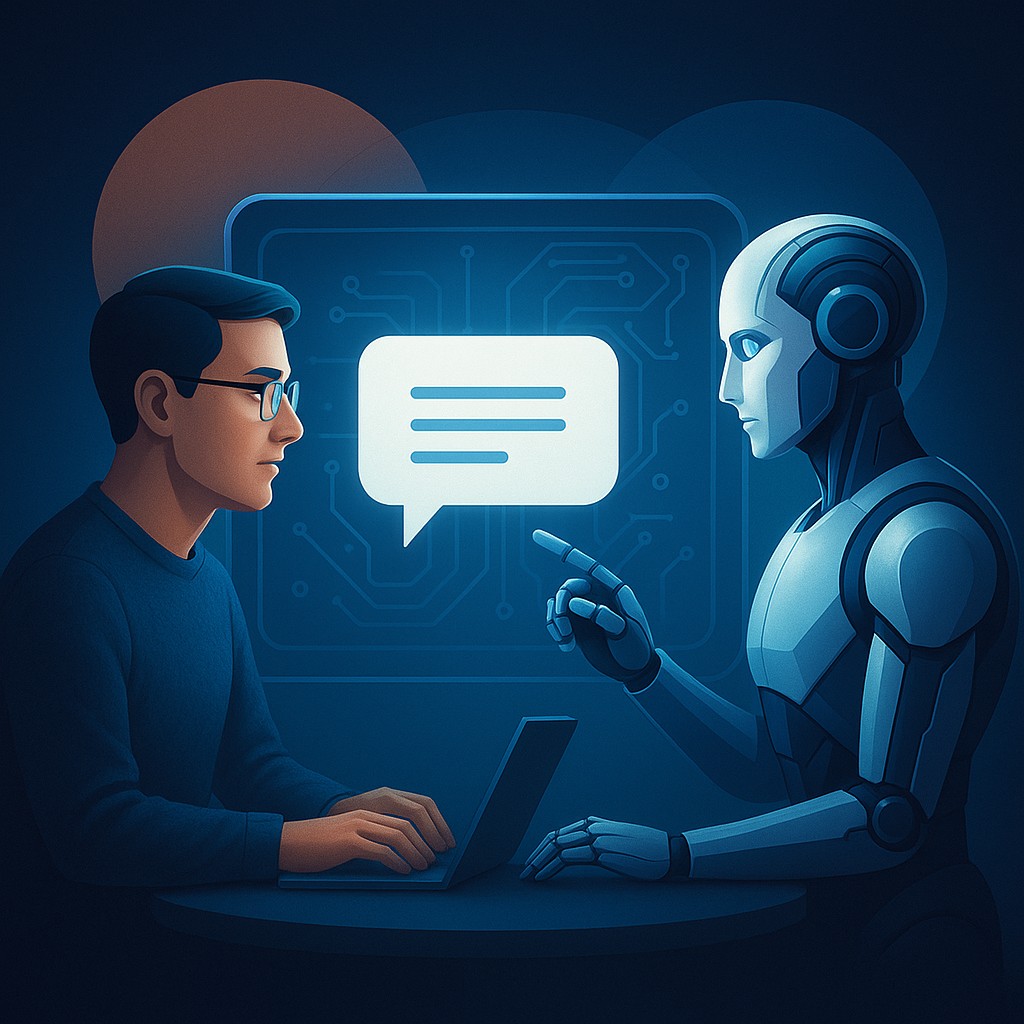
When you type a prompt into a modern AI, you are interacting with a system that has been poked, prodded, and questioned more than a witness in a high-profile trial. Behind the scenes, engineers have spent countless hours trying to make the model misbehave. They hope to find the cracks in its digital armor before a mischievous user does. This process is called "red teaming," a term from military simulations where a friendly group plays the enemy to find weaknesses in a defense plan. In the past, this meant hiring clever people to spend their days trying to trick the AI into giving out restricted info, creating harmful content, or ignoring its ethical rules.
However, the human imagination is surprisingly limited compared to the vast, complex world inside a large language model. A person might think of a thousand ways to ask a dangerous question, but an AI could find a billion. This is why the industry is shifting toward a faster, automated approach called "multi-agent red teaming." In this setup, we no longer rely only on human testers. Instead, we create a digital arena where specialized AI agents face off in a constant, high-speed debate. One agent is designed to be the ultimate rule-breaker, while the other acts as a tireless guard. This creates a feedback loop that evolves much faster than any human-led team ever could.
The Strategy of Adversarial Interaction
To understand how this works, we have to look at the relationship between the two main roles in this digital sparring match: the Attacker and the Defender. The Attacker agent is given a specific goal, such as finding a way to make the target model ignore its safety training. It does not just ask the same question over and over; it learns from every failure. If the target model catches a "jailbreak" attempt (a prompt designed to bypass rules) and shuts it down, the Attacker analyzes why. It might try changing its tone, using complex metaphors, or hiding the request inside a fictional roleplay. It is a master of social engineering, but its target is another machine.
The Defender agent, on the other hand, is not just a passive wall. In many multi-agent setups, the Defender is an active participant that analyzes the Attacker's moves. Its job is to figure out the intent behind the words. While a human might be fooled by a user pretending to be a "rebellious historian" researching ancient poisons, the Defender agent is trained to spot statistical patterns that signal a safety violation. By working at the same speed and scale, these two agents can simulate years of human testing in just a few hours. This is about more than just blocking bad words; it is about understanding the deep logic used to bypass restrictions.
How Agents Discover Digital Loopholes
The magic of this process lies in the many "identities" these agents can take on. In traditional testing, a person might stick to their own culture or language. Multi-agent systems can launch thousands of sub-agents, each testing the model in a different language, technical jargon, or emotional style. One agent might act like a confused student, while another acts like a sophisticated hacker exploring cybersecurity flaws. This allows the red teaming process to cover much more ground. It ensures the model acts safely not just in formal English, but also when it encounters slang, code, or different dialects.
When these agents "debate," they are stress-testing the statistical boundaries of the model. Every time the Attacker finds a successful prompt, it is recorded as a vulnerability. These are not always one-on-one matches; often, multiple agents will work together to see if they can overwhelm the target model's attention. This is called "agentic red teaming," where the attacking system can plan multi-step strategies. For example, it might start with several innocent questions to build "trust" in the conversation, only to spring a forbidden request once the model's internal focus has shifted.
| Testing Method |
Participant Speed |
Creative Breadth |
Scalability |
Primary Goal |
| Manual Red Teaming |
Slow (Human speed) |
High (within human context) |
Low |
Identifying subtle nuances |
| Static Prompt Injection |
Fast (Automated) |
Low (Fixed scripts) |
Medium |
Checking for known keywords |
| Multi-Agent Debate |
Very Fast (Real-time AI) |
Very High (Evolves strategies) |
Extremely High |
Finding new statistical gaps |
Beyond Simple Filters to Systemic Hardening
One of the biggest myths about AI safety is that it is just a list of "forbidden words." In reality, the challenge is more complex because the meaning of words depends entirely on context. A model should be allowed to discuss "knives" in a cooking recipe or a museum exhibit, but not in a street fight. Multi-agent red teaming excels here because it tests the logic of the safety guardrails rather than just their vocabulary. By forcing the AI to defend its decisions against an equally capable AI opponent, developers can see where the logic fails and fix the model's fundamental training.
This leads to what is known as "proactive hardening." Instead of waiting for the public to find a flaw and then releasing a "patch" or quick fix, engineers use data from millions of agent sessions to retrain the model before it is ever released. This creates a stronger foundation. Think of it like a vaccine for software: by exposing the AI to a controlled "virus" of adversarial prompts from another agent, the system builds up immunity. It learns to recognize the shape of a deceptive request, making it less likely to be fooled in the real world.
The Role of Competition in Evolutionary Safety
The reason this "adversarial debate" works so well is that it uses competition, a powerful driver of evolution. When two agents compete, they enter an "arms race." If the Attacker gets better at crafting subtle jailbreaks, the Defender must get better at spotting them. This co-evolution pushes both systems to their limits. Without the Attacker constantly trying new things, the Defender would become stagnant, prepared only for yesterday’s threats. This dynamic keeps researchers alert and ensures the guards are not just watching the front door while the back door is wide open.
However, it is important to remember that this process is based on probability, not absolutes. Because language models work on likelihoods, multi-agent red teaming is about reducing the chance of failure to near-zero. It helps engineers map out the "long tail" of strange edge cases that humans would likely never think of. While we might never reach 100% perfect safety, we are moving toward a world where the AI has essentially seen it all before. It has already "debated" its way through every common trap, making it much more resilient than a model that was simply told to "be good."
Watching the Watchmen in a Multi-Agent World
As we rely more on AI to police other AI, a natural question arises: who is supervising the agents? This is where the human element remains vital. Humans define the ethical "North Star" that the Defender agent protects. We set the rules and interpret the results. The multi-agent debate is a tool for discovery, but the final judgment on what is "safe" or "acceptable" is still a human responsibility. The goal is to use the machine's speed for the heavy lifting, while humans focus on the high-level philosophy of how technology should behave.
This shift from manual testing to automated, multi-agent competition is a major milestone in computer science. It allows us to move beyond our own limited perspectives and uncover the hidden complexities of the digital minds we have built. By watching these silent, rapid-fire debates, we gain a deeper understanding of how intelligence works, how it can be led astray, and how it can be strengthened. It is an ongoing journey where every "jailbreak" found by an agent is not a failure, but a lesson that brings us closer to trustworthy technology.
The next time you interact with an AI and it politely declines an inappropriate request, remember that its restraint was likely forged in millions of previous debates. Behind that simple "I'm sorry, I can't do that" is an invisible history of digital sparring. It is an inspiring example of how we can use AI not just to create content, but to build a more secure and ethical digital world. By embracing this proactive approach, we are ensuring that the future of technology is built on a foundation of rigorous testing and constant improvement.