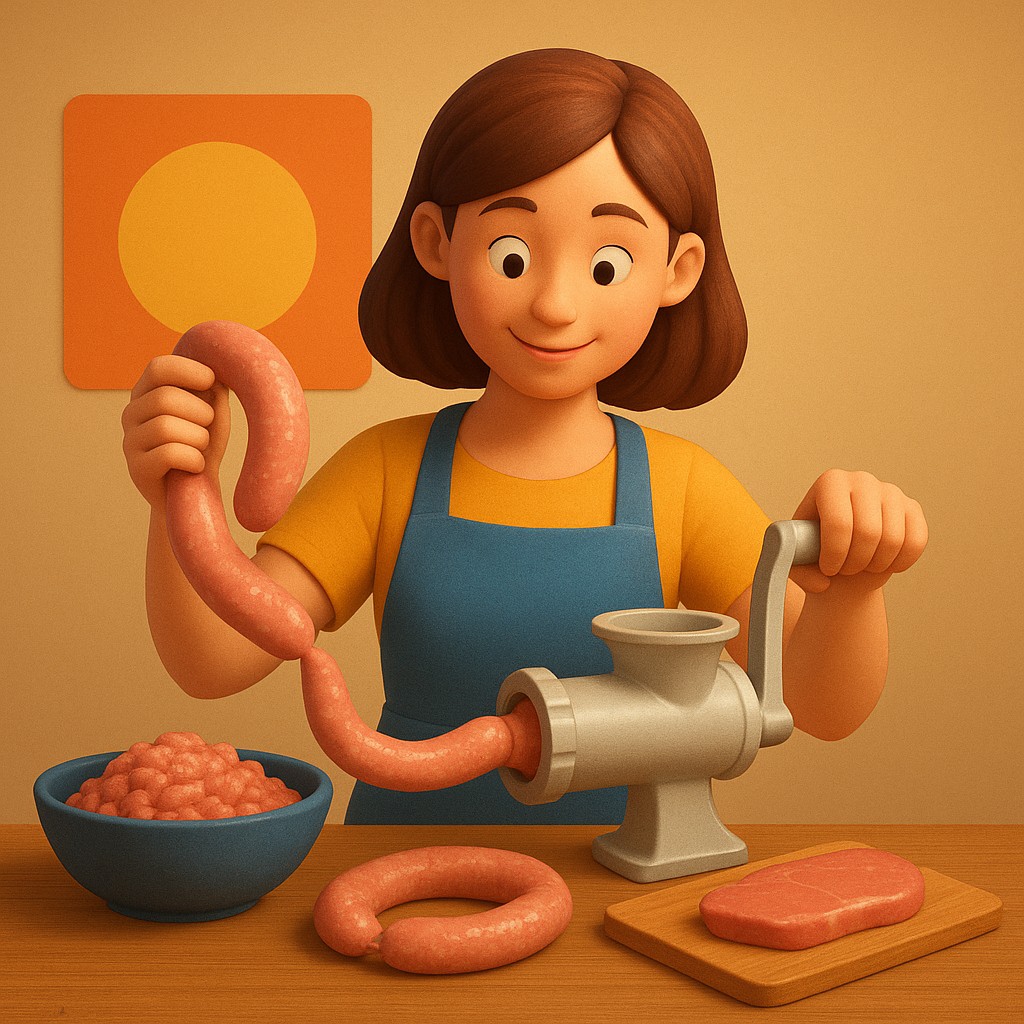
Making sausage at home is a bit like learning a magic trick. You start with ordinary ingredients, follow a few rules that sound oddly scientific, and end up with something that makes people say, "Wait, you made this?" It gives the same quiet satisfaction as baking bread, but with a grinder - the power tool of the kitchen.
It also clears up a supermarket mystery: why some sausages are juicy and springy while others are dry, rubbery, or overly salty. Once you make your own, you see that sausage is not mystery meat. It is a controllable mix of meat, fat, salt, seasoning, and technique. Most of the mystery is just someone else’s choices.
Yes, the first time can feel intimidating. There are new words - casings, bind, bloom - and a low-level fear of creating a biology experiment. The good news is you do not need a butcher’s apprenticeship. You need a clean kitchen, cold ingredients, and a willingness to follow a few non-negotiable safety and texture rules.
The big idea: sausage is a meat emulsion you can actually control
At its heart, sausage is ground meat and fat, salted and mixed until it gets sticky enough to hold together. That sticky stage is not optional. It is the physics of good sausage. Salt dissolves certain muscle proteins, mainly myosin, and those proteins act like a natural glue. They help the meat and fat stay together instead of separating into a sad puddle in the pan.
A common misconception is that sausage is just "ground meat in a tube." If you grind pork, sprinkle spices, and cook it, you will get crumbled seasoned meat more than a bouncy, cohesive sausage. The bind is what creates the spring and juiciness. Your goal is to grind cold, salt correctly, and mix until the mass looks tacky and clings to your hand.
Another myth: "More fat is always better." Fat matters, but more is not automatically juicier if the mixture is not bound or if it gets warm during processing. Warm fat smears instead of staying in separate pieces, and smeared fat can leak out during cooking. Think of fat like chocolate chips in cookie dough - you want them distributed, not melted into the batter before baking.
Gear and setup: you can start simple, but cold is mandatory
You can make great sausage with surprisingly little gear, especially if you start with loose sausage (no casings). A grinder and a stuffer make the process smoother and the results more consistent, but what matters most is temperature control and cleanliness, not a shrine to stainless steel.
Here is a practical starter kit: a kitchen scale (not optional if you want repeatable results), a grinder or a stand-mixer grinder attachment, a large bowl, sheet pans, and a thermometer. If you plan to stuff casings, add a stuffer or a stuffing attachment. A vertical stuffer is easier than using a grinder to stuff, but many people begin with what they have and upgrade later.
The cold rule deserves its own spotlight. Keep meat, fat, bowls, grinder parts, and your mixing paddle as cold as you can without freezing. Pop metal parts in the freezer for 30 to 60 minutes. Chill the meat until it feels firm, and if your kitchen is warm, work in short stages and return the mixture to the fridge when it starts to soften. Cold keeps the fat in clean particles and cuts bacterial growth, so it improves texture and safety at the same time.
Choosing meat and fat: the 70-30 rule (and when to break it)
Most classic fresh sausages are about 70 percent lean meat to 30 percent fat by weight. Pork shoulder is the home-sausage hero because it usually sits near that balance and tastes great. If you use very lean meat, like pork loin or chicken breast, the sausage can turn dry and crumbly unless you add fat back in.
Fat is not just grease. It is a texture ingredient and a flavor carrier. It keeps the sausage moist and makes spices taste rounder. Back fat is excellent if you can get it, but belly fat, fatty shoulder trimmings, or a bit of well-chilled bacon can work. Just avoid heavily smoked or strongly cured bacon if you want the spices to stay in charge.
A quick guide to common sausage styles at home
| Style |
Typical seasoning vibe |
Needs casing? |
Special technique to know |
| Fresh breakfast-style |
Sage, pepper, sweet or spicy |
Optional |
Cook thoroughly, can be loose patties |
| Italian-style |
Fennel, garlic, chili |
Optional |
Mix to a strong bind for a springy bite |
| Bratwurst-style |
Nutmeg, white pepper, marjoram |
Usually |
Often includes a little milk or cream for tenderness |
| Smoked/cured (advanced) |
Paprika, garlic, smoke |
Usually |
Requires curing salt and careful temperature control |
This table is not meant to box you in. It is meant to show that most styles are different seasoning maps over the same basic technique. Once you nail the texture, flavor becomes your playground.
Salt, spices, and the science of “sticky”: building flavor that actually stays
Salt has three jobs: it seasons, it helps proteins bind, and it helps sausage retain moisture. For most fresh sausages, start with about 1.5 to 2.0 percent salt by weight of the meat-and-fat mixture. That means 15 to 20 grams of salt per kilogram of total meat plus fat. This is why a scale is so helpful: you can be accurate without guessing, and accuracy is how you make something great twice.
Spices are flexible, but they work better when you treat them like part of a system. Toast whole spices if you want, but do not burn them. Mix dry spices with the salt first to spread them evenly, then add to the meat. For garlic, choose fresh minced, microplaned, or powdered - each gives a different vibe. Fresh garlic tastes bright and punchy, powder tastes rounder, and both are valid choices.
One more misconception: "You can fix bland sausage by adding more spice at the end." Not really. Once the meat is mixed, the spices need time to hydrate and spread. A better method is to mix, rest the mixture in the fridge for at least a few hours - overnight is even better - then cook a small test patty. Adjust seasoning, remix briefly, and only then stuff.
The test patty is your quality-control superpower
Before you stuff 10 links, cook a tablespoon-sized patty. Taste for salt level, spice balance, and heat. You can fix most seasoning problems at this stage, but you cannot fix a broken texture after stuffing and cooking. The test patty is your friendly, edible rehearsal.
Step-by-step: making fresh sausage the reliable way
The process is straightforward, but the order matters. Think of it as a short checklist where each step sets up the next.
1) Prep and chill
Cut meat and fat into grinder-friendly cubes, about 1-inch pieces. Spread them on a tray and chill until very cold and slightly stiff, about 30 to 60 minutes in the freezer depending on your freezer. Chill your bowl and grinder parts too. This prevents fat smearing and keeps everything safer.
2) Grind with intention
Choose a grind size for the texture you want. A coarse grind gives a rustic feel, a finer grind gives a tighter bite. Many sausages use a two-stage grind: coarse first, then finer after mixing or chilling again. If the mixture starts to look pasty or warm, stop and chill it. Patience is cheaper than ruined sausage.
3) Salt and mix until it turns tacky
Add salt and seasonings, then mix aggressively by hand (clean hands are great tools) or with a stand mixer on low. Look for the mixture to become sticky and to form strands when you pull it apart. This usually takes 1 to 3 minutes in a mixer, or 3 to 5 minutes by hand, depending on batch size and temperature. If it is not sticky, it will not slice or bite like proper sausage.
4) Add cold liquid if the recipe calls for it
Many recipes include a small amount of cold liquid - water, beer, wine, or milk. This helps spread the seasoning and can improve juiciness. Add it slowly and keep mixing until it is absorbed. Do not use warm liquid, because that defeats the cold rule and invites fat smearing.
5) Rest for better flavor
Cover and refrigerate the mixture for at least 4 hours, ideally overnight. This rest improves flavor and evens the texture. It also gives you time to clean up, which is the unglamorous secret to enjoying sausage-making.
Casings without drama: how to stuff and link like you meant it
Casings are just edible containers, and they are less scary than they look. Natural hog casings are traditional and give a satisfying snap. Collagen casings are uniform and convenient, though slightly less springy. Either type works for home use.
Natural casings come packed in salt and need rinsing and soaking. Run water through them like a tiny garden hose to flush out salt and check for holes. Keep them in warm water while you work so they stay flexible. This step feels odd, but it is normal.
When stuffing, the biggest beginner mistake is stuffing too tightly. Overstuffed links burst while cooking or refuse to twist into neat links. Aim for a firm but pliable tube, like a well-stuffed pillow, not a bicycle tire. If you see air pockets, prick them with a sanitized pin or sausage pricker. Air is not evil, it is just inconvenient.
Linking 101
After stuffing a long coil, decide on link length and pinch at intervals. Twist every other link in the opposite direction so they do not untwist each other. If you twist all the same way, your sausage will slowly unravel like a bad plot twist. If you get a tear, do not panic - tie off the casing with butcher’s twine and keep going.
Cooking it right: juicy sausage is mostly temperature management
Fresh sausage should be cooked through, but "through" does not mean "punished." The goal is to cook the meat while keeping fat from quickly rendering out. High heat can split the casing and leak fat, leaving a dry, grainy interior. Medium heat and patience are your allies.
A reliable approach is to start gently, then finish with browning. In a pan, cook over medium to medium-low, turning often. For extra insurance, poach the sausages first in simmering water - not a rolling boil - until nearly cooked through, then brown in a pan for color and flavor. Grilling works too; keep a cooler zone on the grill so you can move links away from flare-ups.
If you like numbers, use a thermometer. For pork, aim for about 160°F / 71°C for fresh sausage, or follow current safety guidance for the meats you use. Pull the sausage as it reaches the target and let it rest a few minutes to keep juices inside. Slicing right away is tempting, but waiting stops your cutting board from turning into soup.
Food safety and curing: what to be strict about (and what not to overthink)
Clean surfaces, cold temperatures, and fresh ingredients do most of the heavy lifting. Wash hands, sanitize equipment, and do not leave ground meat at room temperature. Grinding increases surface area, which is great for texture and bad for bacterial growth. Keep batches small enough to work quickly and chill as needed.
A big misconception is that all sausages require curing salt. Fresh sausage does not. Curing salt, often called Prague Powder or pink curing salt, is for smoked or dried sausages, or anything that spends time in the warm-but-not-fully-cooked zone where botulism risk can rise. If you are not curing or smoking low-and-slow, do not add curing salt casually. Use it only in tested recipes, because the dose matters.
If you want to explore smoked or fermented sausages later, you can, but treat that as the next level with its own rules, gear, and reading. For now, fresh sausage is the best training ground: delicious, forgiving, and safe when handled properly.
Troubleshooting: the common failures and the quick fixes
Even good cooks sometimes make dry, crumbly, or oddly bouncy sausage. These are not personal failures. They usually have a few predictable causes.
If your sausage is dry and crumbly, it is often too lean, under-salted, or under-mixed. Add more fat next time, measure salt by weight, and mix until tacky. If your sausage is greasy with pockets or leaks fat, the mixture likely got too warm, the fat smeared, or you cooked too hot. Work colder, chill between steps, and cook more gently.
If the texture is rubbery, you may have overmixed while warm or used a very fine grind with heavy mixing, which creates a tight, hot-dog-like texture. Chill more, mix just to a good bind, and use a coarser plate for a more rustic result. If the seasoning tastes uneven, mix spices with the salt, add evenly, and rest the mixture before judging.
Making it your own: a simple framework for inventing recipes
Once you have the basic process, you can create signature sausages without guessing. Use a repeatable framework: start with pork shoulder, set your salt percentage, pick one main spice note (fennel, sage, paprika), add supporting aromatics (garlic, onion, pepper), then choose a liquid (wine, beer, water) only if needed for texture. Keep notes like a scientist, but taste like a poet.
For practice, make the same base sausage three times and change only one thing each time - a different pepper, a different herb, a different liquid. You will learn faster than by trying many complicated recipes at once. Sausage rewards small, controlled experiments, and it also rewards eating your data.
You’re closer than you think
Home sausage-making looks mysterious until you do it once, then it becomes a repeatable ritual: chill, grind, salt, mix to sticky, rest, test, stuff, and cook gently. After a couple batches, you will notice texture and seasoning in store-bought sausages the way coffee people notice over-roasted beans. That is not snobbery, it is skill.
So clear some fridge space, grab a scale, and make a batch that is unapologetically yours. The first time a casing snaps and you taste a juicy link you built from scratch, you will realize you did not just make sausage. You built a new kind of kitchen confidence, and it tastes fantastic.