Imagine stepping into a thick tropical rainforest at sunrise. The air is heavy with moisture, and a hazy green light filters through a canopy so dense it feels like the ceiling of a cathedral. To most of us, the resulting noise is a beautiful but chaotic wall of sound: the piercing whistles of birds, the rhythmic hum of cicadas, and the occasional distant hoot of a primate. To a traditional conservationist, this was once a puzzle that could only be solved through years of patient fieldwork, miles of trekking, and a fair amount of guesswork. It was a romantic way to work, but it was also painfully slow and expensive. This made it difficult to prove to the rest of the world exactly how much "nature" was actually being saved.
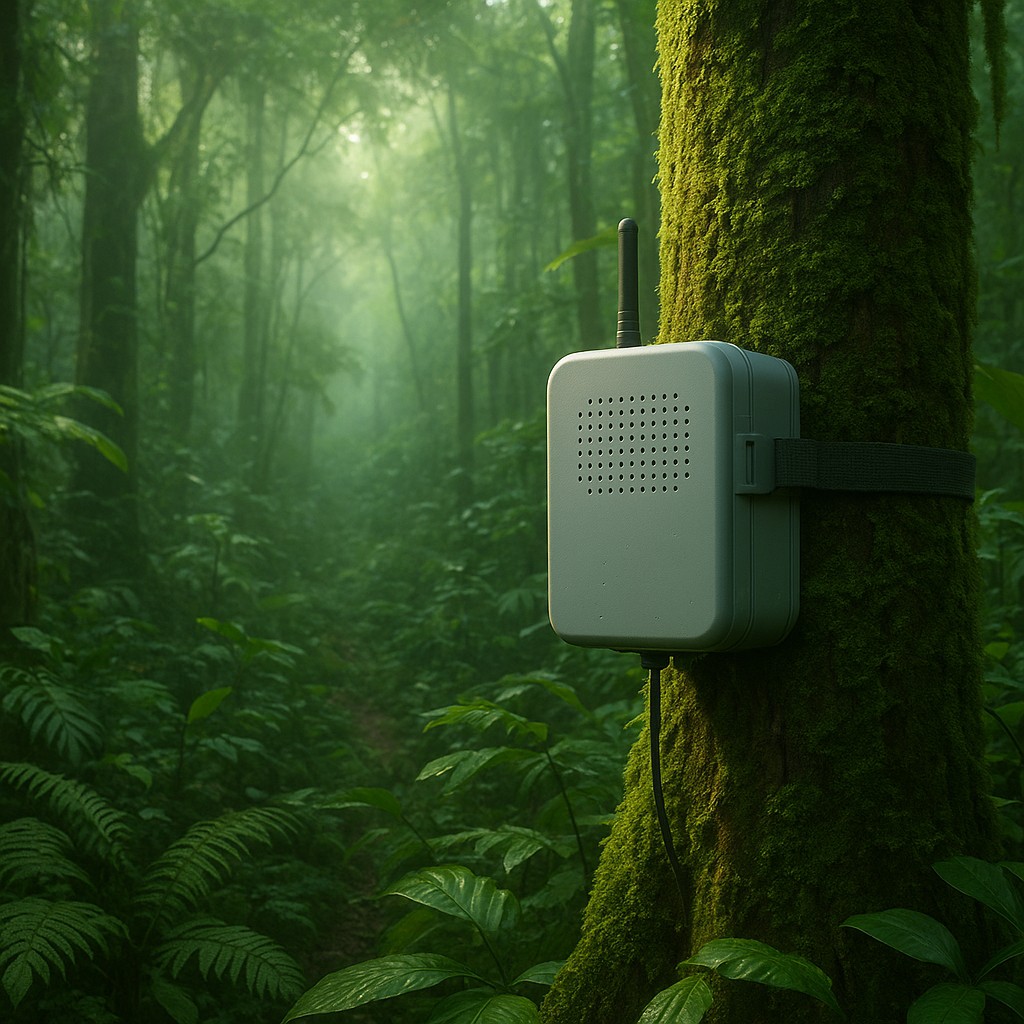
Fast forward to today, and the jungle has developed a digital nervous system. If you look closely at a mossy trunk, you might spot a small, rugged plastic box strapped to the bark. This is an autonomous recording unit – a device that never sleeps, never complains about mosquitoes, and has an ear for detail that would make a symphony conductor jealous. These devices are the backbone of a revolution in how we value our planet. By capturing the "symphony of the wild," we are no longer just guessing at the health of an ecosystem based on a few blurry photos from a trail camera. We are using the very voices of the forest to create a new kind of currency, turning the sounds of life into data-driven investments that could reshape global finance.
Moving from Guesswork to Precise Data
For decades, protecting nature relied on what we might call "proxy metrics." If a park ranger saw a tiger print, they assumed the tiger was healthy, and if the tiger was healthy, they assumed the forest was doing well. While this logic seems sound, it lacks the precision needed for modern economics. If a company wants to offset its environmental footprint by investing in a forest, it needs to know more than just "the forest is still there." It needs to know that insect populations are thriving, that migratory birds are returning on schedule, and that predators have enough prey to survive. Traditional methods, which involve experts walking through the woods once or twice a year, simply couldn't provide that level of detail consistently.
This is where bioacoustics – the study of sound within an ecosystem – comes in. Sound is the primary way many animals communicate, defend their territory, and find mates. Unlike a camera trap, which only captures what walks directly in front of its lens, a single microphone can "hear" in 360 degrees, picking up sounds from the forest floor to the highest treetops. By placing these sensors across a landscape, researchers can capture a holistic "soundscape." This is more than just a recording; it is a biological fingerprint. When you feed these thousands of hours of audio into sophisticated artificial intelligence, the machine can pick out individual species with startling accuracy. It can tell the difference between two similar-sounding frogs or count the number of distinct bird calls in a single morning, creating a real-time health score for the entire environment.
This shift from manual tracking to AI monitoring represents a fundamental change in our relationship with nature. We are moving away from "vague donations," where money is sent to a general cause, and toward a "results-based" model. In this new system, a conservation project must prove its impact using hard data. If a restored wetland is actually louder and more diverse than it was five years ago, the data will prove it. This transparency is the key ingredient that allows international markets to trust that their money is buying a real biological improvement rather than just a feel-good story.
Understanding the Biological Orchestra
To understand how this works technically, it helps to think of an ecosystem as an orchestra where every species has its own "instrument" and a specific time to play. This concept is known as the "acoustic niche hypothesis." In a healthy forest, animals evolve to make noise at different frequencies or at different times of day to avoid drowning each other out. A bird might sing at a high pitch in the morning, while a frog croaks at a low frequency at night. When an ecosystem is damaged, "holes" appear in this orchestra. If a certain type of cricket disappears, a specific frequency band goes silent. By analyzing the "fullness" of the soundscape across the entire spectrum, scientists can estimate biodiversity levels without even needing to identify every single species by name.
The AI models used for this task are trained using deep learning, similar to the technology that powers facial recognition on your phone. These models are fed thousands of hours of verified recordings, learning the subtle differences between a common sparrow and a rare, endangered songbird. Once trained, the AI can process a year's worth of audio in just a few hours – a task that would take a human researcher a lifetime. The result is a "Bioacoustic Index," a number that represents the complexity and health of the environment. This index acts as a bridge between the messy, organic world of the jungle and the structured, analytical world of the boardroom.
| Feature |
Traditional Monitoring |
Bioacoustic Monitoring |
| Data Frequency |
Annual or seasonal snapshots |
Continuous, 24/7 monitoring |
| Detection Range |
Limited visual range |
360-degree auditory range |
| Cost Efficiency |
High (requires expert labor) |
Lower over time (automated) |
| Data Processing |
Manual identification (slow) |
AI-powered identification (fast) |
| Objectivity |
Subject to human bias |
Data-driven and standardized |
| Impact Measurement |
Often anecdotal or estimated |
Quantifiable and verifiable |
These indices allow for a level of detail that was previously impossible. For example, researchers can track "acoustic richness," which measures the number of different sounds, or "evenness," which looks at whether one species is dominating the soundscape (a sign of an unbalanced ecosystem). This data can be mapped over time, showing exactly how a forest recovers after a fire or how animal populations shift due to climate change. It turns the silent, invisible processes of nature into a visible, measurable trend line that anyone can understand.
Banking on the Sounds of the Wild
The real magic happens when this data enters the world of "Biodiversity Credits." Much like the carbon credits that have existed for years, biodiversity credits allow companies to fund conservation projects to offset their environmental impact. However, carbon credits have often been criticized for being hard to verify or for focusing only on carbon while ignoring the complex web of life. Biodiversity credits aim to be more holistic. Instead of just measuring how much wood is in the trees, these credits measure how much life is in the forest.
When a company buys a biodiversity credit, they aren't just making a donation; they are purchasing a verified unit of environmental improvement. This creates a powerful incentive for landowners and local communities to protect their forests. If a village in Borneo can prove that their forest is becoming more diverse and "louder" with wildlife every year, they can sell those credits on the international market. This turns a standing forest into an economic asset that is worth more than the timber inside it. It provides a steady stream of income for conservation, ensuring that the people living closest to these ecosystems benefit the most from their protection.
This market-based approach also solves the "verification gap" that has long troubled global conservation. In the past, it was hard for an investor in London to know if the trees they paid for in the Amazon were still standing, let alone if they were supporting wildlife. With bioacoustic devices uploading data to the cloud, that investor can virtually "listen" to the impact of their money. They can see the data reports, hear the return of rare monkeys, and feel confident that their capital is doing exactly what they intended. It transforms conservation from a form of charity into a sophisticated environmental asset.
Navigating the Challenges of Acoustic Silence
While bioacoustics is a powerful tool, it has its own challenges. One of the most fascinating hurdles is the concept of "biological silence." A common mistake is thinking that a quiet forest is a dead forest, but nature is rarely that simple. Many animals are strategic about when they make noise. Prey species, for instance, may go completely silent if they sense a predator nearby. If a recording captures a sudden hush, it might actually mean that a powerful predator like a jaguar is moving through the area – a sign of a very healthy ecosystem. This means AI models must be trained to understand context, recognizing that silence can sometimes be just as informative as sound.
There are also physical limits. Microphones can be damaged by extreme humidity, curious monkeys might chew on cables, and heavy tropical rain can drown out every other sound for hours. Furthermore, not all animals make noise. A forest could be full of silent lizards, butterflies, and snakes that a microphone would never detect. This is why bioacoustics is often used as part of a "multi-modal" approach, combining sound data with satellite imagery and environmental DNA (eDNA) – a method of identifying species from traces like hair or skin found in the environment. It is one vital piece of a much larger scientific puzzle.
Ethics also play a role in this new frontier. As we fill remote places with digital "ears," we must consider the privacy of the indigenous people and local communities who live there. It is vital that these monitoring programs are designed alongside local inhabitants, ensuring that the data collected empowers them rather than just observing them. The goal is to create a system where technology and traditional knowledge work together, using the latest AI to amplify the voices of those who have protected these lands for generations.
A Future Full of Sound
We are entering an era where the divide between the natural world and the financial world is finally beginning to blur in a productive way. For too long, the economy treated "nature" as an external factor – something that was nice to have but difficult to value. By translating the complex sounds of a thriving ecosystem into data that can be traded, verified, and invested in, we are giving the wild a seat at the table. Bioacoustics provides the evidence, AI provides the scale, and credit markets provide the capital needed to fight biodiversity loss.
This shift represents a profound moment of hope. It suggests that we don't have to choose between economic progress and environmental health. Instead, we can build a world where the more life we foster, and the louder our forests become, the more prosperous our societies grow. The next time you hear birds chirping or leaves rustling, remember that those sounds are more than just background noise. They are the heartbeat of a planet that is finally being heard – and they are the data points of a future where conservation is a core pillar of how we value our world.