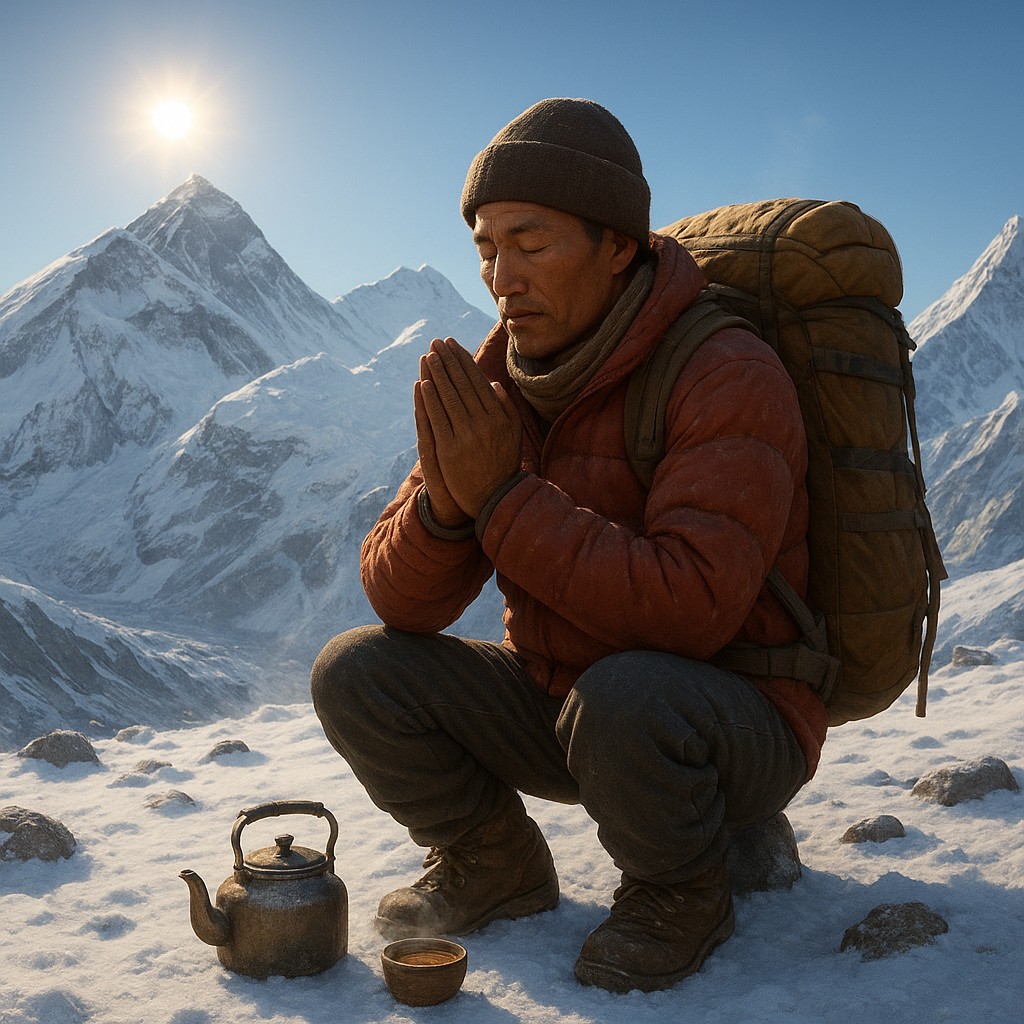
Imagine waking up in a place where the air is so thin you feel like you are breathing through a straw, and the sun reflects off the snow with such glare that it could blind you before breakfast. For most people, this sounds like a scene from a survival movie, but for a Sherpa, it is just a cold Tuesday morning at the office. That office is the Khumbu region of Nepal, a jagged, breathtaking landscape where the peaks touch the edge of space and the wind sings a constant, freezing song. To understand the day in the life of a Sherpa, you must realize they are not just mountain guides. They are the literal backbone of Himalayan culture, possessing a biological and spiritual connection to the heights that the rest of the world is only beginning to grasp.
While the media often portrays Sherpas solely as brave individuals carrying heavy packs for Western tourists, their lives are a complex blend of ancient tradition, modern business, and incredible physical toughness. Before the first light even hits the summit of Everest, a Sherpa’s day has already begun with a prayer, a cup of butter tea, and a level of hard work that would make a marathon runner weep. This is a look at a typical day during the climbing season, where every step is a calculated risk and every breath is a testament to human endurance at the top of the world.
The Sacred Morning Ritual and the Myth of the Superhuman
Long before the sun peeks over the Lhotse face, a Sherpa is awake in the dim light of a tent or a stone house. The day does not begin with checking emails or scrolling through social media, but with the scent of burning juniper. This ritual, known as the Sang, is a way to purify the environment and honor the mountain spirits. To a Sherpa, Everest is not just a pile of rock and ice to be conquered; it is Chomolungma, the "Mother Goddess of the World." This spiritual grounding is essential because it provides the focus needed to face the extreme dangers of the day ahead.
There is a common misconception that Sherpas are superhuman or that they simply do not feel the effects of high altitude. While their bodies have adapted over thousands of years to use oxygen more efficiently, they still feel the cold, the fatigue, and the headaches caused by thin air. Scientists have found that Sherpas have a unique metabolism that allows their mitochondria-the parts of cells that produce energy-to work more effectively even when oxygen is scarce. However, a day in the life of a Sherpa shows that biology is only half the battle. The other half is an iron will and a culture that prizes resilience above all else. After a quick meal of Tsampa, which is roasted barley flour, and salted butter tea, the physical labor begins.
Navigating the Icefall and the Art of Heavy Lifting
By 4:00 AM, the Sherpa is often already on the move, crossing the Khumbu Icefall while the ice is still frozen solid and stable. This is arguably the most dangerous part of the day. Imagine a slow-moving river of ice, hundreds of feet deep, broken into giant blocks the size of houses called seracs. A Sherpa’s job is to navigate this maze, often carrying loads that weigh 60 to 80 pounds. While clients might carry a small daypack with water and a camera, the Sherpa is transporting the essentials of life: oxygen bottles, tents, stoves, and food for the higher camps.
The work is rhythmic but grueling. Every step must be precise because a misplaced crampon can lead to a fall into a bottomless crevasse. Despite carrying heavy loads, Sherpas often move twice as fast as the climbers they assist. This is not to show off, but to spend as little time as possible in "kill zones" where avalanches or ice collapses are likely. They are the "Icefall Doctors" who fix the ropes and ladders that everyone else uses. Without their work in the dark, early hours, the mountain would be impassable for almost everyone else.
| Task Category |
Responsibility Details |
Physical Demand |
| Route Fixing |
Anchoring ropes and placing aluminum ladders over deep crevasses. |
Extremely High |
| Logistics |
Transporting oxygen tanks, fuel, and food to upper camps (C1 to C4). |
Very High |
| Guiding |
Monitoring client health, pacing, and managing technical gear. |
High |
| Camp Management |
Melting snow for water, cooking, and maintaining tent structures. |
Moderate |
| Spiritual Duties |
Conducting Puja ceremonies to ensure the safety of the expedition. |
Low (Mental/Spiritual) |
The Midday Heat and the Complexity of Camp Life
By midday, the high-altitude sun becomes a paradoxical enemy. Because the atmosphere is so thin, the UV rays are incredibly strong, and the heat reflecting off the white snow can make the valleys feel like a giant solar oven. A Sherpa might find themselves stripping down to a single layer while standing on a glacier, despite being surrounded by ice. This is the time for camp management. Once they reach a higher camp, such as Camp II or Camp III, the work does not stop. They must immediately begin carving platforms into the ice for tents and melting massive amounts of snow to provide water for the team.
This phase of the day shows the Sherpa as a master of logistics. They are not just climbers; they are engineers and caretakers. They must ensure that the stoves are working, that the communal tents are secure against the rising afternoon winds, and that every client is drinking enough water. It is a common myth that Sherpas are just porters. In reality, they are often the primary decision-makers on the mountain. When the weather turns or a climber shows signs of HACE, or High Altitude Cerebral Edema, which is a life-threatening swelling of the brain, it is the Sherpa’s expertise and quick thinking that decide whether the day ends in success or a rescue mission.
The Cultural Heart of the Himalayan Community
As the afternoon sun begins to dip, the focus shifts from physical tasks to socializing. Life in the high villages like Namche Bazaar or at Base Camp is a vibrant tapestry of community. Sherpas are part of a tight-knit ethnic group with their own language, music, and traditions. Even in the middle of a grueling climbing season, you will find Sherpas sharing jokes, playing cards, and discussing the politics of the mountain. They are savvy entrepreneurs who have used the climbing industry to build schools, hospitals, and better infrastructure for their people.
It is important to correct the idea that Sherpas are forced into this work. While it remains one of the most dangerous jobs in the world, many young Sherpas take great pride in their climbing heritage. It is a way to provide a life for their families that was once unimaginable. However, this comes with the heavy weight of being away from their loved ones for months at a time. A Sherpa’s day often ends with a satellite phone call or a radio check-in with their spouse and children back in the valley, reminding them that they are climbing not just for the peak, but for their children’s future.
The Quiet Evening and the Weight of the Mountain
As darkness falls and the temperature drops well below zero, the mountain becomes a silent, imposing shadow. The Sherpa retreats into their sleeping bag, often sharing a tent with others to preserve body heat. This is a time for reflection. The physical toll of the day is immense, often burning upwards of 6,000 to 10,000 calories. Tomorrow, the cycle will repeat: another carry to a higher camp, another set of ropes to fix, or perhaps the final push to the summit.
The Sherpa’s perspective on the mountain is one of respect rather than conquest. They understand that the mountain allows them to be there, and that permission can be revoked at any moment. This humility is what keeps them alive. While the world sees the summit photos and the flags, the Sherpa sees the wind patterns, the color of the ice, and the subtle cues of the terrain. Their day ends not when the sun sets, but when they know their team is safe and the gear is ready for the next move toward the sky.
Climbing Toward a Shared Future
The life of a Sherpa is a masterclass in balance: balancing tradition with modernity, extreme risk with careful planning, and individual strength with a deep sense of community. By looking past the surface-level label of "mountain guide," we see a people who have mastered one of the harshest environments on Earth through intelligence and grit. Understanding their daily routine reminds us that the greatest human achievements are rarely solo efforts. Instead, they are built on the quiet, consistent, and heroic work of those who know how to live in harmony with the world’s highest peaks. As you go about your day, remember the Sherpa moving through the icefall, proving that with the right preparation and a humble heart, no height is truly out of reach.