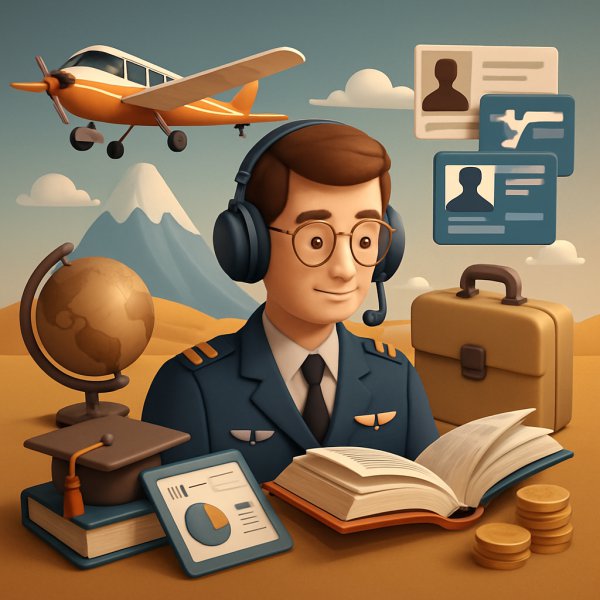
Why learning to fly in Canada could be the best decision you ever make
Imagine climbing out of the everyday fog of traffic, deadlines, and the 9 to 5 commute and seeing the world from above. Becoming a pilot is more than a new skill, it is a different way of thinking - spatially, technically, and responsibly. In Canada you get to learn in diverse flying environments, from the mosaic of prairie fields to coastal winds and mountain passes, which makes Canadian training unusually well rounded and respected worldwide. Whether you dream of being an airline captain, flying bush planes to remote lodges, or simply owning weekend freedom in a small aircraft, the path is clear and achievable with the right plan.
The process can look complicated at first, with licences, medical checks, exams, and hours to build. The good news is that Canada’s licensing system is structured into clear steps that build on each other, and many pilots follow a dozen different pathways to the same result. Think of it like learning music: you start with scales, then songs, then ensembles, and eventually you may lead an orchestra. This guide breaks down those steps into plain language, gives practical actions you can take today, and clears up common myths that trip people up.
You will get a combination of concrete requirements, helpful timelines, real-world tips for saving time and money, plus reflection questions so you internalize choices before you spend cash and time. By the end you will have a realistic route map: what to do first, what to expect at each stage, how long it typically takes, and how to keep going when the weather or finances bite. Strap in - the journey is part science, part craft, and all adventure.
The basic path: from student to professional pilot, simply explained
At a high level, Canadian pilot training is modular. You start with a Student Pilot Permit and initial lessons, then progress to a pilot licence for private use, and if you want to work as a pilot you go on to a Commercial Pilot Licence and then to an Airline Transport Pilot Licence if your goal is the airlines. Along the way you add ratings such as night flying, multi-engine, and instrument flight rules competence, which expand where and when you can fly.
Every licence has three main components: flight training hours, ground study plus written exams, and a flight test. Medical fitness and language proficiency are also required, because safe air navigation depends on physical health and clear radio communications. You can train at a flight school that offers integrated programs, or you can take the modular route and progress piece by piece. Many Canadians use modular training to spread costs and work part-time while building hours.
Progress tends to look like this in practice: a discovery flight and student permit, then focused training for the Private Pilot Licence, followed by work to build flight hours while obtaining commercial course components, then the Commercial Pilot Licence, and finally experience accumulation toward the Airline Transport Pilot Licence. Along the way, people often choose to become flight instructors, work in aerial work, or accept low-paid commercial flying jobs to reach the hours required for higher licences.
Concrete milestones and what they actually mean
To make the pathway less abstract, here are the typical milestones you will pass. Note that exact hour minimums and administrative details can change, so always confirm with Transport Canada and your flight school before committing money.
- Student Pilot Permit and Discovery Flight: You start with a discovery flight to see if you like it, then apply for a student permit so you can fly solo under instruction. You will need a basic medical to start lessons and a photo ID.
- Private Pilot Licence (PPL): This licence lets you fly single-engine aircraft for pleasure and carry passengers, but not for hire. Training gives you the core skills of navigation, flight planning, and safe handling. You must pass a written exam and a flight test to earn the licence.
- Commercial Pilot Licence (CPL): The CPL lets you fly for compensation. Training emphasizes higher-performance flying, advanced navigation, operational decision making, and commercial regulations. You will need a more stringent medical certificate and additional hours and tests.
- Additional Ratings: Multi-engine, night, instrument rating (IFR), and float or tailwheel endorsements expand where you can operate. The instrument rating is particularly valuable if you want a professional career, because it allows flight in clouds and low visibility.
- Airline Transport Pilot Licence (ATPL): The ATPL is the top licence for airline captains. It requires significant flight time, advanced exams, and often additional type ratings for specific jets. Many airlines hire first officers with a Commercial Licence and build experience before issuing command upgrades.
Each step is both a learning milestone and a gatekeeper to new career possibilities. That is the beauty of this system: you can stop after achieving the skill level you want, or you can keep climbing to the airline career if that is your dream.
How much time and money will you need - realistic ranges and variables
Money and hours vary a lot depending on the school, aircraft rates, location, and how intensively you train. Here are typical Canadian ranges to help you budget and plan, with the caveat that prices change and seasonal factors affect pace.
- Private Pilot Licence: Roughly 40 to 60 flight hours, with a common regulatory minimum of about 45 hours for training programs. Cost is often in the CAD 12,000 to CAD 18,000 range depending on aircraft rental rates, instructor fees, and the number of ground school hours. Expect wide variation if you train part-time and take longer.
- Commercial Pilot Licence: Often brings your cumulative time to around 200 hours for aeroplane applicants, meaning add approximately CAD 40,000 to CAD 70,000 after your PPL if you take a full modular route. Integrated full-time programs can be more expensive up front but faster and often have an airline linkage.
- Instrument Rating: CAD 8,000 to CAD 15,000 depending on how much simulator time you use and how many actual IFR hours are flown.
- Total cost to reach airline-ready hours: Many pilots spend CAD 80,000 to CAD 150,000 depending on route, how much instructing offsets costs, and whether you go through an integrated academy versus piecemeal training.
Time-wise, an intensive full-time student might get PPL in 2 to 4 months and CPL within a year, whereas part-time students often take 1 to 2 years to reach commercial standard. Building the experience to be a competitive airline candidate can take several more years unless you enter a cadet or integrated airline program.
Choosing where and how to train - pick the right school for your goals
Your choice of flight school is one of the most consequential decisions. Different schools suit different personalities and budgets. Integrated programs are like immersive bootcamps. They are structured, full-time courses that take you from zero to commercial standard on an accelerated timeline, often with standardized curricula and higher upfront costs. Modular training lets you buy lessons a la carte and progress at your own pace, which is cost-friendly for people who work or need flexibility.
When evaluating schools, talk to current students and recent graduates about pass rates, aircraft condition, instructor turnover, and the school’s culture. Visit the maintenance hangar and ask about aircraft utilization and how maintenance delays are handled. Check whether the school has tie-ins with airlines for cadet programs, and whether they teach in multi-engine trainers and simulators that replicate instrumentation common in commercial cockpits.
Also consider geography. Flying in open prairie airspace gives lots of calm, consistent weather for building hours quickly. Training near mountains builds excellent judgement and mountain-flying skills but introduces weather and terrain challenges that can slow progress. If you want to work on floatplanes or in bush operations, choose a location that offers those experiences as part of the curriculum.
Practical checklist: first 10 actions you can take this week
- Book a discovery flight at a local flight school to experience flying firsthand and ask questions while you are in the cockpit.
- Schedule an aviation medical exam with a Transport Canada Authorized Aviation Medical Examiner to determine which medical category you qualify for.
- Request course outlines and current pricing from 2 to 3 flight schools, and compare aircraft types, instructor ratios, and maintenance procedures.
- Read student reviews and contact recent graduates for candid feedback about their training experience.
- Make a simple budget spreadsheet with realistic flight hour and cost estimates, plus contingency for weather delays.
- Join a local aviation club or online Canadian pilot forum to get mentorship and real-life tips about hiring, instruction, and timeline.
- Study basic aeronautical knowledge resources or buy an introductory PPL ground school book to start learning terminology and decisions.
- If you need financing, explore student loans, bank loans, or flight school financing plans; compare interest rates and repayment terms.
- Plan a timeline for training: part-time evenings and weekends, or full-time block training; choose a calendar and stick to it.
- Think about your career target - private owner, charter pilot, bush pilot, flight instructor, or airline pilot - and use that target to guide which ratings you prioritize.
Common myths and reality checks
Myth: You need perfect eyesight to be a pilot. Reality: Many pilots need glasses. Correctable vision is usually acceptable, and most medical standards allow for correction with contacts or glasses as long as you meet the required corrected acuity. There are limits, and some specific eye conditions need evaluation, but perfect unaided vision is not a strict requirement.
Myth: You must have a university degree to fly for airlines. Reality: Airlines value experience, training quality, and competency more than a specific degree. Some airlines have academic requirements, but many hire based on licences, flight hours, type ratings, and soft skills. A degree can help your resume, but it is not universally mandatory.
Myth: Flight training is glamorous and easy. Reality: It is rewarding, but it takes discipline, repetition, and uncomfortable learning curves. Weather delays, irregular schedules, and financial planning are part of the deal. Expect weekends studying charts and nights revising emergency procedures.
Myth: Military pilots are the only ones who make it to the airlines. Reality: Many civilian-trained pilots reach airline careers. Military service is one route, but modern commercial aviation recruits widely from civilian flight schools and cadet programs.
Ways to build hours and experience that actually pay or teach useful skills
Building time after your CPL is one of the trickiest parts, because airlines typically want experience and you may have to accept lower-paying jobs to get it. Here are common and effective options:
- Flight instructing is the classic pathway. Becoming a Certified Flight Instructor pays modestly but builds instruction time and sharpens your fundamentals by explaining flying to others.
- Aerial work such as banner towing, pipeline patrols, and aerial surveying gives diverse experience and often pays hourly. These jobs test your ability to operate reliably under commercial constraints.
- Charter and float operations can build multi-engine and seaplane experience. In Canada this often leads directly to bush flying opportunities.
- Ferry flights and seasonal work in forestry or tourism add hours and expose you to different operational environments, which is attractive to employers.
The best choices depend on what you enjoy and where you plan to work. In many cases instructor time is the most transferable because it demonstrates command skills and safety culture.
A practical comparison of pilot licences in Canada
| Licence or Rating |
Who it is for |
Typical minimum age |
Typical minimum flight time / requirement (approx) |
Key privileges |
| Student Pilot Permit |
Absolute beginner |
14 to start lessons; solo flight age usually 16 |
Initial training hours until PPL |
Allows solo flights under instruction and to build experience |
| Recreational Pilot Permit |
Hobby flyers |
16 to solo, 16 to hold |
Lower hours than PPL, limited privileges |
Fly small aircraft under simpler conditions, lower cost |
| Private Pilot Licence (PPL) |
Recreational pilots and a foundation for pros |
17 to hold licence |
~45 hours minimum (typical 40 to 60) |
Fly for pleasure, carry passengers, day VFR mostly |
| Commercial Pilot Licence (CPL) |
Paid flying |
18 to hold licence |
Often cumulative ~200 hours for aeroplane applicants |
Fly for hire, can be airline first officer with more experience |
| Instrument Rating (IFR) |
Pilots flying in clouds or low visibility |
Requires PPL |
Variable; practical and theoretical training needed |
Legal competence to fly under instrument flight rules |
| Airline Transport Pilot Licence (ATPL) |
Airline captains |
21 to hold licence |
Typically 1500 total hours or as required by airline pathways |
Command aircraft in airline operations, highest licence |
Note: Numbers are approximate and change over time. Always verify current Transport Canada standards and discuss specifics with your flight school.
Safety culture, decision making, and the invisible side of training
A huge part of becoming a pilot is learning to manage risk in a structured way. Aviation emphasizes checklists, standard operating procedures, and conservative decision making. Your training will hammer home the idea that weather, fuel planning, and go/no-go choices matter more than how smoothly you can fly a crosswind landing. Expect to develop a decision toolkit: preflight briefings, personal minimums, and the habit of discussing alternatives.
Instructor feedback can feel blunt, because safety requires clear correction. Treat it as the most valuable part of training. Keep a training logbook with notes not only of hours but of lessons learned, tight approaches, and weather decisions. These notes are gold when you later train others or reflect on how you matured as a pilot.
Reflection prompts to make your choices clearer
- Why do you want to fly - is it for personal freedom, a career, or both? How does that affect the licence and ratings you prioritize?
- How much time can you realistically commit per week to flying and studying? Will you go full-time or part-time?
- What is your financial comfort zone for training costs, and what funding options can you realistically access?
- Which flying environment appeals to you most - airlines, bush operations, charter, floats, or flight instruction - and which schools offer the best path to get there?
Spend 10 to 20 minutes writing short answers to these. Your choices now will determine both the speed of progress and the kinds of flying you will do.
How to stay resilient when progress is slow
Weather, maintenance, and finances often stretch timelines. Keep momentum with small wins. Block off regular lesson times, study for ground exams a little each day, and network with other students to keep morale high. Consider part-time jobs within the aviation ecosystem, such as ground handling, dispatch, or maintenance-assistant positions, to stay engaged and earn money while absorbing industry culture. Most pilots remember their first solo not as the end but as a stepping stone. The course is long, but each hour is a visible marker of progress.
Closing: the flight path ahead and one big truth to remember
Learning to fly in Canada is a sequence of clear, manageable steps that reward patience, discipline, and curiosity. There is no single "right" timeline, and no magical shortcut beyond focused training and building safe, consistent experience. The big truth is this: competence beats shortcuts. Employers and examiners want pilots who are safe, thoughtful, and consistent, not pilots who raced through hours without solid fundamentals.
If you are energized by solving problems practically, love the idea of competency tests, and relish the unusual combination of technical rigor and human judgment that flying requires, this is an excellent career and hobby to pursue. Start with a discovery flight, schedule the medical, and build your plan around a clear career target. Each lesson will teach technique and, more importantly, how to think about the sky differently. Pretty soon you will look out over the Canadian landscape and understand how small things add up to big journeys. Fly smart, fly curious, and enjoy the ride.