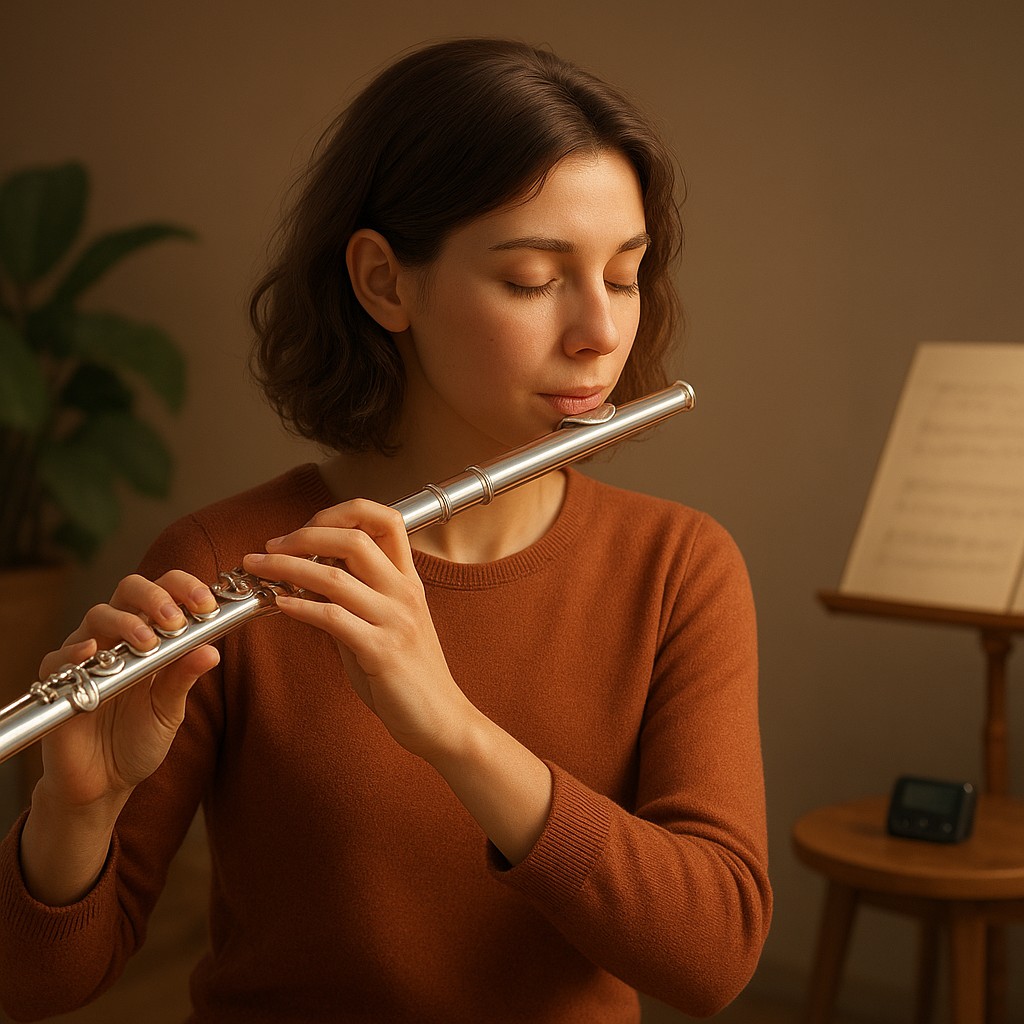
Learning the flute is a bit like learning to whistle with your whole body: easy to imagine, trickier to do, and oddly satisfying when it finally works. The flute asks you to make sound from almost nothing - just a focused stream of air shaped by your lips and guided by your fingers. That can feel scary at first, but it is the flute’s secret power: once you grasp the basics, tiny changes let you shape tone, volume, and color.
The good news is you do not need huge hands, super lungs, or a childhood in a conservatory. You need a decent instrument, a plan, and the patience to sound like a confused goose for a week or two. That phase is normal and short. The flute is not “hard,” it is honest - it shows exactly what your air, posture, and focus are doing.
This guide will take you from first sounds to a steady daily practice routine, with a few myth-busting detours so you do not waste time on the wrong things. Follow the progression and you will build real control: clear notes, smooth finger changes, steadier rhythm, and a tone you like.
Meeting the flute: how it makes sound (and why it feels weird at first)
A flute has no reed or mouthpiece to start the sound for you. You blow a focused stream of air across the embouchure hole in the headjoint. Some air goes into the flute, some goes over it, and that split makes the air column inside vibrate. That vibration becomes pitch, and your fingers change the tube length to pick notes.
That is why beginners hear air noise, random squeaks, or nothing. It is not that you are unmusical - your air angle and lip shape are just not steady yet. Think of it like turning a garden hose to hit a small target: pressure may be fine, but the aim is off by a few degrees. On flute, a few degrees can be the difference between a beautiful note and mysterious windy noise.
Also, loud does not mean supported. Many people try to blow harder to get a sound, but the flute prefers steady, fast air, not brute force. Your job is to make the airstream focused and steady, like a laser pointer, not a leaf blower.
Choosing and setting up your gear without going broke
If you are starting out, a solid student flute from a known maker is a better buy than a shiny cheap flute with poor pads. Leaky pads make everything harder: notes will not speak, tone suffers, and you will think the problem is you when it is the instrument. If you can, rent from a shop first - it gives you maintenance support and an easy upgrade path.
When you assemble the flute, treat it like a small, precise machine. Hold each joint by the smooth metal, not by the keys - keys bend, and bent keys are expensive. Twist gently when connecting pieces instead of forcing them straight on, and line up the parts carefully.
A quick setup checklist makes first notes easier:
- Headjoint alignment: The embouchure hole should line up roughly with the first key posts on the body, with a small adjustment for comfort.
- Footjoint alignment: Many beginners line the footjoint keys with the body keys, though some players shift slightly for hand comfort.
- Cleaning: Swab moisture out after every session. Flutes like being dry and punish neglect with sticky pads.
Do not overthink accessories. A simple cleaning rod and cloth, a sturdy case, and maybe a small stand are enough. The best early “upgrade” is not a fancier flute, it is regular practice.
Building your first sound: embouchure, air, and the “headjoint test”
The embouchure is the shape your lips make to direct air. Avoid a huge grin or a tight pucker. Aim for relaxed corners, a fairly flat chin, and a small opening in the center of your lips. Imagine softly saying “poo” and keep that gentle shape while you blow.
Start with the headjoint alone to isolate making tone. Cover the open end of the headjoint lightly with your palm, place the lip plate under your lower lip, and roll the headjoint slightly in or out until you find the sweet spot. Then blow a narrow stream across the hole like you are cooling hot tea, but with more focus. Your goal is a clear, steady note, not a windy hiss.
The three main controls you will adjust, usually in this order:
- Angle - where the air hits the far edge of the hole. Tiny changes matter.
- Aperture - size of the opening between your lips. Smaller usually focuses the sound.
- Speed - how fast the air is, not how hard you push. Faster air helps higher notes.
A common myth is that you need “strong lungs.” You mostly need coordination. Flute playing is controlled exhaling, not athletic heaving. If you feel dizzy, you are likely overblowing or taking giant breaths too often. Pause, breathe normally, and aim for steadiness.
Once you get a steady headjoint sound, put the flute together and try notes that speak easily, like B, A, and G. Expect a transition where the headjoint works well but the full flute feels different. That is normal - your hands, balance, and embouchure are now multitasking.
Posture and hand position: comfort is a technique, not a luxury
Good posture is not about looking proper, it is about giving your breathing room and avoiding tension. Stand or sit tall, with shoulders relaxed and your head balanced, not craned forward. If you sit, use the front half of the chair so your ribs can expand.
The flute sits to the side, which can make you twist your torso. Keep your chest open and rotate only a little at the neck and arms. Your hands should support the instrument without gripping. Tension in thumbs and wrists is a fast way to make practice unpleasant.
A reliable beginner hand setup:
- Left hand near the top keys, with the left index finger supporting lightly near its base.
- Right thumb under the flute for balance, not squeezing. It is a shelf, not a clamp.
- Fingers curved and close to the keys. Big finger lifts look dramatic but slow you down.
If you feel pain, stop and change position. Mild muscle tiredness is normal, sharp pain is not. Flute playing is more about balance and efficiency than strength.
Reading notes and mapping your fingers without melting your brain
Flute fingerings can look like a puzzle, but they become automatic with practice. Learn notes in small groups and use them musically right away. If you only memorize fingerings like flashcards, your brain will resist. If you use them in tiny songs, your brain will cooperate.
Start with a basic set of middle-register notes - they respond easily and sound stable. For each new note, practice three things: hold it with a steady tone, move to and from a neighbor note, and use it in a simple melody.
Rhythm is the other half of reading music, and it often makes beginners sound uncertain even when notes are right. Use a metronome early, but gently, like a helpful friend tapping their foot, not a strict judge. Count out loud if you can. It feels awkward, but it works like training wheels - annoying, effective, temporary.
A simple practice plan that actually works (and fits real life)
The fastest way to improve is not heroic two-hour sessions once a week. It is short, regular practice that tells your brain, “We do this now.” Even 15 to 25 minutes most days can make you noticeably better in a month.
A balanced session includes tone, technique, and music, in that order. Tone first because it trains embouchure and breathing while you are fresh. Technique next because fingers need calm repetition. Music last because it is the reward and why you picked up the flute.
Here is a practical weekly template you can repeat, adjust, and grow:
| Practice Focus |
What you do |
Time (beginner) |
What “good” feels like |
| Warm-up and breathing |
Easy long tones, relaxed breaths, gentle attacks |
5 min |
Sound starts cleanly, no gasping |
| Tone building |
Long tones with small changes (softer/louder), simple dynamics |
5-7 min |
Tone steady, less airy, fewer squeaks |
| Finger technique |
Slow note changes, simple scales, short patterns |
5-8 min |
Fingers stay close, changes feel smooth |
| Rhythm and music |
Easy melodies, method book lines, play with metronome |
5-10 min |
You can keep going without stopping |
| Cool down |
Swab flute, note what improved, pick tomorrow’s goal |
2 min |
You end feeling organized, not overwhelmed |
A useful rule: do not practice until you get it right. Practice until you can do it correctly several times in a row, then stop before you get sloppy and teach yourself mistakes. Your brain learns what you repeat, including messy versions.
Tone, tuning, and the art of not sounding like a leaky tire
A pleasing flute tone comes from three habits: steady air, a relaxed embouchure, and careful listening. The flute is exposed, so every detail shows, but that also makes it very expressive once you gain control. You are not hidden in a lot of resonance like some instruments - you are painting in watercolor, and every stroke shows.
Tuning on flute changes with dynamics, register, and even the day’s temperature. Pulling the headjoint out slightly lowers pitch, pushing it in raises pitch, but do not treat that as a magic fix. If your air is unfocused or your embouchure is strained, you can be out of tune even with correct alignment.
Build good tuning habits early:
- Use a tuner occasionally, not all the time. Spend more time listening than staring.
- Match pitch with drones or recordings, because tuning is a listening skill, not a visual one.
- Watch dynamics: louder playing often goes sharper, softer can go flatter, depending on your setup.
A common myth is that an airy tone means you need more air. Usually you need better air - a narrower, faster stream and a more precise angle. Sometimes you also need to roll the flute slightly in or out, but do it in millimeters, not dramatic turns.
Articulation: how to start notes cleanly without spitting on your flute
Articulation is how you begin a note, and it is key for clarity. Most articulation on flute uses the tongue lightly touching behind the top teeth and releasing, often with syllables like “too” or “doo.” The tongue shapes the start of the airflow - the air still does most of the work.
Beginners make two common mistakes: no tongue at all, which makes notes mushy and late, or too much tongue, which makes notes pecky and harsh. Aim for a light, quick motion, like tapping a drum softly. Practice on one note first, then in simple repeated patterns.
Try this mini-routine for clean starts:
- Hold a comfortable note (like G) and play four quarter notes with “too, too, too, too.”
- Then play four with “doo” for a softer start.
- Alternate: “too-doo-too-doo” and notice how the character changes.
If your tongue feels tense, your air is often not steady. A stable airstream makes articulation easy - like stepping onto solid ground instead of ice.
Expanding your range and confidence: high notes, low notes, and patience
Your first comfortable range will likely be the middle octave. Low notes need a slightly more open, warm airstream and an embouchure that does not collapse. High notes usually need faster air and a smaller aperture, but not a tighter face. Beginners often tense for high notes, squeezing lips and raising shoulders, which makes control worse.
Approach range like adding spice to food: add a little, test it, adjust, repeat. Spend short bursts exploring high and low notes rather than grinding them for long stretches. If a note will not speak, back up to one that does, then step toward the hard one again.
Do not confuse “playing higher” with “blowing harder.” Blowing harder often makes you sharp, shrill, and tired. Think “faster and more focused,” like narrowing the beam of a flashlight.
Getting unstuck: common beginner problems and quick fixes
Most flute frustrations are not mysterious, they are patterns. The fix is usually small and specific.
Problem: No sound or only air. Check headjoint placement (too rolled in or out), reduce the lip opening, and aim the air slightly downward across the hole. Try the headjoint-only test for a minute.
Problem: Notes squeak randomly. This often comes from changing embouchure while fingers move. Slow transitions and keep the air steady, as if the note change happens under the sound.
Problem: Hands feel cramped. Rebalance the flute with the right thumb and left index support point. Curved fingers, light touch, and shorter movements help right away.
Problem: You run out of breath fast. Usually you are leaking air through a wide aperture or playing with too much tension. Take smaller, calmer breaths and focus on efficient airflow.
If you suspect a mechanical problem (sticky keys, pads not sealing), ask a teacher or a repair shop. Learning on a leaky flute is like trying to ride a bike with a flat tire - possible, but unnecessary.
Making it musical sooner: tiny performances and the joy of sounding like you
Playing music early is not a reward you must earn. It is how you learn expression, phrasing, and confidence. Pick very simple tunes and make them beautiful: steady rhythm, clean starts, smooth changes, and a little dynamic shaping. A five-note melody played with care is more impressive than a hard piece played like a panic attack.
Record yourself sometimes. It will feel odd, but it is one of the fastest ways to improve because it shows what you cannot hear while playing. Keep recordings short, and listen for one or two things only, like “Is my tone steady?” or “Am I rushing?” Then adjust and try again.
If you can, play for someone friendly. A tiny audience, even one person, changes your focus in a good way. It teaches you to keep going, which is the real performance skill. Mistakes happen, but stopping is optional.
The next step: lessons, resources, and how to keep the spark alive
A good teacher can save you months by fixing posture, embouchure, and hand balance early. Even a few lessons act like a map, showing which skills matter most and which frustrations are just normal beginner noise. If lessons are not possible, a structured method book and a steady practice plan are your best friends.
Keep goals small and specific. “Get better” is vague and discouraging, but “play a clear G five times in a row” is achievable today. Stack enough small wins and you will be surprised how far you go in a few weeks.
The flute rewards patience in a satisfying way: one day you fight for a sound, and then, quietly, your body learns. Notes start on time, tone steadies, fingers stop arguing, and you realize you are not “trying to play flute” anymore, you are playing it. Keep showing up for short daily sessions, stay curious about tiny adjustments, and let the occasional goose noises remind you progress is happening.