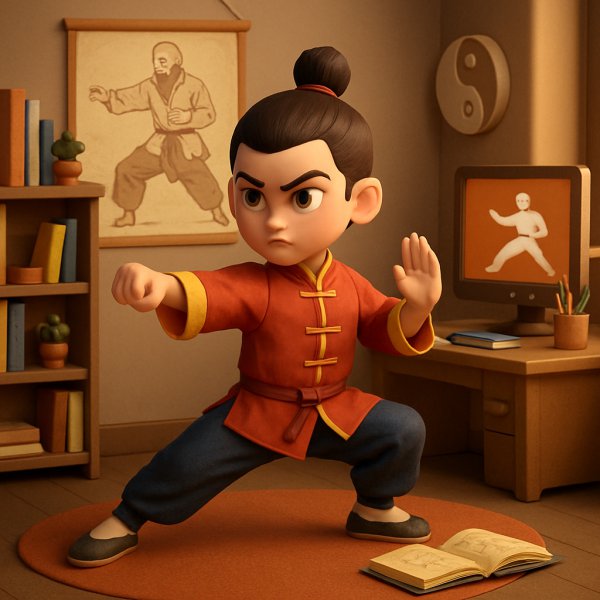
A surprising way to meet Kung Fu: imagine balance, history, and a punchline
Have you ever watched a scene where someone moves so smoothly you suspect they are part cat, part philosophy professor, and wondered what Kung Fu actually is? Kung Fu is not only cinematic kicks and flying flips; it is an umbrella of Chinese martial arts that blends physical technique, mental training, cultural history, and practical self-defense. Starting here invites curiosity - you will see how a stance trains patience, how a form trains pattern recognition, and how a single push can teach biomechanics.
This introduction will pull you through stories, science, and practice so you leave inspired and capable of taking your first steps. You will end with practical drills, common myths dispelled, and resources so you can keep learning with intention.
What Kung Fu really means - beyond the movies
Kung Fu literally means skill acquired through time and effort, not only fighting skill. It encompasses hundreds of styles born across centuries in temples, villages, and courts, each shaped by geography, philosophy, and practical needs. Some styles emphasize rapid close-range strikes, others flowing circular motion, and some prioritize internal energy and health.
Understanding this word-first approach changes expectations: Kung Fu is a lifelong study combining technique, body conditioning, breath control, and moral codes. It is both art and toolkit - think of it as a language that trains your body to speak clearly.
A quick map of major styles you will meet
| Style |
Flavor |
What you learn first |
| Shaolin |
Hard, dynamic, rooted in Buddhist monastery training |
Stances, explosive power, animal forms |
| Wing Chun |
Close-range economy, centerline theory |
Sensitivity, trapping, chain punches |
| Tai Chi (Taiji) |
Slow, internal, health-oriented |
Relaxation, balance, breathing, joint mobility |
| Hung Gar |
Low stances, powerful, southern fists |
Stable stance work, strong hand techniques |
| Wushu |
Modern, performance-oriented |
Acrobatics, speed, standardized routines |
These are entry points, not boxes. Many practitioners cross-train, and masters evolve styles over decades.
What you actually train when you practice Kung Fu
Training breaks into physical, technical, and mental layers that build on one another. Physically you cultivate stance strength, joint mobility, coordination, and timing; technically you learn forms - sequences that encode principles - drills, partner sensitivity, and weapons; mentally you learn focus, stress control, and ethics. Each training session is a micro-lab: a repeated form tightens neural pathways, a sparring drill reveals habits, and a breathing practice re-calibrates your nervous system.
Practical session example: warm-up mobility, stance work (horse stance for 3 minutes), form repetition focusing on a single technique, paired sensitivity drill, and 5 minutes of breath control. Repeat consistently and you build skill through small, measurable gains.
The philosophy that makes Kung Fu meaningful
Many Kung Fu traditions borrow from Confucian or Buddhist thought, tying physical discipline to virtues like humility, perseverance, and compassion. Training cultivates self-knowledge: when your timing fails, you learn patience; when you panic in a drill, you train presence. This inner work is as practical as any punch because conflict often begins in the mind.
Scientific studies back parts of this: systematic reviews show Tai Chi improves balance and reduces falls in older adults, and research in cognitive science suggests martial arts training can improve attention and executive function in children. Think of Kung Fu as body and mind therapy combined with a practical skill set.
Common misconceptions that trip beginners
Many believe Kung Fu is only for fighting or that cinematic moves are realistic. In reality, styles vary widely and film choreography sacrifices realism for spectacle. Another myth is that you must pick a "true" lineage to be authentic; while lineage preserves knowledge, effectiveness comes from consistent, critical practice. Finally, some think Kung Fu is only for the young - but many styles, especially Tai Chi, adapt safely for all ages.
Challenge your assumptions by trying three different classes - a hard-style session, a Wing Chun sensitivity class, and a Tai Chi practice - and reflect on what each trains in your body and mind.
A practical 8-week starter plan you can try at home or in class
Week 1-2: Build habit - 15 minutes daily of basic stance holds and mobility drills. Focus on posture and breath. Week 3-4: Add a short form - learn 8-12 moves slowly, 10 minutes a day. Week 5-6: Introduce partner drills - sensitivity and distance management, once or twice weekly. Week 7-8: Practice a basic weapon form or add power work, and test yourself with a self-assessment - record a short video, note improvements.
Short checklist to track progress:
- Can you hold a horse stance for 3 minutes with steady breath?
- Can you repeat a 10-move sequence without stopping?
- Can you maintain calm breathing during a light contact drill?
This structured approach turns vague enthusiasm into measurable skill.
A real-life snapshot: Ip Man and the power of focused practice
Ip Man, the Wing Chun master, trained in precision, economy of motion, and sensitivity rather than flashy kicks. His story illustrates how simple, focused practice yields effectiveness: repeated technical refinement, close-range drills, and emphasis on centerline control allowed him to be highly effective in real encounters. Modern students who train in Wing Chun often report improvements in timing and quickness even without dramatic athletic gifts.
This case shows that consistent, focused practice beats sporadic, impressive-looking workouts.
Quick resources, etiquette tips, and final prompts to keep you curious
Tips for beginners - find a reputable school with experienced instructors, wear comfortable clothes, arrive early, and ask about safety protocols. Be humble - learning takes time, and partners deserve respect. Recommended reads and viewings include historical overviews, biomechanical analyses of striking, and recorded classes from credible instructors. For scientific grounding, look up systematic reviews on Tai Chi and balance, and research on martial arts and youth development in peer-reviewed journals.
Reflective questions and mini-challenges:
- What habit in your life could you train the way you train a stance - with patience and repetition?
- Try a week of 10 minutes daily practice and journal one change in mood, posture, or focus.
- What style appealed to you and why - pick one reason and test it in a single class.
"Kung Fu is a conversation between intention and movement - practice both politely."
You are now equipped to explore Kung Fu with curiosity, clarity, and a practical roadmap. Start small, stay consistent, and let learning be your primary goal - mastery will follow.