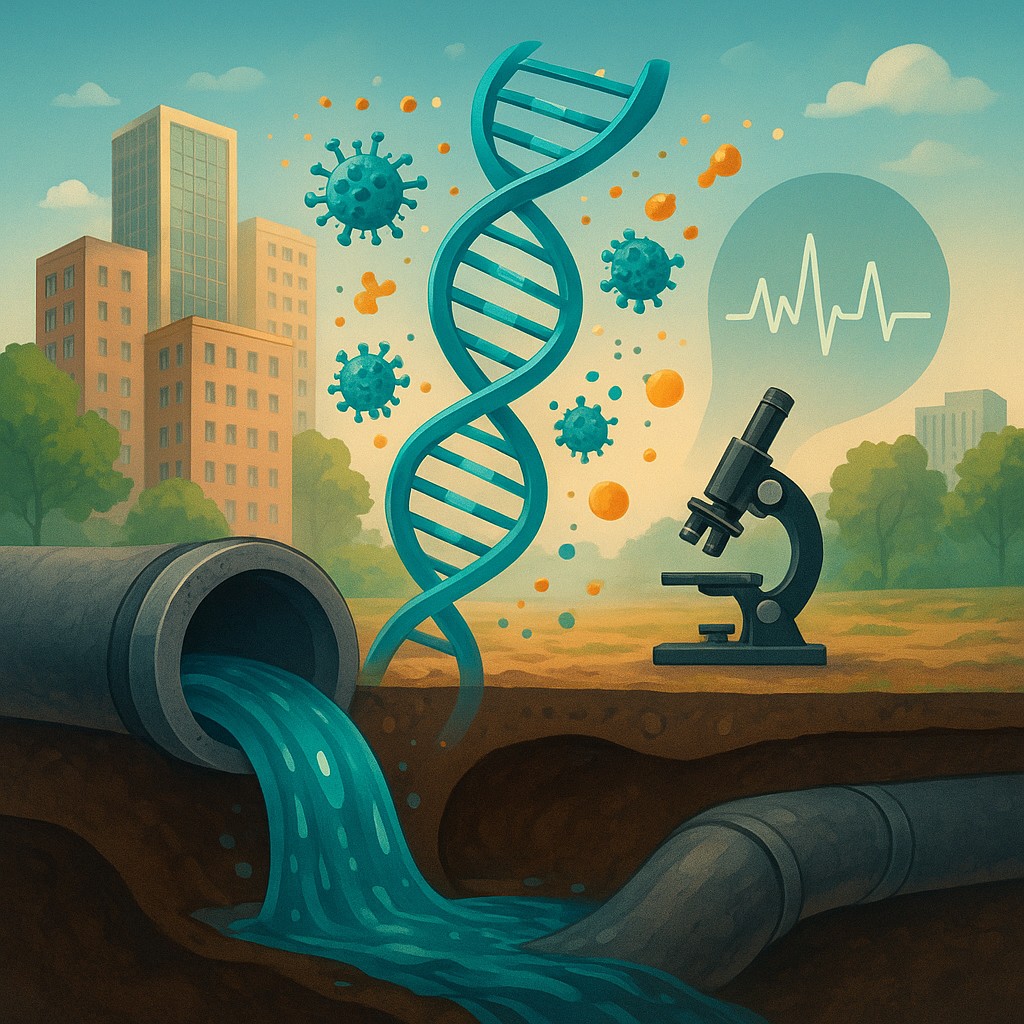
Imagine a world where your city is constantly reporting on its own health. Every time you brush your teeth, wash your hands, or use the bathroom, you contribute to a massive, invisible stream of biological data flowing beneath the streets. This hidden river of information is more than just a byproduct of daily life; it is a goldmine for scientists. They are learning to read the story of a city’s wellness before the residents even realize they are coming down with something.
For decades, public health was a game of catch-up. Doctors had to wait for people to feel sick, book an appointment, sit in a waiting room, and eventually get a lab test before anyone realized an outbreak was happening. By the time that data reached a central database, the virus had already moved three blocks away and spread to five new homes. Today, however, health organizations are changing the game by tapping into our sewers. This shift from reacting to illness to proactively monitoring the environment is fundamentally changing how we defend ourselves against global pandemics.
The Biological Census Beneath the Street
To understand how this works, think of the human body as an unintentional broadcaster. When a virus enters a person, it starts to make copies of itself. During this process, genetic material from the virus is shed through normal bodily functions and washed into the local sewage system. While a person might feel perfectly fine for several days while the virus multiplies, their contribution to the local treatment plant is already sending out a signal. Scientists call this a "biological census" because it treats a city not as 500,000 separate people, but as one giant, interconnected organism sharing a single circulatory system of waste.
By testing water samples at the point where they enter a treatment plant, researchers can get a snapshot of what an entire neighborhood is carrying. They are looking for tiny fragments of viral code, like scattered puzzle pieces in a vast ocean of water. These fragments are no longer infectious, so the sewage itself isn't a "biohazard" in the same way a cough might be, but the genetic information remains intact. This method allows officials to see a new variant arrive in a city up to two weeks before the first patient walks into a clinic. That head start can be the difference between a controlled response and a full-scale crisis.
Cracking the Code with Genomic Sequencing
Searching for a virus in millions of gallons of wastewater is like looking for a needle in a moving, liquid haystack. The secret weapon that makes this possible is a technology called genomic sequencing. Once scientists collect a sample of the influent (the raw sewage arriving at the plant), they concentrate it and extract the genetic material. For viruses like flu or COVID-19, this material is usually RNA. Because the virus is often broken into bits by the time it reaches the plant, scientists use specialized tools to "amplify" these fragments, making millions of copies until they are "loud" enough to be detected.
Once amplified, sequencing machines read the "letters" of the viral code. This is where the process becomes incredibly precise. Different versions of a virus, such as specific strains of bird flu or various lineages of COVID-19, have unique mutations at specific spots in their genetic code. By identifying these mutations, researchers can tell exactly which "brand" of virus is present. They can watch in real time as one variant fades and a newer, more contagious one begins to take over. This allows hospitals to prepare for specific symptoms or update their vaccine advice before the wave of illness even hits its peak.
Comparing the Old Guard and the New Wave
To appreciate this shift in strategy, it helps to compare the traditional medical model with modern wastewater monitoring. The traditional model relies on individuals taking action, while wastewater monitoring relies on the presence of the community as a whole. Both are necessary, but they play very different roles in protecting public health.
| Feature |
Clinical Testing (Doctor Visits) |
Wastewater Surveillance |
| Timing |
Reactive (happens after symptoms start) |
Proactive (detects the virus before symptoms) |
| Privacy |
Individual (linked to a specific person) |
Anonymous (total for the whole community) |
| Bias |
High (only counts people with healthcare access) |
Low (counts everyone who uses a toilet) |
| Detail |
Precise diagnosis for one patient |
General trends for a city or neighborhood |
| Scalability |
Expensive and slow to test everyone |
Very cost-effective for large populations |
While clinical testing is vital for treating a specific patient, it is naturally biased. It only counts people who are sick enough to see a doctor, have the money to pay for it, or have the time to go to a clinic. Wastewater surveillance is the ultimate democratic data source. It doesn't care if you have health insurance or if you are an "asymptomatic carrier" who never feels a single sniffle. If you go to the bathroom, you are counted. This provides a much clearer picture of how much disease is actually in the community, rather than just a count of the most severe cases.
The Fine Line of Privacy and Precision
As with any powerful tool, there are limits to what wastewater monitoring can and should do. One common fear is that the government might be able to trace a virus back to an individual's front door. In reality, the way fluids move through pipes makes this nearly impossible in a city. By the time a sample is taken, the genetic material from thousands of people has been stirred, thinned out, and mixed into a biological soup. It is a group signal, a "we" rather than an "I."
This lack of individual detail is actually a benefit. It provides built-in anonymity that protects privacy while still giving health officials the data they need. The goal isn't to find out who is sick, but to see where the sickness is spreading. If a specific neighborhood shows a spike in a dangerous variant, the city can set up mobile testing sites, hand out masks, or send out health alerts to that specific area. This allows for a targeted response rather than a blunt, city-wide shutdown.
The challenge lies in the "signal-to-noise" ratio. For example, heavy rain can dilute the sewage so much that viral fragments become hard to find. Industrial chemicals or laundry detergent can also break down the RNA. To fix this, scientists use "normalizing" markers. They look for common, harmless viruses that humans shed at a steady rate (like the Pepper Mild Mottle Virus, which comes from eating peppers) to figure out how much human waste is in any given sample. This calibration ensures that a spike in the data actually means more virus is present, rather than just showing that the local stadium had a busy halftime.
A Future of Environmental Intelligence
The success of tracking viruses in sewage has opened the door to a broader vision of "environmental intelligence." We are realizing that our city infrastructure is more than just pipes and concrete; it is a sensory nervous system. In the near future, this same technology could track the rise of antibiotic-resistant bacteria, monitor the success of city nutrition programs, or even detect the early signs of a chemical leak. We are moving toward a world where the environment itself helps us stay healthy, acting as an early-warning system that never sleeps.
This shift represents a profound change in our relationship with the world. Instead of viewing city waste as something to be hidden and ignored, we are beginning to see it as a vital conversation. By listening to what our collective biological footprint tells us, we can build societies that anticipate problems before they become disasters. This marriage of old infrastructure and cutting-edge science is a reminder that sometimes the most advanced solutions to modern problems are literally right beneath our feet.
In the future, the goal is to weave this monitoring into the fabric of every major city. It is an inspiring idea: a world where we can stop a pandemic in its tracks simply because we were smart enough to check the water. You are a part of that story every day. By understanding the power of this data, we can move from a place of fear to one of confidence. The next time you see a crew working on a sewer line, remember they aren't just fixing pipes; they are tending to the early warning system of the future.