Imagine you are sitting in a quiet library when you suddenly feel a tickle in the back of your throat. You know you shouldn't cough because the silence is so heavy, but the more you try to ignore that itch, the more it grows until it consumes your entire focus. Eventually, the pressure becomes so intense that you have to let out a small "hem" just to feel a moment of relief.
Now, imagine that instead of a cough, your body felt a desperate, urgent need to wink, shrug your shoulder, or bark a specific word - and that this "itch" happened dozens of times an hour. This is the world of tics, a fascinating and often misunderstood glitch in the brain’s control center that turns simple movements into involuntary impulses.
Tics are not just "habits," and they certainly aren't a sign that someone is being difficult or seeking attention. They are neurological hiccups - a series of rapid, repetitive movements or sounds that the brain triggers without the person’s permission. While most of us take our ability to sit still for granted, people with tic disorders live with a nervous system that is constantly shouting commands the body feels it must obey. To understand why some people have these uncontrollable urges, we have to look beneath the skin and explore the complex wiring of the human brain, where chemistry and electricity balance on a fine line.
The Secret Language of the Basal Ganglia
To understand why a tic happens, we need to visit a specific neighborhood in the center of the brain called the basal ganglia. Think of the basal ganglia as a high-tech "gatekeeper" or a social filter for your movements. Every single second, your brain generates hundreds of "junk" signals for movements you don't actually want to do, like jumping into a pool while fully clothed or twitching your nose like a rabbit. In a typical brain, the basal ganglia acts like a stern librarian, whispering "shhh" to these unwanted signals and only allowing intentional, useful movements to pass through to the rest of the body.
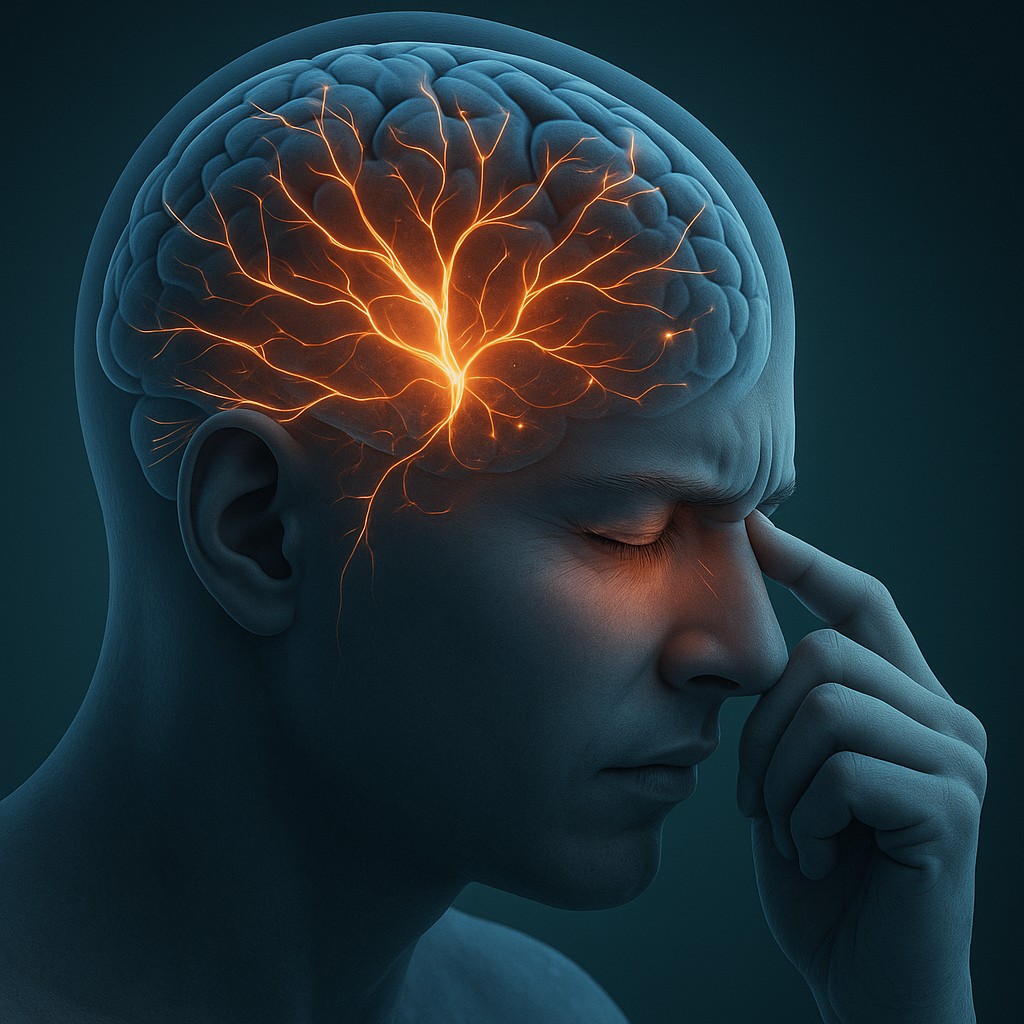
In the brain of someone with a tic disorder, this gatekeeper is occasionally distracted or perhaps a bit too overwhelmed to do its job perfectly. Some scientists believe there is a "leak" in the system, where those junk signals accidentally slip past the gatekeeper and reach the muscles. This is often linked to a chemical messenger called dopamine, which is the brain's "go" signal. If there is too much dopamine activity in certain pathways, or if the receptors are overly sensitive, the brain becomes a bit too enthusiastic about sending out movement commands. It is as if the volume knob on the "movement" channel has been cranked up to ten, and the "mute" button is broken.
This neurological leak is what creates the sensation of a tic. It is not that the person wants to move; it is that their internal filter failed to stop a stray signal from traveling down the spinal cord and into the muscles. Because the basal ganglia are also closely tied to our emotions and habits, these tics can become more frequent when a person is stressed, tired, or even overly excited. When the brain is busy processing big emotions, the gatekeeper becomes even less effective at filtering out those stray twitches and sounds, leading to a "flare-up" of activity.
Distinguishing Between the Flips and the Chirps
Not all tics are created equal. They generally fall into two distinct buckets: motor tics and vocal tics. Within those buckets, we further categorize them as "simple" or "complex" based on how many muscle groups are involved and how much coordination the action requires.
A simple motor tic might be a quick eye blink or a nose twitch - something so fast you might miss it if you aren't looking closely. A complex motor tic, however, looks more like a purposeful action. This might include touching a specific object, hopping while walking, or imitating someone else's gestures. It looks intentional, but for the person doing it, it feels just as forced as a sneeze.
Vocal tics follow a similar pattern. Simple vocal tics are basic sounds like throat clearing, sniffing, grunting, or humming. These are often mistaken for allergies or a lingering cold, which can lead to confusion in classrooms or offices. Complex vocal tics involve words or phrases. This is where many of the biggest myths about tics originate. While many people think of Tourette Syndrome as the "swearing disorder," the truth is that involuntarily shouting inappropriate words - known as coprolalia - is actually quite rare, affecting only about 10 percent of people with the condition. Most complex vocal tics are much more mundane, like repeating a random word or echoing a phrase heard on television.
| Tic Category |
Complexity |
Examples to Look For |
| Motor Tic |
Simple |
Eye blinking, nose wrinkling, shoulder shrugging, head jerking. |
| Motor Tic |
Complex |
Hopping, smelling objects, mimicking gestures, touching the floor. |
| Vocal Tic |
Simple |
Throat clearing, grunting, sniffing, chirping, clicking the tongue. |
| Vocal Tic |
Complex |
Repeating words (palilalia), repeating others (echolalia), using full phrases. |
The Premonitory Urge and the Illusion of Choice
One of the hardest things for someone without tics to understand is the "premonitory urge." This is a physical sensation that occurs just before the tic happens. Many people with tics describe it as a build-up of pressure, a burning feeling, or a specific itch that can only be "scratched" by performing the tic. If you have ever felt a sneeze coming on and tried to hold it back, you have experienced a version of this. You can delay the sneeze for a few seconds, but the discomfort grows until it becomes unbearable. Once you finally sneeze, you feel a massive sense of relief.
This is why we say tics are "involuntary" rather than "un-voluntary." A person can often suppress their tics for a short period, especially in high-pressure environments like a job interview or a first date. However, this suppression comes at a high price. It requires an immense amount of mental energy, almost like trying to hold a beach ball underwater. Eventually, the person runs out of energy and the tics come flooding out, often more intensely than if they had just let them happen in the first place. This "rebound effect" is why a child might have very few tics at school but then have a "tic explosion" the moment they get into the safety of their car or home.
Because of this ability to suppress, outsiders often mistakenly believe the person is choosing to tic. They might ask, "You didn't do that during the movie, so why are you doing it now?" This misunderstanding can be incredibly frustrating. Imagine being told you are "choosing" to have an itchy rash just because you managed not to scratch it for ten minutes. The tic isn't the choice; the brief delay is the choice, and it is an exhausting one to make. Over time, many people with tics find that the best way to manage them is not to fight them, but to find an environment where they feel comfortable letting the tics happen without judgment.
Why Me? The Genetics and Biology of Tics
If you are wondering why some people have this glitchy gatekeeper while others don't, the answer is usually found in a mix of genetics and environment. Science tells us that tic disorders, including Tourette Syndrome, are highly heritable. This means that if you have tics, there is a good chance someone in your family tree had them too, even if they were just considered "fidgety" or had a "nervous habit" back in the day. There isn't just one single "tic gene." Instead, it is likely a combination of several genes that influence how the brain develops its wiring and handles neurotransmitters, the chemicals that carry signals between brain cells.
Beyond genetics, the environment plays a role in how tics show up. These disorders usually appear in childhood, typically around ages five to seven, which is a time of massive brain growth and reorganization. As the brain matures, many children find that their tics naturally fade away or disappear entirely by the time they reach their late teens or early twenties. This happens because the frontal cortex - the part of the brain responsible for "executive control" - finishes developing. It gets better at helping the basal ganglia filter out those stray signals. For some, however, the tics persist into adulthood, though they often become more manageable as the person learns their specific triggers.
It is also very common for tics to bring "friends" along. Many people with tic disorders also navigate other neurological landscapes, such as Attention Deficit Hyperactivity Disorder (ADHD) or Obsessive-Compulsive Disorder (OCD). Scientists believe this is because these conditions all live in the same "neighborhood" of the brain: the circuits that manage impulses, attention, and repetitive behaviors. When the basal ganglia is a bit leaky, it can affect more than just movement; it can affect how a person focuses or processes intrusive thoughts. Understanding tics means looking at the whole person and recognizing that their brain is simply wired to be a bit more "active" than the average.
Navigating a World That Isn't Always Quiet
Living with tics in a world that demands stillness can be a challenge, but it is a challenge that many people meet with incredible resilience and humor. The goal of "treating" tics isn't always to make them go away completely, but rather to ensure they don't get in the way of a happy life. For some, this might involve behavioral therapy where they learn to replace a painful or disruptive tic with a less intrusive movement. For others, it might involve medication to help balance the dopamine levels in the brain, essentially giving that "gatekeeper" a little bit of extra help.
The most important "treatment" of all, however, has nothing to do with doctors and everything to do with the people around the individual. Because tics are worsened by anxiety and self-consciousness, a supportive and educated environment is the best medicine. When friends, teachers, and coworkers understand that a throat clear or a shoulder shrug is just a neurological "sneeze," the pressure on the person with the tic drops significantly. When the pressure drops, the tics often follow suit. Education is the key to turning a source of embarrassment into a simple quirk of biology.
You now possess a deeper understanding of the hidden mechanics behind those sudden twitches and sounds. Tics are not a sign of a broken brain, but rather a brain that is a bit more spirited and less filtered than others. By recognizing the premonitory urge, the role of the basal ganglia, and the exhausting effort of suppression, you can view tic disorders through a lens of empathy rather than curiosity. Armed with this knowledge, you can help foster a world where everyone - regardless of how much they twitch or chirp - feels comfortable in their own skin.