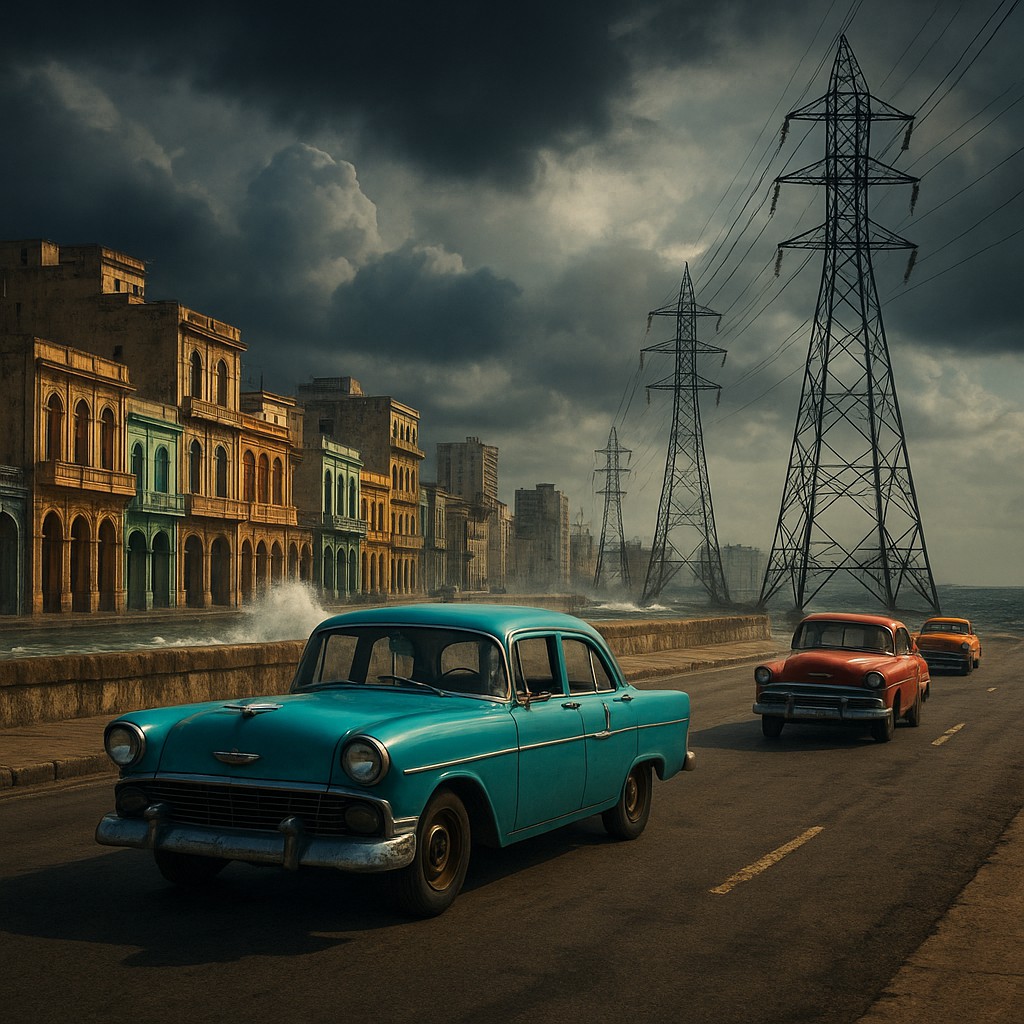
Picture yourself on Havana’s famous Malecón, where the Atlantic spray hits your face as classic 1950s Chevrolets rumble past. For decades, this scene has called to travelers looking for a world frozen in time - a place of soulful music, legendary cigars, and a revolutionary history you can feel on every corner. But the postcard version of Cuba is currently facing its toughest trial in generations. For locals and visitors alike, the reality on the ground is now far more complicated than a salsa rhythm or a cold mojito.
The warnings you hear about avoiding travel to Cuba aren't just rumors. They come from a "perfect storm" of economic, structural, and political problems that have pushed the island's infrastructure to its limit. While Cubans remain some of the heartiest and most welcoming people you will ever meet, they are currently struggling with chronic shortages of food, medicine, and fuel. Even the national power grid is failing, frequently plunging entire provinces into total darkness. To understand why, we have to look past the turquoise water and see how an island survives when it is teetering on the edge of collapse.
A Power Grid on Life Support
To understand the electricity crisis, imagine driving a car for sixty years without ever buying new parts - using only duct tape and luck to keep the engine running. Cuba’s power grid depends on several massive thermoelectric plants, most of them built back in the Soviet era. These plants are designed to last about 25 to 30 years, meaning they are roughly double the age at which they should have been retired. Because Cuba lacks foreign cash and faces strict trade barriers, the government cannot easily buy the specialized parts needed to fix these aging giants.
When one plant goes offline for "unplanned maintenance," it strains the rest of the system, causing a domino effect of failures. Recently, this has led to total blackouts where the entire island loses power at once. For a tourist, this means the air conditioning in your guesthouse cuts out in 90-degree heat, the internet disappears, and your phone becomes useless. For a local, it is much worse: the monthly meat ration spoils in the freezer, and the electric pumps that move water into building tanks stop working entirely.
The lack of electricity is more than an inconvenience; it is a breakdown of modern life. Without power, bakeries cannot bake bread, and hospitals must rely on expensive diesel generators to run life-saving machines. The government has tried to bridge the gap by renting "power ships" from Turkish companies. These floating plants sit in the harbors of Havana and Mariel, feeding electricity into the grid. While they help, they are a costly, temporary fix for a structural problem that requires billions of dollars the country simply doesn't have.
Fuel Chokeholds and Endless Lines
If electricity is the heart of the problem, fuel is the blood supply that has stopped flowing. Cuba produces some crude oil, but it is a thick, sulfurous "sludge" that is hard to refine and can actually damage the power plants it is supposed to run. For years, Cuba traded medical staff and "intelligence services" to Venezuela in exchange for high-quality oil. However, as Venezuela’s own economy crashed, those shipments slowed to a trickle. On top of that, global oil prices are volatile, and because Cuba is short on cash, international tankers often prioritize other buyers.
This has created a landscape of "colas," or lines, that stretch for miles. It is common to see hundreds of cars parked at a gas station for three or four days, with drivers sleeping in their seats just for a chance to buy five gallons of gas. This paralysis affects everything. If trucks can't get diesel, crops rot in the countryside because they can't be moved to the cities. If buses don't have fuel, workers can't get to their jobs. Even tourism, usually protected as the island’s "golden goose," is feeling the pinch, with tour buses grounded and rental cars handed over with empty tanks.
Recent reports even mention a shortage of jet fuel at major airports. This is a major red flag for travelers, as it can lead to sudden flight cancellations or "technical stops" in other countries just to refuel, turning a short flight into a twelve-hour ordeal. When the fuel stops, the island essentially shrinks; people are trapped in their immediate neighborhoods and the typical vibrant motion of Cuban life grinds to a halt.
Empty Shelves and the Currency Maze
The most painful part of the current crisis is food insecurity. Cuba imports about 80 percent of its food, an incredible number for a tropical island with such fertile soil. This is caused by a mix of inefficient state farming and a lack of basic supplies like fertilizer. When the government runs out of "hard currency" - meaning US dollars or Euros - it cannot pay for the shipping containers of chicken, rice, and beans the people need.
The government uses a "libreta," or ration book, which allows every Cuban to buy a set amount of food at low, subsidized prices. But lately, the government has admitted it can no longer guarantee these rations. Essentials like milk for children or eggs often arrive weeks late or not at all. This forces families into private stores or the "informal market," where prices are tied to the high black-market exchange rate of the dollar.
| Essential Item |
Availability in State Stores |
Private/Black Market Status |
Impact on Local Population |
| Bread |
Very scarce; limited by flour shortages |
Expensive; sold by private bakers |
A breakfast staple is missing for many |
| Chicken |
Rare; sold in very small amounts |
Available but costs a week's salary |
Protein is now a luxury for most families |
| Medicine |
Major shortages of basics like aspirin |
People rely on travelers bringing it in |
Simple infections are hard to treat |
| Soap/Hygiene |
Frequently out of stock |
Available in luxury USD-only stores |
Cleanliness suffers without basic supplies |
For a visitor, this often looks like a restaurant menu where 70 percent of the items are "no hay" (we don't have it). You might find a hotel with plenty of lobster but no bottled water, or plenty of rum but no mint for a mojito. While tourists are usually well-fed because they pay in foreign cash, the moral weight of eating a steak while the waiter’s family struggles to find rice is a reality many find hard to ignore.
The Myth of the "Tourist Bubble"
Many people think that staying in a five-star, all-inclusive resort in Varadero will keep them safe from these problems. While these resorts have large backup generators and their own supply chains, the "bubble" is no longer foolproof. When the national grid goes down, even the best generators can fail after running a whole hotel for days. Furthermore, the resort staff are locals dealing with blackouts and food shortages at home, which leads to staffing issues and a drop in service quality.
Another myth is that the U.S. trade embargo is the only cause of the crisis. While the embargo definitely makes everything more expensive by restricting banking and trade, it isn't the only culprit. Experts also point to a failed 2021 currency reform that caused hyperinflation. This caused the Cuban Peso to lose its value almost overnight, making the average state salary (worth about $15 to $20 USD a month on the black market) almost useless for buying imported goods.
The warning to avoid Cuba right now isn't necessarily about crime - Cuba remains statistically safer than many other Caribbean spots when it comes to violence. Instead, it is about the risk of total logistical failure. If you get sick, pharmacies might be empty. If you have a flight, there might not be a car to take you to the airport. If there is an emergency, the phones might not work. This uncertainty is what is driving the travel warnings.
The Strength of the Human Spirit
Despite the bad news, there is a reason people still fall in love with Cuba. The spirit of "resolver" - the Cuban knack for finding a solution - is at an all-time high. This is the ability to fix a 1950s engine with a Soviet tractor part or turn a plastic bottle into a lamp. In the face of hardship, communities have pulled together, sharing what they have and finding joy in music and conversation even on dark streets.
If you choose to visit, many travelers suggest changing your mindset from "vacationer" to "visitor/supporter." This means bringing a suitcase of donations - common medicines, hygiene products, powdered milk, and batteries - to give to families or the owners of the casas particulares (private guesthouses) where you stay. By staying in private homes and eating at paladares (private restaurants), your money goes directly to the people trying to survive, rather than to the government.
While this is one of the hardest chapters in the island's modern history, Cuba has a way of defying the odds. Understanding the fuel, food, and power crisis doesn't just make you an informed traveler; it makes you a more empathetic witness to the dignity of a culture that keeps shining even when the lights go out.
The story of Cuba today is one of massive pressure meeting the immovable force of human endurance. It is a place where every light bulb that flickers on is a victory. Whether you choose to see this moment firsthand or wait for more stable times, keep your eyes on the island. Cuba always manages to surprise the world, and the spirit of its people remains the most reliable power source it has ever known.