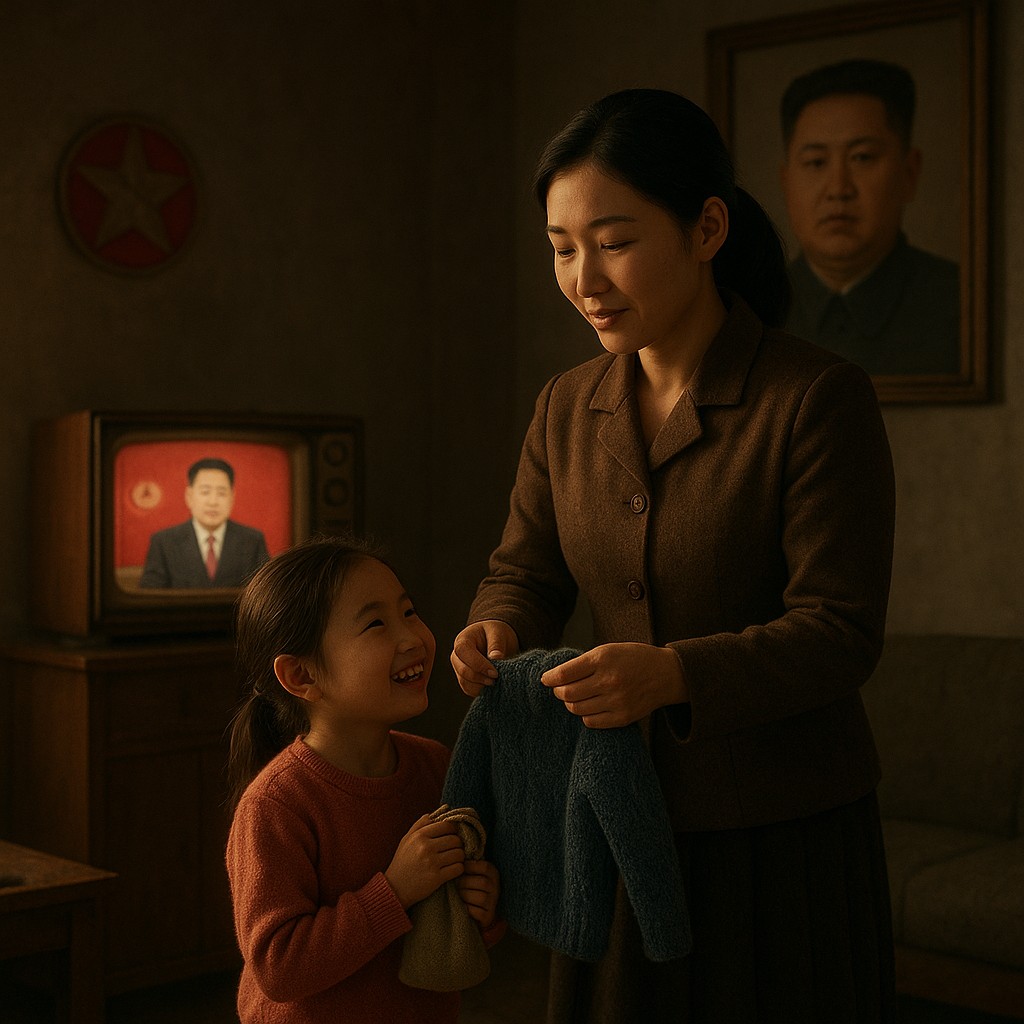
Imagine for a moment that your entire world is shaped by a single, all-encompassing broadcast. From the time you wake up until you go to sleep, the rhythm of your day is dictated not by your own schedule or a favorite playlist, but by the government. In North Korea, the "normal" life we often struggle to imagine is a complex blend of rigid devotion, unexpected grit, and the sharp wit of a survivor. While international news usually focuses on missile launches or political chest-thumping, the reality for the 25 million people living there is grounded in the small, quiet struggles of daily life, such as scrounging for firewood in the winter or learning the unspoken rules of the local black market.
To understand if a person can be happy in such a place, we have to rethink our own definitions of freedom. Humans are remarkably adaptable. Even in the most restrictive environments, people find ways to laugh, fall in love, and take pride in their work. However, this happiness often exists in the shadows or within the tight-knit bonds of family, shielded from the prying eyes of the Inminban - the neighborhood watch groups that keep tabs on every household. Life in the Democratic People's Republic of Korea (DPRK) is a study in contrasts: it is a world of total state control, but it is also a place where a mother will go to incredible lengths to trade a handmade garment for a secret bag of high-quality rice just to make her child’s birthday special.
The Morning Siren and the Social Fabric
For a typical resident of the capital, Pyongyang, or a provincial city like Hamhung, the day begins early. It is often signaled by patriotic music or sirens blaring from public loudspeakers. Most adults are assigned to government jobs where showing up is not just about a paycheck; it is a display of political loyalty. Because the state technically provides housing and food rations, the workplace is the center of a person’s social and political identity. However, since the economic collapse of the 1990s, these official salaries have become purely symbolic, sometimes amounting to less than the price of a single bag of rice. This creates a stressful paradox: people spend their days at a "ghost job" to satisfy the authorities, while their real income is earned in the Jangmadang, the informal or "black" markets.
Social life is built around the group. Everyone belongs to an organization, such as the Women’s Union, the Youth League, or a professional guild. These groups meet regularly for "ideological study" and self-criticism sessions. In these meetings, neighbors or coworkers must confess small failures and points out the flaws of others. While this sounds like a nightmare to someone who values privacy, for a North Korean, it is the basic structure of their world. Within these groups, deep friendships are formed because you spend nearly every waking hour with the same people. They are your coworkers, your supervisors, your critics, and your support system all in one.
Navigating the Two Worlds of the North Korean Economy
The economic reality for an average person is a constant balancing act between the "Official Economy" and the "Shadow Economy." While the government officially forbids private business, the country cannot survive without it. Most families stay afloat because the women of the household run small-scale trade operations. Since men are required to be at their official state posts, women have become the primary breadwinners, selling everything from homemade soybean paste to smuggled electronics. This has led to a subtle but deep shift in power at home, as the person bringing in the actual cash often has a larger say in family decisions.
In the markets, you will see a side of North Korea that looks surprisingly familiar. People haggle over prices, complain about quality, and swap gossip. This is where "real" life happens. It is a high-stakes environment, as certain items - especially foreign movies or music - are strictly illegal and can lead to heavy prison sentences. Yet, the demand for these "forbidden fruits" remains high because they offer a glimpse into a world that looks nothing like the grey, propaganda-filled streets of home. This creates a constant nervous energy; you must always be "on" whenever you are in public, wearing the required state pin and official clothing, while secretly hiding thoughts or belongings that the government would call criminal.
| Aspect of Life |
Official State Expectation |
Private Reality for Citizens |
| Employment |
Lifelong assignment to a state factory or office. |
Attending a "ghost job" while earning money through private trade. |
| Entertainment |
Revolutionary operas and state-run news. |
Secretly watching foreign dramas on smuggled USB sticks. |
| Food Access |
Relying on the Public Distribution System (PDS). |
Buying most food and necessities at private markets (Jangmadang). |
| Loyalty |
Absolute devotion to the Kim leadership. |
Outward performance of loyalty; inward focus on family survival. |
| Social Media |
Non-existent; only a local, closed network (Kwangmyong). |
Using smartphones for calls, games, and approved local news. |
The Digital Divide and the Rise of the Moneyed Class
While we might imagine North Korea as a place stuck in the 1970s, technology has begun to reach the urban middle class. In the last decade, smartphones have become a status symbol in cities. These phones do not connect to the global internet; instead, they access a highly censored domestic network. It allows people to play games, read approved books, and look up recipes, though the government monitors everything. Software pre-installed on the phones takes random screenshots to ensure nothing "subversive" is happening. For a young person in Pyongyang, owning a high-end smartphone is a sign of being part of the Donju, or the "Masters of Money."
This new class of wealthy North Koreans is a recent development. They are entrepreneurs who have navigated legal grey areas to run businesses, often by paying off state officials for protection. For these people, life can be quite comfortable. They can eat at pizza shops in the capital, visit water parks, or buy imported coffee. However, even for the rich, life is unstable. Wealth in North Korea is not protected by the law; if you offend a local party boss, your money and property can be taken in an instant. This creates a "live for today" mindset where happiness is tied to immediate pleasures and the safety of one's inner circle.
The Weight of the "Songbun" System
One of the biggest hurdles to a good life in North Korea is the Songbun system. This is a social ranking that grades every citizen based on the perceived loyalty of their ancestors. If your grandfather fought for the regime, you are in the "core" class, which earns you access to the best schools, better food, and the right to live in the capital. If your ancestors were landowners or had ties to the South, you are in the "hostile" class. This limits your education and job prospects, often forcing your family into hard labor in mines or farming villages.
This system is a permanent shadow. No matter how hard you work or how smart you are, your potential is often decided by events that happened before you were born. For those in the lower ranks, happiness is not about career success, but about finding small ways to bypass the rules. It might mean bribing an official to get a child into a better school or moving to the border where smuggling goods from China is easier. The dream for many is not to overthrow the government, but simply to move up one notch on the ladder so their children don't have to spend their lives in a coal mine.
Finding Joy in the Quiet Moments
Can a normal person be happy in North Korea? The answer is a hesitant yes, but it is a kind of happiness that would feel exhausting to outsiders. Happiness there is found in the gaps. It is found in a family meal after a good day at the market, or in a group of men sharing a bottle of soju (rice liquor) and telling jokes that walk the line of what is allowed. It is found in the pride of a child’s school performance or the relief of surviving a winter without someone betting sick. Because the environment is so harsh, the connections between friends and family are often incredibly deep.
However, we must also recognize that this happiness is always under threat. The state uses "collective punishment," meaning if one person commits a political crime, their entire extended family - three generations - can be sent to a kwanliso, or political prison camp. This creates a constant underlying anxiety. You can be happy, you can be successful, and you can be in love, but you can never be truly relaxed. You are always playing a part in a massive national performance, and the cost of missing a cue is unimaginably high. Yet, because of this, genuine moments of joy are cherished with an intensity that people in the West might never fully experience.
The story of the ordinary North Korean is one of incredible human spirit. It is easy to look at satellite photos of the dark peninsula at night and see only a void. But inside that darkness are millions of people with the same dreams, fears, and hopes as anyone else. By understanding the delicate dance they perform every day to survive and thrive, we see the true strength of the human heart. Their stories remind us that even under total control, the desire for a bit of color in a grey world is something that no government can ever fully put out.