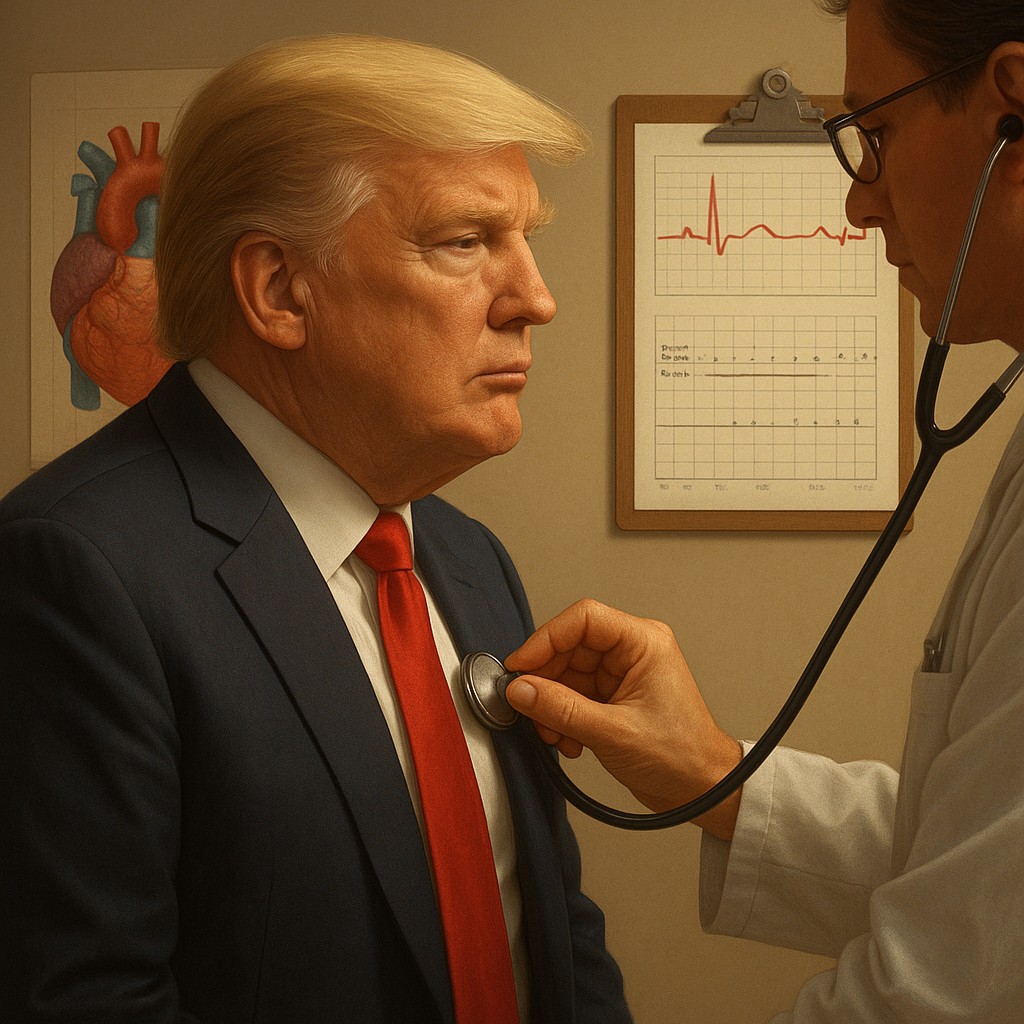
In the high-stakes world of global politics, a leader’s physical and mental stamina is often scrutinized as closely as their voting record or economic plans. For decades, the public has been fascinated by the medical histories of presidents, from JFK’s secret back pain to FDR’s struggle with polio. We instinctively feel that anyone who holds the nuclear codes needs to be in top form. When it comes to Donald Trump, the debate over his health has become a constant in the news cycle, driven by his larger-than-life personality, his famous love of fast food, and his grueling daily schedule.
Cutting through the noise of rumors and guesswork requires a bit of detective work. Some see his diet and worry about a ticking time bomb, while others watch his endless energy on the campaign trail and see a medical marvel. To get a clear picture of his actual health, we have to look past the political theater and focus on the clinical data from White House doctors, the realities of aging, and how medical experts actually measure a leader’s fitness. It is a deep dive into the science of aging, heart health, and how the body handles extreme stress.
The Heart of the Matter: Looking at the Numbers
For any man in his late seventies, health conversations usually start with the heart. According to medical reports from his time in office and recent updates, Donald Trump has a history of high cholesterol, a common issue for many American men. To manage this, he takes statins, the standard medication used to lower "bad" cholesterol and prevent plaque from clogging the arteries. While his doctors have noted that his Body Mass Index (BMI) puts him in the obese category, they have also frequently praised his "incredible genes" and his ability to stay high-energy without a traditional exercise routine.
Doctors use several tools to track heart health, including calcium scores, which measure the amount of hard plaque in the heart's arteries. During a 2018 checkup, Dr. Ronny Jackson reported a score showing mild coronary artery disease, which is typical for a man his age. However, his medical team has focused on aggressive prevention through medication. His heart rate and blood pressure are usually within the normal range, suggesting his cardiovascular system is holding up well under the pressures of public life, even without regular gym sessions.
His weight is another frequent topic of conversation. While carrying extra pounds around the middle can strain the heart and joints, Trump’s physical appearance has stayed much the same for years. He famously views exercise as a "finite resource," believing the human body is like a battery with a limited amount of energy. He prefers to spend that energy on work rather than a treadmill. While this goes against modern medical advice, his ability to stand at a podium for two hours at a time shows a level of endurance that doesn't always show up in BMI stats.
Modern Medicine and the Executive Physical
To understand how a president’s health is monitored, we can look at an "executive physical." These are much more thorough than a standard yearly checkup; they involve a battery of tests meant to catch problems before symptoms even start. The table below covers the main areas that have been part of the public conversation regarding Trump’s health.
| Health Metric |
Typical Findings |
Clinical Context |
| Cholesterol (LDL) |
Managed with Rosuvastatin |
Focused on preventing heart artery blockages. |
| Weight / BMI |
Generally 240 to 250 lbs |
Classified as borderline or Class I obesity. |
| Cognitive Screen |
MoCA (Montreal Cognitive Assessment) |
Used to check for early memory or thinking problems. |
| Sleep Habits |
4 to 5 hours per night |
A common pattern for high achievers, though doctors debate it. |
| Substance Use |
Lifelong teetotaler |
Never drinks alcohol or smokes, which helps long-term health. |
This data explains why his doctors have often given him such positive reports. A nutritionist might not like a diet of well-done steaks and Diet Cokes, but a cardiologist sees his history as a non-smoker and his use of cholesterol medicine as major "protective factors." Trump’s lifelong choice to avoid alcohol and tobacco is likely his biggest health advantage. These two substances are the leading causes of chronic illness and mental decline in older adults. By skipping them, he has avoided decades of potential damage to his liver, lungs, and brain.
The Mental Game and Cognitive Questions
In recent years, the focus on Donald Trump’s health has moved from his heart to his head. Supporters and critics alike analyze every slip of the tongue or long-winded story as evidence of either genius or decline. This is where brain science meets the art of public speaking. In 2018, Trump asked for and took the Montreal Cognitive Assessment (MoCA), a ten-minute screening for mild memory issues. He famously said he "aced" it, meaning he successfully identified animals, drew a clock, and repeated a list of words, showing no signs of standard dementia at the time.
Of course, the brain changes as we age. Critics point to moments where he seems to wander off-topic as a sign of trouble, while defenders call this his "weave" style-a deliberate way of speaking to keep an audience's attention. Neurologists watching from afar note that while speech patterns change, true cognitive decline usually shows up as a loss of "executive function," such as the ability to plan, focus, or multitask. Given his constant travel and work schedule, many experts believe his brain remains highly functional for his age.
There is also the idea of "cognitive reserve." People who spend their lives in high-stakes, fast-paced jobs often build up a resilience to aging. Their brains find shortcuts to make up for minor age-related slowing. Trump’s decades of handling constant conflict and high-pressure deals may have given him a mental toughness that hides the typical signs of aging. Whether his speech patterns are a sign of a problem or just simple exhaustion is something only a private, in-person exam could prove.
Stress: A Burden or a Fuel?
It is well known that the presidency usually ages men quickly. Most people remember how Barack Obama or George W. Bush went gray over four years. However, Donald Trump looked largely the same after his term. This raises an interesting question about how different people handle stress. For many, constant public pressure causes high levels of cortisol (the stress hormone), which wears down the immune system. For Trump, the spotlight seems to act more like a fuel than a drain.
Psychologists often point to "Type A" personalities who thrive on competition. In these people, the adrenaline of a fight can actually improve performance. While most people would find a legal battle or a hostile meeting incredibly stressful, Trump seems energized by them. This unique reaction to stress might be why he hasn't shown the physical "withered" look seen in other leaders. If your body treats a crisis as a game rather than a threat, it takes a much smaller toll on your health.
We also can't ignore the world-class medical care he receives. As a former president, he has access to the best doctors and the latest treatments. This "bubble" of care allows for immediate treatment of any issues, like his bout with COVID-19 in 2020. While that illness was serious enough for a hospital stay, his recovery was fast, aided by advanced monoclonal antibody treatments (lab-made proteins that help the immune system fight the virus). This event showed that while he isn't invincible, he has the best defense possible.
Myths of Diet and Longevity
One of the most relatable things about Trump's health is his love of fast food. Images of him eating McDonald’s on Air Force One have sparked endless talk about nutrition. Most doctors agree that a diet high in processed fats and salt is a bad idea. However, Trump has said he prefers fast food chains because they are clean and consistent. To him, a Big Mac is a safe choice, while a meal at an unknown restaurant could lead to food poisoning.
- Fast food provides high calories, which can fuel long days of campaigning.
- Eating the same types of food can sometimes prevent stomach issues when traveling.
- The comfort of familiar food can lower stress in high-pressure environments.
- Medications like statins can help reduce the impact of a high-fat diet on the heart.
While no one claims burgers and shakes are a health food, it shows how biology varies between people. Some are genetically better at handling salt or fat. Additionally, the "incidental exercise" he gets from walking golf courses and moving during long speeches shouldn't be ignored. It isn't a high-intensity workout, but it keeps him moving, which is the most important thing for health in later years.
Finally, there is the matter of sleep. Trump has long claimed he only needs four or five hours a night. While health agencies recommend seven to nine hours, a small number of people are "short sleepers" who have a specific gene that lets them function well on very little rest. Whether he has this gene or is just driven by ambition, his ability to stay active from early morning until late at night has been a hallmark of his life for decades.
A New Perspective on the Health Debate
The conversation about Donald Trump’s health is a mix of medical facts, personal habits, and a remarkable amount of resilience. He is a man who breaks many of the standard rules of wellness yet remains more active than many people half his age. He serves as a reminder that health isn't just about the absence of disease; it is about the energy to pursue your goals. His history shows that while genetics matter, how we handle stress and the choice to avoid alcohol and tobacco are powerful tools for staying healthy.
As you think about these points, remember that every person is a unique biological experiment. What works for a billionaire politician might not work for everyone, but the core lessons are clear: keep up with your medical checkups, find an environment where you can thrive, and never underestimate the power of a tough mindset. Whether you are running a business or just managing your daily life, your health is the foundation of everything you do. Stay curious, stay informed, and take charge of your own health journey with the same focus a leader brings to the world stage.