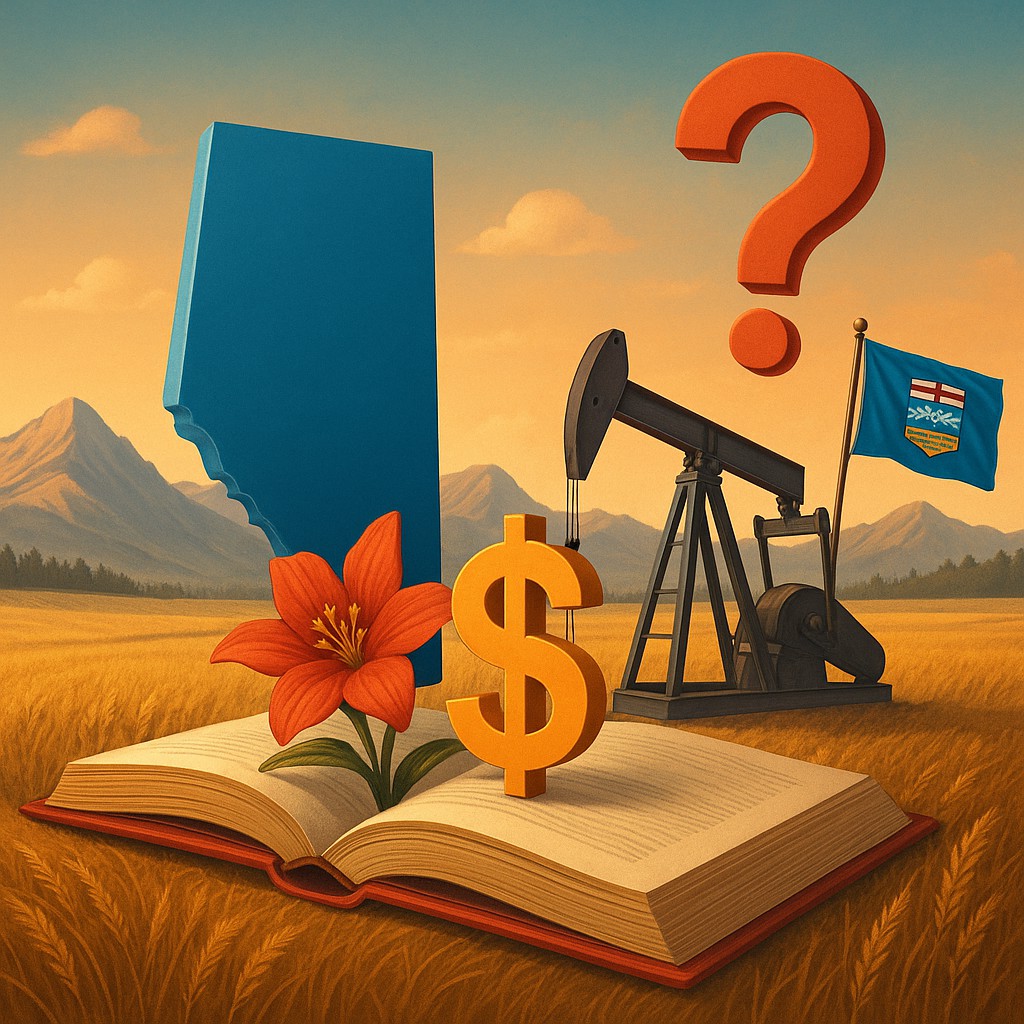
Across the vast, windswept prairies of Western Canada, where the Rocky Mountains tower over golden wheat fields and oil rigs rhythmically pump layers of "black gold" from the earth, a conversation is growing louder. It is a debate about identity, money, and power, and it centers on a word that makes federal politicians in Ottawa break out in a cold sweat: Wexit. While the idea of Alberta leaving the Canadian federation might seem like a sudden outburst of anger, it is actually the result of decades of simmering tension and a feeling that the province is the engine of the country but is rarely allowed to steer the car.
Understanding Alberta’s desire for independence requires looking past surface-level politics and into the province's "Wild Rose" soul. For many Albertans, this is not just about going it alone; it is a fundamental disagreement over how a country should run. Imagine living in a house where you pay most of the rent, do the repairs, and provide the electricity, yet your roommates constantly tell you your lifestyle is a problem and refuse to let you renovate your own room. This sense of "western alienation" is the heartbeat of the separatist movement. To see where it might lead, we have to look at the history, the hurdles, and the high-stakes math involved.
A Marriage of Convenience and Constant Friction
The relationship between Alberta and the federal government has never been a honeymoon. Ever since Alberta joined Canada in 1905, there has been a lingering sense that the "Eastern Establishment" in Ontario and Quebec views the West as a resource colony rather than an equal partner. This friction boiled over in the 1980s with the National Energy Program (NEP). This federal policy felt like a blatant raid on Alberta's oil wealth to subsidize the rest of the country. Even though the NEP ended decades ago, its ghost still haunts the province, serving as a reminder that Ottawa has the power to interfere with Alberta's main industry.
The modern call for separation, often called "Wexit" (a play on Britain’s "Brexit" from the EU), gained momentum as global conversations shifted toward climate change and carbon taxes. Alberta holds the world’s third-largest oil reserves and feels caught between its economic survival and federal environmental rules. When national policies make it harder to build pipelines or set strict limits on emissions, many Albertans see it as an attack on their way of life. This has created a deep rift. A segment of the population now believes their future would be brighter as a sovereign nation rather than as a "cash cow" for a government that seems to dislike their main export.
The Mathematical Heart of the Argument
At the center of the debate is a complex system called Equalization. This federal program is designed to ensure all provinces can provide similar public services, like healthcare and education, regardless of their local tax wealth. Because of its massive oil revenue, Alberta has historically been a "have" province, meaning it does not receive these payments. Instead, federal taxes paid by Albertans are redistributed to "have-not" provinces. For many in Alberta, this feels like an unfair wealth transfer that rewards provinces with different economic priorities while Alberta picks up the tab.
To see the scale of this relationship, it helps to look at the numbers. While the exact figures change based on oil prices and budgets, the trend has stayed the same for decades: Albertans pay significantly more into the federal treasury than they receive back in spending. The following table shows the different perspectives that fuel the separatist fire.
| Issue |
The Alberta Separatist View |
The Federal Government View |
| Natural Resources |
Alberta should have total control over its oil and gas without federal interference. |
Resources belong to provinces, but the climate and trade between provinces are federal duties. |
| Equalization |
A "wealth tax" that drains billions from Alberta to pay for other provinces. |
A constitutional tool to ensure every Canadian gets equal services no matter where they live. |
| Environment |
Carbon taxes and emissions limits are "industry killers" meant to hurt the West. |
National standards are needed to meet climate goals and modernize the economy. |
| Representation |
The system favors the large populations of Ontario and Quebec, leaving the West silenced. |
Representation is based on population, ensuring democratic fairness for the majority. |
The Legal Mountain and Indigenous Rights
If Alberta actually tried to leave, it wouldn't be as simple as changing the signs at the border. Canada’s Constitution is famously difficult to change, and there is no "exit clause" for a province. Following Quebec’s independence movements in the 1990s, the Supreme Court ruled that a province cannot declare independence on its own. Instead, it would need to hold a vote with a "clear majority on a clear question." After that, the federal government and all other provinces would be forced to negotiate. These talks would be a legal nightmare, covering everything from the national debt to how to split up the military.
An even bigger hurdle involves Indigenous land rights. Much of Alberta is governed by Treaties between the Crown (the Canadian state) and various First Nations. These Treaties were signed long before Alberta was even a province. Indigenous leaders have pointed out that their agreements are with Canada, not with a potential "Republic of Alberta." If Alberta separated, it would be trying to take land subject to ancient, binding agreements. Many First Nations have said they have no interest in leaving Canada. This could leave a newly independent Alberta looking like "Swiss cheese," full of holes where sovereign Indigenous lands remain part of Canada.
The Landlocked Dilemma and Economic Reality
One of the strongest arguments against separation is simple geography: Alberta is landlocked. Currently, as a province, Alberta has rights to move its goods across other provinces to reach the coast. As an independent country, it would be surrounded by Canada to the north, east, and west, and the United States to the south. It would have to negotiate international trade deals and transit rights with the very country it just left. Critics argue that if Alberta finds it hard to build pipelines through British Columbia now, it would be much harder as a foreign nation with no constitutional leverage.
Furthermore, economic stability depends on currency. Would an independent Alberta create its own "Alberta Dollar," or keep using the Canadian dollar without having any say in interest rates? Investors hate uncertainty. The chaos of a legal transition could cause "capital flight," where companies move their money out of the province to avoid risk. While separatists say they would save billions in equalization payments, opponents argue those savings would be swallowed by the massive cost of starting a new government, including a border service, an army, and diplomats.
The Path Forward: Soft Separatism or Reform?
Recently, the talk has shifted from grumbling to actual laws. Premier Danielle Smith’s government introduced the Alberta Sovereignty Within a United Canada Act. This law aims to give the province the power to ignore federal laws it considers harmful. While this isn't full separation, it is a form of "soft" separatism designed to test the limits of the Constitution. There is also talk of a citizen-led referendum. If enough people sign a petition, the government could be forced to hold a vote on whether Alberta should stay or go.
However, polls suggest that while many Albertans are angry and feel ignored, a majority are still hesitant about full independence. They want a better deal within Canada, not necessarily a divorce. The threat of separation is often used as a bargaining chip to force Ottawa to listen. When Alberta talks about leaving, it grabs the attention of leaders in Toronto and Montreal, forcing them to address issues like pipelines or tax reform. This "strategic separatism" allows the province to vent its frustrations and push for change without actually jumping off the legal cliff.
A Future Built on Cooperation
The story of Alberta and Canada is like a long, complicated family saga. It is full of drama, money fights, and different visions of the future, but it is also defined by a shared history. Alberta’s hard work and resources have built much of the modern Canadian economy, and Canada provides the global standing that allows Alberta to thrive. Whether the Wexit movement leads to a true crisis or remains a loud protest against federal overreach, it serves as a reminder that a country as large as Canada requires constant work and communication to stay together.
Political landscapes always shift, and the "impossible" can sometimes become reality. Understanding this tension gives you a window into the delicate balance of how countries are run. Whether you are an Albertan, a fellow Canadian, or an observer from afar, knowing the "why" behind these movements helps us navigate a world where national borders are shaped as much by the heart as they are by the law.