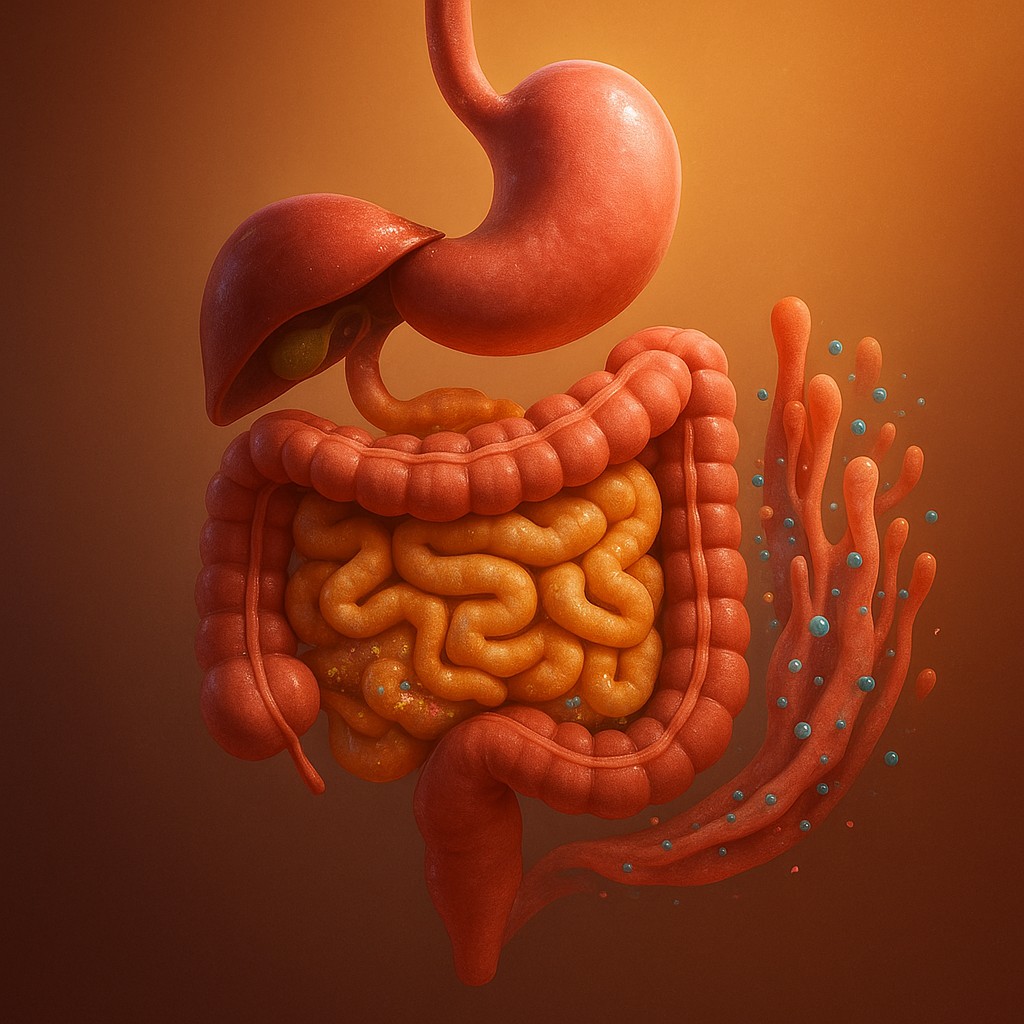
Imagine for a moment that you are a high-end recycling plant, a sophisticated chemical laboratory, and a master logistics center all rolled into one. Every single day, you take in raw materials like sandwiches, salads, and snacks, and dismantle them with such surgical precision that they become the very building blocks of your life. Without you even thinking about it, your body breaks down complex proteins into muscle-mending fibers and turns carbohydrates into the electrical fuel that keeps your heart beating and your brain thinking. This process, known as digestion, is not just about eating; it is a relentless, 24-hour journey through a twisting tunnel of biological magic.
We often think of our stomachs as the stars of the show, but your digestive system is actually a 25-foot-long masterpiece of teamwork involving organs you rarely think about. It is a world where acids can dissolve metal, where billions of helpful bacteria act as your personal security detail, and where tiny finger-like projections grab nutrients out of a moving stream of liquid. Understanding how this works is like getting the blueprints to your own house. Once you know how the plumbing and the electrical grid are laid out, you stop seeing food as just breakfast and start seeing it as the incredible energy source that powers your entire existence.
The Journey Begins with a Splash of Saliva
Most people assume digestion starts when food hits the stomach, but the party actually kicks off before you even take a bite. The moment you smell a fresh pizza or see a beautiful cake, your brain signals your salivary glands to start "watering." This isn't just to make food easier to swallow; it is your first dose of chemical weaponry. Saliva contains an enzyme called amylase, which immediately begins attacking the chemical bonds of starches. If you chew a piece of plain bread long enough, you might notice it starts to taste sweet. That is the amylase turning complex carbohydrates into simple sugars right there in your mouth.
Chewing is the only part of the process you actually control, and it is arguably the most important mechanical step. By grinding your food into a soft paste called a bolus, you increase the surface area for chemicals to work on later. If you gulp your food down like a seagull, you are making your stomach do manual labor it wasn't designed for. Once you swallow, the bolus enters the esophagus, a muscular tube that uses a wave-like motion called peristalsis to push food downward. This isn't just gravity at work; peristalsis is so strong that you could actually swallow a glass of water while hanging upside down, though I wouldn't recommend trying that at a dinner party.
Into the Cauldron of the Acid Vat
Once the food clears the trapdoor at the end of the esophagus, it drops into the stomach. The stomach is essentially a stretchy, muscular bag filled with one of the most corrosive liquids in nature. This liquid, gastric juice, is a potent cocktail of hydrochloric acid and enzymes. You might wonder why this acid doesn't eat through your own body. The answer is a thick, gooey layer of mucus that coats the stomach lining. Without that protective slime, the stomach would literally digest itself. The acid's primary job is to denature, or unfold, the tightly coiled proteins found in things like meat and beans so that enzymes like pepsin can get in and start snipping them into smaller chains.
The stomach is also a master of the "churn." It isn't just sitting there like a bowl; it is constantly squeezing and folding the food, mixing it with acid until it turns into a thick, creamy liquid called chyme. It stays here for two to four hours depending on what you ate. A meal high in fat, like a greasy burger, stays in the stomach much longer because fat is difficult to break down and requires more mechanical effort. Interestingly, the stomach also acts as your body’s first line of defense against food poisoning. The acid is so harsh that it kills the vast majority of bacteria and viruses that hitch a ride on your lunch, acting as a biological furnace that incinerates unwanted guests.
The Secret Chemistry of the Golden Quarter
Once the stomach has turned your meal into a liquid slurry, it releases it slowly through a tiny valve into the first part of the small intestine, known as the duodenum. This is where the real chemistry happens. If the stomach is the heavy-duty grinder, the duodenum is the laboratory. Because the chyme coming out of the stomach is incredibly acidic, the body has to neutralize it immediately so it doesn't burn the delicate walls of the intestine. The pancreas steps in here, acting as a hero by secreting bicarbonate, which is essentially biological baking soda, to bring the pH levels back up to a safe, neutral state.
At the same time, your gallbladder squirts out a yellowish-green liquid called bile, which was made in the liver. Think of bile as your body's dish soap. Fats are stubborn and don't like to mix with the water-based liquids in your gut; they tend to clump together in big oily bubbles. Bile breaks these big fat bubbles into millions of tiny droplets, a process called emulsification. This allows fat-digesting enzymes to get to work. Without bile, you wouldn't be able to absorb essential vitamins like A, D, E, and K, which are fat-soluble. This section of the gut is relatively short, but it serves as the crucial intersection where your liver, pancreas, and gallbladder all work together to finalize the breakdown of every molecule you've eaten.
Summary of Major Digestive Fluids
| Fluid |
Source |
Main Function |
| Saliva |
Salivary Glands |
Starts carb breakdown and lubricates food |
| Gastric Juice |
Stomach Lining |
Kills bacteria and unfolds protein chains |
| Bile |
Liver/Gallbladder |
Breaks fat into tiny droplets (emulsification) |
| Pancreatic Juice |
Pancreas |
Neutralizes acid and breaks down all nutrients |
| Intestinal Enzymes |
Small Intestine |
Finalizes molecules for absorption into blood |
Where the Magic Happens and Nutrients Enter the Blood
Now we arrive at the small intestine, which despite its name, is actually the most expansive and important part of the entire system. It is about 20 feet long and is packed with millions of tiny, hair-like projections called villi. If you were to flatten out the surface of the small intestine, it would cover the area of a tennis court. This massive surface area is necessary because this is where the "entry" happens. This is the moment where the food stops being "outside" your body (inside the hollow tube of the gut) and starts being "inside" your body (in your bloodstream).
Each of these tiny villi is filled with blood vessels and a specialized channel for fat called a lacteal. As the liquid chyme moves over these villi, the nutrients cross through the thin walls of the intestine and into the blood. Simple sugars and amino acids go straight into the blood vessels, while fats take a detour through the lymphatic system. This is an incredibly selective process; your body has specific "doors" for different nutrients. This is also why keeping your gut healthy is so important. If the lining of the small intestine is damaged, you might not absorb the vitamins you need, no matter how healthy your diet is.
The Final Reconstruction and the Liver's Toll
Once the nutrients have crossed the border into your bloodstream, they don't just wander around aimlessly. Almost everything absorbed from the gut is funneled directly into a massive vein called the portal vein, which leads straight to the liver. Think of the liver as a customs officer and a master chef combined. It checks the blood for toxins, processes any medications you've taken, and decides what to do with all the new nutrients. If you have too much sugar in your blood, the liver turns it into glycogen for storage. If you need building blocks for muscle, it sends out the amino acids.
The liver is also the place where your body begins to rebuild "you" using the "them" you just ate. It takes the broken-down parts of a chicken breast or a broccoli stalk and reassembles those amino acids into human proteins, like hemoglobin for your blood or collagen for your skin. It is the ultimate factory, ensuring that your blood chemistry remains stable and that your organs get exactly what they need at the right time. When people talk about "detoxing," they often ignore the fact that the liver is a literal detox machine. It has been perfecting its craft for millions of years, working tirelessly every time you finish a meal.
The Forgotten World of the Large Intestine
By the time the remains of your meal reach the large intestine, or colon, nearly all the nutrients have been stripped away. What’s left is a watery mixture of fiber, dead cells, and bacteria. The colon’s primary job is to reclaim water and salts back into the body, turning the liquid waste into a solid form. If the colon works too fast, you get diarrhea and dehydration; if it works too slowly, it sucks out too much water, leading to constipation. It is a delicate balance of timing and hydration.
However, the most fascinating part of the large intestine is the microbiome. Your colon is home to trillions of bacteria, outnumbering the human cells in your body. These aren't "germs" in the bad sense; they are essential partners. They feast on the fiber that your enzymes couldn't break down, and in exchange, they produce essential vitamins like Vitamin K and B12 that you can't make yourself. They also communicate with your immune system and your brain. We are only just beginning to understand how these tiny residents influence everything from our mood to our weight, proving that digestion is as much about ecology as it is about chemistry.
Correcting Common Myths About Your Gut
Because we can't see what's happening inside, many myths have sprouted up about digestion. One of the most persistent is the idea that chewing gum stays in your stomach for seven years. In reality, while your body can't digest the synthetic rubber in gum, it treats it like any other fiber. Peristalsis simply pushes it through the system, and it usually makes its exit within a day or two. Another common misconception is that you shouldn't drink water while eating because it "dilutes" your stomach acid. The body is much smarter than that; it constantly monitors stomach acidity and adjusts its production of juice to maintain the correct level no matter how much water you sip.
There is also a popular belief that "cleanses" or "fasts" are necessary to clear out old waste stuck to the walls of your intestines. In a healthy body, this simply doesn't happen. The lining of your gut is incredibly dynamic; the cells on the surface of your intestines are replaced every few days. Your digestive system is a self-cleaning oven that is constantly shedding its old lining and moving waste along. As long as you are eating enough fiber and staying hydrated, your body is more than capable of keeping its "pipes" clean without any expensive juices or specialized supplements.
The Mastery of Your Internal Alchemy
Every time you sit down to a meal, you are engaging in one of the most complex biological dances on the planet. From the first drop of saliva to the final absorption of a life-saving vitamin, your body performs a masterpiece of engineering that allows you to survive and thrive. You are not just a passive consumer of food; you are a sophisticated transformer of energy. This system is remarkably resilient, but it also responds beautifully when we treat it well. We can do this by chewing thoroughly, eating a variety of whole foods to feed our microbiome, and listening to the signals of hunger and fullness our bodies send us.
Now that you understand the mechanics of the acid vat, the chemical laboratory of the duodenum, and the vast nutrient-catching plains of the small intestine, you can appreciate the true wonder of your own biology. Your digestive system is a testament to the incredible efficiency of life, turning the outside world into the very fabric of your being. So, the next time you enjoy a meal, remember that beneath the surface, a trillion tiny workers are busy at their stations, making sure every bite you take helps you become the best version of yourself. Be proud of the incredible laboratory you carry within you, and treat it with the respect such a masterpiece deserves.