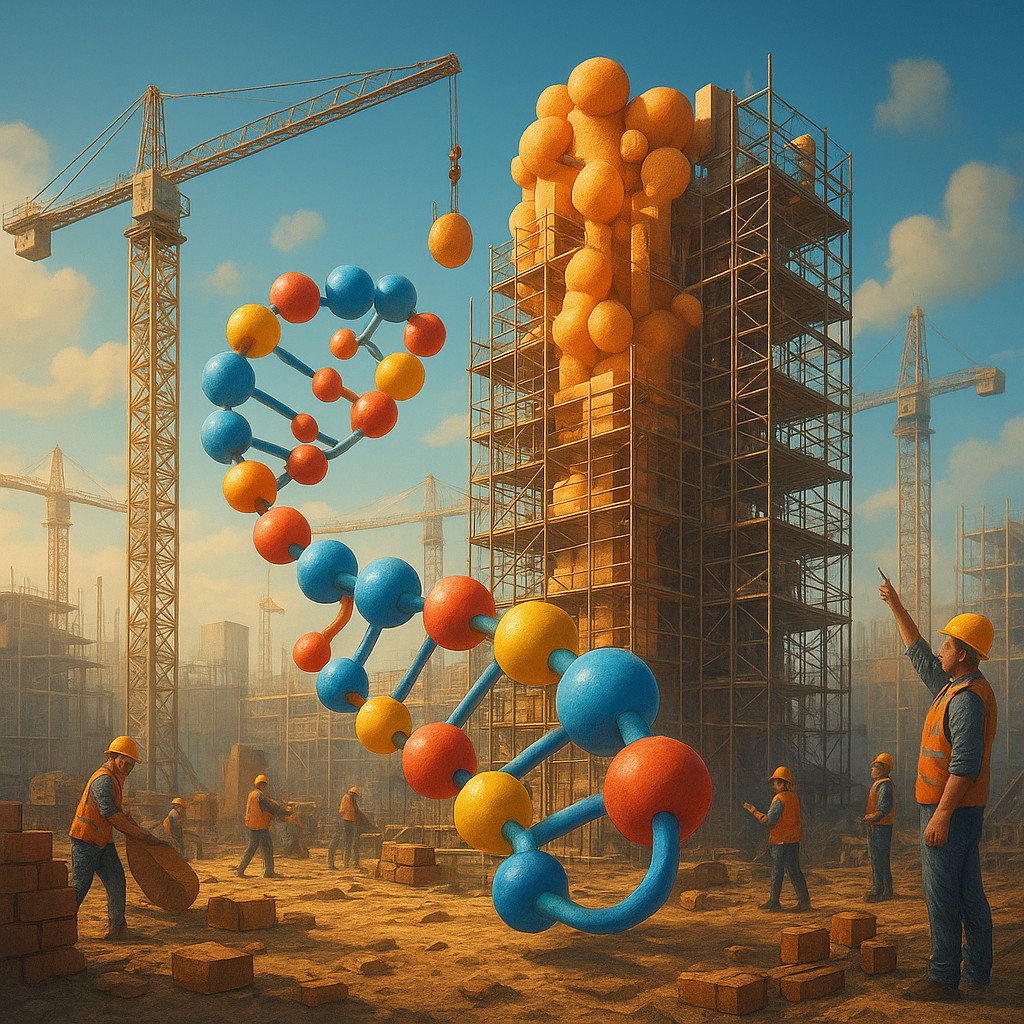
Imagine you are standing inside a bustling construction site where the most complex machine in the known universe is being assembled. In this scenario, the building blocks are amino acids, and the finished skyscrapers are proteins. But between a single brick and a towering glass monolith, there is a vital middle ground known as the peptide. While proteins usually get all the glory in the world of fitness and health, peptides are the unsung messengers, the specialized foremen, and the high speed couriers that tell your body how to function second by second. Without them, your cells would be like coworkers who forgot how to use their messaging apps, wandering around without any instructions on what to build or when to repair.
Understanding peptides is like gaining VIP access to the control room of your own biology. These molecules are far more than just "small proteins," though that is a common way to describe them. They are precise, elegant chemical sequences that regulate your sleep, hunger, skin elasticity, and even your mood. Because they are smaller and more nimble than proteins, they can slip through doors that larger molecules find locked, acting as biological keys for your cellular architecture. As we dive into the world of these microscopic powerhouses, you will discover that peptides are not just a trendy buzzword in skincare or athletics; they are the very language your body uses to speak to itself.
The Architecture of Life in Miniature
To understand what a peptide truly is, we have to start with its ingredients: amino acids. Think of amino acids as individual letters of the alphabet. When you string a few of these letters together, you get a word. In the biological world, that "word" is a peptide. Generally, if you have a chain of between two and fifty amino acids, you have a peptide. Once the chain gets significantly longer than fifty, it starts folding into complex, three-dimensional shapes and earns the official title of a protein. This distinction might seem like scientific hair-splitting, but the size difference changes everything about how the molecule behaves in your body.
The bond that holds these amino acids together is called a peptide bond. This is a very strong link that forms when one part of a molecule (the carboxyl group) reacts with another (the amino group). This reaction releases a tiny droplet of water, a process scientists call dehydration synthesis. It is a poetic thought: your body builds its internal communication system by strategically squeezing out water to lock these chemical "letters" together. Because these chains are relatively short, they are flexible and can interact with receptors on the surface of cells with incredible speed and precision.
Peptides are categorized by how many amino acids they contain. A dipeptide has two, a tripeptide has three, and an oligopeptide is a medium length chain of up to about twenty. Beyond that, you enter the territory of polypeptides. While the names sound like they belong in a chemistry textbook, you actually interact with these categories every day. For example, the artificial sweetener aspartame is a dipeptide, while many of the most powerful hormones in your brain are oligopeptides. They are the "Short Message Service" or SMS of the biological world, delivering quick, punchy instructions that trigger massive shifts in how you feel and function.
Deciphering the Biological Mailroom
If proteins are the heavy machinery that makes up your muscles and organs, peptides are the instruction manuals. Their primary role in the body is signaling. One of the most famous peptides in human history is insulin. While it is often discussed in the context of blood sugar, insulin is a peptide hormone that tells your cells to open up and accept glucose for energy. Without this specific peptide "knock" on the cellular door, your body would starve even in the midst of plenty. This illustrates the fundamental nature of peptides: they are catalysts for action, telling the body when to grow, when to heal, and when to burn fuel.
Another fascinating group is the neuropeptides. These are the peptides that work in your nervous system, acting as a bridge between your thoughts and your physical sensations. Endorphins, the molecules responsible for a "runner's high" or the relief after a good laugh, are actually peptides. They bind to receptors in the brain to dull pain and produce a sense of euphoria. This shows that peptides are not just structural bits; they are the chemical architects of our emotional experience, navigating the space between the physical and the psychological.
Outside of the brain, peptides are the main drivers of the healing process. When you get a cut on your finger, your body releases signal peptides that rush to the injury. These messengers call for reinforcements, telling skin cells to produce more collagen and the immune system to ward off invaders. This is why the skincare world is currently obsessed with peptides. By applying specific lab-made peptides to the skin, we are essentially "tricking" the body into thinking there is a repair job to be done. This prompts it to produce more collagen and elastin, which keeps skin looking firm and youthful.
Distinguishing the Players in the Amino Acid Game
People often use the terms peptide and protein interchangeably, but the distinction is vital. It is a bit like the difference between a poem and a multi-volume novel. Both use the same alphabet and grammar, but their scale and purpose are entirely different. A protein is a massive, heavy-duty structure that often requires specific molecules to help it fold into its final, functional shape. A peptide, being smaller, is much more "plug and play."
| Feature |
Peptide |
Protein |
| Size |
Short (2 to 50 amino acids) |
Large (usually 50+ amino acids) |
| Structure |
Simple, often linear chains |
Complex, folded 3D structures |
| Primary Role |
Signaling, hormones, messengers |
Structure, enzymes, muscle fiber |
| Stability |
Generally less stable, easily broken down |
More stable, built for longevity |
| Absorption |
Can sometimes cross barriers easily |
Usually needs significant digestion |
Because of their small size, peptides are often less stable than proteins. They are designed to be "disposable" messengers. They show up, deliver their message, and are quickly broken down by enzymes called peptidases so the signal does not stay "on" forever. Imagine if you sent a text message and the notification sound never stopped ringing; that is what would happen if peptides did not degrade quickly. Proteins, on the other hand, are built to last, providing the structural scaffolding for your bones and tissues for months or years. This fleeting nature is a feature, not a bug.
Common Myths and the Science of Reality
With the rise of "biohacking" and advanced fitness supplements, a lot of misinformation has spread regarding what peptides can and cannot do. One of the most common myths is that you can simply "eat" any peptide to get its benefits. Unfortunately, the human stomach is a very hostile environment designed specifically to tear amino acid chains apart. If you swallow a peptide meant for skin repair, your digestive enzymes will likely treat it just like a piece of chicken, breaking it down into basic amino acids before it ever reaches your bloodstream. This is why many medical peptides must be injected or delivered through specialized creams and nasal sprays.
Another misconception is that all peptides are "natural" and therefore inherently safe. While your body produces thousands of peptides naturally, the lab-created versions can be incredibly potent. Because they act as biological keys, using the wrong key or using it at the wrong time can throw your body's delicate internal harmony out of balance. For instance, some peptides used in fitness to stimulate growth hormone are so effective that they can lead to unwanted side effects if not monitored by a professional. Just because a molecule is small does not mean it is not powerful; after all, a tiny key can start a massive engine.
Finally, there is the myth that peptides are only for athletes or people looking to stop the clock on aging. In reality, peptides are already used to treat many medical conditions. From managing Type 2 diabetes to treating chronic pain and autoimmune disorders, peptide therapy is one of the most exciting frontiers in medicine. They offer a level of "targeted" treatment that traditional drugs often lack. While a standard pill might affect your whole body, a peptide can be designed to find one specific receptor on one specific type of cell and give it one specific instruction.
Exploring the Varieties of Peptides and Their Functions
The sheer variety of peptides in nature is staggering. Antimicrobial peptides, for example, are "natural antibiotics" found in everything from human sweat to the skin of frogs. They work by punching holes in the cell membranes of bacteria, providing a first line of defense against infection. Unlike traditional antibiotics, which bacteria can often learn to resist, it is much harder for a germ to develop resistance to a physical "hole puncher." This makes them a major area of research for scientists looking to solve the problem of antibiotic-resistant superbugs.
There are also "carrier peptides" that act like microscopic delivery drivers. These peptides can bind to other molecules, like minerals or drugs, and transport them across the skin or into cells where they normally could not go. In the beauty world, you might see "copper peptides" on a label. This is a case where a peptide is used to carry a copper ion into the skin to help with wound healing and antioxidant defense. By themselves, the minerals might struggle to get where they need to go, but the peptide acts as their all-access pass.
Enzyme inhibitor peptides are another crucial category. Many toxins found in nature, such as those in snake venom, are actually peptides. They work by blocking specific enzymes or channels in the victim's body, effectively "clogging" the biological machinery. While that sounds terrifying, modern medicine has found ways to harness these inhibitors for good. By slightly modifying these toxins, scientists have created life-saving medications for high blood pressure and heart conditions. It is a perfect example of how the same "language" of peptides can be used to either stop a heart or save a life.
The Future of Peptides in Health and Technology
As we look toward the future, the potential for peptides seems almost limitless. We are moving into an era of "precision medicine" where treatments are tailored to an individual's specific genetic makeup. Peptides are the perfect tool for this because they are easy to customize in a lab. Scientists can now "program" a peptide by arranging amino acids in a specific order to target a rare type of cancer cell while leaving healthy cells untouched. This "seek and destroy" capability is a major goal in cancer research, and peptides are leading the charge.
Beyond medicine, peptides are even being used in technology and material science. Researchers are experimenting with "self-assembling" peptides that can form microscopic wires or scaffolds for growing human organs in a lab. Because they are biocompatible, meaning the body does not reject them as foreign objects, they are ideal building blocks for the next generation of medical implants. Imagine a world where a broken bone is repaired with a peptide "glue" that not only holds the bone together but also signals the body to speed up the natural healing process tenfold.
The study of peptides also opens up new ways to understand the link between the gut and the brain. We are discovering that the bacteria in our gut produce peptides that travel to our brain and influence our moods and cravings. This means that the "feeling" you have in your gut might literally be a peptide conversation happening between your microbes and your neurons. As we learn to "speak" this language more fluently, we may find new ways to treat depression, anxiety, and even neurological disorders like Alzheimer's by shifting the peptide balance in our systems.
Embracing Your Inner Molecular Architect
By now, you should see that peptides are far more than just a chemical definition or a supplement on a shelf. They are the vibrant, fast-acting messengers that make life possible. Every time you feel a burst of energy, every time your skin heals from a scratch, and every time you feel the warmth of a hug, it is because peptides are working behind the scenes. They slide into receptors and deliver the "go" signal to your cells. They represent the perfect intersection of simplicity and power, proving that you do not need thousands of parts to change the world; sometimes, you just need a few of the right amino acids in the right order.
Learning about peptides is an invitation to marvel at the complexity of your own existence. It is a reminder that there is a constant, intelligent dialogue happening inside you at all times. Whether you are interested in the science of aging, the future of medicine, or just understanding how your body recovers after a long day, the peptide is your gateway to that knowledge. So, the next time you hear someone talking about proteins, give a little nod to their smaller, nimbler cousins. Peptides are the true navigators of our biological world. Stay curious, keep asking how the letters of life are being written, and remember that you are a walking, talking masterpiece of molecular communication.