Imagine for a moment that you are the manager of a world-class, five-star restaurant. During the lunch rush, the kitchen is a chaotic symphony of activity. Chefs are searing steaks, waiters are dodging each other with heavy trays, and every square inch of the floor is occupied by someone moving at high speed. In this frantic state, there is simply no room for the janitorial staff to come in with mops and heavy floor buffers. The staff can do a quick wipe of the counters occasionally, but the deep cleaning required to keep the establishment from becoming a biohazard must wait until the doors are locked and the lights are dimmed.
Your brain operates under a remarkably similar logistical constraint. Throughout your waking hours, your neurons fire like pistons, consuming vast amounts of energy and, as a byproduct, creating a steady stream of metabolic exhaust. This cellular debris, including specific proteins linked to neurodegenerative diseases, builds up in the narrow corridors between your brain cells. However, because your brain is so densely packed and electrically active while you are awake, it lacks the space and hydraulic pressure required to push this trash out. To solve this, your body has evolved a brilliant, high-pressure plumbing trick that only activates when you hit the pillow.
The Architectural Shift of the Sleeping Mind
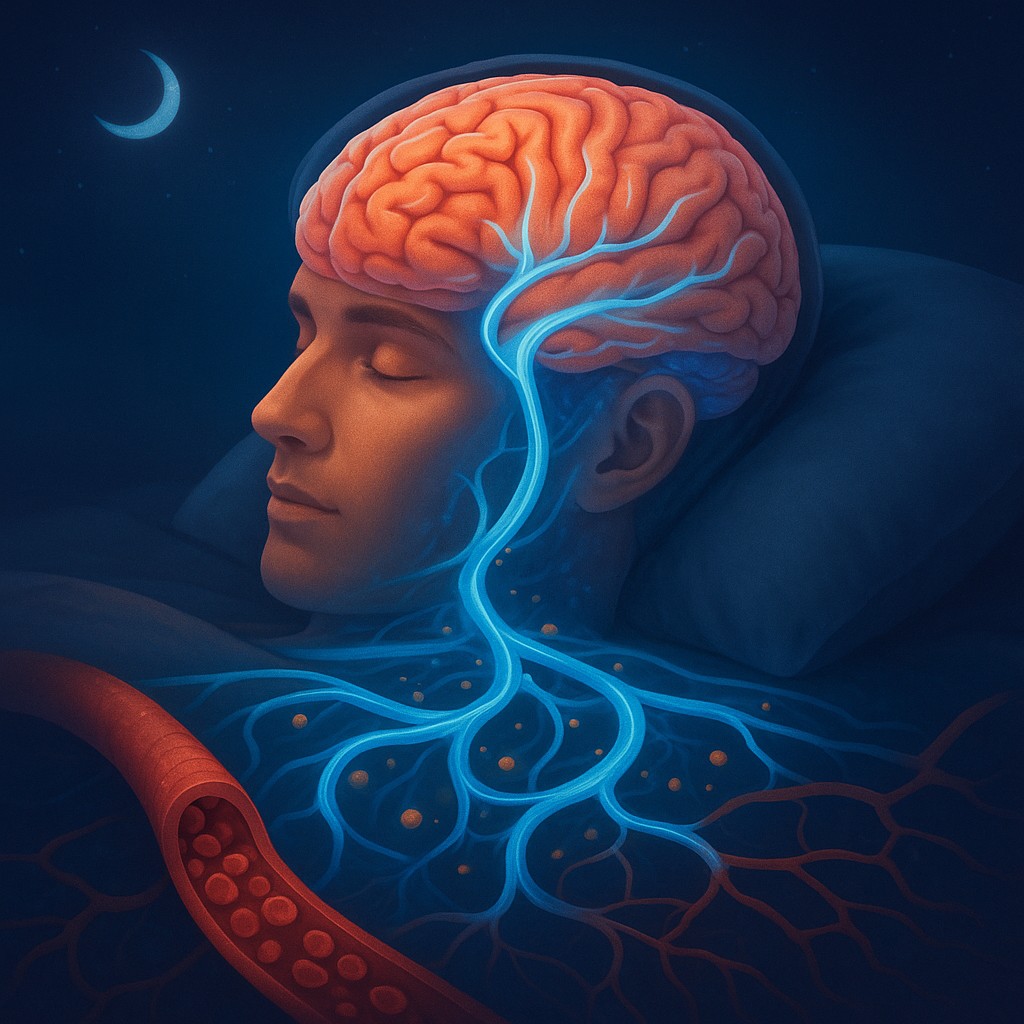
To understand how the brain cleans itself, we first have to look at its unusual physical constraints. Unlike the rest of your body, which has a lymphatic system (a network of vessels that drains fluid and waste from tissues), the brain was long thought to be an isolated fortress. Because of the blood-brain barrier, it was a mystery how such an active organ managed its trash removal. Scientists eventually discovered that the brain has its own specialized version of this plumbing, which they named the glymphatic system. The name is a blend of "glial cells," the support cells that act as the system's plumbers, and the "lymphatic system" it mimics.
The magic happens the moment you enter deep, slow-wave sleep. While you are dreaming, your brain cells literally shrink. They do not just power down; they physically contract, increasing the space between cells - the interstitial space - by a staggering 60 percent. If the brain during the day is like a crowded subway car at 5:00 PM where no one can move, the brain during deep sleep is like that same car at 3:00 AM, with enough room for a cleaning crew to walk through with a power washer. This expansion is the critical "on switch" for the glymphatic cycle, transforming the brain from a solid mass into a porous sponge.
The Hydraulic Dishwasher in Your Head
Once those cellular hallways widen, the brain initiates a surge of cerebrospinal fluid (CSF). This is the clear, watery liquid that normally cushions your brain and spinal cord. During the day, CSF mostly stays on the periphery, but at night, it is funneled deep into the brain tissue through channels created by the glial cells. This is not a passive trickle or a slow soak; it is an active, pressurized flush. Think of it as a hydraulic dishwasher that uses the force of the fluid to dislodge and carry away the day's accumulated metabolic gunk.
The primary target of this nightly power wash is a protein called beta-amyloid. In a healthy brain, beta-amyloid is produced and then promptly washed away. However, if the glymphatic system is sluggish or interrupted, these proteins can begin to clump together, forming the plaques that are a sign of Alzheimer’s disease. By flushing these toxic proteins into the general circulation, where the liver and kidneys can eventually dispose of them, the glymphatic system acts as your primary defense against cognitive decline. This is why that "foggy" feeling after a night of tossing and turning is not just in your head - it actually is your head, specifically the physical debris that was never cleared away.
| Feature |
The Waking Brain |
The Deeply Sleeping Brain |
| Cellular Layout |
Cells are expanded and packed tightly. |
Cells shrink by up to 60 percent. |
| Fluid Movement |
CSF stays mostly on the brain's surface. |
CSF surges through the deep brain tissue. |
| Waste Management |
Trash accumulates (metabolic buildup). |
Trash is actively flushed into the bloodstream. |
| Energy Priority |
Processing external stimulus and logic. |
High-pressure hydraulic cleaning. |
| Primary Driver |
High neurological activity. |
Slow-wave oscillations and cardiovascular pulse. |
The Heartbeat as a Master Plumber
One of the most fascinating aspects of this system is that it does not have its own pump. Your brain does not have a separate heart to move this cleaning fluid around. Instead, the glymphatic system hacks your cardiovascular system. The fluid is propelled through the brain by the rhythmic pulsations of your arteries. Every time your heart beats, the pressure wave travels up into the brain, thumping against the channels of the glymphatic system and pushing the CSF forward. It is a beautiful example of biological efficiency, using the engine of the heart to power the sanitation of the mind.
This connection creates a direct link between your heart health and your long-term brain health. Conditions like high blood pressure or hardened arteries (atherosclerosis) do not just affect your chest; they dampen the effectiveness of those nightly pressure waves. If your arteries lose their elasticity, they cannot pulse as effectively, which means the rinse cycle in your brain becomes more of a dribble. Maintaining a healthy cardiovascular system ensures that the hydraulic pressure remains high enough to reach every nook and cranny of your neural architecture, ensuring that no cellular trash is left behind to fester.
Debunking the Myth of the "Productive" All-Nighter
There is a pervasive cultural myth that sleep is a luxury or a passive "off" state that can be traded for extra hours of productivity. From a biological standpoint, this is wrong. People often believe that the brain simply rests to recharge its batteries. While energy replenishment is part of the story, the more critical function is this physical sanitation. When you pull an all-nighter, you are not just tired; you are physically walking around with a "dirty" brain. The beta-amyloid and other metabolic byproducts, like tau proteins, continue to saturate your neural pathways, interfering with the signaling between neurons.
This buildup is the reason for the immediate decline in executive function, memory, and emotional regulation after a period of sleep deprivation. Your neurons are trying to fire while surrounded by chemical interference. Some people claim they have "trained" themselves to need only four hours of sleep, but research consistently shows that while these individuals might feel "fine," their objective cognitive performance and the biological markers of brain waste clearance are significantly impaired. You cannot hack your way out of a physical cleaning requirement. If the dishwasher does not run, the dishes stay dirty, regardless of how much coffee you drink.
Optimizing the Nightly Rinse Cycle
Knowing that the glymphatic system is most active during deep, slow-wave sleep allows us to make better decisions about our lifestyle and sleep hygiene. It is not just about the number of hours spent in bed, but the quality of the deep sleep cycles achieved. Factors like alcohol consumption might help you fall asleep faster, but alcohol is notorious for suppressing the deep sleep stages where the glymphatic system is most active. Consequently, passing out is not the same as cleaning up. You might wake up after eight hours of booze-induced slumber feeling like you have been hit by a truck because your brain’s plumbing was essentially shut off all night.
Even your sleeping position might play a role in how well your brain drains. Some studies suggest that side-sleeping may be the most efficient posture for glymphatic transport compared to sleeping on your back or stomach. While the human body is resilient and can adapt to many variables, the core principles remain the same: your brain needs a consistent, high-quality window of downtime to manage its internal environment. By prioritizing deep sleep and cardiovascular health, you are essentially ensuring that your internal janitor has the tools, the pressure, and the time needed to keep your cognitive machinery sparkling and ready for the challenges of the coming day.
The discovery of the glymphatic system has transformed our understanding of the relationship between sleep and neurological health. It reminds us that our brains are not just abstract processors of information, but physical organs subject to the same laws of biology and waste management as any other part of the body. Embracing the need for sleep is not a sign of weakness, but a commitment to biological maintenance. As you drift off tonight, take a moment to appreciate the invisible, high-pressure waves of fluid coursing through your brain, quietly scrubbing away the day’s stress and preparing you for a clear, sharp, and revitalized morning.