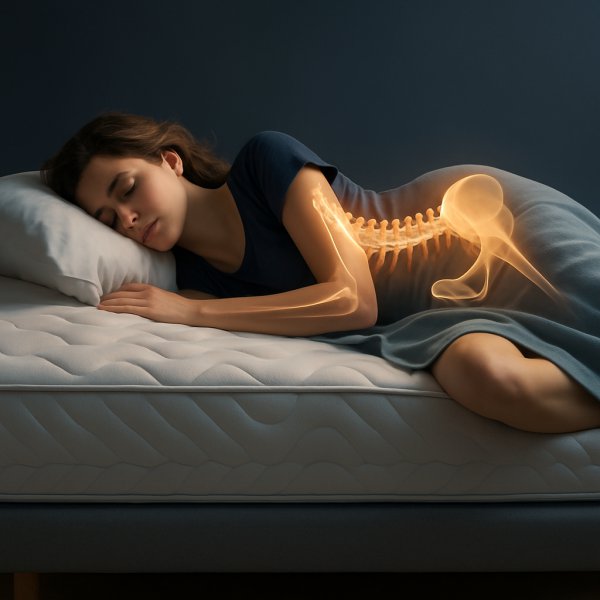
Why your mattress choice is secretly changing your life
Most of us treat mattresses like a boring utility - a place to park our tired bodies until morning. But the surface you sleep on is a major, often invisible, player in how you feel, move, and think. Good sleep comes from more than just the right number of hours - it arrives when your body rests on a surface that supports your spine, cushions pressure points, and keeps temperature and motion under control. Once you understand what your body needs, the difference feels as dramatic as swapping from flip-flops to custom shoes.
Think of a mattress as the stage where your nightly repair job happens. Muscles relax, discs hydrate, and your nervous system processes the day. If the stage is lumpy or too rigid, the performance stumbles - you wake sore, restless, or with odd numbness. Conversely, when the surface matches your body and habit, sleep deepens and recovery happens more efficiently. That means better mood, less pain, and sharper thinking the next day.
This guide takes you from basic ideas to practical choices, mixing a little science with real-world stories and a touch of humor. By the end you will know how to match sleeping positions, body type, and preferences to mattress materials and firmness - and you will have clear steps to test and buy a better mattress. Read on as if your sleep depends on it - because it does.
You will be asked to think, experiment, and maybe challenge what you assumed about "firm is best" or "expensive equals perfect." There are myths to bust and easy wins to try tonight. So get comfortable - and mentally prepare to become a smarter sleeper.
How your body asks for support: spine, pressure, and micro-movements
Your spine wants neutral alignment - that means maintaining its natural S-curve while you rest, not being twisted, excessively arched, or flattened. A good sleeping surface adapts to curves at the shoulders, hips, and lower back so the spine stays aligned whether you sleep on your back, side, or stomach. If the mattress is too soft, your hip and shoulder will sink, which can tilt the pelvis and strain the lower back. If it is too hard, the shoulders and hips will sit on top, creating pressure points and interrupting circulation.
Pressure relief is about blood flow and nerve comfort. When tissues are pressed for long periods, localized blood flow drops, causing pain and numbness when you move. Materials that conform - like certain foams or latex - distribute pressure over a larger area and reduce those hot spots. But total conformity is not always ideal because you also need to feel supported when you change positions. The best surfaces balance contour with lift.
Micro-movements during sleep - shifting, turning, and small muscle adjustments - are another part of the equation. A surface that isolates motion well helps couples sleep without waking each other. Similarly, a responsive surface that gives slightly when you move keeps adjustments small and comfortable. The technical terms can be fun to think about, but the practical test is simple: you should be able to change positions smoothly and wake refreshed, not stiff.
Firmness: what the numbers mean and how to use them
Mattress firmness is commonly presented on a 1-10 scale, where 1 is mattress-on-concrete soft and 10 is firm as a board. But firmness labels do not equal support - they describe surface feel, not how well the mattress maintains spinal alignment for your body type. Softer mattresses can support heavier bodies if they have a supportive core, and firmer mattresses can feel uncomfortable for smaller-framed side sleepers.
Body weight and sleeping position interact with firmness. Generally, lighter people (under about 140 pounds) tend to prefer softer surfaces that allow enough sink for shoulder and hip contouring. Average weight sleepers (140-230 pounds) often find medium to medium-firm comfortable. Heavier sleepers benefit from firmer, high-support cores that prevent excessive sink and maintain alignment. Side sleepers usually want softer to medium feel to relieve shoulder and hip pressure. Back sleepers need medium-firm support for lumbar alignment, and stomach sleepers typically require firmer surfaces to avoid lower back sag.
When testing firmness, lie in your usual position for at least 10 to 15 minutes and bring a pillow for your normal setup. Pay attention to whether your spine feels straight, whether pressure builds at shoulders or hips, and whether you can transition positions without effort. Trusted retailers and trial periods make this testing practical at home.
Materials explained - foam, latex, springs, and hybrids in plain language
Memory foam conforms and absorbs motion, making it excellent for pressure relief and couples who want less disturbance. It can trap heat unless it is gel-infused or ventilated, so look for cooling features if you sleep warm. Latex gives more bounce and faster responsiveness, with natural latex offering durability and cooler sleep than many foams. It is often a favorite for people who want contour without the "stuck" feeling memory foam can produce.
Innerspring mattresses use steel coils for support and offer strong airflow and edge support. They can feel bouncy and are often paired with comfort layers of foam or latex in hybrid designs. Hybrids aim to combine the best of both worlds - the support and cooling of coils with the pressure relief of foam or latex. Materials also include fiber fills and pillow-tops, which add surface softness but usually do not change core support.
Durability varies by material and build quality. Natural latex and high-density foams tend to last longer than low-density foams or thin comfort layers over cheap springs. If you want longevity, look at construction, materials, and return policies rather than brand alone.
Matching sleeping positions to ideal surfaces
Side sleepers usually benefit from a medium-soft to medium-feel mattress that cushions the shoulders and hips and prevents the spine from curving. Look for good pressure relief in the upper layer and adequate support underneath to stop the hips from dropping too far. A pillow that keeps the head aligned is also crucial - think of the head and neck as the final piece of your spinal puzzle.
Back sleepers need medium-firm support that keeps the lumbar region cradled without letting the pelvis sink and exaggerate the lower back curve. Target a mattress that has zoned support or a firm core with a softer top layer so the shoulders and lower back are both accommodated. A thinner pillow often works best to keep the neck neutral.
Stomach sleepers are less common and usually require a firmer surface to prevent the pelvis from sinking and increasing lower back extension. Thin pillows and attention to core engagement during the day help, but night after night on too-soft a surface will likely increase discomfort. Combination sleepers should focus on balance - a responsive mattress with moderate pressure relief that allows easy turning without losing support.
Temperature, motion transfer, and the partner factor
Heat is a make-or-break comfort element. Closed-cell memory foam can trap warmth, while coils, perforated latex, and breathable covers promote cooling. If you or your partner run hot, prioritize airflow, phase-change materials, or cooling technologies in the comfort layers. Sometimes a simple mattress topper that focuses on cooling can be the fast fix you need.
Motion transfer matters if you share a bed. Memory foam and latex usually isolate motion well, meaning your partner's turns will not wake you. Innerspring units with thin comfort layers can transfer more motion. Hybrids vary depending on the comfort materials used. Edge support is also relevant for couples - a strong perimeter avoids the feeling of sliding off when sitting or sleeping near the edge.
Noise and bounce are minor but real considerations. If your partner wakes easily with movement, choose materials and builds designed to dampen energy. Quiet, consistent support tends to produce quieter sleep.
When a mattress is done for - sagging, dips, and lifespan signs
Most mattresses last somewhere between 5 and 12 years, depending on materials, weight load, and build quality. Foam mattresses, especially those with high-density layers, often last 7 to 10 years. Latex mattresses often exceed 10 years if maintained well. Innerspring units can vary widely - good coils last, but thin comfort layers wear out faster.
Look for visible or felt sagging greater than 1 to 1.5 inches, which is a practical sign of decline. New aches in the morning, increased tossing and turning, and waking with numbness are red flags. Rotating mattresses used to be suggested regularly, but with many modern constructions rotation is less helpful than using a quality foundation and avoiding sitting on the same spot every day.
Warranty language matters - it often covers manufacturing defects and significant sag but not comfort preferences. Understand the warranty specifics and combine them with a generous trial window when buying.
Common myths that steer sleepers wrong
Myth - firmer is always better. Reality - firmness is personal and position-dependent. A very firm mattress can create pressure points for side sleepers and cause more pain than a softer, properly supportive option. Myth - expensive equals perfect. Reality - price can reflect marketing, brand margins, and features you may not need. Practical testing beats price tags.
Myth - you must flip your mattress. Reality - many modern mattresses are single-sided and flipping would ruin their zoning. Myth - a mattress protector ruins feel. Reality - thin protectors often have negligible feel impact and protect against stains and allergens, preserving your mattress lifespan. Calling these out helps you shop with eyes wide open.
How to test, measure, and buy without regret
Testing in-store is useful, but only a 10-minute lie-down will not reveal how a mattress behaves over a whole night. Favor trial periods of at least 30 nights, preferably 90 to 120, because your body adapts and the mattress settles. When you test in-store, bring the pillow you use and spend at least 10 to 15 minutes in your usual sleep positions. Check for spinal alignment by imagining a straight line from your neck through your lower back - it should feel neutral.
Measure your bedroom and plan for the foundation - a mattress without proper support can feel different and wear faster. Read return and pickup policies carefully. Look for independent certifications like CertiPUR-US for foams or GOLS for natural latex when you care about materials. Finally, consider trialing a mattress topper first if you are uncertain - it can be a low-cost experiment.
Small case studies - real sleepers, real fixes
Case study 1 - Emily, a side sleeper with shoulder pain. Emily slept on a medium-firm innerspring and woke with tight shoulders. After trying a memory foam mattress topper, she felt less pressure but still sagged at the hips. She switched to a medium-soft hybrid with targeted zoned support and immediately noticed less shoulder pain and fewer wake-ups. Her sleep quality improved within two weeks, and her morning stiffness disappeared after a month.
Case study 2 - Marcus and Lena, partners with different needs. Marcus sleeps hot and is a back sleeper. Lena is a side sleeper who wakes with hip pressure. They chose a hybrid mattress with a latex-like comfort layer for responsiveness and cooling channels, plus dual-sided pillow-top options in their large bed. Motion transfer decreased, both felt supported, and nights of "I need another blanket" turned into "Let's sleep in - again."
A practical 6-step action plan to find your ideal sleeping surface
Start by imagining your typical night and taking notes on position, temperature sensitivity, and any pain spots you wake with. Treat this like a mini sleep audit that guides decisions, not a test of willpower.
Next, use a checklist when trying beds - spend 10 to 15 minutes lying in each usual position and ask these questions: does my spine feel neutral, do I feel pressure at shoulders or hips, do I sink too much, and can I move with ease. Then try a targeted experiment - a mattress topper, a change of pillow, or a different base - before committing to a new bed.
When shopping, insist on a trial period and check the return logistics and fees. If you share a bed, prioritize motion isolation and cooling features. After purchase, allow two to four weeks for adaptation, and reassess after one month. If discomfort persists, use the return window.
Quick bullet checklist:
- Note your sleep position, weight category, and temperature tendencies
- Test in-store with your pillow and 10-15 minutes per position
- Choose a mattress with an adequate trial period and clear return policy
- Consider a topper as a low-cost experiment
- Reassess comfort after 2-4 weeks at home
Questions to pause and think about - reflect on your sleep needs
- When was the last time you woke in the morning feeling genuinely refreshed, and what mattress were you sleeping on then?
- Which sleeping position do you naturally fall into without thinking, and how often do you wake with pressure or numbness?
- What trade-offs would you accept - for example, slightly less plush comfort for better cooling, or firmer support to reduce lower back pain?
Key takeaways to remember on repeat
- Support is about spinal alignment, not just surface firmness.
- Match firmness to body weight and sleeping position, not to marketing labels.
- Material choice affects pressure relief, motion transfer, cooling, and durability.
- Test with a realistic trial period and verify return logistics before you buy.
- Simple fixes like a different pillow or a topper can solve many problems quickly.
- Replacing a mattress is an investment in daily recovery and long-term health.
One last friendly push toward better sleep
Choosing the ideal sleeping surface is part science, part personal preference, and part little experiments. You do not need to be perfect - you need a mattress that brings your spine into a neutral line, removes pressure points, and keeps temperature and motion in check. Take measured steps, test with patience, and remember that better sleep begins with a stage that supports the nightly work your body does. Go find the surface that helps you wake up to the life you want to live. Your future well-rested self will thank you.