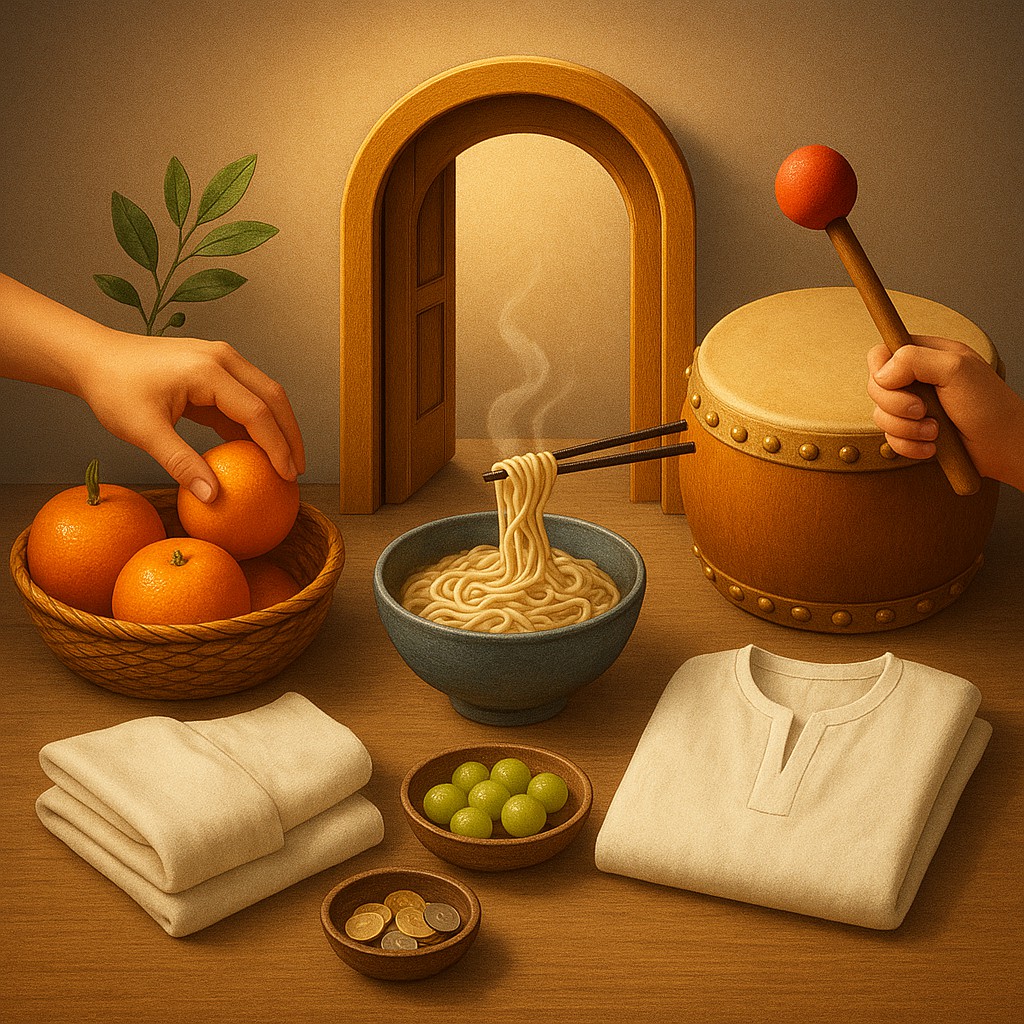
On most calendars, New Year’s Eve is just a square you tear off and replace. Culturally, though, it feels more like a trapdoor between worlds: the "old" year drops away, and people scramble to land in the "new" one with the right words, foods, noises, colors, and sometimes even underwear. The surprising thing is not that humans mark the moment. It is how wildly specific the rituals become, and how confidently people will insist, "Yes, of course you must do this, or your luck will be odd."
New Year activities form a global language with thousands of dialects. Some rituals are loud enough to rattle windows, some are small enough to fit in a pocket, and some are gloriously chaotic. Learning them is more than party trivia. It is a fast track to understanding what a community fears, hopes for, and laughs about when time resets and people make promises they will bravely forget by February.
The universal logic behind the weirdness: luck, cleaning, and “fresh starts”
Most New Year customs rest on a few simple ideas that show up nearly everywhere, even if the details vary. One is purification: you clean the house, wash away last year’s bad vibes, and try not to carry stale energy into January. Another is inviting abundance: you eat round foods, keep money in your pocket, or make sure your pantry is full, because symbols like to behave like practical metaphors. A third is protection: loud noises, fire, smoke, or masks are used to drive away whatever trouble might be hiding at the threshold.
A common misconception is that these rituals are random or meaningless superstition. Some are superstitions, yes, but they are also social tools. They help groups coordinate strong emotions: joy, relief, grief, gratitude, anticipation. Even if you do not believe grapes can change your finances, doing something together at midnight makes a shared story, and humans run on stories the way phones run on batteries.
Another myth is that globalization has made New Year celebrations all the same. Fireworks and champagne have spread, but local twists remain stubbornly alive. People will post a countdown video on social media and still throw water out the window or eat exactly 12 grapes because their grandmother insists. Modern life adds layers, it rarely replaces the foundations.
Foods that behave like wishes (and sometimes like dares)
If New Year traditions had a most popular category, it would be food. Food is symbolic and immediate: you can literally taste your hopes. Across countries, you will notice patterns. Round foods often stand for coins and continuity, long noodles suggest long life, and legumes represent prosperity because they look like little edible tokens.
In Spain, one of the best-known rituals is eating 12 grapes at midnight, one grape for each clock chime, each grape representing a month of good luck. It sounds charming until you try to chew, swallow, and smile as the clock rushes forward. Many people fail with dramatic dignity, which is part of the charm. In parts of Latin America, including Mexico, grapes appear too, sometimes paired with written wishes or specific clothing colors.
In the southern United States, Hoppin’ John (black-eyed peas, rice, sometimes greens) appears as a dish for prosperity. Black-eyed peas stand for coins, and greens stand for paper money. The same idea shows up in Italy, where lentils are a classic New Year dish because they resemble small coins. They are often served with pork, since pigs root forward and forward motion makes a nice metaphor for progress.
In Japan, many people eat toshikoshi soba, buckwheat noodles whose long shape suggests longevity and resilience. The noodles can break easily, which some see as a clean break from last year’s troubles. That gives the dish a double meaning: live long, and also let go. In the Philippines, families often prepare 12 round fruits for the 12 months, leaning hard into the "round equals wealth" idea in a way that is both elegant and very snackable.
If you want an easy memory trick: New Year foods often fall into three "wish types":
- Wealth: lentils, peas, round fruits, ring-shaped cakes
- Longevity: noodles and other long or slow-cooked dishes
- Protection: foods with strong flavors (garlic, spices), or ritual meals eaten together to strengthen bonds
Loud, bright, and slightly dangerous: traditions that chase away bad spirits
There is a reason fireworks turn up everywhere: noise and light feel powerful. In China and in Lunar New Year celebrations worldwide, firecrackers traditionally scare off evil spirits and bad luck, tied to the legend of the monster Nian. Even where firecrackers are restricted today, you still find the "noise logic" in lion dances, drums, and communal noise-making. The point is not just spectacle, it is symbolic defense. The new year arrives, and you greet it like a VIP while warning troublemakers to move along.
In Denmark, some people celebrate by smashing plates (often old dishes) at friends’ doors. Waking up to a pile of broken ceramics is, surprisingly, a compliment: it means friends showed up for you. It turns the usual rule of "do not break things" into "we love you enough to bring destruction." There is also a tradition of standing on chairs and jumping down at midnight, literally leaping into the new year. It is a simple physical metaphor that does not need overthinking, which is usually best.
In Scotland, Hogmanay can include fire festivals and torchlit processions in places like Stonehaven. Fire is both cleansing and protective, and it looks spectacular against a dark winter sky. Add first-footing (the first person to enter your home after midnight, traditionally bringing gifts like coal, shortbread, or whisky), and you get a celebration that feels half neighborly, half doorway rite.
In parts of South Africa, some neighborhoods have practiced throwing furniture or household items out of windows around New Year. It is not universal and is discouraged for safety reasons, but it is an unforgettable, literal take on the "out with the old" impulse. The underlying idea is common worldwide: when you remove clutter, you make room for better things. Most places just use a donation bag instead of gravity.
Clothing, colors, and the strange power of “what you wear changes what happens”
New Year customs are not only about what you eat or explode. They are also about what you put on, as if the universe checks your outfit before deciding your fate. This is where things get wonderfully specific.
In Brazil, many people wear white on New Year’s Eve, especially at beaches like Copacabana, as a sign of peace and renewal. Celebrations often include offerings and rituals tied to Afro-Brazilian traditions, and the ocean becomes a dramatic stage for hope. People may also jump seven waves, making wishes as they go, mixing spirituality, nature, and a bit of exercise.
Across parts of Latin America (and now popular in many places), there is a tradition of wearing color-coded underwear: yellow for money, red for love, white for peace, and sometimes green for health. It is private and funny, which makes it oddly powerful. You can take part without explaining yourself to anyone, like a secret contract with the future.
In Italy, red underwear is also linked to good luck at New Year. Different places set different rules (gifted versus bought, worn once versus burned), but the common thread is simple: red is bold, protective, and hard to miss. If luck has poor eyesight, red is a safe bet.
A common misconception is that clothing rituals are shallow or only about looks. In practice they are about identity and intention. Wearing a color "for courage" is a small, wearable reminder to act differently in the months ahead. Even skeptics can see the psychology: symbols work because we keep seeing them.
Movement rituals: running, leaping, swimming, and leaving the past behind
Some New Year customs are basically workouts dressed up as tradition. They use the body to tell a story: you are not just thinking about change, you are performing it.
In the Netherlands, people eat oliebollen (fried dough balls) and appelflappen, but they also have a famous cold-water tradition: the Nieuwjaarsduik, a New Year’s dive into icy water, often the North Sea. It is part community event, part personal challenge, and part proof that people will do anything if you call it a tradition and hand them a towel. Similar "polar plunge" events happen in other countries, but the Dutch version is especially iconic.
In Ireland and parts of the UK, you might find playful customs like banging bread on the walls in some local traditions to chase away hunger or bad spirits. Whether or not it is common today, it shows the same pattern: you use motion and sound to set a boundary against misfortune. In many cultures, thresholds matter, and New Year is the biggest threshold of all.
In Latin American countries and among diaspora communities, some people run around the block with an empty suitcase at midnight to invite travel in the coming year. It is absurdly visual, and that is why it sticks. If you have ever wanted to manifest vacations with cardio, this is your moment.
A whirlwind tour: surprising traditions, country by country (with a handy table)
The world is too big for a complete list, but you can learn a lot from a curated set. Notice how each tradition maps to a wish: love, money, protection, health, travel, or cleansing. Also notice how many rituals are social. Luck, apparently, prefers company.
| Country/Region |
Activity |
What it’s “for” |
Why it’s memorable |
| Spain |
Eat 12 grapes at midnight |
Good luck across 12 months |
A timed chewing challenge with high stakes and laughter |
| Japan |
Eat toshikoshi soba |
Longevity, letting go of hardship |
A simple meal that carries layered meaning |
| Brazil |
Wear white, jump seven waves |
Peace, renewal, wishes |
The ocean becomes a wish-making partner |
| Denmark |
Smash plates at friends’ doors, jump off chairs |
Friendship, good fortune |
Destructive affection plus a literal leap into the year |
| Scotland |
First-footing, fire celebrations |
Prosperity, protection |
The year begins with a symbolic "first guest" |
| Philippines |
Display/eat 12 round fruits |
Wealth and abundance |
A fruit bowl that doubles as a prosperity spell |
| Italy |
Eat lentils (often with pork), sometimes red underwear |
Wealth, luck |
"Coins on a plate" and bold color symbolism |
| Netherlands |
New Year’s cold-water dive |
Resilience, fresh start |
A communal "I can do hard things" moment |
How traditions travel and evolve (and why that’s not “inauthentic”)
Many people worry that mixing traditions is disrespectful or "not real." But cultures have always borrowed from each other. Trade routes, migration, marriage, and media spread rituals the way wind spreads seeds. A tradition can be both old and adaptable, like a recipe that changes depending on what’s in your pantry.
For example, fireworks have gone global, but their meaning shifts with local stories. Color-underwear customs pop up in new places because they are easy to adopt, funny, and personal. Food traditions change too: if you cannot find a specific ingredient, you substitute something that keeps the symbolism alive. The key is intention and context, not perfect copying.
One more misconception: "These customs are all ancient." Some are, but many are surprisingly recent or only recently popularized. The Spanish grape ritual, for instance, spread in part because of agricultural surplus and marketing in the early 1900s. That does not make it fake, it makes it human. We build meaning from what we have, including extra grapes.
Making it stick: a simple way to remember (and respectfully try) New Year customs
If you want to remember New Year activities without carrying an encyclopedia, think in categories rather than scattered facts. Most rituals fit into a few buckets: eat, wear, clean, make noise, cross a threshold, do something brave, share with others. When you learn a new tradition, ask, "Which bucket is this in, and what wish does it express?"
If you want to try a tradition from another culture, do it with curiosity and respect. A good rule is to avoid turning sacred practices into party tricks, especially when they belong to a living religion or a history of oppression. Many New Year customs are open and communal, and they are often happy to be shared, especially food ones. When in doubt, learn the story, credit the culture, and do not claim you invented it after watching one video.
Here are a few low-risk ways to join thoughtfully:
- Host a "world New Year" snack table: grapes, lentils, noodles, round fruits, with labels explaining the symbols.
- Write 12 wishes and pair them with 12 grapes or 12 minutes of quiet reflection.
- Do a friendly "first-foot" twist: have a guest bring something symbolic like tea, bread, or a candle.
- Pick a color to wear that represents a real goal, then name one action you will take in January to support it.
Stepping into the year like you mean it
New Year traditions may look silly from the outside, but from the inside they are small, practical poems. They turn abstract hopes into things you can bite, wear, jump over, carry, or safely light on fire. In a world that often feels too big to control, that is not childish, it is wise. You cannot command the future, but you can choose how you greet it.
So pick one surprising ritual from somewhere you have never been, learn its story, and try a respectful version that fits your life. Let it be fun, and let it be intentional. When midnight comes, you will be doing what humans everywhere have always done: making meaning together, one hopeful, slightly ridiculous act at a time.