In the quiet halls of medical history, there is a ghost that haunts doctors and scientists alike: a phenomenon that defies the logic of pills and scalpels. We have all heard the stories of the patient given months to live who laughed their way into a decade of health, or the athlete who visualized their muscle fibers mending and returned to the field weeks ahead of schedule. For a long time, these accounts were tucked away in the "anecdotal" drawer, dismissed as lucky flukes or statistical outliers that did not belong in a serious textbook. However, as our understanding of the brain has evolved from seeing it as a simple computer to a complex chemical factory, we have realized that the mind is not just a passenger in the body. It is the lead engineer of our biological reality.
If you have ever felt your heart race before a big presentation or experienced a "gut feeling" of dread, you have felt the mind-body connection in its most basic form. Your thoughts, which feel weightless and invisible, are actually physical events. They trigger a cascade of hormones and electrical signals throughout your nervous system. The question is no longer whether the mind can influence the body, but how far that influence extends. Can we actually think ourselves into health? More dangerously, can our thoughts make us sick? To answer this, we have to pull back the curtain on the strange world of the placebo effect and the terrifying grip of the stress response.
The Chemistry of Belief and the Placebo Effect
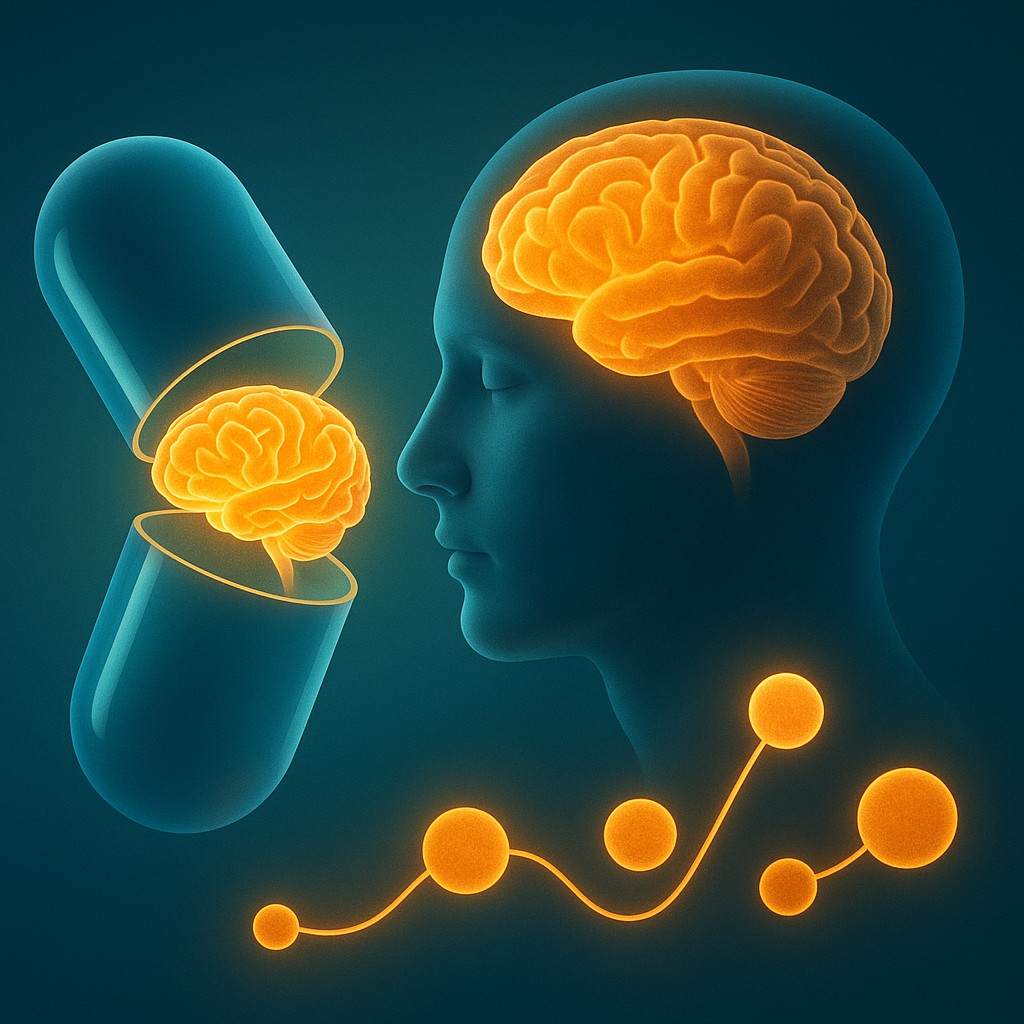
The most famous evidence for the mind's healing power is the placebo effect. This is essentially the body's ability to create its own pharmacy based on expectation. When a patient takes a sugar pill believing it is a powerful painkiller, their brain does not just "think" the pain is gone. Instead, it releases endogenous opioids, which are natural painkillers just as real as the drugs you buy at the store. The brain views the act of taking medicine as a signal to start the healing process, proving that our beliefs serve as a blueprint for our biology. This is not magic; it is a sophisticated survival mechanism that allows the body to distribute resources based on what it believes is happening.
Curiously, the placebo effect has a dark twin known as the nocebo effect. If you believe a treatment will make you sick or that you are destined to catch the flu, your brain can actually manifest those symptoms. This highlights a critical truth: the mind is a double-edged sword. It can either speed up our recovery or act as a heavy anchor on our well-being. Researchers have found that even the way a doctor speaks to a patient can change the outcome of a surgery. A confident, warm delivery lowers the patient's stress levels and primes their immune system for repair. The hardware of the body is always listening to the software of the mind, and the messages we send can be the difference between a quick recovery and a long struggle.
How Stress Silences the Immune System
To understand why a positive mindset helps us stay healthy, we have to look at what happens when our minds are stuck in a loop of worry. Evolutionarily speaking, the stress response was designed to help us outrun a predator, not to help us deal with a full inbox or a difficult relative. When you are stressed, your body enters "survival mode," releasing cortisol and adrenaline while shutting down non-essential systems like digestion and, crucially, the immune system. If you are about to be eaten by a bear, your body does not care about fighting off a cold virus or repairing a small muscle tear; it only cares about immediate survival.
The problem in the modern world is that many of us live in a state of "chronic low-grade stress," meaning our immune systems are permanently suppressed. When your mind is constantly screaming that there is a crisis, your body’s natural repair crews go on strike. By learning to manage our mental state through mindfulness or relaxation, we are not just "feeling better" in an abstract way. We are actually giving the body permission to turn the immune system back on. This is why people who practice meditation or deep breathing often get sick less often. They have stopped telling their bodies to prioritize a fake emergency over long-term health.
Visualizing Recovery and the Architecture of Repair
If simply relaxing can stop the damage, can active visualization actually speed up the healing of a physical injury? The answer lies in the way the brain maps the body. When you visualize a specific movement or the healing of an injury, you are activating the same neural pathways as if you were actually doing it. Studies on athletes show that those who mentally rehearse their recovery alongside physical therapy often regain strength and mobility much faster than those who do not. The brain is the control center for every repair signal. By focusing your attention on an injury, you are effectively increasing blood flow and neural activity in that region.
This does not mean you can "wish" a broken leg back together in five minutes, but it does mean you can optimize the environment in which that bone heals. By maintaining a mental image of health, you prevent the brain from "forgetting" how to use that part of the body, a common side effect of long-term injury. Think of the mind as the foreman on a construction site. The body provides the bricks and mortar, but the mind provides the schedule and the motivation for the workers. Without a focused mind, the body’s repair efforts can become disorganized and sluggish.
Practical Tools for Mental Wellness and Physical Health
It is one thing to know that the mind influences the body, but it is another to put that knowledge into practice. To harness this power, we must treat our mental habits with the same discipline as our diet or exercise. This involves identifying the "thought loops" that trigger our stress response and replacing them with more constructive stories. While it may sound like "self-help" fluff, the physical impact of gratitude and positive framing is backed by hard data. When you focus on what is working in your body rather than what is failing, you create an internal environment that supports cellular repair.
| Mental State |
Physical Impact |
Long-Term Health Result |
| Chronic Anxiety |
High Cortisol, Suppressed T-Cells |
Increased risk of infection and slow healing |
| Radical Optimism |
Dopamine and Endorphin Release |
Better heart health and pain management |
| Focused Visualization |
Increased Neural Signaling to Site |
Faster recovery of motor skills and muscle memory |
| Deep Relaxation |
Parasympathetic Activation |
Enhanced cellular repair and digestion |
| Resentment/Anger |
Elevated Pro-inflammatory Cytokines |
Higher risk of chronic inflammatory diseases |
The Boundaries Between Science and Pseudoscience
As exciting as the power of the mind is, we must be careful not to fall into the trap of believing the mind can cure everything on its own. There are limits to what belief can do, and ignoring medical science in favor of "positive thinking" is a dangerous gamble. The power of the mind acts as an assistant and a guardian, not a replacement for antibiotics, surgery, or chemotherapy. If you have an infection, your body needs the physical tools to kill the bacteria, though your mind can certainly help your immune system work more efficiently. The goal is a partnership between modern medicine and the untapped potential of your own consciousness.
Myths often suggest that people are "to blame" for their illness because they did not "think positively" enough. This is a cruel misconception that ignores the incredible complexity of genetics, environment, and pure chance. Using the mind to heal is about maximizing your odds and giving your body its best chance to succeed, not about achieving god-like control over every cell. True mental power comes from accepting what we cannot control while fiercely optimizing what we can: our reactions, our perspectives, and our internal dialogue. When we strike this balance, we become active participants in our own health.
Cultivating the Inner Physician
Ultimately, the journey of health is as much a mental marathon as it is a physical one. By understanding that your thoughts have a direct line to your internal chemistry, you gain a sense of control that can transform how you navigate the world. You are not a helpless victim of your biology, but a collaborator in its ongoing creation. Every time you choose a slow, deep breath instead of spiraling into panic, or visualize your body as a resilient machine, you are casting a vote for your future well-being.
Harnessing the power of the mind is not about being perfect or never feeling sad; it is about knowing you have a powerful tool at your disposal. The next time you feel a sniffle coming on or a sore muscle acting up, remember that the gray matter between your ears is the most sophisticated laboratory on the planet. Trust in your body's wisdom, direct your mind with intention, and embrace the fascinating, lifelong process of becoming the master of your own internal universe.