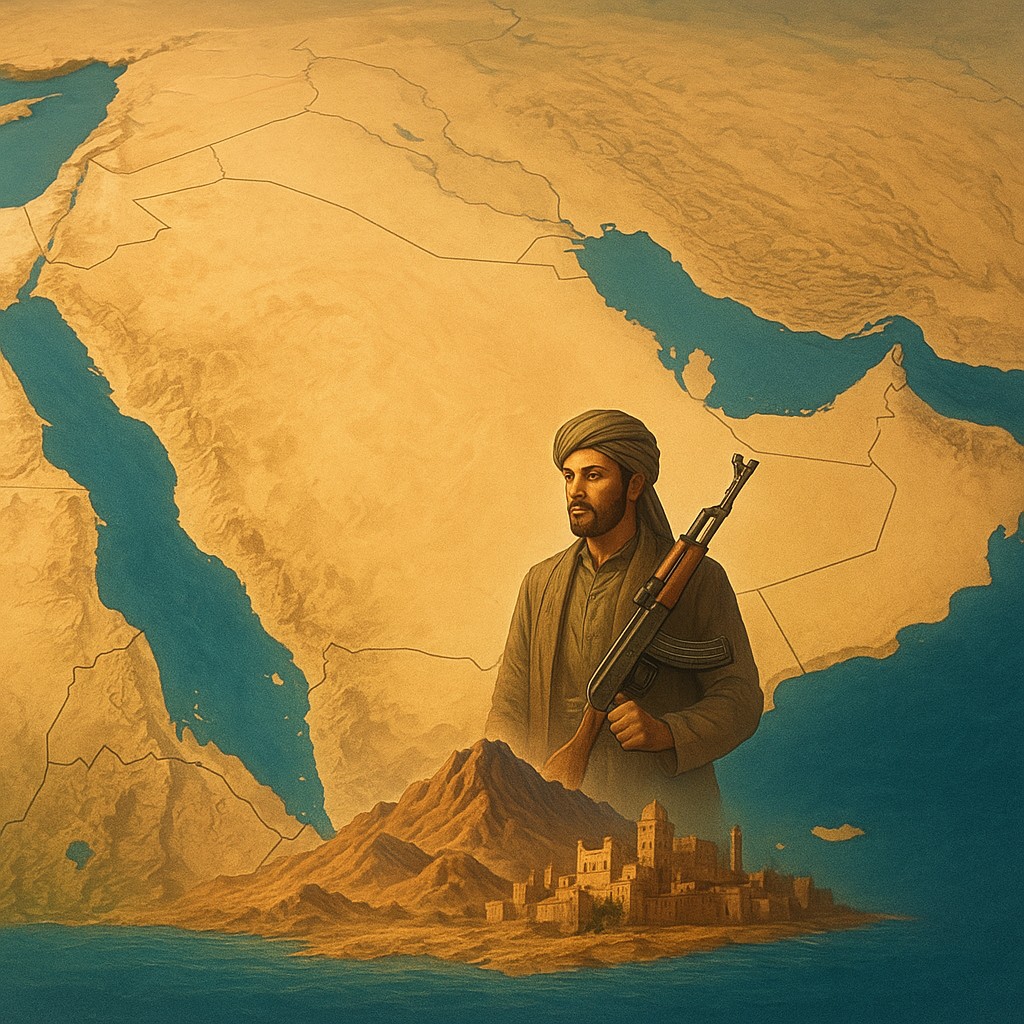
Imagine looking at a world map where the vast Saudi Arabian desert meets the deep blue of the Red Sea. At the southern tip of the Arabian Peninsula lies Yemen, a land of cloud-piercing mountains and a history that stretches back to the very start of civilization. Over the last few decades, a group known as the Houthis has grown from a small local movement in these northern highlands into a major international power that global superpowers are watching closely. They are far more than a simple rebel group; they are a sophisticated organization with a distinct religious identity, a powerful military, and a story fueled by the feeling of being abandoned by the modern world.
Understanding the Houthis is like peeling back the layers of an onion. Each layer reveals how local frustrations can spiral into global headlines. They did not appear out of nowhere. Their rise is a story of religious revival, political anger, and a fierce drive for independence in a region often controlled by foreign interests. To truly understand them, we have to look past the dramatic news clips of Red Sea ship attacks and head into Yemen’s rugged mountains. There, a man named Hussein al-Houthi set off a chain of events that would eventually shake the Middle East to its core. This is the story of how a sidelined minority fought for its identity and changed its nation’s history forever.
The Mountain Roots of a Global Movement
The story begins in the Saada province of northern Yemen, a rocky landscape where most people follow the Zaydi branch of Shia Islam. To understand the Houthis, you first have to understand the Zaydis. Unlike the Sunni majority of the Muslim world or the larger Shia populations in Iran and Iraq, Zaydis have their own unique legal and religious traditions. Their practices are often described as the "closest" version of Shiism to Sunnis. For nearly a thousand years, Zaydi leaders, known as imams, ruled Yemen, leaving behind a long legacy of pride and leadership. However, a revolution in 1962 overthrew this system, and the Zaydis gradually found themselves pushed to the fringes by the new government.
By the 1980s and 90s, many Zaydis felt their culture was under attack. They watched the rise of "Wahhabism"- a strict, conservative form of Sunni Islam spreading from neighboring Saudi Arabia- and feared it was taking over their traditional lands and schools. In response, a religious leader named Hussein al-Houthi started a group called the "Believing Youth." At first, this was not an army; it was more like a summer camp or a cultural club. They taught children about Zaydi history and encouraged them to be proud of their roots. It was meant to be a peaceful educational movement, but as Yemen’s political climate grew more heated, the Believing Youth became much more politically active.
Hussein al-Houthi was a magnetic leader who began attacking the Yemeni government for its corruption and its close alliance with the United States and Saudi Arabia. He became increasingly bold, and by the early 2000s, his followers were holding massive protests. The Yemeni government, led by President Ali Abdullah Saleh, did not take this challenge lightly. In 2004, officials tried to arrest Hussein, sparking a series of six wars between Houthi followers and the national military. Hussein was killed early in the conflict, but his death only turned him into a martyr. His brothers took command and renamed the group "Ansar Allah," which means "Partisans of God."
From the Highlands to the Capital
While the Houthis were fighting the government in the mountains, the rest of Yemen was also reaching a breaking point. In 2011, the Arab Spring protests swept across the Middle East. Yemenis from all walks of life took to the streets to demand the resignation of President Saleh, who had been in power for over 30 years. The Houthis joined these protests, using their military experience and organization to gain ground. When Saleh finally stepped down and his vice president, Abdrabbuh Mansur Hadi, took over, the country remained unstable. The transition was messy, the economy crashed, and many felt the new government was just as helpless as the last one.
The Houthis saw a chance to expand far beyond their northern home. In a move that stunned the world, they marched south and seized the capital city, Sanaa, in late 2014. They did not do it alone; in a strange twist of fate, they teamed up with their former enemy, the ousted President Saleh, who still controlled loyal parts of the army. By early 2015, they had forced President Hadi to flee the country. This takeover was the "point of no return." It turned a local rebellion into a massive civil war, drawing in a group of Arab nations led by Saudi Arabia and the United Arab Emirates. These countries were determined to push the Houthis back and put Hadi back in power.
The war that followed became one of the worst humanitarian disasters of the 21st century. Despite being outgunned by the billions of dollars and advanced airpower of the Saudi-led coalition, the Houthis proved incredibly tough to beat. They used the steep mountain terrain to their advantage and built a sophisticated arsenal of drones and missiles. Many experts believe Iran provided or helped build these weapons. This connection to Iran is a major point of debate; while the Houthis share religious and political goals with Iran, they often insist they make their own decisions. Regardless of where the weapons came from, the Houthis managed to hold Sanaa and much of northern Yemen, essentially creating their own state.
Deciphering the Houthi Identity
To understand what motivates this group, we have to look at their official slogan, known as the "Sarkha" or the Scream. It is a bold, rhythmic chant: "God is the Greatest, Death to America, Death to Israel, A Curse Upon the Jews, Victory to Islam." To Western ears, this sounds extremely aggressive, and it does reflect the group's deep hatred of foreign interference. They see themselves as part of an "Axis of Resistance," a network of groups including Hezbollah in Lebanon and various militias in Iraq that oppose Western influence in the Middle East. However, inside Yemen, the Houthis use this slogan to stir up national pride, framing themselves as the only ones brave enough to stand up to foreign powers.
Despite their fierce words, the Houthis are also practical administrators. In the areas they rule, they have set up their own taxes, courts, and schools. They are not just rebels hiding in caves; they are a government managing the lives of millions. International human rights groups often criticize their rule as oppressive, pointing to jailed journalists, silenced critics, and strict social rules. Yet, for some Yemenis, the Houthis offer a sense of order and safety that was missing during the chaotic years after the revolution, even if that order comes at a very high price.
It is also important to remember that the Houthi leadership is not the same as the Zaydi population. Not all Zaydis are Houthis, and not everyone living under their rule agrees with them. The movement is a political and military organization that grew out of a specific religious community. They have successfully used local tribal identity and the historical memory of the Zaydi imams to claim they are the rightful guardians of the nation. This mix of religious passion, tribal loyalty, and anti-foreign sentiment makes them very difficult to defeat or ignore.
Comparing the Players in the Yemeni Conflict
| Group / Actor |
Primary Goal |
Main Support Base |
External Connection |
| The Houthis (Ansar Allah) |
Rule Yemen; remove Western and Saudi influence |
Zaydi Shia, northern tribes |
Iran (political and military) |
| Government of Yemen |
Regain international recognition and control |
Sunnis, southern tribes |
Saudi Arabia, UAE, USA |
| Southern Transitional Council |
Independence for South Yemen |
Southern separatists |
United Arab Emirates |
| Saudi-Led Coalition |
Block Iranian influence; restore Hadi |
Regional monarchies |
Western powers (UK and USA) |
Entering the Global Stage via the Red Sea
While the Houthis have been famous in the Middle East for years, they recently became a household name worldwide because of their actions in the Red Sea. Following the start of the conflict between Israel and Hamas in late 2023, the Houthis began attacking cargo ships passing through the Bab el-Mandeb strait. They claimed these attacks were meant to support Palestinians in Gaza, targeting ships they believed were linked to Israel or its allies. This turned a local civil war into a global economic crisis. The Red Sea is one of the world's most vital trade routes, carrying about 12% of all global trade.
Suddenly, the world's most powerful navies, including those of the U.S. and the UK, were sent to protect ships from Houthi drones and missiles. This escalation proved that the Houthis had done something few other groups could: disrupt the global economy. By posing as the defenders of Palestine, they also became very popular across the Muslim world, even among those who dislike their internal politics. or methods. It was a brilliant branding move that allowed them to jump from a regional rebel group to a major player in international politics.
This shift also showed how far the group has come technologically. They are no longer just fighters with rifles; they now use anti-ship missiles, long-range "kamikaze" drones (drones designed to crash into targets), and even underwater drones. This hardware allows them to strike far beyond their borders. The situation in the Red Sea is currently a tense standoff. The U.S. and its allies have launched many airstrikes against Houthi launch sites, but the group shows no signs of backing down. For them, the conflict is worth the prestige and political power they gain by challenging the West on the open ocean.
Debunking Common Myths
When a group is as controversial as the Houthis, myths tend to spread quickly. One common myth is that they are simply "puppets" of Iran. While Iran certainly provides them with major support and their goals often align, the Houthis have their own local agenda. In the past, they have ignored Iranian advice, such as when they captured the capital against Tehran's recommendations. Seeing them only as an Iranian tool ignores the deeply Yemeni nature of their fight and their long history of seeking local power.
Another mistake is thinking the Houthis represent all Shia Muslims. As mentioned, Zaydi Shiism is quite different from the "Twelver" Shiism practiced in Iran. In fact, for centuries, Zaydis were often at odds with other Shia groups. Furthermore, the war in Yemen is not just a simple "Sunni vs. Shia" religious battle. It is about resources, land, and political power. Some Sunnis fight alongside the Houthis for tribal reasons, while some Zaydis hate the Houthi movement. Reducing the conflict to religion oversimplifies a very complex and human struggle.
Finally, it is a mistake to think the Houthis are an unorganized band of rebels. They have a very central command and a high-tech propaganda machine. They run TV stations, produce professional-quality music videos (known as zawamil), and manage a complex bureaucracy. Whether someone agrees with them or not, they have proven to be one of the most organized military and political movements in the modern Middle East. Understanding this sophistication is key to realizing why they have been so hard to defeat and why they cannot be ignored in peace talks.
The Future of the Region
The rise of the Houthis is a reminder that in today's world, local issues have global consequences. A religious revival in a remote mountain range can eventually lead to higher prices for gas or electronics in London or New York. The Houthis have survived decades of war, foreign intervention, and economic blockades, emerging as a force that any future peace plan must include. Their journey from a small youth group to the "Partisans of God" shows the power of identity and the resilience of a group that feels it has nothing left to lose.
As we look ahead, the question is not whether the Houthis will remain a factor, but how they will use their power. Will they go back to being a domestic political party, or will they continue to use their military to influence world events? The peace of Yemen and the safety of the Red Sea depend on that answer. By studying their history, we gain more than just facts; we see how the struggles of the past shape the volatile world of today.
Learning about the Houthis teaches us that history is never truly over. Old grievances can find new life in surprising ways. It reminds us to look deeper than the headlines and respect the complicated history of the places we see on the news. As world events continue to unfold, remember the winding roads of the Saada mountains and the "Scream" that echoed from their peaks to the shores of the Red Sea. Knowledge is our best tool for navigating these complicated times.