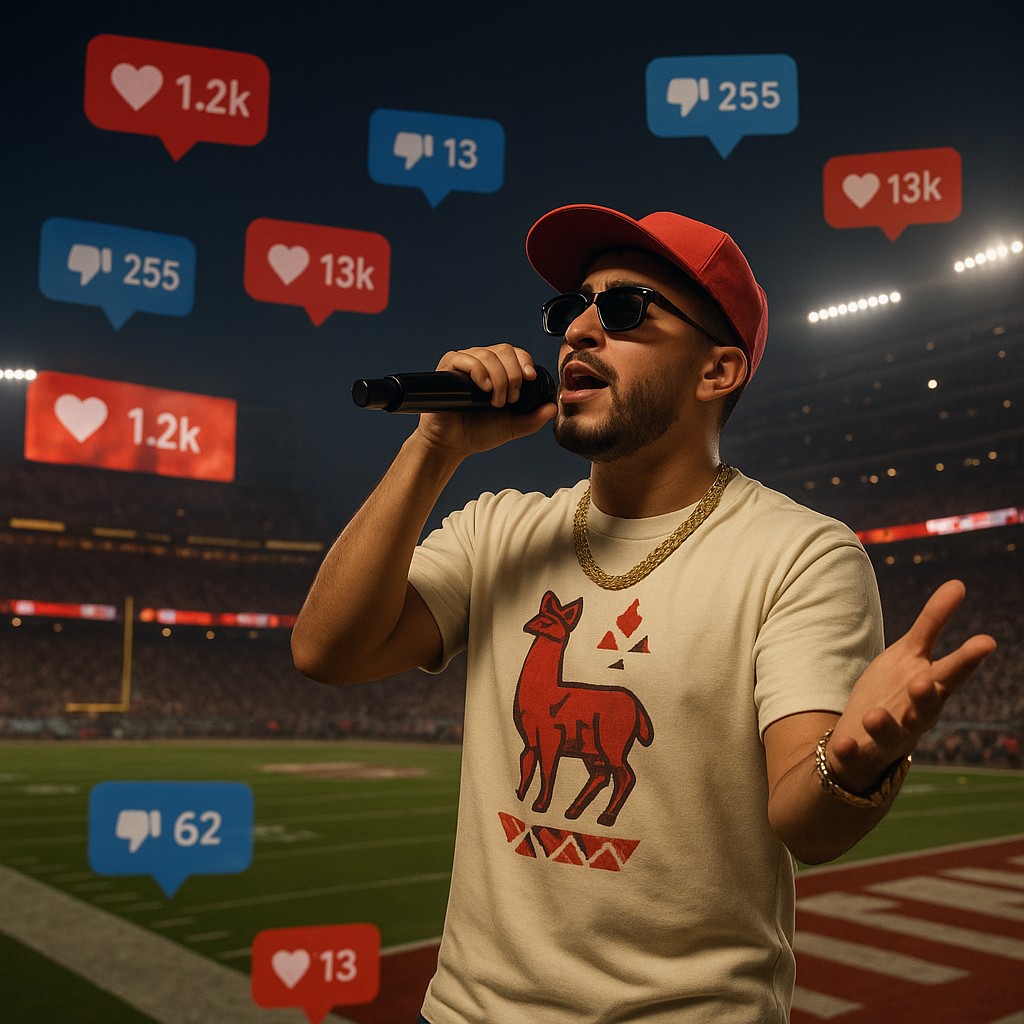
The lights at Levi’s Stadium in Santa Clara did more than just light up a football field during Super Bowl LX; they sparked a global conversation. When the NFL announced that Bad Bunny would be the 2026 halftime headliner, it was clear this was a turning point for the entertainment industry. This was not just a pop star singing hits; it was a high-stakes bet on the power of the "Global Latino" movement. As the final notes of his hit "Titi Me Pregunto" faded into the California night, the internet did exactly what people expected: it exploded into a mix of pure praise, sharp political takes, and intense cultural debate.
Understanding the response to this show requires looking beyond simple likes and dislikes on social media. The audience did not just watch a performance; they took part in a vote on what an "American" halftime show should look like in a world where the biggest artist on earth speaks Spanish. To some, it was a brilliant display of rhythm and inclusion. To others, it was a confusing break from traditional American style. By breaking down how the public reacted, we can learn a lot about how music, identity, and the digital world collide during the most-watched twelve minutes of television each year.
A Tale of Two Timelines on Social Media
The immediate reaction felt like watching two different movies at once, depending on which app you opened. On TikTok and Instagram, the mood was a party. Younger fans and lovers of "reggaeton" (a popular style of music from Puerto Rico) praised the high-energy dancing, the vibrant Caribbean imagery, and the guts it took to let a non-English speaker run the biggest stage in the U.S. Many viewers felt the show was truly American because it was diverse, showing a side of the country that is often ignored during major sports broadcasts.
On the other hand, a very different story played out in other circles. Critics argued the show lacked the broad appeal of past rock stars or pop icons, calling the performance "niche" or "alienating." Some well-known figures even called it one of the worst shows ever, saying that not understanding the lyrics made it impossible to enjoy. This split was about more than just songs; it reflected deep cultural divides over what counts as national heritage. While half the audience saw a bridge to the future, the other half felt like they were being left out of the conversation.
Artistic Vision versus the TV Experience
When looking at feedback from both production experts and casual viewers, a common theme emerged: a clash between "vibe" and "clarity." Bad Bunny’s set was built as a movie-like tribute to the Caribbean, with massive parade floats, hundreds of dancers, and a bright color palette that stood out against the usual gritty look of a football stadium. Many praised the artistic ambition, saying the show felt more like a street festival than a polished corporate event. Art critics especially loved the use of "Boricua" (Puerto Rican) pride in the fashion and set design.
However, many people watching at home complained about the sound quality and the hectic camera work. On television, some of the complex dance moves were lost in wide shots. For those who did not know the lyrics, the fast-paced energy sometimes felt like "white noise." This highlights a classic challenge for modern halftime shows: how do you create an intimate feel for the thousands in the stadium while making sure that same energy translates to a 60-inch screen at home? For those who felt the vibe, the technical flaws did not matter, but for the skeptics, it gave them more reasons to complain.
Comparing Perspectives on the Performance
| Group |
Main Praise |
Main Criticism |
Underlying Feeling |
| Gen Z & Millennials |
Cultural representation and energy |
Wished for more guest stars |
Feeling seen and validated. |
| Traditionalist Critics |
Visual scale and production value |
Language barrier and "noise" |
Feeling out of touch with trends. |
| Music Analysts |
Innovation in mixing genres |
Muddy sound and audio mix |
Recognizing a global shift. |
| Media Personalities |
High viewership and "viral" moments |
Political controversy |
Seeing the event as a brand. |
The "Delete" Heard Round the World
One of the most confusing and talked-about moments after the 2026 game did not happen on stage, but on a phone screen. Shortly after the show, Bad Bunny deleted every post on his Instagram account. This caused a "digital panic" among fans and led to wild guesses from the media. Was he quitting? Was he upset by the criticism? Or was he simply hitting the "reset" button on his image after reaching the peak of his career?
In the world of modern fame, silence can be louder than words. This move made sure that even after the game was over, everyone was still talking about him. It turned the halftime show from a single event into the final chapter of an era, forcing fans to save and discuss the performance with extreme intensity. The conversation shifted from "Did you see that dance?" to "What does this mean for the future of Latin music?" This tactic showed he knew exactly how to stay relevant in a time when attention spans are shorter than a 30-second commercial.
A New Way to Measure Success
When we ask if people liked the show, we have to look past the idea that everyone has to love it. In the past, halftime shows tried to play it safe to please everyone from children to grandparents. Those days are gone. The 2026 reaction proved that the NFL and its performers are now leaning into "polarizing success." In the digital age, a show that everyone thinks is just "okay" is a failure. You want the people who love it to shout from the rooftops and the people who hate it to tweet about it for days.
By that standard, the 2026 halftime show was a massive win. It created more talk, more memes, and more deep-dive essays than almost any show in the last decade. People were not just watching Bad Bunny; they were using him as a mirror for their own values. For supporters, he represented a changing, more inclusive world. For critics, he represented a world they no longer recognized. Both groups were equally hooked, proving that the goal of modern entertainment is not to be liked by everyone, but to be impossible to ignore.
As you look back on this historic moment, remember that pop culture is rarely about who is objectively "best" or "worst." It is a map of where we are as a society. Whether you thought the show was a masterpiece or a confusing mess, the fact that you have an opinion at all means the performers did their job. You have gone from just watching a show to becoming part of the story. Use this to look at future events with a sharper eye, knowing that the most debated moments are usually the ones that end up making history. Stay curious, keep asking "why," and do not be afraid to explore the messy, beautiful world of global culture.