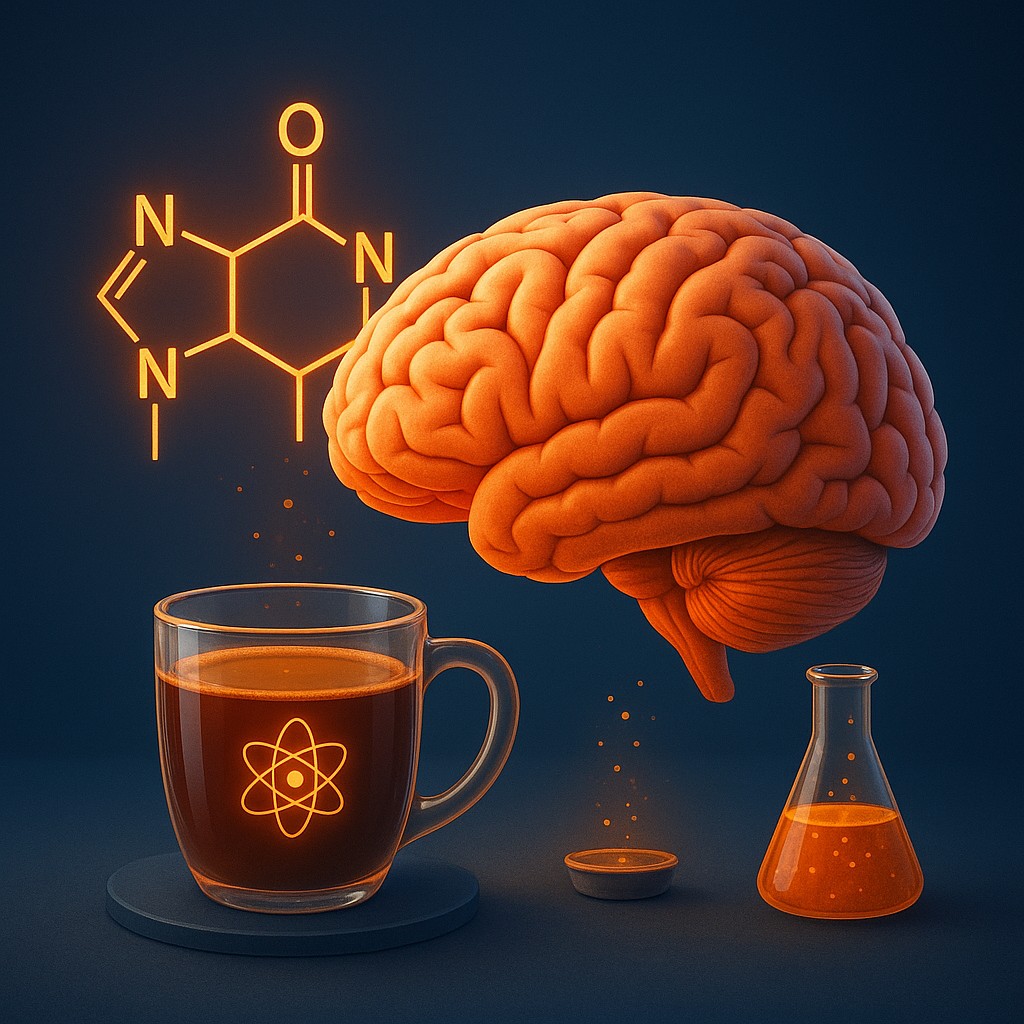
Think of your brain as a high-performance engine that never truly stops running. From the moment you wake up, your neurons are firing and your synapses are sparking. Your mental machinery constantly burns through a massive amount of cellular fuel called ATP (adenosine triphosphate). This is the basic "energy currency" of life, powering everything from solving a hard math problem to the simple reflex of blinking. However, just as a wood-burning stove leaves behind a pile of ash, burning ATP leaves behind a chemical residue. This byproduct is a tiny molecule called adenosine. It acts as your body’s internal hourglass, tracking exactly how long you have been awake.
As the day goes on, this "molecular ash" piles up in the spaces between your brain cells. It does not just sit there; it hunts for specific docking stations called adenosine receptors. When adenosine plugs into these spots, it acts like a dimmer switch for your nervous system. It slows down your neurons and dials back the intensity of your brain's electrical activity. Scientists call this growing feeling "sleep pressure." The more adenosine you build up, the heavier your eyelids feel and the more your brain begs for a chance to "clean house." It is a relentless biological accounting system that ensures every hour of wakefulness is eventually paid back with interest.
The Chemistry of the Cellular Exhaust Pipe
To understand why we get drowsy, we have to look at the energy cost of being conscious. ATP is a molecule with three phosphate groups. When your brain needs a boost, it breaks one of those chemical bonds, releasing a burst of power and leaving behind a simpler molecule. After a full day of thinking and moving, your brain has processed a mountain of this fuel, creating a high concentration of adenosine. This is not a flaw in our design; it is a smart feedback loop. High adenosine levels signal to the brain that energy stores are low and that the mind's delicate machinery needs a break to restock and repair.
This buildup happens mostly in the areas of the brain that keep us alert. As adenosine levels climb, they turn off the "wake-up" neurons that keep us focused. At the same time, they turn on the "sleep" neurons that get the body ready for bed. By the sixteen-hour mark, this creates a rising tide of sleepiness that is almost impossible to ignore. It is a primitive but effective safety switch. Without it, we might push our nervous systems until they break. By linking sleepiness directly to energy use, evolution made sure we are physically forced to recover what we spent.
The Great Molecular Imposter
Most of us have a favorite tool to fight the tide of adenosine: caffeine. To your brain, caffeine is the ultimate master of disguise. If you looked at caffeine and adenosine side-by-side, they would look remarkably similar. They are like two different keys that happen to fit the same lock. When you drink coffee or tea, the caffeine enters your bloodstream and rushes to your brain. Because it has a similar shape, it wedges itself into the adenosine receptors, effectively plugging the holes. However, because it is an imposter, it does not actually trigger the "slow down" signal; it just sits there, blocking the real adenosine from getting in.
This creates a pharmaceutical illusion. The adenosine is still there-in fact, it keeps building up at the same rate-but your brain can no longer "feel" the pressure. It is like putting a piece of tape over the "low fuel" light on a car's dashboard. The light is off, so you feel fine to keep driving, but the actual fuel level is still dropping. This is why caffeine gives you a "boost" without providing any real biological energy. It is not fuel; it is a silencer for your brain's alarm system. You feel alert simply because your brain is temporarily deaf to the signals telling it that it is exhausted.
The Inevitable Caffeine Crash
The problem with using an imposter molecule is that the real adenosine does not vanish just because its docking station is occupied. While caffeine is busy blocking the sensors, the biological "ash" from your brain's energy use continues to pile up in the background. Your sleep pressure keeps rising higher and higher, creating a massive backlog of signals desperate to be heard. Eventually, your liver filters the caffeine out of your system, and the molecules detach from the receptors. When this happens, the floodgates open.
The huge reservoir of built-up adenosine rushes into the now-empty receptors all at once. This causes the infamous "caffeine crash," a sudden wave of exhaustion that feels much worse than normal tiredness. You aren’t just feeling the sleepiness of that moment; you are feeling the combined weight of all the hours you spent ignoring the signal. This often starts a vicious cycle: a person drinks even more caffeine to fight the crash, which further delays the inevitable and leads to a restless, low-quality night of sleep.
| Feature |
Adenosine (The Anchor) |
Caffeine (The Shield) |
| Origin |
Produced naturally by burning ATP energy. |
Taken in via coffee, tea, or soda. |
| Primary Role |
Signals the brain that it is time to sleep. |
Blocks sleep signals to keep you alert. |
| Effect on Receptors |
Plugs in and triggers "slow down" signals. |
Plugs in and blocks "slow down" signals. |
| Longevity |
Cleared away only during deep sleep. |
Broken down by the liver over several hours. |
| Consequence |
Higher levels increase "sleep pressure." |
Leads to a "crash" once it wears off. |
Two Systems in a Delicate Dance
It is a common mistake to think your "sleep drive" and your "internal clock" are the same thing. In reality, your body uses two separate systems to decide when you should be awake. The first is the sleep drive powered by adenosine. This is a simple matter of volume: the longer you stay awake, the more you want to sleep. The second system is your circadian rhythm. This is an internal clock in the brain that reacts to light and darkness, telling your body to be active during the day and rest at night.
Think of it as a coordinated dance. During a normal day, your adenosine levels rise steadily, pushing you toward sleep. At the same time, your internal clock sends out a "wakefulness signal" that peaks in the afternoon to help you resist that pressure. As night falls, the internal clock stops sending the wake signal and starts making melatonin, while the adenosine pressure hits its limit. These two forces work together to pull you into a deep sleep. When they are out of sync-like during jet lag-you might have high adenosine pressure but a "wide awake" internal clock, leading to the miserable feeling of being "tired but wired."
Scrubbing the Brain Clean
The only way to actually lower adenosine levels is through high-quality sleep. While you are out cold, your brain undergoes a transformation. The space between your brain cells actually grows, allowing the glymphatic system-the brain's waste management network-to flush out metabolic trash. During this "rinse cycle," the adenosine stuck to your receptors is cleared away. This is the physical version of paying off a debt. By the time you wake up, your adenosine levels are back to zero, leaving you refreshed and ready to start over.
This "adenosine debt" explains why a twenty-minute nap can feel so powerful. Even a short bit of sleep lets the brain clear out some of the buildup, lowering the pressure on your receptors. However, if you fail to pay off the full debt with a full night's sleep, you start the next day with a "residual balance." This lingering adenosine creates a heavy fog that makes it hard to focus. You are essentially trying to run a high-performance engine while the exhaust pipe is partially clogged.
Embracing the Biological Rhythm
Understanding how adenosine works changes sleep from a chore into a vital act of maintenance. It changes our view of caffeine from a "magic energy source" to a tool that has hidden costs. When we realize that drowsiness isn't a sign of weakness, but a chemical report on our brain's energy status, we can work with our biology instead of against it. Respecting sleep pressure is about more than avoiding a crash; it is about making sure your brain is clean and ready for the day ahead.
By timing our caffeine to avoid the afternoon surge and prioritizing sleep to clear our molecular debts, we can reach a level of mental clarity that no stimulant can match. The next time you feel your eyes getting heavy, appreciate the molecular dance happening inside your head. Your brain is telling you a story about the energy you have spent and the rest you have earned. Listen to that signal, pay off your adenosine debt, and you will wake up with genuine, sustainable energy.