Imagine you are sitting in a small, sterile exam room. The crinkle of the paper on the table sounds like a thunderstorm, and the clock on the wall ticks with the frantic rhythm of a metronome. Your doctor walks in, clearly caffeinated but exhausted, looking at a clipboard rather than your face. You have exactly fifteen minutes to explain a complex, lingering set of symptoms that have been bothering you for months. In this high-pressure environment, your brain freezes. You forget to mention the strange rash that only appears on Tuesday mornings, and the doctor, rushed by a waiting room full of impatient patients, snaps to a quick conclusion. This "blink-of-an-eye" medicine is the standard of care today, but it often sacrifices accuracy to stay on schedule.
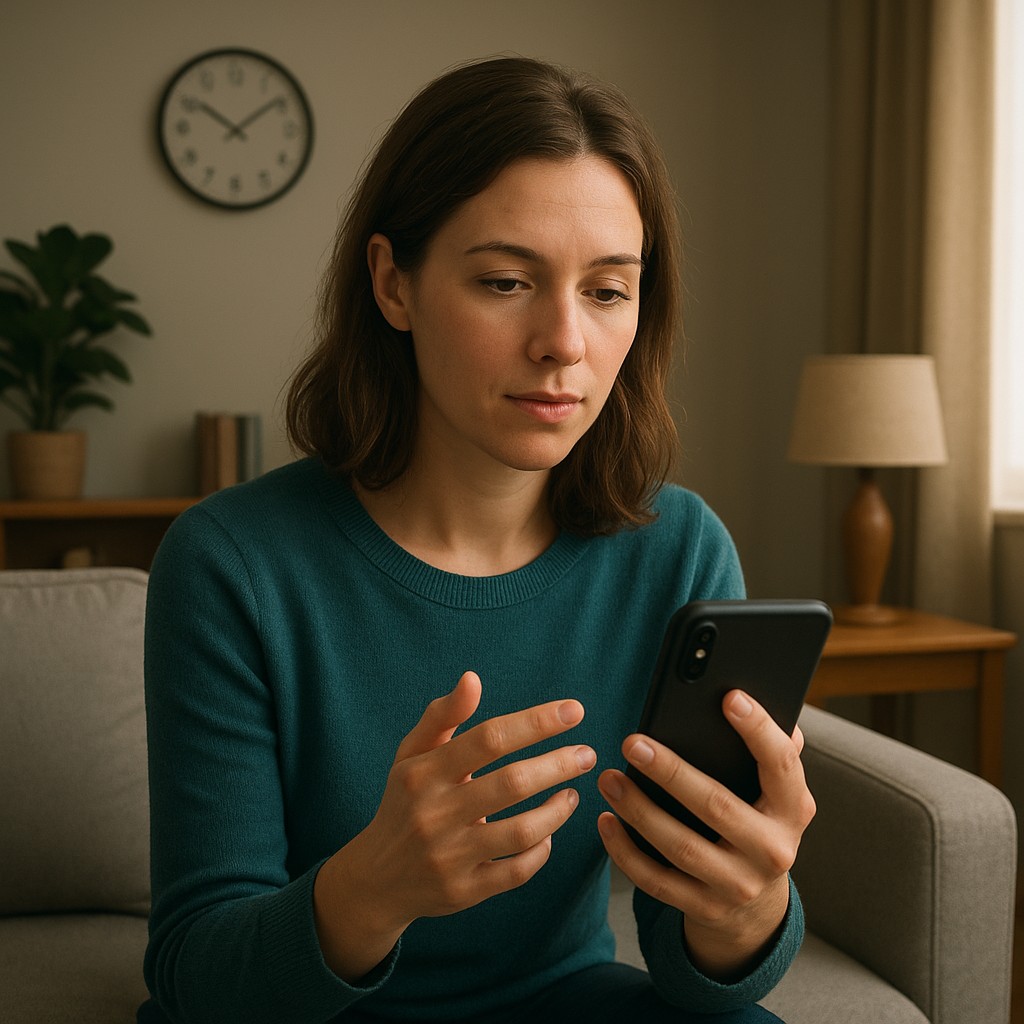
Now, shift the scene to your living room. You are relaxed, holding your smartphone, and recording a short video. You show the camera exactly how your joint moves when it hurts, and you describe your symptoms with the clarity that only comes when you aren't being watched by a person in a white coat holding a stopwatch. You hit send, and hours later, a specialist sits down in a quiet office. They have no ringing phones, no nurses knocking on the door, and no "next patient" looming. They watch your video once, then again, pausing to zoom in on a subtle skin texture or a slight tremor in your hand. This is the world of asynchronous video telemedicine - a framework that is quietly dismantling the "fast-food" approach to healthcare in favor of a model that celebrates the power of slow, deliberate thinking.
The Mental Trap of the Real-Time Appointment
The traditional medical visit is a psychological pressure cooker for both the patient and the physician. When we communicate in real time, our brains prioritize social cues, immediate responses, and the desire to be likable or efficient. This is known as "System 1" thinking, a term coined by psychologist Daniel Kahneman to describe our fast, instinctive, and emotional brain processes. While System 1 is great for jumping out of the way of a moving car, it is notoriously bad at diagnosing rare autoimmune disorders. In a live video call or in-person visit, a doctor is often forced to make a "snap" judgment. They use heuristics - mental shortcuts - to categorize your symptoms quickly. While these shortcuts are right most of the time, the small percentage of time they are wrong can lead to devastating diagnostic errors.
Asynchronous video snippets act as a circuit breaker for this rushed mental process. By removing the live interaction, the doctor is no longer performing a social role; they are performing an analytical one. They can engage "System 2" thinking, which is slower, more deliberate, and logical. When a doctor watches a recorded clip, their brain isn't worrying about the awkward silence while they think. They can consult a textbook, look at a previous lab result, or replay the patient's description of their pain three times before reaching a conclusion. This transition from "performance" to "analysis" reduces the mental strain on the provider, allowing the subtle nuances of a patient's condition to actually register.
Capturing the Truth Between the High Notes
One of the greatest flaws of the traditional "see me now" medical model is that symptoms rarely happen during your scheduled appointment. If you suffer from a condition that flares up sporadically, such as certain tremors, skin conditions, or breathing issues, you are often stuck trying to describe a ghost to your doctor. You end up saying things like, "Well, it didn't look like this yesterday," or "I promise it was making a clicking sound this morning." This reliance on memory is incredibly unreliable because human memory is naturally flexible and prone to change. We forget details, exaggerate intensity, or minimize symptoms because we feel fine the moment we are sitting in front of the clinician.
Asynchronous video snippets solve this by allowing for "point-of-impact" documentation. A patient can record a thirty-second clip the very moment a symptom occurs. This provides the doctor with high-quality, objective data rather than a subjective memory. It is the difference between a detective arriving at a crime scene three weeks later to ask neighbors what they saw, versus having a clear security camera recording of the event itself. For long-term care, which involves monitoring a condition over months or years, these snippets create a visual diary that reveals patterns. A doctor can look at a series of videos and see a gradual decline in mobility or a change in speech patterns that would be impossible to detect in a single, isolated fifteen-minute window.
Comparing the Logistics of Modern Care
To truly understand why this shift is happening, we need to look at how different styles of interaction affect the quality of the medical outcome. While convenience is often the primary selling point for telemedicine, the real advantage here is the "cognitive environment" created for the diagnostic process. The following table highlights the fundamental differences between the high-pressure live model and the deliberate asynchronous model.
| Feature |
Live Video / In-Person |
Asynchronous Video Snippets |
| Primary Thinking Mode |
System 1 (Fast, Intuitive, Shortcuts) |
System 2 (Slow, Analytical, Logic) |
| Patient Pressure |
High (Anxiety, "White Coat" syndrome) |
Low (Comfort of home, time to prepare) |
| Data Quality |
Subjective (Based on memory) |
Objective (Visual evidence of symptoms) |
| Physician Environment |
Interrupted and time-bound |
Focused and intentional |
| Best Use Case |
Acute issues (Cold, flu, prescriptions) |
Chronic monitoring and complex diagnosis |
| Diagnostic Risk |
High (Errors due to time pressure) |
Low (Ability to re-watch and analyze) |
The Art of Seeing What Is Hidden
In clinical medicine, there is a concept known as "anchoring bias." This happens when a doctor hears the first few symptoms a patient mentions and immediately latches onto a specific diagnosis, ignoring any later information that contradicts it. It is a natural byproduct of the human brain trying to be efficient in a time-constrained environment. However, when a physician reviews a video snippet, they are not engaged in a conversation where they feel the need to steer the narrative. They are essentially a silent observer. This removes the "confrontational" aspect of gathering a medical history, allowing the doctor to take in the full picture before reaching a conclusion.
Furthermore, asynchronous snippets allow for better collaboration. In a traditional setting, if a general practitioner is stumped, they might refer you to a specialist, which involves another appointment, another waiting room, and a whole new explanation of your history. In a modern asynchronous framework, that GP can simply forward the video snippet and their notes to a specialist. The specialist can then review the same "primary source" material. This ensures that no information is lost as it moves between providers. It creates a collaborative ecosystem where the patient's actual symptoms, not just a doctor's interpretation of them, are the central focus of the medical team.
Overcoming the Myth of the "Personal Touch"
A common criticism of asynchronous care is that it feels cold or impersonal. Critics argue that medicine is a human-centric field and that removing the live interaction destroys the doctor-patient bond. However, this is largely a misconception based on a misunderstanding of what makes a medical interaction valuable. Is it more personal to have a rushed, distracted fifteen-minute conversation where you feel unheard, or is it more human to have a physician spend twenty minutes of focused, dedicated time reviewing your case in a quiet environment where they can actually see you?
The irony is that asynchronous snippets can actually lead to a deeper sense of being heard. When a doctor responds to a video snippet with a detailed analysis, mentioning specific things they saw in the recording, it demonstrates a level of attention that is rarely found in the "churn" of a physical clinic. The patient realizes, "My doctor actually watched me. They saw the struggle I'm having." This builds a different kind of trust, one based on skill and thoroughness rather than just bedside manner. We must distinguish between "social intimacy" and "clinical intimacy." While live calls provide the former, asynchronous snippets excel at the latter - which is ultimately what saves lives and prevents errors.
Designing a Workflow for the Future
For this system to work, it requires a shift in how both patients and providers view a medical consultation. For the patient, it means becoming a more active participant in their own care. They must learn how to capture clear video, how to describe their sensations accurately, and how to use the technology to their advantage. For the provider, it requires a restructuring of the workday. Instead of back-to-back appointments, the doctor of the future might spend blocks of time in "asynchronous review," much like a radiologist reviews X-rays. This protected time is sacred; it is the laboratory where the hard work of diagnosis happens.
It is also vital to note that this is not a one-size-fits-all solution. This framework is specifically designed for long-term care, chronic disease management, and diagnostic puzzles. You would not use a video snippet if you were having a heart attack or if you had a deep cut that needed immediate stitches. In those cases, the speed of System 1 thinking and physical intervention is exactly what you need. But for the millions of people living with complex, invisible, or fluctuating conditions, the asynchronous model offers a lifeline. It replaces the "check-box" mentality of modern medicine with a detective mentality, where every clue is preserved and every piece of evidence is weighed with the gravity it deserves.
Embracing the Slow Medicine Revolution
As we move further into the digital age, we must resist the urge to use technology merely to make things faster. Speed is the enemy of accuracy in complex systems. By embracing the "slow thinking" encouraged by asynchronous video snippets, we are choosing a path that values the human brain's capacity for deep analysis over its capacity for quick reactions. This is a shift from healthcare as a simple transaction to healthcare as a rigorous scientific inquiry. It empowers patients to be the historians of their own health and frees doctors to be the scholars they were trained to be.
The goal of this transition is nothing less than a diagnostic revolution. When we remove the stopwatch from the exam room, we remove the shadows where errors hide. We allow for the quiet moments of realization that lead to the correct diagnosis, a better treatment plan, and ultimately, a longer and healthier life. If you are ever faced with a complex health challenge, remember that you have the right to be seen, not just watched. You have the right to a medical process that honors the complexity of your body with the focus and patience it requires. This is the promise of the asynchronous framework: a future where the quality of your care is no longer limited by the minutes on a clock.