Why the rise of Rome still feels like our story
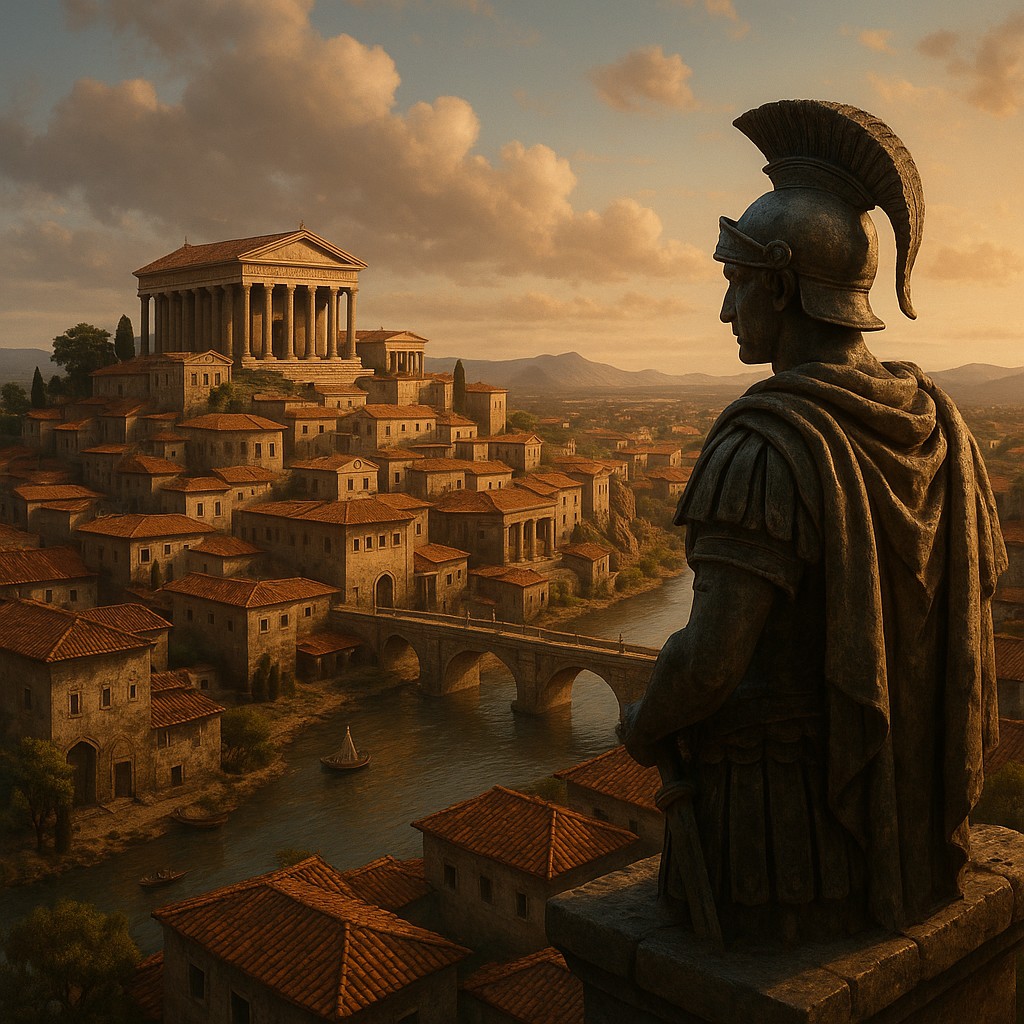
Imagine a small hilltop town with a population no larger than a modern university campus, set beside a lazy river. Over the course of a few centuries that town grows into a power that dominates the Mediterranean - shaping law, language, and lives far beyond its original walls. That is not just ancient history, it is a dramatic case study in how institutions, force, culture, and sheer ambition can combine to create change on a continental scale.
Knowing how Rome began to become an empire matters because it helps explain some of the persistent patterns of history: how military success translates into political power, how elites manage and exploit economic growth, and how new systems can be built by bending old ones. It also shows that empire formation is rarely inevitable or instantaneous. It is messy, contested, and full of personalities who both create opportunity and accelerate collapse.
This story is part forensic investigation, part political thriller, and part social experiment. We will trace Rome from a cluster of villages through a competitive republic, to a system with a single dominant ruler who cleverly kept the republic in name while centralizing power in practice. Along the way, we will correct popular myths, spotlight turning points, and give you memorable hooks to recall why each change mattered.
Settle in, because the path from hilltop town to imperial powerhouse is a mix of smart policy, brutal warfare, lucky timing, clever propaganda, and repeated moments when people decided the old rules no longer served their goals.
How Rome looked before it could dominate
The earliest Rome was one of many Latin communities in central Italy. It shared language and religious practices with neighboring towns, and its early growth depended on fertile land, river access for trade, and a lucky geographic position between Etruscan and Greek spheres of influence. Those connections brought cultural and technological exchanges, such as techniques in building, metalworking, and urban planning, which helped Rome punch above its size.
Rome’s monarchy period, whether legend or fact, introduced political and religious institutions that mattered later. Kings, some of them likely of Etruscan origin, managed public works like the Forum and city drainage, and structured early religious life that later blended into republican offices. The transition from kingship to a republic after 509 BCE created a template for mixed government - a set of offices, assemblies, and a powerful senate - that could be adapted as Rome grew.
Geography also mattered. Situated on the Tiber and roughly midway between Greek and Etruscan centers, Rome was well placed to become a crossroads. It lacked natural defenses that made expansion a necessity rather than a luxury. Surrounded by rival groups, Romans learned early that diplomacy combined with force offered the best chance for survival and advantage.
The Roman Republic as a political experiment
When Romans expelled their last king, they did not create a modern democracy. They built a competitive republic where power was shared among aristocratic families, and where elected magistrates carried limited-term authority checked by custom and law. Two consuls led the state annually, the senate managed financial and foreign policy priorities, and popular assemblies gave certain decisions legitimacy, especially regarding war.
This mixed system was flexible and resilient for a long time. It encouraged debate, built a class of experienced magistrates, and created incentives for elites to pursue military glory as a route to prestige. At the same time, the republic was never equal - social divisions between patricians and plebeians shaped access to office for centuries, and these conflicts produced important reforms like the creation of tribunes with veto power.
Republican government rewarded ambition in a way modern readers may find familiar. Military command was a fast route to wealth and reputation, and successful generals could acquire client armies and political followings. As Rome expanded in Italy and beyond, these dynamics intensified, and institutions intended for a city-state were stretched to govern a rapidly growing territory.
Expansion in Italy: allies, citizenship, and the network effect
Rome’s early expansion was not simply a string of conquests; it was an integrated strategy of alliances, grants of citizenship, and pragmatic accommodation. After defeating neighbors like the Latins, Samnites, and Etruscans through a mix of war and diplomacy, Rome often offered different degrees of citizenship and legal privileges to defeated or allied communities. This created a web of reciprocal obligations - troops in exchange for protection and legal rights.
These arrangements created resilience. Allied communities provided manpower for Rome’s armies while local elites were co-opted into Roman political culture. The loyalty of many Italian communities to Rome during later wars was not purely forced, it was partly sustained by these legal and social ties that bound their fortunes to Roman success. The result was a growing manpower base and a sense that Rome’s fate mattered to many non-Romans.
This network effect made expansion easier over time. Each new alliance increased resources and legitimacy, and Roman administrative practices - road building, colonies, and local magistrates - spread a common framework that smoothed trade and troop movement. By the third century BCE, Rome was the dominant power in Italy, ready to face larger rivals over sea.
Military innovation and the reaping of strategic advantage
Rome’s soldiers were not invincible because of superior numbers alone. They benefited from adaptable organization and a culture of discipline. Early on Rome used manipular formations - flexible units that could move and fight effectively in the broken terrain of Italy, unlike the rigid phalanxes of Greek armies. This allowed Roman forces to succeed against diverse enemies with different tactics.
Logistics mattered as much as tactics. Romans invested in roads, engineering corps, and predictable supply systems, which let them operate far from home for extended periods. They also institutionalized military service: citizens expected to fight, and veterans were often settled in colonies that spread Roman practices and secured new lands.
Finally, Rome turned war into a political and economic engine. Spoils funded public building and political patronage; victories made generals into household names; and military success reinforced the legitimacy of Roman institutions. Over time, this feedback loop shifted more resources and prestige into military achievement, setting the stage for generals to translate battlefield power into political influence.
Economic and social engines behind expansion
Expansion creates wealth, and wealth changes politics. Conquests brought land, slaves, and new trade routes into the hands of the Roman elite. Large estates, worked by enslaved people captured in war, grew and displaced small farmers, who sometimes sold their plots and migrated to Rome seeking work. Urbanization followed, concentrating wealth and social problems in the city and changing the political calculus.
Trade across the Mediterranean, fueled by new provinces, filled Roman coffers and introduced luxury goods and cultural exchange. Money mattered: elites invested in public spectacles, building projects, and patronage networks that secured political loyalty. At the same time, increasing inequality produced social tensions that would be exploited by ambitious leaders.
Roman society became more cosmopolitan and more economically interconnected. That created opportunities for social mobility for some, and profound grievances for others. Those grievances, together with the new wealth that generals could extract and distribute, helped erode older republican norms and created openings for political entrepreneurs.
When generals began to bend the rules of the republic
Ambitious military leaders who commanded loyal armies could accumulate wealth and support in ways that outstripped traditional political routes. Figures like Gaius Marius reformed recruitment, enticing landless citizens into the army by promising pay and land, and in doing so created legions personally loyal to their commanders rather than to the Roman state. This was a pivotal shift.
Later, leaders such as Lucius Cornelius Sulla, Pompey, and Julius Caesar used military force to settle political disputes at home. Sulla marched his legions on Rome to assert his authority, setting a dangerous precedent: the army was no longer just an instrument of foreign policy, it was now a tool in domestic power struggles. These interventions turned political competition into violent confrontation.
Civil wars followed, fragmenting republican consensus and convincing many Romans that the old norms could not contain elite rivalry. The republic’s institutions were strained by repeated use as tools for partisan ends. When rules break regularly, people begin to accept new rules that promise order or stability, even if they concentrate power in fewer hands.
Julius Caesar: the decisive crisis and the end of an era
Julius Caesar is often treated as the villain or liberator, depending on taste, but his career crystallized existing trends. A brilliant general and politician, Caesar won fame in Gaul, amassed wealth and veteran loyalty, and crossed the Rubicon in 49 BCE, effectively declaring civil war. That act tested republican limits: a single man using personal military power to control politics at Rome.
Caesar’s dictatorship centralized power and enacted reforms that responded to real problems - debt, calendar reform, veterans’ land grants - while also concentrating authority. His assassination in 44 BCE did not restore the old republic; it produced another round of conflict that revealed how deeply the old norms had eroded. The resultant power struggles made a new political arrangement more likely.
The aftermath clarified a lesson: removing one dominant figure did not recreate stable, contested institutions when the underlying social and military dynamics had already shifted. Rome needed a new settlement that could reconcile the power of military leaders with governance, or else faces continual civil strife.
Octavian and the art of being emperor without the title
Octavian, later known as Augustus, offers the masterclass in political packaging. He emerged from the chaos after Caesar’s death, outmaneuvered rivals like Mark Antony, and secured a singular position by 27 BCE. Crucially, he did not abolish republican forms outright. Instead, he presented himself as the restorer of the republic while retaining the real levers of power - command of the army, control of finances, and influence over key appointments.
Augustus created the principate, a new system that kept traditional offices but subordinated them to one dominant figure who claimed to preserve republican liberty. He professionalized the army, established fire and grain policies that stabilized Rome, and invested in infrastructure and propaganda that promoted his image as bringer of peace. The result was a durable settlement where the city saw order, and elites retained enough privilege to buy into the new system.
This was empire as a political innovation as much as a territorial reality. Rome continued to expand under imperial leadership, but the fundamental change was the concentration of authority in one person who reorganized institutions to make centralized control efficient and legitimate.
Table: Comparing Rome’s key political phases
| Phase |
Approximate dates |
Core institutions |
How power was held |
Key features |
| Kingdom |
8th - 6th century BCE |
Kings, early religious offices |
Hereditary or appointed kings |
Foundational myths, urbanization, early infrastructure |
| Republic |
509 - 133 BCE |
Consuls, senate, assemblies |
Collective magistracies, aristocratic influence |
Expansion in Italy, mixed constitution, increasing military role |
| Late Republic |
133 - 27 BCE |
Tribunes, triumvirates, commanders |
Personal armies and political alliances |
Social unrest, civil wars, rise of strong generals |
| Principate |
27 BCE - 284 CE |
Princeps, senate, imperial bureaucracy |
Centralized authority in emperor, senate as advisory |
Institutional stabilization, imperial expansion, propaganda |
Clearing up common myths that trip learners up
Myth 1: Rome “inevitably” became an empire. The truth is that empire-making was contingent. Geography, leadership choices, economic opportunities, and repeated crises all shaped outcomes. Different decisions at several key moments could have produced a very different result.
Myth 2: The Roman Republic was a pure democracy. In reality, it was an oligarchic republic where a small number of elite families controlled most power, even as assemblies and tribunes played important roles. Political competition was fierce, but not broadly participatory in the modern sense.
Myth 3: Emperors immediately abolished all republican institutions. Augustus and his successors kept much republican form while changing who held power. The illusion of restored republican governance made the transition politically palatable and more stable.
Myth 4: Military might alone explains Rome’s rise. Military success was essential, but it worked together with legal innovations, citizenship policies, economic integration, and effective governance. Rome’s durability came from combining force with institutions that could extract resources and maintain order.
Understanding these corrections helps you see empire formation as a process shaped by choices and constraints, not as the inevitable march of destiny.
Memory hooks: the turning points to keep in mind
Remember these five pivot moments to structure the story in your mind: the expulsion of kings and creation of the Republic; Roman dominance of Italy through alliances and citizenship; the professionalization and political use of the army; the breakdown of norms through generals like Sulla and Caesar; and Augustus’s reorganization into the principate. Each step was the result of specific pressures and choices, and each made the next step more likely.
If you like simple frameworks, use this: institutions + military success + economic integration + elite competition + political packaging = empire. It is not a formula, it is a way to remember the interacting forces that propelled Rome forward.
Why this ancient tale should inspire you today
Rome’s path to empire offers a mirror for modern institutions. It shows how adaptability can be a strength, but also how systems can be hollowed out if elites substitute force and patronage for shared norms. It also highlights that leadership matters - not just raw power, but the skill to organize people, narrative, and law in ways that gain consent.
Learning how Rome became an empire leaves you wiser about the fragility and resilience of political orders. It invites questions you can use in any era: who benefits from change, what rules are being bent, and how can reforms be designed to protect public goods rather than private power? Those are practical, useful questions whether you study ancient history or current events.
So keep that curiosity alive. The Romans teach us that big changes are rarely sudden, they are cumulative, and they hinge on choices people could always have made differently. That realization should make you feel both smarter and more responsible - because the mechanics of power are human-made, and human-made things can be reshaped.