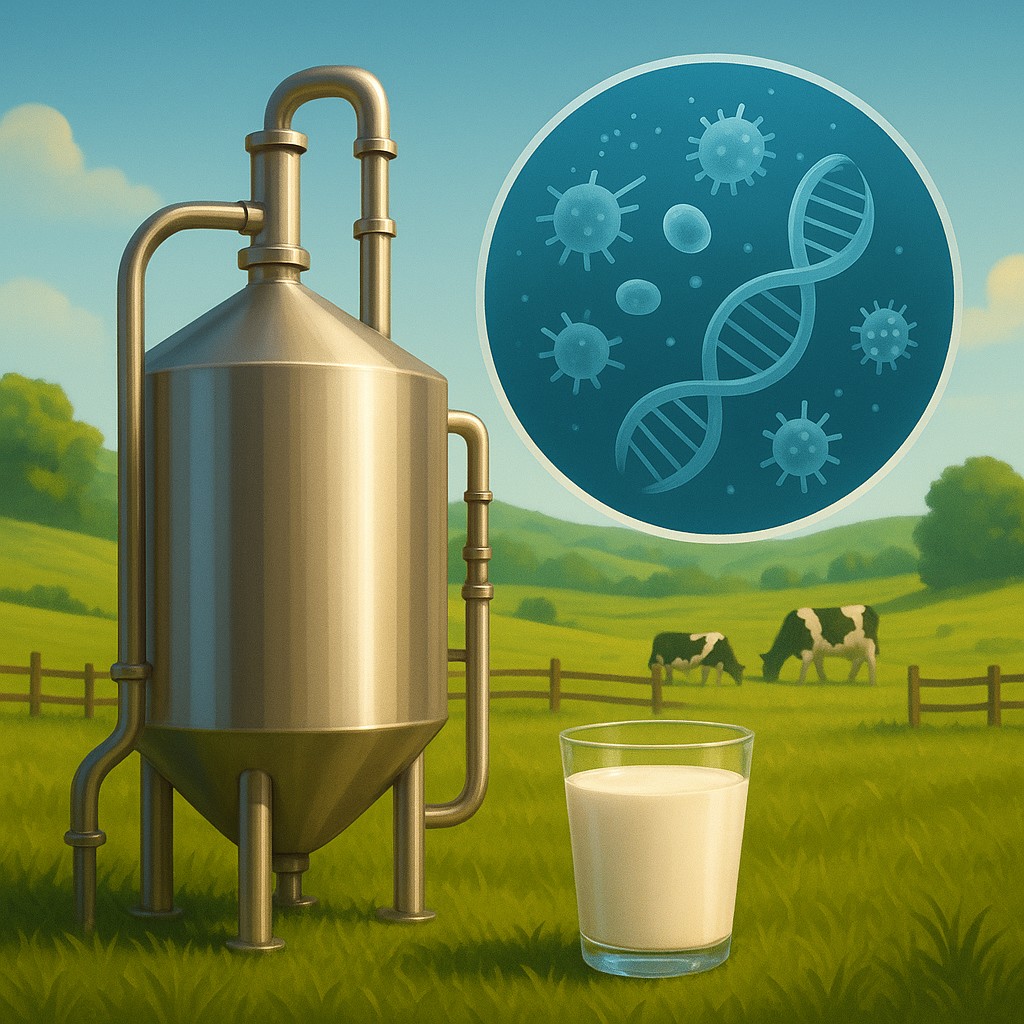
Imagine for a moment that you are standing in a lush, green pasture. You see rolling hills, long fence lines, and the familiar black-and-white silhouettes of Holstein cows grazing in the distance. Now, imagine you could shrink that entire landscape - thousands of gallons of water, tons of grain, and the complex digestive system of a 1,500-pound animal - into a sleek, stainless steel vat no larger than a backyard shed. This isn't a vision of a world without cheese or ice cream. Instead, it is a look at how we can make those favorites without needing a physical cow. We are currently seeing a shift in food production that feels like science fiction but is actually rooted in the same basic biology that gives us bread and beer.
This transition is driven by a process called precision fermentation. While traditional fermentation uses microbes like yeast to consume sugar and release carbon dioxide or alcohol, precision fermentation treats these tiny organisms like biological software. By "reprogramming" their internal code, we can instruct them to produce high-value molecules usually found only deep inside a mammal. The result is a glass of milk that is molecularly identical to the dairy from a farm, but brewed in a facility that looks more like a microbrewery than a barn. This technology promises a future where we can enjoy real dairy without the environmental and ethical baggage of industrial livestock.
The Microscopic Software Engineers
To understand how a tiny fungus can produce a glass of milk, we first have to look at how life follows instructions. Every living thing, from a blade of grass to a blue whale, follows a genetic script. In a cow, specific DNA sequences provide the blueprints for creating proteins like whey and casein. These proteins are the architectural wonders of the dairy world; they are responsible for the stretch of mozzarella and the creamy texture of premium gelato. For decades, the only way to get these proteins was to raise a cow, feed it, and wait for its biological machinery to do the work.
Precision fermentation changes the location of the factory but keeps the same blueprint. Scientists identify the specific bovine DNA sequence that codes for a protein like beta-lactoglobulin, the main component of whey. They then recreate this sequence in a lab, essentially making a digital copy of the cow's instructions. This genetic "app" is inserted into a host microbe, such as Saccharomyces cerevisiae (common yeast) or Trichoderma reesei (a hardworking fungus). Once the host is "booted up" with this new code, it stops focusing only on reproducing and begins spending its energy building and releasing real dairy proteins.
The beauty of this system lies in its efficiency. Instead of a cow using its metabolism to maintain bones, skin, and a nervous system, the microbe spends nearly all its calories on producing a single, pure protein. The yeast doesn't need to walk, think, or moo; it just needs a warm environment and a steady supply of sugar to act as a living 3D printer for dairy. This specialized focus allows for a level of purity and consistency that is difficult to reach in traditional farming, where a cow’s diet and health can change the milk's quality from day to day.
Reconstructing Milk Without the Cow
When we talk about "dairy," we are usually referring to a complex biological cocktail of water, fats, proteins, minerals, and sugars. Traditional plant-based milks, like almond or oat, try to mimic this mix by blending plant ingredients. However, they often fall short because plant proteins like gluten or globulin simply don't behave like dairy proteins. They don't melt the same way, they don't foam as well in a latte, and they often have a "beany" or "nutty" aftertaste. Precision fermentation skips this problem because the final product is not a "milk alternative" - it is the actual protein itself, built to the exact same specifications.
Once the microbes finish their work in the fermentation tank, the liquid is filtered to remove the yeast cells. What remains is a pure, bio-identical dairy protein. This protein can then be dried into a powder and sold to food companies that use it to build dairy products from scratch. This "Lego-set" approach allows for incredible customization. A manufacturer can take precision-fermented whey, combine it with plant-based fats (like coconut oil), add water and a bit of sweetener, and create a product that has the exact nutrition and behavior of milk without the parts people often want to avoid.
One of the biggest benefits of this custom approach is the removal of "baggage" ingredients. Traditional cow's milk naturally contains lactose, a sugar that billions of people worldwide cannot digest properly. It also contains cholesterol and occasionally traces of hormones or antibiotics used on the farm. Because precision fermentation starts with a clean slate, the resulting products are naturally lactose-free and cholesterol-free. You get the functional magic of the protein - the stretchy pizza cheese and the frothy milk foam - without the digestive discomfort or heart-health concerns.
Comparing the Environmental Impact
Moving dairy production into fermentation tanks isn't just about health; it is a response to a growing environmental crisis. Traditional dairy farming uses massive amounts of resources. To produce just one gallon of milk, a cow needs thousands of gallons of water and a huge amount of land to grow the corn and soy it eats. Furthermore, cows are ruminants, meaning their multi-chambered stomachs produce methane - a greenhouse gas much more potent than carbon dioxide in the short term. Precision fermentation offers a way to shorten the supply chain significantly.
| Resource Category |
Traditional Dairy Farming |
Precision Fermentation |
| Land Use |
Requires vast acreage for grazing and feed crops. |
Industrial facilities occupy a tiny footprint. |
| Water Consumption |
Thousands of gallons per gallon of milk produced. |
Closed-loop systems recycle most water used. |
| Greenhouse Gases |
High methane emissions from cow digestion. |
Minimal emissions, largely based on the power grid. |
| Production Speed |
Years to raise a cow; months for a milk cycle. |
Batch cycles measured in days or weeks. |
| Waste Products |
Manure runoff can contaminate local water. |
Spent yeast can be reused as animal feed or fertilizer. |
When you look at the numbers, the potential to return land to nature is staggering. If we can produce the world’s protein in breweries rather than on pastures, we could theoretically return millions of acres of farmland to forests or prairies. This would create a massive carbon sink to help fight climate change. Furthermore, because fermentation facilities can be built almost anywhere, from deserts to city centers, we can drastically reduce the "food miles" spent transporting heavy liquids over long distances.
The Bio-Identical Paradox and Safety
While precision fermentation is a major achievement, it comes with a vital warning: molecular identity means the risks are identical, too. Because the whey and casein produced by yeast are chemically the same as the proteins from a cow, they trigger the exact same biological responses. For most people, this is a miracle of food science. For a small percentage of the population, however, it represents a hidden danger.
There is a big difference between a food intolerance and a food allergy. Many people are lactose intolerant, meaning their bodies struggle to break down the sugars in milk. These people can safely eat precision-fermented dairy because it contains no lactose. However, people with a true dairy allergy are reacting to the proteins (whey or casein) themselves. Their immune systems see these proteins as threats and launch an inflammatory attack. Because the fermented proteins are "real" dairy, they will trigger an allergic reaction or even a life-threatening response in sensitive individuals.
This creates a unique marketing and labeling challenge. For years, "vegan" or "animal-free" labels have served as a shorthand for "safe for people with dairy allergies." If a product was vegan, people assumed it was made from plants and was free of cow proteins. Precision fermentation breaks this rule. A tub of ice cream made with fermented whey is technically vegan because no animals were involved, but it is absolutely not dairy-free. This requires clear labeling to ensure "animal-free dairy" is understood as a description of how it was made, not a safety guarantee for those with allergies.
Modern Science Meets Traditional Flavors
The final hurdle for precision fermentation isn't the science; it is the "uncanny valley" of taste. We have been eating plant-based replacements for years, and our palates have grown used to the compromises. We expect "fake" cheese to be a bit waxy and "fake" milk to be a bit watery. Precision-fermented dairy aims to erase those compromises. By reintroducing the specific proteins that allow milk to curdle and age, we can now produce artisanal cheeses that go through the same chemical changes as a wheel of traditional Brie or a sharp Cheddar.
Curdling is a beautiful bit of chemistry. When enzymes or acids are added to milk, the casein proteins clump together to form a structure that traps fat and water. Plant proteins usually don't clump this way; they either stay dissolved or turn into a grainy mess. Because precision fermentation provides actual casein, the resulting "milk" can be turned into curds and whey using the same ancient cheesemaking techniques used for thousands of years. This allows cheesemakers to focus on their craft - the aging and flavor development - without worrying about the changing quality of raw milk from a farm.
This technology also allows for "hybrid" products. We are starting to see drinks that use oat milk for creaminess and fiber, but add a small amount of fermented whey to provide the perfect foam for a cappuccino. This modular approach to food design lets us create textures and nutrition profiles that were once impossible. We are no longer limited by a cow’s biology; we can now design dairy for the specific needs of the human body and the modern kitchen.
Embracing the Microbial Renaissance
As we look toward the middle of the century, our idea of "natural" food is bound to change. For a long time, we have equated natural with the countryside, thinking that anything involving a computer or a lab is somehow artificial. Yet, there is nothing more natural than fermentation. It is the process that gave us our first sourdough bread, our first jars of yogurt, and our first bottles of wine. Precision fermentation is simply the next logical step in this ancient partnership between humans and microbes. It is a refinement of a technique we have used for millennia to make our food safer, tastier, and longer-lasting.
The potential of this technology goes far beyond the dairy aisle. By proving that we can program microbes to produce complex animal proteins, we are opening the door to a more resilient food system. This isn't just about replacing the cow; it is about reclaiming the land, protecting our water, and ensuring that delicious, nutritious food is available to a growing global population without costing us the earth. The next time you enjoy a creamy scoop of ice cream or a slice of perfectly melted pizza, consider the silent work of the billions of tiny organisms that made it possible. We are entering an era where the smallest life forms on our planet are helping us solve some of our biggest problems, one molecule at a time.