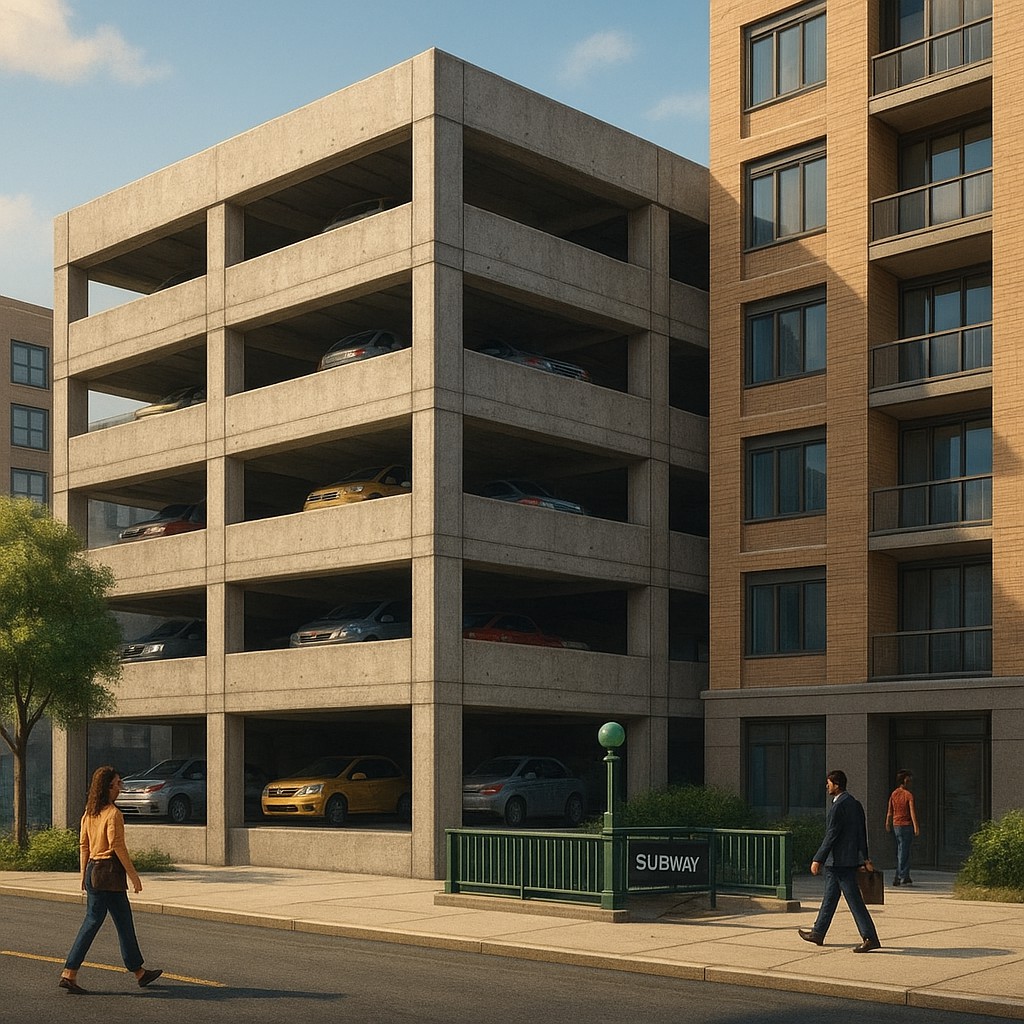
Have you ever walked past a brand-new apartment building and noticed a massive, multi-story concrete garage attached to it, even though the building is right next to a subway station or a busy bus line? It seems logical at first because cars need a place to stay just as much as people do. However, behind that wall of concrete lies a hidden web of laws that have dictated the shape of our cities for decades. These laws, known as parking minimums, force developers to build a specific number of parking spots for every apartment, office, or shop, regardless of whether the people living there actually own a car.
This setup creates a strange paradox where a city might have a desperate shortage of affordable housing for people but a government-mandated surplus of luxury housing for cars. In urban planning, every square foot of a building has a price tag. When a city requires a developer to build two parking spots for every two-bedroom apartment, they are essentially ordering that a huge chunk of the budget and the land be dedicated to stationary machines. This hidden cost is baked directly into your monthly rent or mortgage payment, making the "cost of living" quite literally the "cost of parking."
The Invisible Price Tag on Every Parking Space
To understand why cities are suddenly eager to scrap these laws, we have to look at the hard math of construction. Building a parking spot is more complex than just painting lines on asphalt. In crowded cities where land is expensive, developers often have to build "structured parking," which means multi-level garages or underground bunkers. These structures are engineering feats but financial nightmares. On average, a single parking space in an above-ground garage can cost between $25,000 and $50,000 to build, and underground spots can easily cost twice that much.
When a developer is forced by law to build fifty parking spots for a fifty-unit building, they are adding millions of dollars to the project. If those spots aren't actually needed because the building is in a walkable neighborhood, that money is essentially wasted. To pay back those millions, the landlord must charge higher rent to every resident, including those who ride bikes or take the train. This acts as a "parking tax" on people without cars, forcing the lowest-income residents to pay for the vehicle storage of their wealthier neighbors. By removing these mandates, cities aren't banning parking; they are simply letting developers decide how much parking their customers actually want and are willing to pay for.
Shifting From Car Storage to Human Habitat
The environmental and visual impact of parking minimums is just as heavy as the financial one. When a massive part of every city block is reserved for cars, everything gets pushed further apart. This creates a cycle of suburban sprawl: because things are far apart, you need a car to get anywhere, and because everyone has a car, the city requires even more parking. Huge stretches of asphalt and towering concrete garages create "heat islands" that raise city temperatures and create massive amounts of runoff that can flood local sewers during heavy rains.
By removing these requirements, urban planners are trying to break this cycle and focus on "human-scale" development. Without the need for a massive garage, a developer might use that extra space for more apartments, a small grocery store on the ground floor, or a courtyard for residents. This higher density makes public transit more successful because more people live within a short walk of the station. This represents a fundamental shift in thinking: seeing the city as a place for people to live and interact rather than a warehouse for private property that sits idle 23 hours a day.
Comparison of Development Models
The table below shows how parking mandates change the basic features of a residential building project.
| Feature |
Mandated Parking Model |
Market-Based Parking Model |
| Construction Cost |
High (includes expensive garages) |
Lower (matches actual demand) |
| Number of Units |
Lower (space lost to ramps and stalls) |
Higher (more room for actual homes) |
| Rent Prices |
Higher (subsidizes "free" parking) |
More competitive (reflects lower costs) |
| Main Way to Travel |
Designed around cars |
Choice of walking, biking, or transit |
| Environmental Impact |
High runoff and heat absorption |
More room for green space and density |
| City Appearance |
Large garages and blank walls |
Active streets and storefronts |
Common Concerns and the Reality of the Curb
Whenever a city announces it is dropping parking minimums, the first question people ask is: "Where will everyone park?" There is a common fear that the streets will become a mess of double-parked cars and drivers circling the block for hours. However, data from cities that have already made the change, such as Buffalo or Minneapolis, shows a different result. When developers are free to choose, they don't usually build zero parking; they build "right-sized" parking. If they are building luxury condos, they will still build plenty of spots because their customers expect them. If they are building affordable studios for students, they might build very few.
The real solution to parking issues lies in better curb management, such as permits or meters, rather than mandatory private garages. If street parking is managed well, the market settles naturally. People who absolutely need a car will choose to live in buildings that provide parking. People who want to save money will choose the slightly cheaper units built without garages. This creates a more diverse housing market with more choices, rather than a one-size-fits-all rule that assumes every person comes attached to a two-ton metal box.
Reshaping the Future of the Neighborhood
The movement to end parking minimums is gaining speed across North America, from major hubs like Austin and San Jose to smaller towns looking to fix up their downtowns. These changes are often part of a broader "zoning reform" effort to make cities more flexible. When a city removes these old rules, it often allows for "infill" development, which are small projects on tiny lots that were previously impossible to build because the parking wouldn't fit. This allows for the return of "missing middle" housing, such as duplexes and small apartment courts, which fit perfectly into existing neighborhoods.
As these reforms take hold, the very feel of our neighborhoods begins to change. Instead of walking past garage doors and blank concrete walls, people might walk past more windows, small gardens, or sidewalk cafes. Reducing required parking also encourages the use of e-bikes and scooters, as the space for one car can hold a dozen bicycles. It is a slow transformation, since buildings take years to design and build, but the long-term result is a city that feels more vibrant, more connected, and much more affordable for everyone.
The shift away from parking minimums is a reminder that the way we design our cities is a choice. By questioning old rules that put cars before people, we open up new ways to create neighborhoods that are more affordable, sustainable, and pleasant. As you walk through your own community, take a moment to look at the space around you and imagine what it could be if we designed it for people rather than the vehicles they drive.