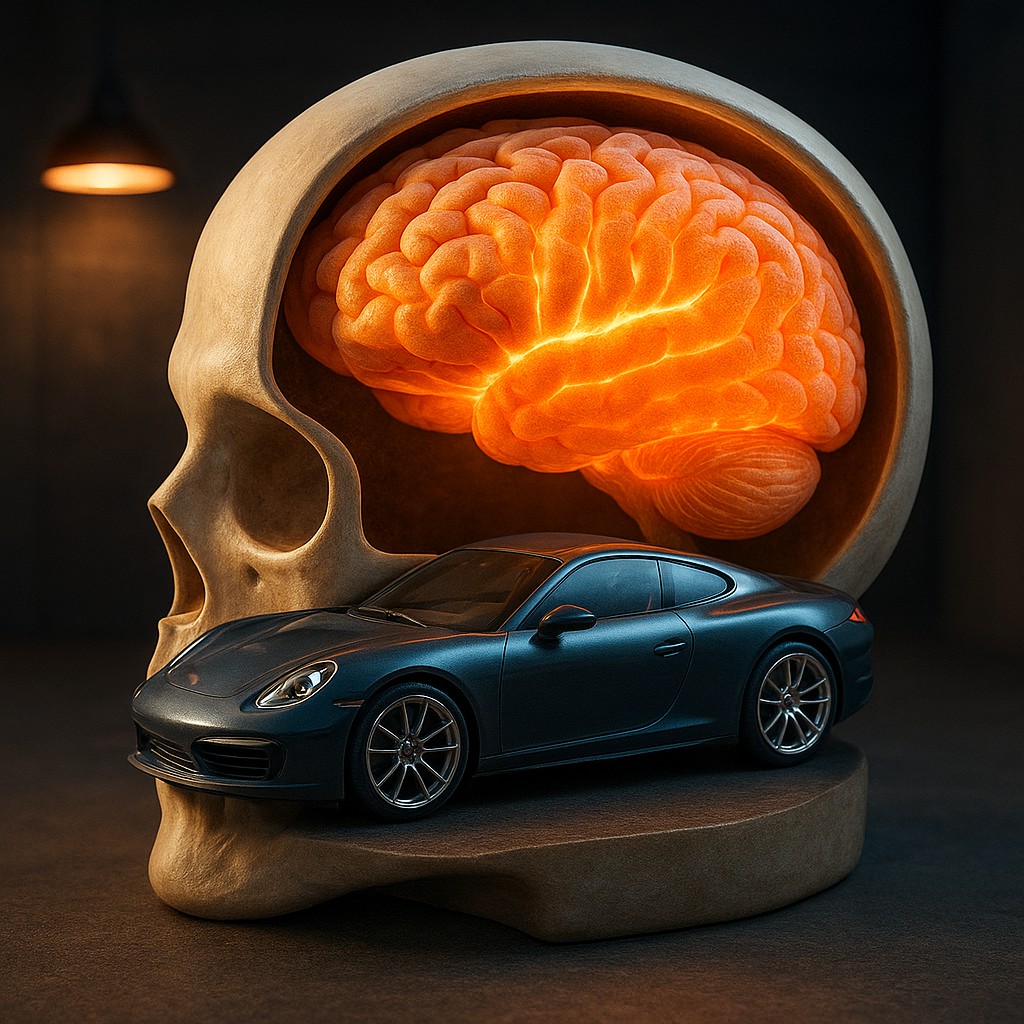
Think of your brain as a high-performance sports car parked in the garage of your skull. When it is brand new, the engine purrs, the gears shift with buttery smoothness, and it can accelerate from a standstill to a complex philosophical thought in under three seconds. However, if you leave that car sitting idle for years, the oil begins to gum up, the battery drains, and the tires develop flat spots. Keeping your mind sharp is not about stopping the car from aging, but about keeping the engine tuned, the fluids flowing, and occasionally taking it out to the racetrack to see what it can really do. The human brain is remarkably resilient, but it operates on a strict "use it or lose it" policy.
Many people assume that mental decline is an inevitable slide into a fog, a slow fading of the lights that we simply have to accept. This is one of the most persistent myths in modern health. In reality, your brain possesses an incredible quality called neuroplasticity, which is its ability to rewire itself by forming new connections throughout your life. Whether you are twenty-five or seventy-five, your brain is constantly remodeling itself based on the information you give it. If you spend your days in a repetitive loop of mindless scrolling and routine tasks, your brain becomes very good at being bored. But if you challenge it, fuel it properly, and give it the rest it deserves, you can maintain a razor-sharp intellect well into your later years.
The Myth of Fixed Intelligence
We often treat intelligence and mental clarity as if they were fixed traits we inherited, like eye color or a family heirloom. You might hear someone say they are "not a math person" or that their memory has always been "like a sieve." The truth is far more exciting. Your brain is not a static container that fills up and stays that way; it is a living muscle that grows stronger with resistance. When you struggle to learn a new language or fumble through chords on a guitar, you are not failing. You are actually physically thickening your gray matter. The discomfort you feel during a difficult mental task is the sensation of your brain building new bridges between cells.
A common misconception is that brain games and digital puzzles are a cure-all for a sharp mind. While Sudoku and crosswords are certainly better than staring at a blank wall, they often only make you better at Sudoku and crosswords. True mental sharpness comes from novelty and variety. If you have been doing the same type of puzzle for ten years, your brain is effectively on autopilot. To keep the gears turning, you need to step outside your comfort zone. This means engaging in activities that are mentally demanding and completely different from your daily routine. Complexity is the fuel that keeps the prefrontal cortex-the part of the brain responsible for complex thinking-firing on all cylinders.
The Architecture of a Cognitive Fortress
If we want to build a mind that stands the test of time, we have to look at the biological foundation. You cannot expect a high-performance engine to run on swamp water. The brain is the most energy-heavy organ in the body, consuming about twenty percent of your total calories despite making up only two percent of your weight. What you eat directly impacts the structural health of your brain cells. Omega-3 fatty acids, found in fatty fish and walnuts, act like high-grade lubricant for your synapses, the gaps where signals jump from one cell to the next. Antioxidants found in berries act as a cleaning crew, mopping up "cellular rust" known as oxidative stress.
Sleep is perhaps the most underrated tool for a sharp mind. Think of sleep not as a period of inactivity, but as a night-shift janitorial crew that enters the building once the lights go out. During deep sleep, the brain’s waste-removal system flushes out metabolic trash, including proteins linked to brain diseases. While you are dreaming, your brain is also hard at work organizing memories, moving the day’s information from short-term storage to the long-term archives. Skipping sleep to study or work more is like trying to write a masterpiece on a chalkboard that hasn't been erased in a week. Eventually, there is just no room left for new ideas.
Moving the Body to Feed the Mind
One of the most surprising secrets to a sharp mind has nothing to do with thinking at all, but with moving. Physical exercise is perhaps the closest thing we have to a magic pill for the brain. When you get your heart rate up, your body produces a protein called Brain-Derived Neurotrophic Factor, or BDNF. Scientists often call this "Miracle-Gro for the brain." BDNF nurtures existing cells and encourages the growth of new ones, particularly in the hippocampus, which is the center for learning and memory. A brisk walk does more for your mental health than almost any supplement because it improves blood flow, delivering a fresh surge of oxygen to your brain.
Beyond the biology, movement changes how we process information. There is a reason why many of history’s greatest thinkers, from Aristotle to Steve Jobs, were famous for their walking meetings. Physical activity helps break mental loops and encourages "divergent thinking," which is the ability to come up with creative solutions to problems. It is not just about the intensity of the workout, it is about staying consistent. Even low-impact movement like yoga or gardening can lower cortisol levels. High levels of cortisol, the stress hormone, are toxic to the brain over long periods, effectively shrinking the areas responsible for focus and self-control.
| Habit Category |
High-Impact Activities |
Main Mental Benefit |
| Active Learning |
Learning a language, playing an instrument |
Strengthens brain wiring and structure |
| Physical Movement |
Aerobic exercise, dancing, brisk walking |
Boosts growth proteins and memory center size |
| Nutritional Support |
Mediterranean diet, fatty fish, leafy greens |
Lowers inflammation and protects brain cells |
| Social Connection |
Group discussions, volunteering, team sports |
Improves brain function and emotional health |
| Mental Rest |
Meditation, 7-9 hours of sleep, power naps |
Clears out waste and organizes memories |
The Social Engine of the Intellect
Humans are social creatures, and our brains are wired to navigate the complexities of relationships. It turns out that isolation is one of the fastest ways to let the mind grow dull. Engaging in a lively debate, explaining a concept to a friend, or even just following the subtle cues of a group conversation requires immense mental effort. You have to listen, mirror emotions, predict responses, and find the right words all at once. This is a full-body workout for your brain. Studies consistently show that people with strong social ties experience slower mental decline than those who live in isolation.
The beauty of social interaction is that it forces us into new experiences. Other people are unpredictable; they challenge our assumptions and introduce us to new perspectives. This social friction keeps the mind agile. Even if you are an introvert, finding a group to join-whether it is a book club, a chess group, or a volunteer organization-provides a layer of protection for your brain that you simply cannot get from an app. Working toward a common goal with others taps into ancient pathways that keep us alert and engaged with the world around us.
Breaking the Routine to Build the Future
The greatest enemy of a sharp mind is a rut. Habits are wonderful for saving energy, but they are the death of growth. When you drive the same route to work, eat the same breakfast, and perform the same tasks, your brain effectively goes to sleep. To wake it up, you must introduce intentional changes. This does not require a total life overhaul. It can be as simple as brushing your teeth with your "wrong" hand, which forces your brain to build new pathways to coordinate a familiar task in a strange way. It can mean taking a different route home or picking up a book on a subject you know absolutely nothing about.
The goal is to become a lifelong learner. The most vibrant people are those who remain curious. They ask why things work the way they do, and they are not afraid to be beginners. There is a specific kind of humility required to be a student again, especially as an adult. However, that vulnerability is exactly where the growth happens. When you allow yourself to be bad at something new, you are giving your brain the best gift possible. You are proving to your nervous system that the world is still wide, full of wonder, and worth paying attention to.
Cultivating the Quiet Mind
While we have talked a lot about adding activities, sometimes the best way to keep the mind sharp is to subtract. We live in an era of constant digital noise, where our attention is the most valuable commodity on earth. Constantly switching your focus from one thing to another is exhausting for the brain. It creates a state of "continuous partial attention" that prevents us from ever reaching deep focus. To protect your mind, you must learn to defend your concentration. Practicing mindfulness or meditation is not just about relaxation; it is about training your brain to ignore the noise and stay present on a single task.
This mental discipline is like endurance training for the mind. When you sit quietly and observe your thoughts without getting swept away by them, you are strengthening the connections in your prefrontal cortex. This leads to better emotional control, improved concentration, and a greater sense of clarity. In a world that tries to distract you every second, the ability to sit still and think deeply is a superpower. By slowing down, you actually allow your brain to catch up and function with more precision.
Your mind is the lens through which you experience the world, and keeping that lens clear is the most important project you will ever undertake. It is a journey that doesn't have a final destination, but rather a series of daily choices. Every healthy meal, every challenging conversation, every brisk walk, and every page of a difficult book is an investment in your future. You have the power to shape your brain, to strengthen its foundations, and to keep it running brightly for decades to come. When you know how your brain thrives, you can move forward with confidence, knowing that your best thinking is not behind you-it is waiting in the challenges you choose to tackle today.