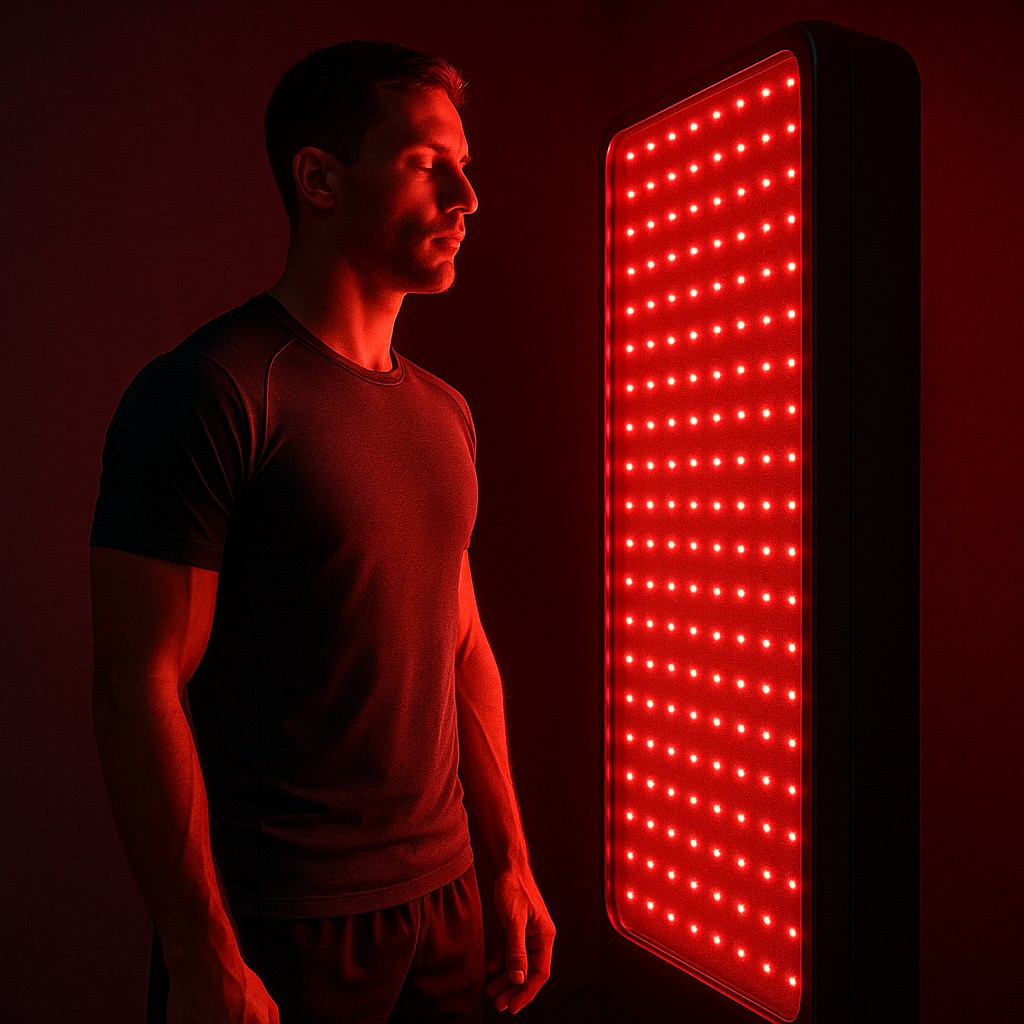
If you have spent any time scrolling through the social media feeds of elite footballers, Olympic sprinters, or NBA stars lately, you might have noticed a peculiar trend. Instead of the traditional scenes of athletes submerged in ice baths with gritted teeth, they are increasingly seen standing calmly in front of towering panels of glowing crimson light. At first glance, it looks more like a ritual from a high-budget science fiction film than a training regimen. However, this is not a Hollywood set, and these athletes are not just trying to look cool in the dark. They are engaging in a process called Photobiomodulation, a sophisticated biological hack that uses light to talk directly to the cells.
For decades, the standard recovery protocol was essentially "rest and ice." We assumed that if we pushed the body to its limits, the only solution was to wait and let the fire of inflammation burn out on its own. But the modern sporting world operates on a schedule that waits for no one. With games spaced just days apart and the physical demands of competition reaching an all-time high, scientists have been hunting for a way to turn the body’s internal repair shop into a high-speed factory. Photobiomodulation represents a shift from passive resting to active biological acceleration. In this process, specific wavelengths of light act as a catalyst for healing, essentially "charging" the body’s batteries at a molecular level.
The Invisible Engine Fueling Cellular Recovery
To understand why a red light can fix a strained hamstring, we have to zoom past the skin and muscle fibers all the way to the mitochondria. You likely remember from school that the mitochondria are the "powerhouses of the cell," but in the context of sports recovery, they act more like the logistics managers of a disaster relief zone. When an athlete trains, their muscles undergo tiny tears and chemical stress. The body needs energy, specifically a molecule called Adenosine Triphosphate (ATP), to repair those tears, flush out toxins, and bring the tissue back to its healthy baseline.
Under normal circumstances, this process is limited by how efficiently your mitochondria can pump out ATP. This is where Photobiomodulation (PBM) comes in. PBM uses specific wavelengths of light, typically in the red (600 to 700 nanometers) and near-infrared (800 to 1000 nanometers) spectrums. These photons act like keys that fit perfectly into a lock called cytochrome c oxidase, an enzyme inside the mitochondria. When the light hits this enzyme, it triggers a chemical reaction that helps the cell process oxygen more effectively and produce significantly more ATP. It is the biological equivalent of giving a construction crew a fleet of high-powered electric tools instead of hand saws; the work gets done much faster because the energy supply has been supercharged.
Beyond just creating energy, this light stimulation helps manage oxidative stress. Intense exercise creates a buildup of reactive oxygen species, which can cause lingering soreness and damage if they stay in the system too long. Red light treatment encourages the release of nitric oxide, a molecule that helps widen blood vessels. This improved circulation means more oxygen-rich blood reaches the damaged tissue while metabolic waste is carried away more efficiently. It is a dual-action system: it provides the fuel for repair and clears out the debris that slows it down.
Mapping the Spectrum of Light Therapy
Not all light is created equal, and the type of "glow" an athlete stands in matters immensely. Many people confuse red light therapy with the heat lamps found in a sauna or the ultraviolet rays of a tanning bed, but the physics behind them could not be more different. UV light, for instance, has a very short wavelength and high energy, which can damage DNA and cause sunburns. On the other end of the spectrum, far-infrared lamps primarily generate heat to warm the surface of the body. PBM lives in a "Goldilocks zone," where the light is energetic enough to penetrate deep into the body but gentle enough not to cause heat damage or cellular mutations.
| Light Type |
Wavelength Range |
Primary Biological Function |
Common Use Case |
| Ultraviolet (UV) |
100 - 400 nm |
Vitamin D production / Skin damage |
Sterilization and tanning |
| Visible Red |
600 - 700 nm |
Skin health and surface healing |
Wound repair and skin tone |
| Near-Infrared (NIR) |
700 - 1100 nm |
Deep tissue and muscle recovery |
Joint pain and muscle repair |
| Far-Infrared |
3000 nm - 1 mm |
Thermal heating and sweating |
Detoxification and relaxation |
As the table shows, the "magic" for athletes happens in the Near-Infrared range. While visible red light is excellent for treating things on the surface, like skin scrapes or inflammation near the outer layers, it lacks the "punch" to reach deep muscle groups. Near-infrared light, however, is nearly invisible to the human eye but has a remarkable ability to pass through skin and bone. This allows it to reach the quadriceps, hamstrings, and even deep joints like the hip or shoulder. By using a combination of both red and near-infrared light, recovery panels can treat an athlete from the surface down to the core of the muscle at the same time.
Moving Beyond the Placebo Myth
Whenever a new technology gains popularity in the sporting world, skepticism follows closely behind. It is easy to dismiss a glowing red panel as a high-tech "mood lamp" or a placebo intended to make athletes feel like they are doing something productive. However, the science of PBM is backed by thousands of peer-reviewed studies, many of which originated in NASA’s labs. In the 1990s, researchers found that red LEDs could help grow plants in space and, more importantly, help heal skin wounds on astronauts, which usually take a long time to mend in zero-gravity environments.
Modern sports science has taken those early findings and applied them to "return-to-play" protocols. For a professional team, every day a star player sits on the sidelines represents a massive loss in both competitive edge and revenue. Clinical trials involving athletes have shown that those using PBM experience significantly less Delayed Onset Muscle Soreness (DOMS) and lower levels of creatine kinase, a marker for muscle damage, compared to those who do not use the therapy. This is not just about "feeling" better; it is about measurable biological markers indicating that the body is repairing itself at an accelerated rate.
One of the most persistent myths is that PBM is a shortcut that lets you skip the hard work of recovery. Critics often argue that by suppressing inflammation with light, you might be preventing the body from adapting and getting stronger. While this is a valid concern with things like anti-inflammatory drugs (NSAIDs) or excessive icing, PBM works differently. It doesn't just "turn off" inflammation; it helps the body move through the inflammatory phase more efficiently. It supports the natural process rather than hijacking it, which is why many trainers now view it as a foundational tool rather than a luxury.
Practical Integration into a Daily Routine
While the sight of a thousand-dollar light panel is common in the training rooms of the Dallas Cowboys or Real Madrid, the principles of Photobiomodulation are becoming increasingly accessible to everyday fitness enthusiasts. However, using light as a tool requires a bit more nuance than just sitting in a red room. The timing and "dosage" of light are critical. Research suggests that using PBM before a workout can actually prime the muscles for stress, potentially increasing endurance and reducing the risk of strains. Conversely, using it after a workout focuses the energy on repairing the tissues that were just pushed during the session.
For the average person looking to experiment with this technology, consistency is more important than intensity. A ten-to-fifteen-minute session a few times a week is generally the sweet spot. The light must be applied directly to the skin, as clothing will reflect most of the photons and prevent them from reaching the mitochondria. It is also a remarkably safe intervention, as it is non-ionizing and does not produce the harmful radiation associated with X-rays or excessive sun exposure. However, users should always protect their eyes with appropriate goggles, as the intensity of the LEDs can be straining over time.
It is vital to maintain a balanced perspective on what these "magic panels" can and cannot do. A common mistake is treating light therapy as a replacement for the "Big Three" of recovery: sleep, nutrition, and hydration. If an athlete is only sleeping four hours a night and eating a poor diet, no amount of red light will save their performance. Think of PBM as a turbocharger on a car engine. The turbocharger makes the car go faster and run more efficiently, but you still need fuel and oil in the tank for the car to run at all. When added to a solid foundation of health, light therapy becomes the marginal gain that separates the good from the great.
Stepping Into a New Era of Biological Optimization
We are currently witnessing a fascinating shift in how we view the human body's relationship with its environment. For a long time, we viewed ourselves as isolated machines that just needed food and water to function. Now, we are beginning to understand that we are deeply "photo-biological" creatures. Our bodies respond to different types of light in profound ways, from the blue light that wakes us up in the morning to the red and infrared light that helps us heal after a grueling day of physical exertion.
As Photobiomodulation moves from the secretive training camps of elite athletes into the mainstream, it invites us to reconsider what recovery really means. It is no longer just a period of "nothingness" or waiting for the clock to run down. Recovery has become a proactive, energized state where we can actively support our cells in their constant quest for repair. By embracing these biological insights, you can move away from the "no pain, no gain" mentality and toward a more intelligent, light-speed approach to physical health. Whether you are a marathon runner or someone just looking to stay active and pain-free, the future of your recovery might just be a glow away.