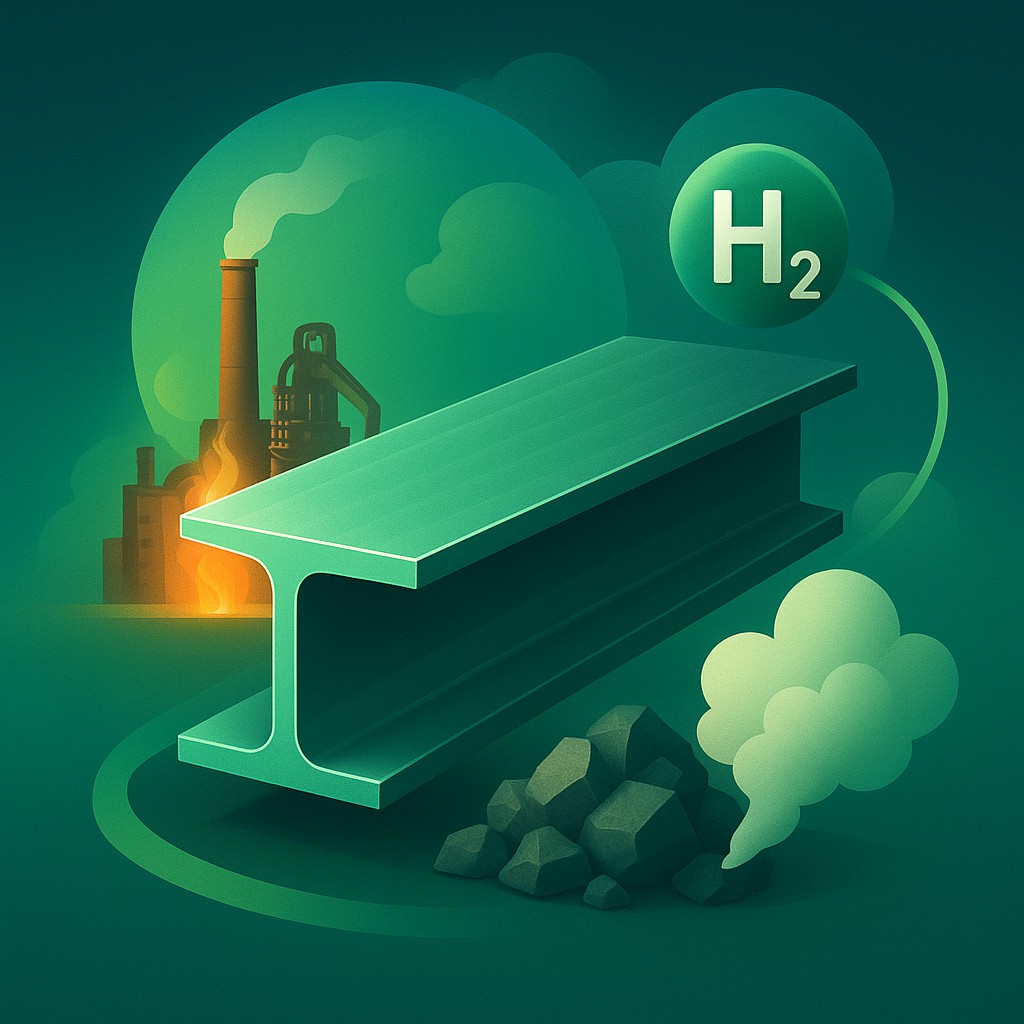
Take a look around your room and try to count how many objects rely on steel. From the hidden beams supporting your ceiling to the cutlery in your kitchen drawer, the engine in your car, and the tiny springs inside your ballpoint pens, steel is the literal skeleton of modern civilization. We produce nearly two billion tons of it every year, making it the most used metal on the planet. However, there is a heavy price for this incredible strength and versatility. Currently, the steel industry is one of the world's most prolific polluters, contributing roughly seven to nine percent of all global carbon dioxide emissions. For every ton of steel produced in a traditional furnace, about two tons of CO2 are released into the atmosphere, creating a massive environmental footprint that has been notoriously difficult to erase.
The heart of the problem lies in a chemical process that hasn't changed much since the Industrial Revolution. To turn iron ore, which is essentially rusted rock, into pure iron, you must strip away the oxygen atoms attached to the metal. This requires a "reducing agent," and for centuries, that agent has been coked coal. When coal is burned at incredibly high temperatures alongside iron ore, the carbon in the coal grabs the oxygen from the ore. This forms CO2 gas that floats away into the sky, leaving liquid iron behind. It is a brilliant bit of chemistry that built the modern world, but in an era where we need to stabilize the climate, this carbon-heavy marriage between coal and iron needs a serious divorce. This is where the revolutionary concept of Green Steel enters the stage, promising a future where our buildings and bridges are forged not with smoke and soot, but with the most abundant element in the universe: hydrogen.
The Chemistry of a Cleaner Metal
To understand how we can fix steel, we first have to appreciate the high-stakes chemical dance happening inside a blast furnace. Iron ore is found in nature as iron oxide. If you want the iron, you have to convince the oxygen to leave the metal and bond with something else. In a traditional setup, carbon is the preferred partner for that oxygen. It is cheap, abundant, and very effective. However, the byproduct of this relationship is carbon dioxide, the primary driver of global warming. The "Green Steel" movement seeks to swap carbon for hydrogen. When hydrogen gas is introduced to iron ore at high temperatures, it performs the same task as carbon but with a much friendlier outcome. Instead of producing CO2, the hydrogen atoms bond with the oxygen to create H2O, which is simple water vapor.
This transition is more than a minor tweak to a factory setting; it is a fundamental reimagining of heavy industry. In a "Hydrogen Flash Smelting" process, the iron ore does not just sit in a pile. It is ground into a fine powder and sprayed into a chamber filled with intense heat and hydrogen gas. The reaction happens in a flash, literally in seconds, converting the ore into high-purity iron. This method bypasses several energy-intensive steps required in traditional mining and smelting, such as the creation of "coke" from coal or the "sintering" of iron ore into clumps. By simplifying the process and changing the chemistry, we move from a world of smokestacks to a world of steam vents.
Breaking Down the Methods of Iron Reduction
When we talk about decarbonizing the steel industry, there isn't just one single path, though hydrogen-based methods are currently the frontrunners. It helps to look at how these new technologies compare to the old guard that has dominated the landscape for over 150 years. The traditional Blast Furnace (BF) and Basic Oxygen Furnace (BOF) route is the heavyweight champion of emissions. Meanwhile, newer methods like Direct Reduced Iron (DRI) coupled with Electric Arc Furnaces (EAF) are paving the way for a cleaner future. The following table highlights the key differences between these methods to show exactly why the shift to hydrogen is so impactful for our planet's health.
| Feature |
Traditional Blast Furnace |
Hydrogen Direct Reduction (DRI) |
Hydrogen Flash Smelting |
| Primary Fuel |
Coking Coal / Coke |
Natural Gas or Hydrogen |
Pure Green Hydrogen |
| Main Byproduct |
Carbon Dioxide (CO2) |
Water Vapor (if H2 used) |
Water Vapor (Pure) |
| Feedstock Form |
Large Pellets / Sinter |
Pellets or Briquettes |
Fine Ore Concentrates |
| Reaction Time |
Several Hours |
6 to 10 Hours |
Seconds to Minutes |
| Carbon Footprint |
Extremely High |
Low to Zero |
Near Zero |
The table illustrates that as we move toward the right, the speed and "greenness" of the process increase. Hydrogen Flash Smelting is particularly exciting because it can handle fine ore concentrates. Most iron ore today must be processed into pellets before it can be used in a furnace, a step that requires its own massive amount of energy. Flash smelting can take the fine dust directly from the mine, skipping the pelletizing stage and saving even more energy and money in the long run. It is a more streamlined, elegant solution to a very messy problem.
The Massive Challenge of Green Hydrogen Production
If hydrogen flash smelting is so effective and clean, why aren't we doing it everywhere already? The answer lies in the "Green" part of Green Hydrogen. Hydrogen is the most common element, but it rarely exists on its own on Earth. It is usually stuck to oxygen in water (H2O) or to carbon in methane (CH4). To get pure hydrogen gas, you have to break those bonds, which requires a staggering amount of energy. Today, most hydrogen is produced using natural gas in a process that releases its own fair share of CO2. For the steel industry to be truly green, the hydrogen must be produced via electrolysis, where renewable electricity from wind or solar is used to "zap" water molecules and split them into hydrogen and oxygen.
The scale of electricity needed for this is mind-boggling. To replace all the coal used in global steelmaking, we would need to produce hundreds of millions of tons of green hydrogen. This would require a massive expansion of our renewable energy grids, likely doubling or tripling the number of wind turbines and solar farms we currently have. Additionally, the equipment used for electrolysis, known as electrolyzers, is still expensive to manufacture and operate. This creates a "chicken and egg" problem. Steel companies are hesitant to build multi-billion dollar hydrogen furnaces if they cannot get cheap hydrogen, and energy companies are hesitant to build massive hydrogen plants if they do not have a guaranteed buyer like a steel mill.
Fortunately, several global initiatives are working to bridge this gap. In Sweden, projects like HYBRIT and H2 Green Steel are already building large-scale pilot plants that use fossil-free electricity from the country's abundant hydroelectric and wind power. They are proving that you can actually make high-quality steel without a single lump of coal. These early adopters are betting that as carbon taxes rise and consumers demand "greener" products, the premium price of green steel will become a competitive advantage rather than a burden. Imagine buying a car and knowing that the metal it is made of actually helped clean the air instead of polluting it during its creation.
Rethinking the Global Supply Chain
The impact of green steel ripples far beyond the walls of the foundry. When a major industry like steelmaking changes its recipe, the entire global supply chain feels the shockwaves. Currently, the logistics of steel are built around coal mines and shipping lanes that can handle massive amounts of heavy, dusty fuel. If we shift to hydrogen, the geography of steelmaking might change entirely. Instead of building steel mills near coal deposits, we might see them popping up in places with immense renewable energy potential, such as sun-drenched deserts or windy coastlines. This could lead to a geopolitical shift where countries like Australia, Chile, or even parts of Africa become the new "industrial heartlands" because of their ability to produce cheap green hydrogen.
Furthermore, the transition to green steel addresses the "hard-to-abate" sectors of our economy. While it is relatively easy to put a battery in a passenger car or a solar panel on a roof, it is incredibly difficult to decarbonize the materials used to build bridges, skyscrapers, and cargo ships. By cleaning up the source of the metal itself, we are effectively "pre-cleaning" every other industry that uses steel. A construction company doesn’t have to change how it builds a skyscraper; if the steel arrived at the site with zero carbon debt, the entire building's environmental impact drops significantly from day one. This makes green steel one of the most powerful levers we have to move the world toward a sustainable future.
There is also a fascinating technical benefit to using hydrogen in flash smelting: precision. Traditional blast furnaces are like giant, slow-moving beasts that take a long time to heat up and cool down. Flash smelting is more like a precision instrument. Because the reaction happens so quickly and uses powdered ore, the process can be tuned with extreme accuracy. This allows for the creation of specialized alloys and high-grade iron with fewer impurities. Far from being a compromise made for the environment, green steel could actually lead to stronger, more reliable materials for the engineers of tomorrow.
Correcting the Myths of the Hydrogen Evolution
As with any major technological shift, there are plenty of misconceptions floating around about green steel and hydrogen. One common myth is that hydrogen is too dangerous to use in an industrial setting because it is highly flammable. While it is true that hydrogen requires careful handling, the steel industry has been dealing with incredibly dangerous substances for over a century, including molten metal at 3,000 degrees Fahrenheit and explosive pressurized gases. Safety protocols for hydrogen are already well-established in the chemical and aerospace industries. In many ways, hydrogen is safer than the gases currently used in steel mills. Because it is so light, it dissipates rapidly into the atmosphere if a leak occurs, rather than pooling on the ground like heavier fuels.
Another misconception is that green steel will make consumer goods prohibitively expensive. While the initial cost of green hydrogen is high, the cost of the steel itself is usually only a small fraction of the price of a finished product. For example, in a car that costs thirty thousand dollars, the cost of the steel might only be a few hundred dollars. Even if the price of that steel doubled, it would only add a small percentage to the total price of the vehicle. As the technology scales and we get better at producing green hydrogen, these costs will continue to fall, much like the prices of solar panels and batteries have plummeted over the last decade. We aren't just paying for "cleaner" metal; we are investing in the infrastructure that will eventually make this the cheapest way to manufacture anything.
Finally, some skeptics argue that we should stick to carbon capture and storage (CCS) for existing coal furnaces instead of switching to hydrogen. While CCS can help, it is often seen as a temporary fix. Capturing carbon from a blast furnace is difficult, expensive, and only stops about 80 to 90 percent of emissions. Hydrogen flash smelting, on the other hand, is a "zero-emission" solution from the start. Why spend decades trying to clean up an old, dirty process when we have the opportunity to build a brand new, inherently clean one? The hydrogen revolution is about more than just small improvements; it is about a total transformation of how humanity interacts with the elements of the Earth.
Forging a World Without a Carbon Shadow
The journey toward green steel is one of the most exciting frontiers in modern engineering. It represents a rare moment where ancient craftsmanship meets futuristic science. By mastering the art of the hydrogen flash, we are proving that we don't have to choose between a thriving industrial civilization and a healthy planet. This shift requires bold investments, massive leaps in renewable energy capacity, and a global commitment to rethink how we extract and process the Earth's riches. The reward is a world where the very bones of our cities, from the smallest apartment to the tallest tower, are born from a process that leaves behind nothing but water and hope. As you go about your day, look again at the steel around you and imagine it forged by the power of the sun and the lightest gas in the universe, a testament to human ingenuity’s ability to fix even our most deep-rooted mistakes.