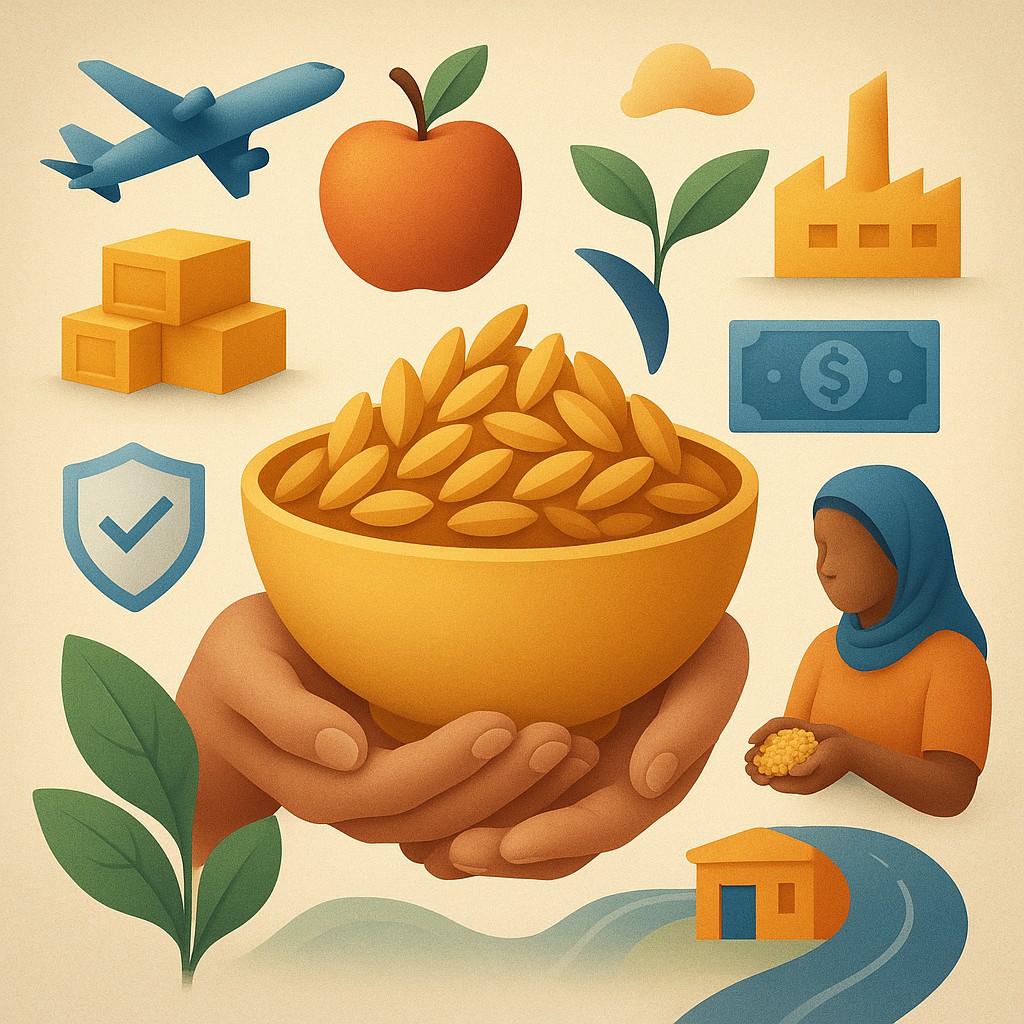
A child going to bed hungry is not the kind of "not enough food" problem most people picture. The planet already produces enough calories to feed everyone, with room to spare. Yet hunger persists, not because the world forgot how to farm, but because getting food to the right place, at the right time, at the right price is a messy human-systems problem.
Now picture a billionaire stepping up, checkbook in hand, ready to "end world hunger." The easy move is to fund a huge food giveaway, ideally with dramatic photo ops and stirring music. That can save lives quickly, but if it becomes the main plan, hunger comes back the moment the giving stops, like weeds after a warm rain.
So the best way for a billionaire to stop world hunger is less like buying everyone dinner and more like fixing the kitchen, the roads to the kitchen, the locks on the pantry, and the rules that decide who gets a seat at the table. It is not one heroic act. It is a portfolio of targeted steps that remove bottlenecks and build resilient food systems, while protecting the people most likely to be left out when things get messy.
Hunger is usually a logistics and poverty problem wearing a food costume
Start with a clear definition: hunger is driven by lack of access to nutritious food, not just a lack of food somewhere on the planet. Access depends on income, prices, safety, infrastructure, and stability. When drought or conflict hits, food might still exist globally, but local supplies shrink, prices jump, and families run out of money long before the world runs out of grain.
A billionaire who wants real progress needs to think like a systems engineer, not a generous grocery store. The key question is: where does the chain break between farms and families? Sometimes it breaks at production, when farmers cannot grow enough. Often it breaks after harvest, when food spoils or there are no roads or storage. Frequently it breaks at purchasing power, when people are too poor to buy what's available. And in the hardest places, it breaks because violence, corruption, or weak governance make normal markets impossible.
One misconception worth tossing into the compost: "If we just shipped more food, hunger would end." Emergency food aid is vital during famine or disaster, but shipping food as a default solution can undercut local farmers, distort markets, and create dependency. Another myth: "Hunger is mostly about overpopulation." Population growth matters in some places, but hunger today is more tightly linked to poverty, inequality, climate shocks, and conflict. The problem is not how many mouths there are, it is how the system is designed.
First, save lives fast: build a permanent emergency engine that can surge
Stopping hunger means preventing people from starving while you fix the system. This part feels intuitive: get food, cash, and medical nutrition to people immediately. The trap is treating it like a once-a-year charity drive instead of an always-ready capability, like a fire department that can handle both kitchen fires and citywide infernos.
A billionaire’s best first move is to fund an emergency response engine that is professional, data-driven, and tied into local networks. That means pre-positioning food and therapeutic nutrition in regions that repeatedly face crises, paying for fast logistics, and investing in early-warning systems that spot trouble before it becomes a catastrophe. It also means partnering with experienced humanitarian organizations and local governments instead of reinventing the wheel with a shiny new logo.
One of the most effective modern tools is cash-based assistance. In many crises, markets still work, but families cannot afford food. Giving cash or vouchers lets people buy locally, preserves dignity, and supports local sellers. It also cuts the cost and delay of shipping bulky goods across oceans. Cash is not a fix-all. If food is physically unavailable or prices are spiraling, you still need direct food delivery and market stabilization.
A practical emergency "starter kit" a billionaire could fund looks like this:
- Early warning and forecasting using weather data, price tracking, and conflict monitoring
- Pre-arranged logistics contracts for transport, warehousing, and last-mile delivery
- Flexible cash programs that can scale quickly when prices jump
- Treatment for acute malnutrition, especially for children under five
- Protection measures so aid reaches women and other vulnerable groups safely
This phase does not end hunger for good, but it prevents the worst outcomes and buys time for deeper work. Without it, long-term projects can feel morally hollow, like planting an orchard while the house is on fire.
Then, attack the quiet giant: poverty and affordability
Most chronic hunger is basically a wallet problem. People may live near food, but they cannot reliably pay for it, especially when prices spike. So a billionaire who wants to stop hunger should think beyond food and into income, safety nets, and the economics of daily life.
One of the highest-leverage investments is strengthening social protection systems, like cash transfers, school feeding programs, and nutrition support for pregnant women and young children. These programs work because they smooth shocks. When a breadwinner loses work, when rain fails, or when prices rise, the family does not immediately fall into a nutritional free-fall. Evidence from many countries shows predictable cash support improves food security, health, and school attendance, and it stimulates local economies by raising demand.
Another way to help is to lower the cost of nutritious foods, not just calories. Cheap calories are everywhere. Cheap nutrients are the hard part. Fruits, vegetables, eggs, dairy, and legumes often cost more than refined staples, especially where cold chains and roads are weak. If the billionaire wants better results, investments should target the "nutrient gap," not just the "calorie gap."
That could mean financing cold storage, refrigerated transport, and local processing so tomatoes do not rot on the way to market and eggs can travel safely. It could also mean helping small food businesses scale, like millers fortifying flour or firms making affordable, shelf-stable nutrient products. The goal is not a single miracle food, but making normal diets more affordable and possible.
Fix the middle of the pipeline: storage, roads, and the boring stuff that works
If hunger had a supervillain, it would not be "not enough farming." It would be "post-harvest loss," a polite phrase for food disappearing between harvest and plate. In many regions, crops spoil because there is nowhere dry to store them, no reliable refrigeration, and no efficient transport. This loss is not just tragic, it is costly. Spoilage raises prices and pushes poor families out of the market.
A billionaire can do a lot by making the food system less fragile. Headline-grabbing innovations are fun, but basic infrastructure often wins. Better rural roads connect farmers to markets. Warehouses and silos cut spoilage and let farmers sell later when prices are fairer. Cold chains make fresh foods viable. Digital tools can match supply and demand and reduce the guessing that leads to gluts in one place and shortages in another.
Energy is an underappreciated factor. Without reliable electricity, cold storage is a fantasy. Investing in decentralized renewable energy for farming communities can improve irrigation, storage, processing, and household cooking. When families have cleaner cooking options, they rely less on wood and charcoal, which improves health and saves time, especially for women and girls.
The goal is not that a billionaire personally paves roads. The goal is to use philanthropic capital to reduce the risk of these projects, attract public funding, and pull private partners into places they would otherwise avoid. Think of it as paying the startup costs for a functioning market.
Empower the people who grow much of the world’s food: smallholder farmers, especially women
A huge share of the world’s food comes from smallholder farmers, many of whom work on thin margins and lack access to quality seed, fertilizer, irrigation, credit, insurance, and training. If you want fewer hungry people next year and the year after, raising smallholder productivity and resilience is one of the cleanest paths.
But it has to be done right. Dumping inputs without training can backfire. Promoting a single crop can increase risk if prices collapse or pests arrive. The best approach supports farmer-centered systems that raise yields, diversify crops, and lower risk.
A billionaire can fund agricultural extension services that actually reach farmers, using a mix of in-person advisors and mobile tools. They can back affordable micro-insurance so one drought does not wipe out a family’s future. They can invest in water management, like small-scale irrigation and rainwater harvesting, which matter more as the climate changes.
We need to talk about women. In many places, women do a large share of farm work but have less access to land rights, credit, training, and markets. Closing that gap is not just fair, it is smart. When women control more resources, household nutrition usually improves. A billionaire focused on impact should make women’s empowerment a core part of hunger policy, not a side project.
Climate, conflict, and governance: the three forces that can erase progress overnight
If hunger were a board game, climate shocks, conflict, and weak governance are the cards that send you back five spaces. Droughts, floods, heat waves, and shifting seasons make harvests unpredictable. Conflicts break markets, displace people, and block aid. Poor governance can turn resources into waste, or worse, into tools of power.
A billionaire cannot solve geopolitics alone, but they can reduce vulnerability. Climate-smart farming, drought-tolerant crops, diversified income sources, and better water systems help communities absorb shocks. Supporting conflict-sensitive programs lowers the risk that aid fuels tension. Funding transparency tools and local accountability groups can make public food programs harder to hijack.
Another misconception: "Technology will fix hunger." Technology helps, but it cannot negotiate ceasefires, enforce fair land rights, or guarantee aid reaches marginalized groups. Hunger is as much about power as it is about productivity. Ignoring governance means spending a fortune treating symptoms while the underlying disease keeps spreading.
A smart billionaire plan looks like a portfolio, not a single silver bullet
The highest-impact strategy is a balanced portfolio with three time horizons: immediate relief, medium-term repairs, and long-term resilience. The billionaire should also fund measurement and independent evaluation, because good intentions are not the same as good results. If an approach does not work, you pivot. That is not failure, it is seriousness.
Here is a simple way to compare major approaches and what they do best:
| Approach |
What it does best |
Typical risks if done poorly |
Best use case |
| Emergency food aid and therapeutic nutrition |
Prevents starvation, treats severe malnutrition |
Undermines local markets, arrives too late, creates dependency |
Famine, disasters, conflict zones |
| Cash transfers and safety nets |
Improves access, supports local markets |
Causes inflation if supply is constrained, can exclude people |
Chronic poverty, sudden price spikes |
| Infrastructure (roads, storage, cold chain, energy) |
Cuts spoilage, lowers prices, strengthens markets |
Opens space for corruption, suffers from poor maintenance, misaligned incentives |
Areas with high post-harvest loss |
| Smallholder support (training, inputs, irrigation, insurance) |
Raises yields, resilience, and incomes |
One-size-fits-all programs, potential environmental harm |
Rural hunger, climate vulnerability |
| Nutrition-focused market development |
Makes healthy diets affordable |
Can produce overprocessed products, needs regulation |
Hidden hunger and micronutrient deficits |
| Governance and transparency investments |
Reduces leakage, improves delivery |
May face political backlash, progress can be slow |
Places where systems repeatedly fail |
Notice what is missing: "Buy all the food in the world and hand it out." That is not a strategy, it is a temporary event.
How to spend billionaire money without setting it on fire
A billionaire can waste hundreds of millions faster than you think if they chase visibility over effectiveness. The best path is disciplined, collaborative, and humble about complexity. A quiet meeting with supply chain experts often beats a loud speech about compassion.
A few principles make the difference:
- Partner, don't duplicate. Work with governments, UN agencies, local NGOs, and farmer groups that already have networks and credibility.
- Fund flexibility. Crises change fast. Restrictive funding turns a response into a bureaucratic scavenger hunt.
- Measure outcomes, not vibes. Track malnutrition rates, diet diversity, market prices, and program coverage, using independent evaluators.
- Invest locally. Buy locally when possible, hire locally, and build local leadership so programs outlast the donor’s attention span.
- Plan the exit. The goal is durable systems, not permanent philanthropy. Design programs that can transition to public funding or sustainable markets.
Also: avoid becoming the central hero. If one person holds the keys, the system stays fragile. The best legacy is building institutions and markets that keep working when the billionaire retires, loses interest, or takes up a new hobby like underwater pottery.
The real “best way”: make hunger politically and economically difficult to ignore
World hunger persists partly because the costs fall on people with the least power and the fewest microphones. A billionaire can change that by using influence to keep hunger on the agenda, backing evidence-based policies, and defending the budgets that make safety nets and nutrition programs possible. Money can buy food, but political will buys continuity.
That might mean funding independent data systems that show where hunger is rising in real time. It might mean supporting journalists and researchers who expose corruption in food programs. It might mean convening unusual alliances—farmers, retailers, health leaders, and finance ministries—to treat nutrition as an economic priority, not just a charity issue.
If you want a single sentence answer: the best way for a billionaire to stop world hunger is to fund immediate lifesaving aid while building resilient, locally owned food systems that make nutritious food affordable and accessible for the poorest through infrastructure, safety nets, smallholder support, and better governance.
Hunger is not a mysterious curse. It is a solvable set of problems, and we already know many of the tools that work. The inspiring part is that a billionaire’s money, aimed well, can save lives this week and prevent hunger next decade. The even more inspiring part is that this is not only a billionaire’s job. Citizens, voters, engineers, teachers, farmers, and everyday shoppers all shape the system too. The world does not need a single savior, it needs millions of people refusing to accept hunger as normal and building practical fixes until "going to bed hungry" becomes a line from history books.