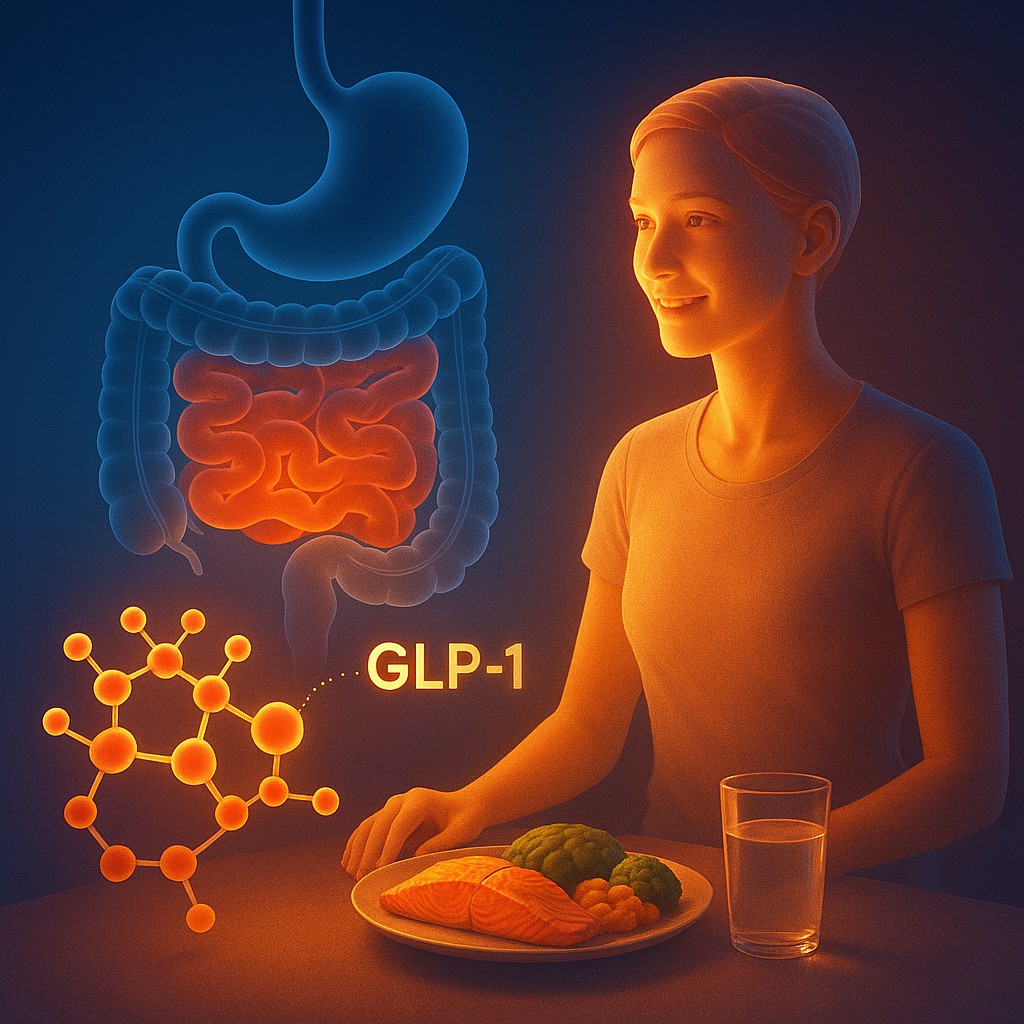
Imagine you are at a dinner party, and the person across from you is glowing. They have a newfound energy and look significantly leaner than they did six months ago. When you ask for their secret, they don't describe a grueling marathon training plan or a monk-like devotion to kale salads. Instead, they mention a string of letters and a number that have recently dominated every health headline and stock market report: GLP-1. It sounds like a secret agent code or a high-tech engine part, but it is actually a tiny molecule that has lived inside your body since the day you were born.
The world of medicine is currently undergoing a massive shift. We are moving away from the idea that weight and metabolic health are purely matters of "willpower" and toward an understanding that our biology is the true choreographer of our cravings. GLP-1, or Glucagon-like peptide-1, is the star of this show. Understanding how it functions is like getting the master key to your body’s communication system; it reveals how your gut talks to your brain and why that conversation sometimes gets lost in translation. This isn't just a story about losing a few pounds. It is a story about how we might finally be solving the complex riddle of human metabolism.
Decoding the Natural Magic of the Gut
To understand GLP-1 medications, we first have to understand the natural hormone they mimic. In its organic state, GLP-1 is a "messenger" hormone produced in your small intestine and your brain. Whenever you take a bite of food, your gut senses the nutrients and releases this hormone into your bloodstream. Its primary job is to tell your pancreas to get ready for incoming sugar by producing insulin, but it also does something much more profound: it acts as the ultimate signal that you are full.
When GLP-1 hits your brain - specifically the hypothalamus - it essentially turns off the "hunger alarm." It tells your body that you have plenty of energy and don't need to keep searching for snacks. This is known as the "incretin effect," which is just a technical way of saying that your gut helps regulate your blood sugar and appetite in real-time. In a perfectly functioning system, this hormone keeps your weight stable and ensures your energy levels don't spike or crash throughout the day.
However, for many people, this signal is either too weak or disappears too quickly. Natural GLP-1 is incredibly fragile; it usually lasts only a few minutes in the bloodstream before an enzyme called DPP-4 breaks it down. This is why you can feel full immediately after a meal but find yourself eyeing the pantry again only an hour later. Modern GLP-1 medications, like semaglutide or tirzepatide, are "super-versions" of this hormone. Scientists modified the molecule so that instead of lasting minutes, it stays active in your body for an entire week, providing a steady, constant signal of satisfaction and control.
The Triple Threat Strategy of Metabolic Control
When a person begins a GLP-1 treatment, the body starts behaving as if it is in a state of permanent, comfortable nourishment. This happens through three distinct pathways that work together to change how the body handles fuel. The first stop is the pancreas. By triggering insulin production only when blood sugar is high, these molecules lower glucose levels without the dangerous "crashes" often caused by older diabetes drugs. This makes the body much more efficient at processing the energy it gets from food.
The second pathway involves the stomach itself through a process called delayed gastric emptying. Simply put, the medication tells the stomach to slow down. Instead of dumping food into the small intestine rapidly, the stomach holds onto it longer, which physically keeps you feeling full for a longer time. This slow-motion digestion means the rise of sugar in your blood is a gentle wave rather than a frantic spike, reducing stress on your internal organs.
The third and perhaps most fascinating pathway is located deep within the brain’s reward centers. Many people who struggle with weight report a phenomenon known as "food noise" - a constant, obsessive background chatter about what the next meal will be or how much chocolate is left in the cupboard. GLP-1 molecules quiet this noise. By interacting with dopamine pathways, they reduce the "reward" we get from high-calorie, sugary foods. Users often describe this transition as a profound sense of peace. Food stops being a constant preoccupation and returns to being what it was always meant to be: fuel.
The Long-Term Outlook on Health and Longevity
Whenever a "miracle" treatment arrives, the first question is whether it is too good to be true. Because GLP-1 medications were originally developed to treat Type 2 diabetes, we actually have nearly two decades of data on how they affect the human body. The long-term news is surprisingly positive and extends far beyond the scale. One of the most significant benefits is the protection these medications offer to the heart.
Research shows that people on long-term GLP-1 therapy have a lower risk of major heart events, such as heart attacks and strokes. This isn't just because of weight loss; the hormone appears to reduce inflammation in the blood vessels themselves. Furthermore, emerging evidence suggests these medications might protect the kidneys and even the brain, with ongoing studies looking at their potential to slow Alzheimer’s and Parkinson’s diseases. By reducing body-wide inflammation, GLP-1 seems to act as a system-wide "tune-up."
However, the "downside" of the long-term equation often involves dependency. Because these drugs address a biological deficiency or a structural metabolic issue, stopping them often causes the body to return to its old ways. If the "food noise" was silenced by the drug, it often screams back once the drug is gone. This has led many experts to view GLP-1 therapy not as a temporary "fix," but as a long-term management tool for a chronic condition, much like taking blood pressure medication or wearing glasses.
| Feature of GLP-1 |
Natural Hormone Function |
Medication-Assisted Function |
| Duration in Body |
Lasts for 2-3 minutes |
Lasts for 5-7 days |
| Hunger Impact |
Short-term fullness after a meal |
Consistent reduction in "food noise" |
| Blood Sugar |
Assists insulin after eating |
Continuous glucose stabilization |
| Digestion Speed |
Normal transit through the gut |
Significantly slowed stomach emptying |
| Long-term Goal |
Immediate energy management |
Sustained metabolic health and weight loss |
Navigating Physical and Emotional Side Effects
No biological intervention is free, and for GLP-1, the "tax" is usually paid through the digestive system. Because the drug slows down the stomach, the most common side effects are nausea, vomiting, and constipation. For most, these symptoms are a temporary hurdle that appears when they first start or increase their dose. It is as if the body needs a moment to adjust to the new, slower rhythm of its digestive tract.
There are also more significant, though rarer, risks that require medical supervision. Pancreatitis, a painful inflammation of the pancreas, is a known but infrequent complication. There is also a theoretical risk regarding a specific, rare type of thyroid cancer. However, this has mostly been seen in rodent studies and hasn't shown a clear, strong link in humans yet. Beyond the physical, some users report "anhedonia," or a dulled ability to feel pleasure. If the drug numbs the joy of a cheeseburger, it can occasionally numb the joy of other things as well, though this is less common.
One of the most talked-about side effects is actually a result of the weight loss itself: loss of muscle mass. When the body loses weight rapidly, it doesn't just burn fat; it can also consume muscle for energy. This is why doctors emphasize high-protein diets and strength training. Without intentional movement, a person might end up "skinny-fat" - having a lower weight but a higher percentage of body fat and less strength than before.
Correcting Myths and Misconceptions
As GLP-1 medications have saturated our culture, a few myths have taken root. The first is that these drugs are an "easy way out." In reality, people on these medications still have to make conscious choices about what they eat and how they move. The drug simply levels the playing field, making it possible to follow the advice that never worked for them before. It turns a steep mountain climb into a manageable walk.
Another common myth is that the weight loss is "fake" or "artificial." Biological weight loss is always real; the body is using stored fat for energy. The medication simply corrects a chemical imbalance that made it difficult for the body to access those stores. Furthermore, some worry that these drugs "damage" the metabolism. In truth, evidence suggests that for many people with chronic obesity or diabetes, the metabolism was already struggling, and the GLP-1 acts as a corrective bridge to help it function more like a healthy system.
Finally, there is the myth that these are strictly "weight loss drugs." While they are effective for shedding pounds, their primary role is metabolic health. Many users report improvements in sleep apnea, joint pain, and even mental clarity long before they reach their goal weight. By focusing only on the "cosmetic" aspect, we miss the broader picture of systemic health improvement these therapies provide.
Embracing a New Era of Personal Health
We are standing at the threshold of a new understanding of the human body. We no longer have to view metabolic struggles as moral failures, but as biological puzzles waiting to be solved. GLP-1 has taught us that the signals between our gut and our brain are just as important as the calories on our plate. This knowledge empowers us to move forward with more compassion for ourselves and others, recognizing that health is a complex dance of chemistry, environment, and habit.
If you are considering this path, remember that your most powerful tool is curiosity. Whether you use these medical advancements or simply apply the lessons they teach - such as the importance of protein, fiber, and blood sugar management - you are now better equipped to listen to your body. The journey to health isn't about finding a magic wand; it’s about finding the right tools to build a life where you feel vibrant, energetic, and truly at home in your own skin. Broaden your horizons, keep learning, and trust that your biology is a partner in your wellness, not an enemy to be conquered.