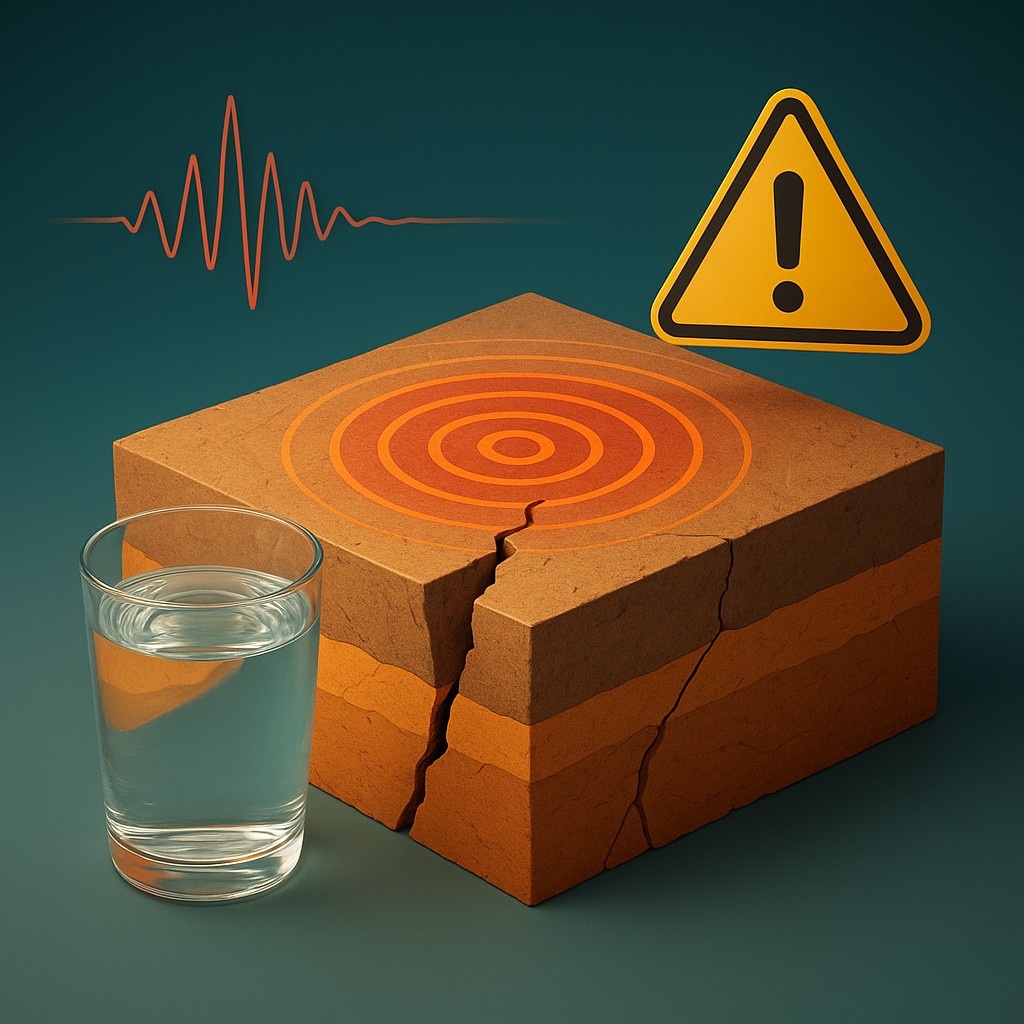
If you have ever watched a glass of water ripple for no clear reason, or felt the floor give a tiny, unsettling shiver, you have met one of Earth’s most dramatic habits: it shakes itself awake. Earthquakes can be barely noticeable, like a polite throat-clear from the planet, or they can rearrange parts of a city in under a minute. Either way, they remind us that the ground is not a fixed stage. It is an active, moving part of a living world.
The good news is that earthquakes are not random acts of cosmic mischief. They follow patterns, have causes, and can be described in ways that help us prepare. You cannot stop a fault from slipping, but you can learn what is happening, spot common myths, and know what to do when the shaking starts. Knowledge is not a hard hat, but it comes close.
The ground shakes because stored energy finally gets released
An earthquake is the sudden shaking of the ground when energy stored inside the Earth is released quickly. That energy moves outward as seismic waves, which are simply wiggles that travel through rock, similar to how sound moves through air. The shaking you feel is the surface responding as those waves pass.
Most earthquakes start along fractures in the Earth’s crust called faults. A fault is not a hole or a crack you can fall into, despite what disaster movies show. It is more like a seam where blocks of rock can move relative to each other. These blocks do not slide smoothly because rock surfaces are rough and friction is stubborn. Stress builds slowly over years to centuries, then suddenly the rocks slip, energy is released, and the Earth does a brief, unwanted dance.
Two terms help you locate where an earthquake begins. The focus (or hypocenter) is the point underground where the rupture starts. The epicenter is the point on the surface directly above the focus, often where shaking is strongest, though local ground conditions can change that a lot. Think of the focus as the snapped rubber band, and the epicenter as the spot on the table above it where you notice the twang.
The planet’s crust is broken into moving plates, and they do not always play nicely
The deeper reason earthquakes happen is plate tectonics. Earth’s outer shell is divided into large pieces called tectonic plates that slowly move, often at about the speed your fingernails grow. That sounds harmless until you remember these plates are thousands of kilometers across and made of rock. When plates interact, stress builds, and earthquakes become more likely.
There are three main types of plate boundaries, and each tends to produce different earthquake patterns. At convergent boundaries, plates collide or one plate dives beneath another, making some of the world’s largest earthquakes. At divergent boundaries, plates pull apart and magma rises to form new crust, usually causing smaller, frequent quakes. At transform boundaries, plates slide past each other side-to-side, which can produce powerful shallow earthquakes that feel especially sharp near the surface.
Not all earthquakes happen neatly on plate boundaries. Some occur inside plates, called intraplate earthquakes, often on ancient faults that get reactivated. These can be surprising because people assume “far from the edge of a plate” means safe. Far from a boundary often means lower risk, not zero risk. Earth is very good at finding old weaknesses.
Not all quakes are the same: how earthquakes are classified
When people ask how big an earthquake is, they often mix up different ideas. Scientists describe earthquakes by magnitude (how much energy is released), depth (how deep the rupture starts), and faulting style (how the rocks move). Each of these matters for what you feel and what gets damaged.
Magnitude is reported using the moment magnitude scale (written as Mw), which replaced older scales like the Richter scale for most scientific work. The key detail is that magnitude is logarithmic. Roughly, each whole number increase means about 10 times more ground motion and about 32 times more energy released. So a magnitude 7 is not just a bit bigger than a magnitude 6, it is a different beast.
Depth also changes the outcome. Shallow quakes (0 to 70 km deep) tend to cause more damage because the energy has less distance to fade before reaching the surface. Deeper quakes can be felt over large areas but often cause less intense shaking at any one place. If one quake rattled your whole region but did not knock much down, depth could be part of the reason.
Here is a simple summary tying the main classification ideas together:
| Classification angle |
Common categories |
What it tells you in real life |
| Magnitude (Mw) |
Minor (<4), Light (4-4.9), Moderate (5-5.9), Strong (6-6.9), Major (7-7.9), Great (8+) |
Bigger numbers generally mean wider damage potential and longer shaking |
| Depth |
Shallow (0-70 km), Intermediate (70-300 km), Deep (300-700 km) |
Shallow quakes usually shake harder at the surface |
| Fault movement |
Normal, Reverse (thrust), Strike-slip |
Helps predict shaking style, aftershocks, and where surface rupture might occur |
Fault movement needs a quick, clear explanation. Normal faults happen when the crust is being pulled apart, so one block drops relative to another. Reverse or thrust faults happen when the crust is squeezed, pushing one block up over another, and these are common in big subduction zone earthquakes. Strike-slip faults involve sideways motion, like two books sliding past each other on a table. Each style shapes how the rupture spreads and where the strongest shaking may occur.
Seismic waves: the messengers that do the shaking
Once a fault slips, energy moves away in waves. The main wave types are P waves, S waves, and surface waves. You do not need a physics degree to get the point: they arrive at different times and cause different kinds of motion.
P waves (primary waves) arrive first and compress and expand the ground in the direction they travel. They are fast and often feel like a sharp bump or a quick jolt. S waves (secondary waves) arrive later and shake the ground side-to-side or up-and-down, usually causing stronger motion. Then come surface waves, which travel along the Earth’s surface and often produce the rolling or swaying feeling that can make buildings and stomachs unhappy.
This is why earthquake early warning systems can work in some places. Instruments detect the early P waves and send alerts before the more damaging waves arrive. The warning may be only a few seconds, but a few seconds is enough to stop a train, pause a surgery, or get under a sturdy table instead of sprinting for the stairs like a panicked cartoon character.
Aftershocks, foreshocks, and the myth of “the big one is over”
Earthquakes often come with sequels. Aftershocks are smaller quakes that happen as the crust adjusts to the changes caused by the main rupture. They can continue for days, weeks, or even months, and they usually get less frequent and smaller over time. A common misconception is that aftershocks are “echoes.” They are not. They are real slips on the same fault system responding to a new stress arrangement.
Foreshocks are earthquakes that happen before a larger quake, but here is the catch: you only know a quake was a foreshock after the bigger one happens. That makes them tricky for prediction. People sometimes assume a small quake means a bigger one is coming, or that it “released pressure” so a big quake is now less likely. Both ideas can be wrong. Small quakes do not reliably predict big ones, and they do not necessarily vent stress in a helpful way.
The safest mindset is simple: treat any noticeable quake as a sign to be ready for more shaking. After a mainshock, damaged buildings and weakened slopes are more vulnerable, so an aftershock that would be harmless on a normal day can be dangerous when structures are already weakened.
Ground shaking is only part of the danger
When most people picture earthquake damage, they imagine buildings falling. That can happen, especially where structures are not built for shaking, but earthquakes cause harm in many ways. Often, secondary effects do as much damage as the shaking itself.
One major hazard is liquefaction, where water-saturated sandy soil temporarily behaves like a liquid when shaken. Buildings can tilt, roads can buckle, and buried pipes can float upward. Another is landslides, which are more likely on steep slopes or after heavy rain, where shaking can trigger slopes to fail. Earthquakes under the ocean can generate tsunamis, not because the sea is “shaken,” but because the seafloor suddenly shifts and displaces a large volume of water.
There is also a quieter threat: damage to lifelines. Water pipes break, power lines fail, gas leaks occur, and roads crack. That can turn a survivable quake into a complex emergency if hospitals lose power or clean water is scarce. Preparedness is about more than dodging falling objects, it is also about being ready for disruptions afterward.
What to do during an earthquake: simple actions that actually work
In the moment, your brain will want to do something dramatic. Try something effective instead. For most indoor situations, the best guidance is summed up as Drop, Cover, and Hold On. It is not catchy because it is cute, it is catchy because it saves lives.
When shaking starts:
- Drop to your hands and knees so you do not get knocked over.
- Cover your head and neck, and get under a sturdy table or desk if possible.
- Hold On to your shelter, because it may shift as the ground moves.
If you cannot get under furniture, cover your head and neck and move next to an interior wall, away from windows and tall furniture that can topple. Do not run outside during strong shaking. Many injuries happen from falling glass and debris near building exits. Also, avoid doorways unless you live in an older, unreinforced building where a doorway is clearly a strong frame. The idea that doorways are always safest is an overgeneralized myth from a different era of construction.
A few common situations deserve their own notes. If you are in bed, stay there, cover your head with a pillow, and ride it out unless you are directly under something that can fall. If you are outside, move away from buildings, streetlights, and power lines, then drop and protect your head. If you are driving, pull over to a clear spot, stop, set the parking brake, and stay in the car until the shaking ends, avoiding bridges and overpasses if you can safely do so.
What to do after the shaking stops: the next 30 minutes matter
When the main shaking ends, it is tempting to declare victory. This is when you should switch into careful, practical mode. Aftershocks may follow, and hazards like gas leaks and damaged structures become the main concern.
First, check yourself and the people around you for injuries and give basic first aid if needed. Then look for obvious dangers: smell gas, see sparks, notice water leaks, or hear unusual cracking? If you suspect a gas leak, open windows if possible, leave the building, and contact professionals. Use flashlights rather than candles, because broken gas lines and open flames are a truly unromantic combination.
If you are in a damaged building, be cautious about re-entering. Cracks do not always mean collapse is imminent, but you cannot judge structural safety by vibes alone. Listen to local authorities, and expect communication networks to be overloaded. Texting often works better than calling, because it uses less bandwidth. If you are in a coastal area and the quake was long or strong, do not wait for an official warning to move to higher ground, because tsunami waves can arrive quickly.
Preparedness that feels doable, not doom-and-gloom
Preparedness is often sold like a lifestyle brand: buy this kit, buy that gadget, buy the deluxe emergency doodad. In reality, the most effective steps are boring, affordable, and surprisingly empowering.
Start by making your space less hazardous. Secure tall bookcases to walls, strap water heaters, and latch cabinets that hold heavy items. Keep heavy objects on lower shelves, and avoid hanging heavy frames over beds or couches. These changes reduce injury risk in a way that no “tactical” flashlight ever will.
Then think about supplies and planning. You do not need to become a bunker enthusiast, but it helps to have:
- Water and non-perishable food for at least a few days
- A flashlight, batteries, and a basic first aid kit
- Copies of key documents and a little cash
- A plan to contact family, including an out-of-area check-in person
Finally, practice. Earthquake drills feel silly until you need them, and then they feel like a superpower. If everyone in your home knows where to drop and cover, where shoes are stored (broken glass is common after a big quake), and how to shut off gas if instructed, you have already reduced chaos.
Earthquake myths that refuse to retire
Some myths stick because they are comforting or cinematic. Unfortunately, earthquakes do not care about our feelings or movie plots.
One myth is that animals always predict earthquakes. Animals can sense vibrations and may act oddly, but their behavior is inconsistent and not reliable for prediction. Another myth is that scientists can precisely predict earthquakes. They cannot, at least not in the “Tuesday at 3:17 pm” way people imagine. What scientists can do is estimate probabilities over years or decades and map hazard zones, which is very useful for building codes and planning.
A final myth is that standing in a doorway is always safest. Modern buildings often have multiple strong points, and doorways are not magically reinforced portals. The safest place is generally under sturdy furniture or beside an interior wall, protecting your head and neck. The goal is not to find a single perfect spot, it is to reduce the chance of being hit by falling objects.
Living with earthquakes without living in fear
Earthquakes remind us that Earth is active, not fragile. The same forces that make quakes also build mountains, recycle crust, and shape the landscapes we love. You do not have to be terrified to be prepared, just like you do not have to be paranoid to wear a seatbelt.
If you take away one big idea, let it be this: earthquakes are sudden, but your response does not have to be. Learn the basics of what causes them, understand how they are measured, and practice a simple plan for what you will do during and after shaking. A few smart habits turn an unpredictable event into a manageable one. The next time the ground decides to wiggle, you will not just endure it, you will know how to handle it.