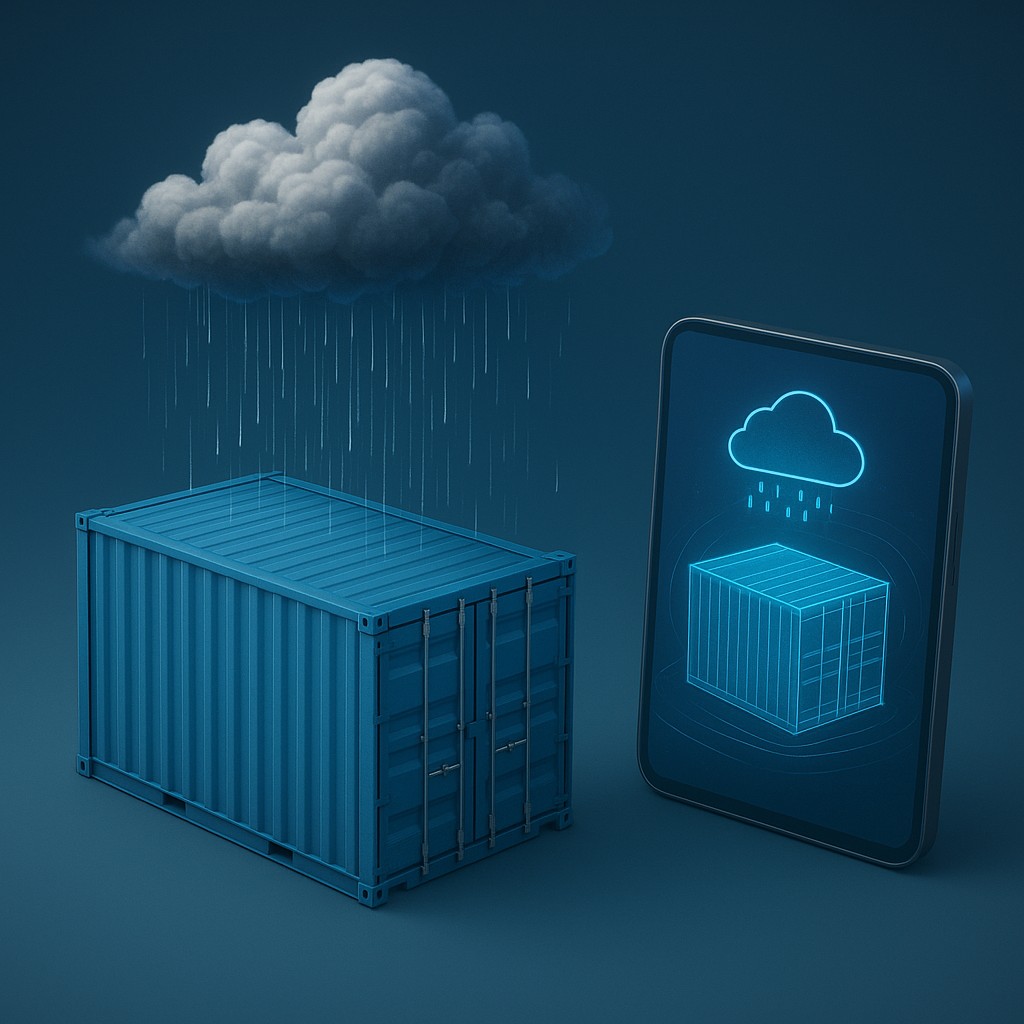
Imagine you are shipping a thousand high-end gaming consoles or ten tons of premium organic Basmati rice across the ocean. You have packed them into a standard 20-foot steel box, locked the heavy doors, and watched a crane hoist it onto a ship. To the naked eye, that steel container is a fortress, an impenetrable vault designed to keep the elements out. However, inside that dark, metallic belly, a silent and destructive weather system is brewing. As the ship moves from the humid tropics toward the chilly North Atlantic, the air inside the container begins to change. This is the birth of "container rain," a phenomenon where the ceiling of your shipping crate becomes a localized storm cloud. It can turn your dry goods into a soggy, moldy, or rusted disaster before they ever reach the port.
For decades, this has been an accepted gamble of global trade. The cost was simply built into the price of doing business as a multi-billion-dollar annual loss. We have tried to fight it with bags of silica gel or expensive refrigerated units, but the sheer scale of global logistics makes these solutions either insufficient or too pricey. The problem is not just the water itself, but the unpredictability of when and where the air will reach its breaking point. Now, the shipping industry is moving away from just crossing its fingers and toward a high-tech solution that lives in the cloud. By creating "digital twins" of these steel boxes, logistics companies are using real-time physics to predict exactly when a crate is about to "sweat." This allows them to step in with surgical precision before a single drop of water forms on the ceiling.
The Microclimate Within the Steel Walls
To understand how a digital twin saves a cargo of electronics, we first have to look at the physics of the container as a closed system. A shipping container is essentially a giant oven or freezer, depending on the sun. When it sits on the deck of a ship in the midday sun, the steel walls can reach temperatures far higher than the air outside. This heat moves to the air inside, which expands and begins to pull moisture out of whatever it can find. If you are shipping timber, grain, or even cardboard packaging, those materials hold "bound water" that the warm air greedily sucks up. The air becomes a sponge, soaking up humidity until it is heavy and saturated.
The danger begins when the sun goes down or the ship moves into colder waters. As the steel walls cool rapidly, the air directly touching those walls loses its ability to hold vapor. It hits the "dew point," which is the specific temperature where gas turns back into liquid. Suddenly, the moisture that was invisible and harmless becomes physical droplets clinging to the ceiling. Because of the ridges in a container’s roof, this water gathers into heavy beads and eventually "rains" down on the cargo. This cycle can happen dozens of times during a single voyage across the ocean, creating a literal tropical rainforest inside a box that was supposed to stay bone-dry.
Mapping Reality with Virtual Shadows
The digital twin is the savior in this scenario, but it is more than just a 3D model that looks like a box. In the world of logistics, a digital twin is a sophisticated mathematical simulation that exists in a computer and mirrors the physical container in real time. Sensors mounted inside the physical box track temperature, humidity, and the "specific weight" of the air. These sensors beam data via satellite to the digital twin, which also receives external data like the ship’s GPS coordinates, local weather forecasts, and the intensity of the sun hitting that specific part of the deck.
The digital twin uses this stream of data to run constant "what-if" scenarios. It knows the thermal properties of steel and the heat capacity of the cargo inside, whether it is dense coffee beans or hollow plastic toys. By combining the internal humidity readings with the predicted temperature drop for the coming night, the twin can calculate exactly how many hours remain before the internal air hits the dew point. It turns a chaotic weather event into a predictable timeline. This allows the system to send an alert to the ship’s crew or an automated vent system, saying, "Open the vents for 20 minutes now to flush out the humid air before the temperature drops at sunset."
The Invisible Dance of Heat and Moisture
Preventing container rain is not as simple as just "letting the air out." In fact, opening a container at the wrong time can actually cause more damage than keeping it shut. If you open a cold container in a humid port, the outside air will rush in and instantly condense on your cold cargo, much like a cold soda can "sweats" on a hot summer day. This is why the digital twin is a decision-making tool rather than just a thermometer. It calculates the "heat exchange" (thermal energy moving from the sun into the container) and the "mass exchange" (the movement of water vapor between the cargo and the air).
The twin must balance these two factors to find the "Goldilocks zone" for the cargo. It must account for the "breathability" of the goods, as organic materials like cocoa beans essentially breathe, releasing moisture and heat as they settle. The digital twin tracks this metabolic rate. If the twin sees the internal temperature rising faster than the weather suggests it should, it might even detect a "hot spot" where mold is beginning to grow, as the biological process of decay creates its own heat. This level of insight allows for proactive management that a human inspector could never achieve just by looking at the outside of a box.
A Comparison of Preservation Strategies
To see why digital twins are such a leap forward, it helps to compare them to the traditional methods we have used to keep cargo dry. Most of these older methods are "passive," meaning they are set at the beginning of the trip and cannot adapt if conditions change.
| Method |
How it Works |
Pros |
Cons |
| Desiccants |
Bags of clay or silica gel that soak up moisture. |
Cheap and easy to toss in. |
Limited capacity; they stop working once they are "full." |
| Kraft Paper Liners |
Lining the walls with thick paper to absorb sweat. |
Provides a physical barrier. |
Can become a soggy mess and promote mold growth. |
| Reefers |
Fully refrigerated, climate-controlled containers. |
Perfect control of the environment. |
Extremely expensive and uses massive amounts of fuel. |
| Digital Twins |
Real-time sensors and AI predictive modeling. |
Highly accurate and proactive. |
Requires initial investment in sensors and software. |
As the table shows, the digital twin occupies a unique space. It offers the precision of a high-end refrigerated "reefer" unit but uses the hardware of a standard, dry container. By using data instead of heavy machinery, companies can protect sensitive goods without the massive carbon footprint and cost of running a giant refrigerator across the Pacific. It is the definition of working smarter, not harder, using the laws of physics to our advantage.
Correcting the Myth of the Airtight Box
One of the most common misconceptions in shipping is that a container is airtight and that "outside" air is the primary enemy. In reality, containers are designed to breathe slightly to prevent pressure build-up, and the most dangerous moisture is often already inside when the doors are closed. This is known as "hidden moisture." It lives in the wooden pallets used to stack the boxes, in the cardboard packaging, and even in the floorboards of the container itself. If a pallet was stored outside in the rain before being loaded, it can carry several liters of water into the container.
The digital twin accounts for this "initial cargo moisture." By observing how the humidity levels react to the first few hours of heat on the ship, the AI can estimate how much water was trapped inside at the start. If it detects a high initial moisture load, it does not wait for the first night to signal for ventilation. It recognizes the threat immediately and instructs the system to purge that moisture while the air is still warm and the water is still a vapor. The idea that you should keep the box sealed tight is often what leads to the worst damage, and the digital twin provides the data-driven confidence to know when to break that seal.
Mastering the Math of Global Movement
The use of this technology represents a fundamental shift in how we view the global supply chain. For a long time, shipping was a "black box" industry. You put things in a container at Point A, and you did not truly know what state they were in until you opened the doors at Point B weeks later. Digital twins turn that black box into a glass one. This transparency does more than just stop mold; it changes the economics of insurance and food security. When a provider can prove that a cargo of grain never hit the dew point, the risk of spoilage vanishes, insurance premiums drop, and less food is wasted in a world that desperately needs it.
We are moving toward a future where every physical object has a digital ghost watching over it. This "Internet of Ships" ensures that the physics of the journey are managed as carefully as the navigation of the vessel itself. By treating heat exchange as a math problem to be solved rather than a force of nature to be endured, we are making the world smaller and more efficient. The next time you unbox a new smartphone or pour a bowl of rice, consider the invisible digital twin that might have spent three weeks calculating the dew point of the air just to make sure your goods arrived crisp, dry, and perfect.
The beauty of this system lies in its elegance. It does not require us to build stronger walls or bigger engines; it only requires us to listen to the data the environment is already giving us. As we refine these virtual models, the gamble of global trade begins to disappear, replaced by a symphony of sensors and simulations. There is a quiet brilliance in using a computer in an air-conditioned office to tell a sailor in the middle of a typhoon when to open a vent, all to save a box of cargo from a few grams of water vapor. It is a reminder that in the modern age, information is the best umbrella we have ever invented.