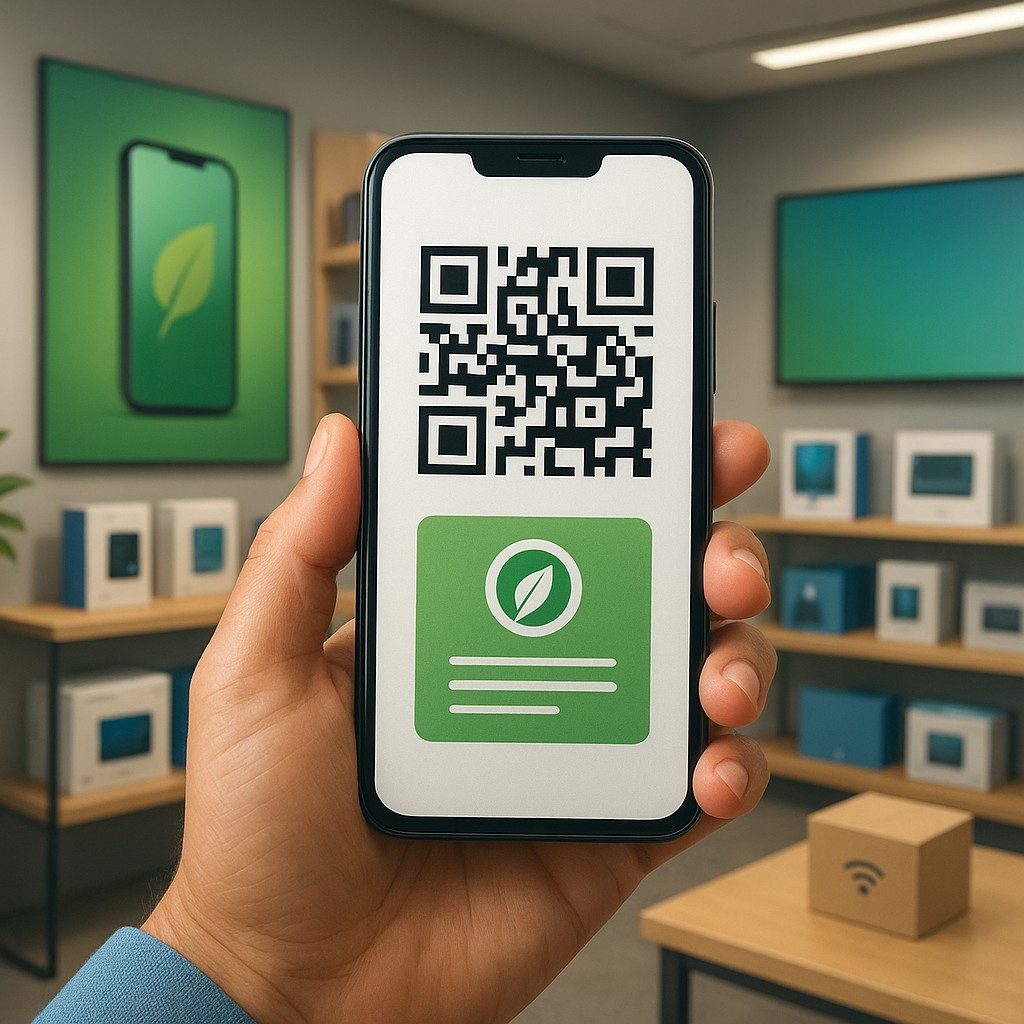
Imagine standing in a crowded electronics store, holding a sleek new smartphone that promises to change your life. The packaging is minimalist, the screen is sharp, and the marketing is full of comforting words like "responsible" and "green." But as you hold it, a nagging question surface: where did the cobalt in this battery actually come from? Was it mined ethically, or did it leave a trail of environmental damage in some far-off corner of the globe? Until recently, it was almost impossible for the average shopper to find an answer. We had to rely on corporate "pinky-promises" and vague brochures.
For too long, the world of consumer goods has been a "black box." Raw materials go in one side and finished products come out the other, with almost no way to see what happens in between. We have used a "take-make-waste" model, where an object’s history is erased the moment it hits the store shelf. However, a massive shift is underway called Digital Product Passports (DPPs). These function as a digital identity or a biological record for physical objects. Every phone, jacket, or industrial battery can now carry its entire life story with it, accessible through a simple QR code scan.
The Secret Life of Everyday Objects
At its core, a Digital Product Passport is a "digital twin" of a physical item that lives in the cloud. Think of it as a detailed resume for a product. Instead of listing college degrees, it lists carbon footprints, material parts, and repairability scores. When you scan a QR code on a pair of jeans or a laptop, you aren't just visiting a generic website. You are looking at a verified record of that specific item’s journey. This system replaces guesswork with hard data that follows a product from the moment its materials leave the earth until it finally reaches a recycling center.
This transition is more than just a cool feature for tech fans; it is becoming a legal requirement in major economies, led by the European Union. These rules force manufacturers to be completely honest about their supply chains. If a company claims a product is made of "recycled ocean plastic," the DPP must prove it. This moves the burden of proof away from the customer, who used to have to spend hours researching brands, and places it on the producer. It turns every product into a storyteller, bringing transparency to an industry that has traditionally survived on secrecy.
The power of the DPP is its ability to fix "information asymmetry." In economics, this happens when a seller knows much more about a product’s quality and origin than the buyer does. By leveling the playing field, these passports make "greenwashing"-making false claims about environmental friendliness-a much riskier strategy. When every claim can be checked against a cloud record, companies can no longer hide high-pollution habits behind pretty photos or clever slogans. Sustainability changes from a marketing "vibe" into a measurable, taxable, and verifiable fact.
Mapping the Journey from Cradle to Grave
The structure of a Digital Product Passport is complex because it gathers data from dozens of different sources. To see how it works, look at the life of a high-end winter coat. The journey begins at the source, where the DPP records where the wool came from, how much water the textile mill used, and which chemical dyes were applied. All this data is bundled together and linked to a unique ID-a digital fingerprint-embedded in a QR code on the coat’s care tag.
As the coat moves through global shipping routes, the passport keeps collecting data. It logs the carbon emissions from the ships and planes used for transport. Once it reaches the store and then your closet, the passport enters its "active" phase. This is where the data helps the owner. If a zipper breaks three years later, you can scan the code to find the exact part number for a replacement or find a nearby repair shop. This helps the product last longer, moving us away from "throwaway" fashion and toward a circular economy where items are reused.
| Passport Feature |
Information Provided |
Benefit to the User |
| Material Origin |
Exact source of raw minerals or fibers |
Shoppers can avoid unethical sourcing |
| Carbon Footprint |
Total emissions from making and shipping |
Regulators can apply fair carbon taxes |
| Repair Guides |
Blueprints and spare part IDs |
Owners can fix items instead of tossing them |
| Recyclability |
Chemical breakdown of all parts |
Recyclers can safely process materials |
| Ownership History |
Record of previous owners (optional) |
Resale markets can prove an item is real |
When the coat finally wears out, the DPP serves one last vital purpose. It tells recyclers exactly what the coat is made of. Many modern products are "monsters" made of mixed materials that are nearly impossible to recycle because companies don't know which glues or metal alloys were used. With a quick scan, a recycling plant's computer can see the coat is 80 percent wool and 20 percent recycled polyester. This allows for a clean, efficient recovery of materials, ensuring that waste from one product becomes the "food" for the next.
Debunking Myths of the Transparent Supply Chain
Whenever a big change in transparency happens, rumors and myths follow. One common mistake is thinking Digital Product Passports are just fancy "Energy Star" or "Fair Trade" stickers. While those labels describe a general category, a DPP is much more specific. It provides data for the exact batch, or even the individual item, in your hand. Unlike a static sticker, the digital passport is dynamic. It can be updated with new info, like a software update for a phone or a safety recall for a car seat, long after it leaves the factory.
Another misconception is that this technology only helps environmental activists. In reality, the biggest impact might be on the businesses themselves. Many large corporations actually have very little visibility into their "Tier 3" or "Tier 4" suppliers-the small companies that sell parts to their own suppliers. By using DPPs, a manufacturer gets a complete view of their own operations. This helps them find ways to be more efficient, reduce waste, and protect themselves from shipping delays. It is a tool for smart business just as much as it is for protecting the planet.
Finally, some worry this will make products much more expensive. While there is a cost to setting up the computer systems, the long-term savings are huge. When products are easier to fix, they last longer, giving the buyer more value. When materials are easier to recycle, the cost of raw materials for future products goes down. Transparency isn't just a moral choice; it is a smart economic move. It takes the "hidden costs" of pollution and waste that society has been paying for decades and puts them back on the official balance sheets where they belong.
The Human Element in a Digital System
Despite the precision of cloud tracking and QR codes, there is one variable no software can control: the human being. A Digital Product Passport can provide a perfect guide on how to take apart a battery or where to drop off old sneakers, but it cannot force a person to walk to the recycling bin. Technology provides the "how" and the "why," but the "do" is still a human responsibility. This shows the limit of digital tools in solving physical problems.
The gap between having information and taking action is the next big challenge. For DPPs to work, they must be part of our lives in a way that makes the sustainable choice the easiest one. Imagine a smartphone that senses its hardware is failing and automatically sends a notification with a link to its own passport. The passport could then offer a one-click option to schedule a recycling pickup or give a discount on a new model if you trade in the old one. By making it easy to be responsible, the passport turns a chore into a smooth experience.
The goal of this system is to change how we relate to our belongings. For a long time, we have lived as "consumers," a word that implies we just use things up until they are gone. Digital Product Passports invite us to become "stewards." When we can see the history, the hard work, and the environmental cost of an object, we are more likely to value it, care for it, and make sure it finds a second life. It transforms a plastic gadget or a cotton shirt from a temporary convenience into part of a larger global story.
Embracing a Future of Verifiable Ethics
As we move forward, the "unseen" parts of our products will become their most important features. We are entering an era where a product's digital shadow is just as significant as the object itself. In this world, a brand's reputation won't be built on expensive commercials, but on the honesty of the data in their product passports. This is a win for curious shoppers, a win for ethical makers, and most importantly, a win for a planet that has been paying the price for our lack of transparency.
You now have the knowledge to see past the shiny surface of what you buy. The next time you see a QR code on a tag, remember it isn't just a link to a website; it is an invitation to hold a company accountable. You have the power to demand the truth about the items in your life. As these digital rules become the standard, that truth will be just one scan away. The future of shopping isn't just about buying better things; it is about knowing more, living better, and making sure our footprint on this earth is recorded in clear data rather than lost in the shadows.